
How to Break in Leather Boots
This post contains affiliate links. As an Amazon Associate, we earn from qualifying purchases.
To break in leather boots effectively, wear them for short periods each day to allow the leather to soften while ensuring they fit snugly without being painfully tight. Use adhesive bandages on areas that rub against your feet to prevent blisters. Gradually increase wear time and engage in light activities to help the boots conform to your feet. With patience and care, you’ll achieve a comfortable fit. For those interested, further insights on leather quality and maintenance will be provided later in the article.
Essential Facts in 30 Seconds
- Wear new leather boots at home for short periods, gradually increasing wear time.
- Use adhesive bandages on rubbing spots to prevent blisters and monitor for hot spots.
- Adjust laces for a snug fit, ensuring enough toe room to avoid discomfort.
- Engage in light outdoor activities to help boots conform to your foot shape.
- Be patient; breaking in leather boots may take days or weeks, and soreness is normal.
Understanding the Break-In Process
Breaking in leather boots is important for comfort. This process helps the tough material shape to your feet. It may take days or even weeks, so some soreness is normal.
Start by wearing your new boots for short periods each day. This gradual method allows the leather to soften.
Proper sizing is key. The boots should feel snug but not painfully tight. Loose boots won’t break in well.
Quality leather boots, like those with Goodyear welted or stitchdown construction, can enhance your experience and make them last longer. Wearing your boots around the house also helps with breaking them in and reduces discomfort.
Patience matters. Using a leather conditioner can further aid in the softening process. Soon, your leather boots will feel just right. Enjoy the journey to comfort!
Importance of Fit and Quality
Finding the right fit and quality in leather boots is very important for comfort. A good fit means your boots won’t pinch or rub. This makes it easier to break them in. Here are some helpful tips:
- Look for boots that feel snug, but not too tight.
- Choose high-quality leather, like full-grain or oil-tanned.
- Try on different brands. Sizes can be very different.
Quality matters. Brands known for durability, like those with Goodyear welted styles, are a smart choice. The Red Wing Iron Ranger is a great boot for an easier break-in.
Make sure your toes have enough room to wiggle without feeling pressure. Regularly checking foot size is essential to ensure proper fit, especially as your feet may change over time.
Good quality boots can last for decades with proper care. Investing in fit and quality means you’ll enjoy your leather boots for many years. This choice improves both comfort and performance.
Care and Maintenance of Boots
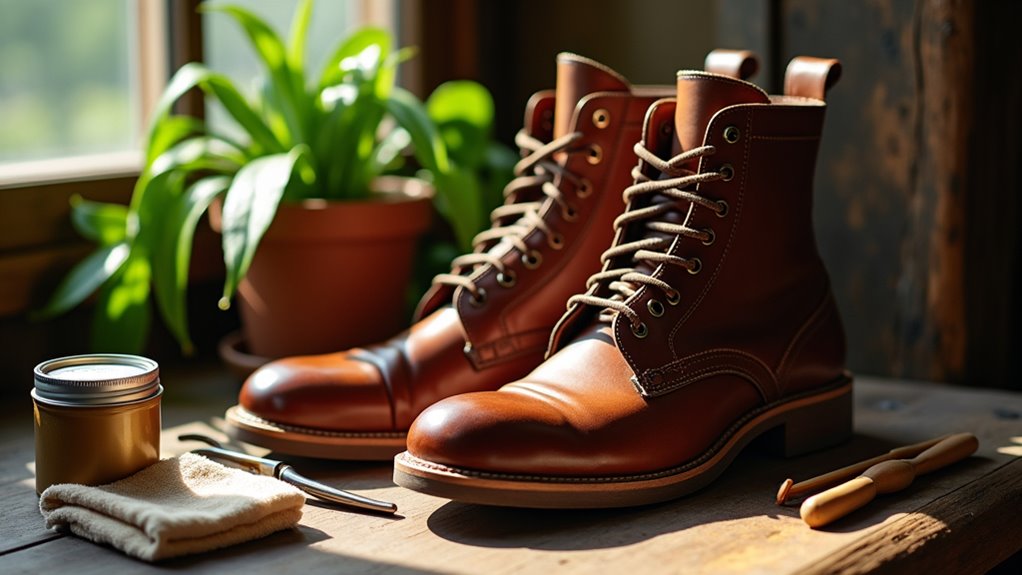
Clean your boots regularly. Remove dirt and mud after each use. Control dampness by letting them dry naturally. Avoid direct heat sources. Regularly clean leather shoes to remove dust and dirt after each wear.
Condition the leather every few months. This helps prevent cracks and keeps the leather soft.
Store boots in a cool, dry place. Use boot trees or stuff them with newspaper to maintain shape.
Regular care keeps boots comfortable and stylish for years. Follow these steps to enjoy your favorite boots longer.
Regular Cleaning Routine
A regular cleaning routine keeps leather boots looking great. Start by using a soft brush or a damp cloth. This removes dirt and debris. Keeping the leather clean helps it last longer.
Every 3-6 months, apply a good leather conditioner. This keeps the leather soft and stops it from cracking. Additionally, consider using a suede protector to safeguard against future stains and damage.
Follow these simple steps for great care:
- Clean often: Use a brush or cloth to wipe off dirt.
- Condition leather: Apply a leather conditioner to keep it flexible.
- Check for damage: Look for cracks or loose stitching.
Taking care of your boots keeps them nice. A little effort goes a long way. Enjoy wearing your boots!
Moisture Control Techniques
Humidity control is key for keeping leather boots in great condition. Here are some effective techniques:
| Technique | Benefits | Tips |
|---|---|---|
| Allow Rest Days | Extends boot life | Rest boots for one day after 2-3 wears. |
| Clean Regularly | Stops mold and bad smells | Use a damp cloth to wipe them down. |
| Avoid Water | Keeps shape intact | Never soak boots in water. |
| Use Moisture-Wicking Socks | Keeps feet dry and comfy | Choose breathable materials. |
Keep your boots looking good and lasting longer with these simple steps. Additionally, proper care helps maintain full-grain leather quality, ensuring longevity and comfort.
Conditioning Leather Periodically
Conditioning leather boots keeps them looking great and lasting longer. Regularly applying leather conditioner softens the leather. It also stops the leather from drying out and cracking. Condition your boots every few months or whenever they seem dry. Always follow the manufacturer’s instructions.
Focus on parts that rub together. This helps improve comfort. Use a soft cloth or your hands to rub the conditioner in. This helps the leather absorb it faster.
Check for any loss of shine. This shows it’s time to condition your boots.
Taking care of your leather boots ensures they stay strong and stylish.
Wearing and Breaking In Your Boots
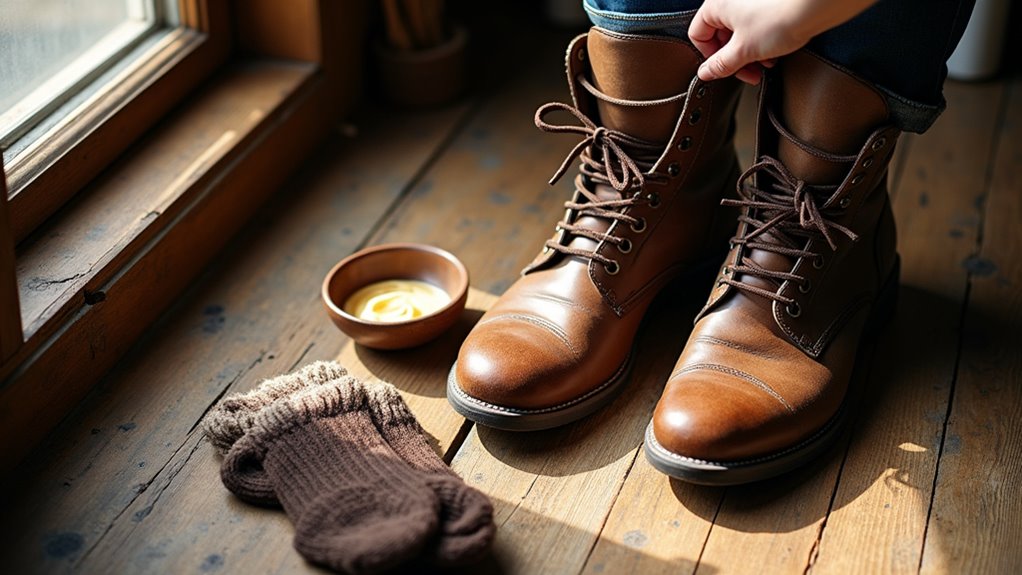
New leather boots need special care. Start by wearing them at home for short times. Aim for 30 minutes to an hour. Slowly increase how long you wear them. This helps the leather shape to your feet. It’s crucial to consider your foot type when selecting boots for optimal comfort and support.
Use adhesive bandages on spots that might rub. This will help prevent blisters. Don’t wear them all day right away. Mix them into your daily routine.
Watch for “hot spots” where the boots rub. Consider using moleskin padding for extra comfort in these areas.
Be patient. It may take days or weeks for your boots to feel right. The more you wear them, the better they fit. Enjoy your new boots!
Choosing the Right Leather
Choosing the right leather for boots matters. Different types of leather affect comfort and style. Soft leathers, such as cordovan, fit snugly to your feet. They feel great right away. Stiff leathers, like roughout, last longer and stand up to wear.
Think about what you like. Consider how you’ll use the boots. Breathability is key for comfort. Flexibility helps when walking or standing. Both factors make wearing boots enjoyable. Clogs, for example, provide excellent arch support which can enhance comfort during long periods of wear.
Get the leather that suits your needs. The right choice makes a difference in how your boots feel and look. Enjoy your new boots!
Types of Leather
Choosing the right leather for your boots impacts comfort and style. Different leathers offer unique qualities. They vary in how long they take to break in and how comfortable they feel.
Here are three popular types:
- Cordovan: Luxurious and strong. It needs less care over time.
- Veg-tan: It creates a nice patina but needs more maintenance to stay fresh.
- Roughout: Rugged and water-resistant. Offers comfort right from the start.
Think about your comfort and how you’ll use the boots. The right leather type can greatly improve your experience.
Pick wisely for the best fit for your needs.
Leather Comfort Considerations
Finding the right leather for your boots is important for comfort. Different leathers have different qualities. Here’s a simple guide to help you choose:
| Leather Type | Comfort Level | Break-in Time |
|---|---|---|
| Full-Grain Leather | High | Minimal |
| Vegetable-Tanned Leather | Moderate | Moderate |
| Oil-Tanned Leather | High | Quick |
Think about how each type fits your foot. Softer leathers break in quickly. Stiffer options last longer. Check the thickness and finish too. These factors affect how comfortable your boots will be. Make a smart choice for a better fit!
Tips for a Comfortable Fit
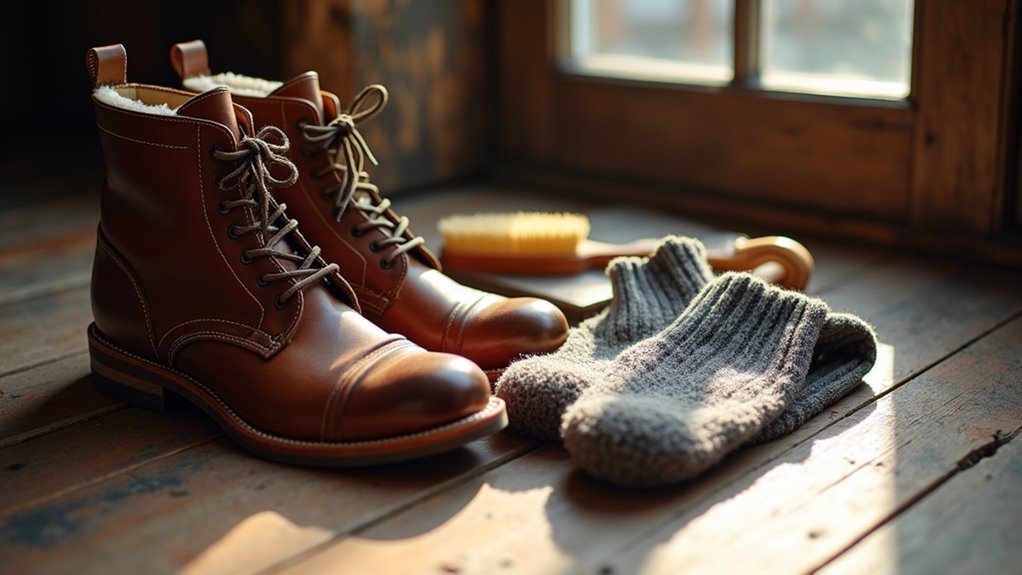
To ensure your leather boots fit well, measure both feet carefully. Sizes can differ by brand. Trying on boots in person is key to finding the right size.
Follow these tips to break in new boots comfortably:
- Wear them at home for short times. This helps the leather shape to your feet.
- Use leather conditioner on stiff spots. It softens the material and adds comfort.
- Adjust the laces for a better fit. The boots should hug your feet without hurting.
For areas that rub against your skin, put on adhesive band-aids. This can prevent blisters and discomfort. Additionally, consider wearing your boots while engaging in light outdoor activities, as this can help them conform to your foot shape more effectively.
These easy steps will make breaking in your boots a breeze. Enjoy your new boots with more comfort. A good fit is essential for long-lasting wear.
Frequently Asked Questions
How Long Does It Typically Take to Break in Leather Boots?
Breaking in leather boots usually takes a few days to several weeks. Many things affect this time. The type of leather plays a big role. Boots made with softer leather often break in faster. The construction of the boot matters too. Stiffer boots can take longer to feel comfortable.
Your foot shape also influences how quickly boots fit. Everyone’s feet are different. Some might need more time to adjust. Wear your boots for short periods at first. Gradually increase the time you wear them. This helps the leather soften and mold to your feet.
Can I Wear Leather Boots in Wet Conditions During the Break-In?
Wearing new leather boots in wet conditions is not a good idea. Water can harm the leather. It can change the shape and comfort of your boots. Keeping them dry helps them last longer. Take care of your boots during the break-in period. This way, they stay in good condition. Enjoy your boots for many years!
Should I Break in Boots Before a Long Hike or Event?
Breaking in your boots before a long hike or event is very important. Wear them gradually to ensure comfort. This helps to prevent foot pain. The leather will also shape to your feet better.
Start by wearing your boots for short walks. Gradually increase the time you wear them. This way, your feet get used to the boots. It’s a smart move to avoid blisters and soreness later on.
Take care of your feet. Happy feet make for a happy hike! Enjoy the outdoors without pain.
What Should I Do if My Boots Still Hurt After Breaking In?
Boots that still hurt after breaking in can be frustrating. Don’t worry, there are ways to fix this. Start by applying neatsfoot oil. This will soften the leather and make it more comfortable.
For spots that rub your skin, use moleskin. It acts as a cushion and reduces friction.
Try wearing your boots for short periods. Gradually increase the time you wear them. This helps the boots shape to your feet.
Is It Normal for Leather Boots to Squeak After Breaking In?
Leather boots often squeak after breaking in. This is normal. As the boots fit your feet, they can create friction. This friction causes the squeaky sound.
To help reduce the noise, apply some leather conditioner. It keeps the leather soft and helps it mold to your foot better. Taking care of your boots can keep them looking good too.
Don’t worry too much about the squeaking. With time, the noise usually goes away. Enjoy your boots!
Conclusion
Breaking in leather boots can be easy and enjoyable. Start with the right size. Quality leather makes a big difference too. Take your time as you wear them. Comfort will come with each step.
Every crease and scuff shows your adventures. They tell stories of the places you’ve been. Lace up your boots and step out. Embrace the journey. Your boots are ready for whatever lies ahead.