
Wooden Clogs History and Uses
This post contains affiliate links. As an Amazon Associate, we earn from qualifying purchases.
Wooden clogs, known as klompen, are traditional Dutch footwear that originated in the Netherlands around the 13th century. Initially designed for farmers and workers, they have evolved into decorative pieces that represent Dutch culture, especially at festivals. Made from durable woods like alder or beech, clogs can be comfortable for everyday use. Proper cleaning and maintenance are essential to keep them looking great. Further details about their history and care will be provided later in the article.
Essential Facts in 30 Seconds
- Wooden clogs originated in the 13th century as practical footwear for farmers in the Netherlands.
- Their popularity increased in the 16th and 17th centuries, becoming essential for outdoor labor.
- Industrialization led to a shift from single-piece to two-piece clog designs in the 18th and 19th centuries.
- Today, wooden clogs represent Dutch culture and are featured in festivals and parades.
- Proper care, including cleaning and humidity control, is important for their longevity.
Origins of Dutch Wooden Clogs
Dutch wooden clogs, known as klompen, are unique shoes made from wood. Their history goes back to the 13th century. The first clogs were discovered in a peat bog in Drenthe around 1230. Early klompen were carved from one piece of wood. They were practical and often used by farmers and workers. People secured them with leather straps.
In the 16th and 17th centuries, klompen grew in popularity. They became essential for outdoor jobs like farming, fishing, and woodcutting. These clogs protected feet and kept them dry.
By the 18th and 19th centuries, the design changed. Clogs now had wooden soles with leather or fabric uppers.
Today, many people wear traditional wooden clogs for cultural reasons or as souvenirs. In rural areas, they still serve practical purposes, especially for gardening and other tasks. Klompen remain an important part of Dutch culture.
Evolution and Cultural Significance
Wooden clogs have a rich history that dates back to the 13th century. These shoes began as simple work footwear. Over time, they became cultural symbols of Dutch heritage. Clogs showcase traditional craftsmanship and artistry.
Today, wooden clogs serve many purposes. They’re worn by farmers, gardeners, and workers in various industries. Their sturdy design protects feet and provides comfort.
During special events, clogs celebrate Dutch traditions. People wear them in festivals and parades. Their bright colors and unique designs attract attention.
Wooden clogs are more than just shoes. They connect people to their history and culture. Every pair tells a story of craftsmanship and heritage.
Historical Development of Clogs
Clogs, also known as klompen, have a rich history that starts in the 13th century in the Netherlands. People made them from a single block of wood. These shoes protected the feet of rural workers and were very practical.
By the 16th and 17th centuries, clogs became essential for farmers. They helped keep feet safe from muddy fields in the Dutch landscape.
During the 18th and 19th centuries, the design changed. Clogs became two-piece shoes. This new design improved comfort and made production easier.
In the 20th century, fewer people wore clogs. Despite this decline, they still represent Dutch culture. You often see them in traditional costumes.
Today, wooden clogs serve two purposes. They are useful footwear and fun decorative souvenirs. People enjoy them for their charm and cultural value.
| Time Period | Clog Design | Cultural Significance |
|---|---|---|
| 13th Century | Single piece | Practical for rural workers |
| 16th-17th Century | Single piece | Vital for farmers |
| 18th-19th Century | Two-piece | Improved comfort |
| 20th Century | Decline in use | Symbol of Dutch heritage |
| Present Day | Practical & decorative | Souvenirs reflecting culture |
Cultural Symbolism in Society
Wooden clogs, or klompen, are more than just shoes. They’re a symbol of Dutch culture. These wooden shoes have a history that goes back to the 13th century. Farmers and fishermen originally used them for work. Over time, clogs became cultural icons.
The making of wooden clogs shows amazing craftsmanship. Skilled artisans, called bodgers, still make them today. They pass down their skills through generations.
During festivals, wooden clogs are important. They feature in traditional clog dancing, which celebrates Dutch spirit.
Though people wear them less for everyday use, their meaning remains strong. Many wear clogs on special occasions. Others keep them as decorative pieces.
These shoes remind everyone of Dutch heritage and craftsmanship.
Craftsmanship and Manufacturing Techniques
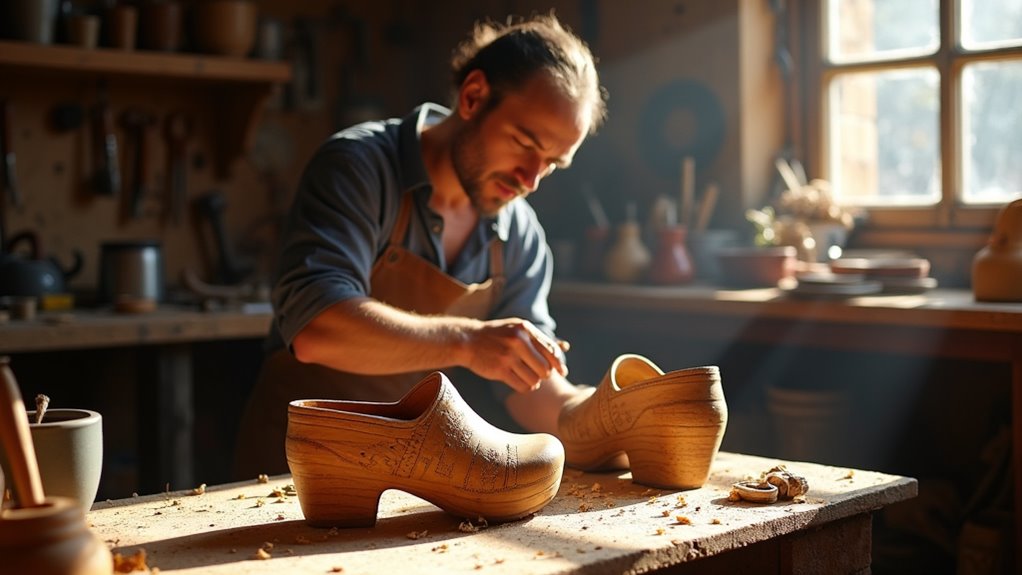
Wooden clogs have a long history of craftsmanship. Skilled artisans, called bodgers, create these shoes using techniques passed down through generations. They start by choosing strong woods like alder or beech. From solid blocks, they carve the shape of the clog with a special axe. Then, they use sharp knives to refine the design. This hand-carving takes time, followed by a drying phase of about three weeks.
During the 18th and 19th centuries, production became more industrial. Clogs changed to a two-piece design. This design features separate wooden soles and uppers made from leather or fabric.
Today, manufacturers use modern, eco-friendly methods. Clogs now often have interchangeable uppers for customization. Rubber and leather improve durability and comfort. Each pair of clogs combines tradition with new ideas, showcasing unique craftsmanship.
Types of Wooden Clogs
Wooden clogs come in different types. Each type has its own use and style. These shoes show off Dutch culture and craftsmanship.
Here are three main kinds of wooden clogs:
- Traditional klompen: These are simple wooden shoes. Farmers and fishermen often wear them. They keep feet dry and safe while working outside.
- Safety clogs: These clogs are made for professionals. They offer better protection in risky places. Many chefs and construction workers choose these for their comfort and safety.
- Decorative souvenir clogs: These clogs are bright and colorful. They often have beautiful designs. Tourists buy them to remember their trip to the Netherlands.
Each type of clog has a special purpose. Whether you want something practical or a unique piece of art, there’s a clog for you.
Think about what you need to find the right pair!
Comfort and Modern Adaptations
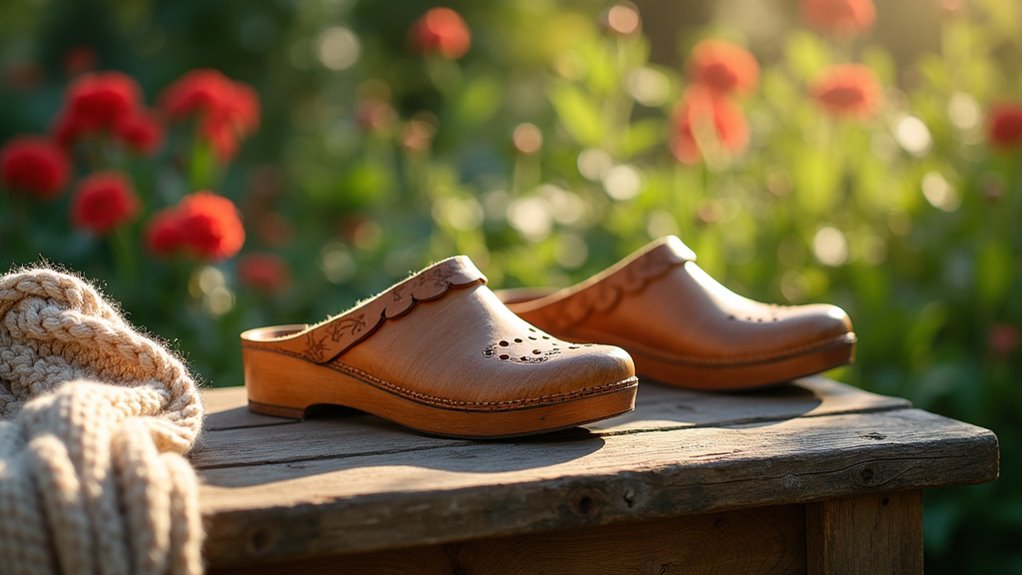
Clogs have changed a lot over time. They now meet the needs of modern life. Many people think clogs are uncomfortable. This isn’t true. Wooden clogs offer great support for your feet and back. After a short time, they feel cozy. Leather straps help keep them snug. This allows them to fit your feet perfectly.
Today’s clogs come with different upper styles. You can change them to match your outfit. Many clogs use a mix of leather and rubber. This makes them last longer and feel better. Many brands also use eco-friendly methods. This shows a commitment to taking care of the planet. Clogs are designed for support and comfort, making them an excellent choice for those on their feet for long periods.
Modern clogs are stylish and trendy. They attract many different people. Clogs provide both comfort and style. They also support eco-friendly practices. Enjoy all the benefits of wooden clogs today!
Care and Maintenance of Wooden Clogs
Keep your wooden clogs in great shape. Clean them often with a damp cloth. This helps remove dirt and dust.
Store clogs in a cool, dry place. Avoid direct sunlight to prevent damage. Sunlight can cause fading and cracking.
For extra care, use a soft brush for tough spots. Check for any signs of wear. If you see scratches, use wood polish to fix them.
Regular care will help your clogs last longer. They’ll also look better. Enjoy your clogs for years to come!
Cleaning Techniques
To keep your wooden clogs in great shape, regular cleaning and care are important. Here are some simple steps to follow:
- Wipe away dirt and dust with a damp cloth. Don’t soak your clogs in water. This can cause cracks or warps.
- Use a small amount of natural oil, like linseed oil, every few months. This helps nourish the wood and protects it from moisture.
- For tough stains, gently scrub with a soft brush and mild soap. Make sure to dry them well to avoid moisture buildup.
Check your clogs often for any wear or damage. This helps them last longer.
Storage Recommendations
Proper storage of wooden clogs helps them last longer. Keep your clogs in a cool, dry place. Avoid direct sunlight to prevent warping. Humidity can hurt the wood, so stay away from damp areas. Stuffing your clogs with newspaper helps them keep their shape and absorbs extra moisture.
Here’s a simple guide for storage and care:
| Action | Frequency | Purpose |
|---|---|---|
| Clean with a damp cloth | After each use | Remove dirt and prevent buildup |
| Air dry | After cleaning | Keep the wood strong |
| Apply wood conditioner | Every 3-6 months | Nourish the wood and make it shine |
| Check humidity | Regularly | Stop splitting and damage |
| Store away from sunlight | Always | Prevent warping and cracking |
Follow these tips. Your clogs will look good and last for years!
Frequently Asked Questions
Are Wooden Clogs Suitable for Outdoor Activities?
Wooden clogs are great for outdoor activities. They keep your feet dry in wet and muddy areas. Once you break them in, they provide good support. Clogs also protect your feet from sharp rocks and other hazards. Their sturdy design makes them reliable for rugged terrains. Plus, they are easy to clean. Just wash them off after a day outside. So, if you plan to enjoy nature, wooden clogs can be a smart choice.
Can Wooden Clogs Be Resoled or Repaired?
Wooden clogs can be easily resoled or repaired. Skilled artisans fix them, just like superheroes fix their capes. These experts keep your clogs comfy and stylish. Regular maintenance helps them last longer. When the soles wear out, don’t throw them away. A good repair can bring them back to life. Many cobblers offer clog repairs. They can replace the sole or fix any damage. This way, you save money and help the environment. Keep your clogs looking great!
What Types of Wood Are Commonly Used for Clogs?
Clogs are often made from various types of wood. Common choices include alder, beech, sycamore, balsa, willow, and poplar. Each wood type brings its own benefits.
Alder is strong and lightweight. Beech offers durability and a smooth finish. Sycamore is known for its resistance to moisture. Balsa is very light and comfortable. Willow provides good shock absorption. Poplar is sturdy and affordable.
These woods improve the overall comfort and performance of clogs. Whether for work or leisure, wood choice matters in clog design.
How Do Wooden Clogs Compare to Traditional Footwear?
Wooden clogs provide great arch support. They also have good ventilation, which keeps feet cool. These shoes are very durable. They often last longer than regular shoes. At first, clogs may feel stiff. Over time, they shape to fit your feet nicely. Many people appreciate their comfort and style. Clogs are a smart choice for those seeking support and durability.
Are There Any Health Benefits to Wearing Wooden Clogs?
Wearing wooden clogs offers many health benefits. They support your arches and help with posture. This can lead to less back pain. Clogs also improve blood circulation. They reduce the impact on your joints. Plus, they promote a natural walking style. This helps with balance and stability. Overall, wooden clogs can be a great choice for your feet.
Conclusion
Wooden clogs have a fascinating history and useful benefits that still matter today. They began in the Netherlands and have evolved over time. These shoes provide comfort and style. Slipping your feet into a pair feels great. The wood is warm and sturdy. With proper care, wooden clogs can last for many years. They are easy to clean and maintain. Many people enjoy wearing them for work or casual outings. Their unique design makes them stand out. Try a pair and discover their charm and practicality. You may just find a new favorite shoe!