
How to Choose Kitchen Clogs
This post contains affiliate links. As an Amazon Associate, we earn from qualifying purchases.
To choose the best kitchen clogs, prioritize comfort, safety, and easy cleaning. Look for features such as non-slip rubber soles to minimize the risk of slips and a closed-toe design for added protection. Cushioned insoles, such as memory foam, can help alleviate foot fatigue during long shifts. Additionally, opt for materials that are easy to clean and consider styles with ventilation for breathability. Ensuring the right fit is crucial to prevent discomfort. Further details and tips for selecting the ideal clogs will be provided later in the article for those seeking more information.
Essential Facts in 30 Seconds
- Choose non-slip rubber soles to prevent slips on wet or greasy floors.
- Opt for closed-toe designs for protection from sharp tools and hot liquids.
- Select cushioned insoles made from memory foam or gel to minimize foot fatigue.
- Look for easy-to-clean, water-resistant materials for quick maintenance.
- Consider clogs with ventilation features for better airflow and comfort.
Understanding the Importance of Kitchen Clogs
Spending long hours in the kitchen can be tough on your feet. The right footwear makes a big difference. Kitchen clogs provide comfort and support for chefs and kitchen staff. They help reduce foot fatigue, so you can work longer without pain.
Slip-resistant soles are a must. They prevent slips on wet or greasy floors, keeping you safe. A closed-toe design protects you from sharp objects and hot liquids.
Materials matter, too. Many clogs are made from easy-to-clean rubber or polyurethane. This makes cleaning quick and easy. The ergonomic design usually includes cushioned footbeds and arch support. This helps your feet feel good all shift long.
Additionally, many clogs are designed with breathable materials that keep your feet cool and dry during long shifts.
Investing in non-slip kitchen shoes improves safety and comfort. Happy feet lead to a happier kitchen experience.
Key Features to Look for in Kitchen Clogs
Finding the right kitchen clogs is essential for comfort and safety. Focus on key features that make a difference. A non-slip rubber sole helps prevent slips on wet floors. Closed toe designs protect your feet from sharp tools and hot liquids often found in kitchens.
Cushioned insoles provide arch support. This keeps your feet feeling good during long hours. Look for memory foam or gel options for extra comfort.
Choose clogs that are easy to clean. Water-resistant materials handle spills well and make washing simple. Ventilation features are also important. They allow airflow, keeping your feet cool and fresh during busy kitchen times. Additionally, selecting clogs with deep tread patterns can enhance grip and reduce slip incidents on slippery surfaces.
With these features, kitchen clogs can improve your workday and keep you safe. Enjoy working in comfort and confidence.
Different Types of Kitchen Clogs
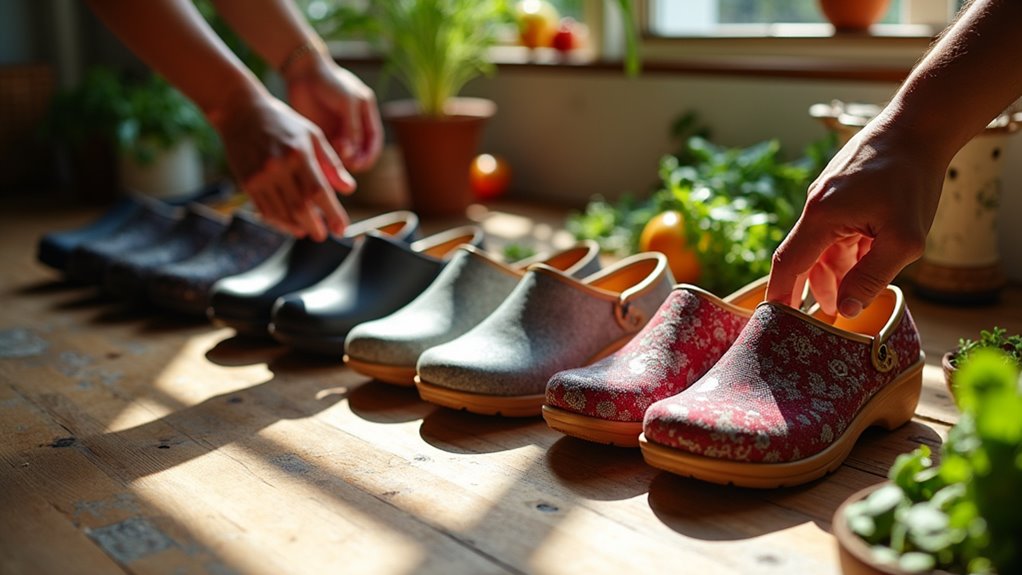
Understanding kitchen clogs is important for safety and comfort. These shoes make it easy to move quickly in a busy kitchen. Many have non-slip soles. This helps prevent slips on greasy or wet floors. Closed toe designs protect feet from sharp objects and hot spills. This is vital for chefs working hard.
Common materials for kitchen clogs include polyurethane and EVA. These materials keep the shoes lightweight and waterproof. They’re also easy to clean, which helps maintain hygiene. Some clogs even have ventilation holes. This allows air to flow, keeping feet cool during long shifts.
Look for styles that are dishwasher-safe, like the Calzuro Classic Clog. They make cleaning simple.
With these features, kitchen clogs keep you safe, comfortable, and stylish while cooking.
Comfort and Support Considerations
Comfort and support are essential when selecting kitchen clogs. Start with clogs that have cushioned insoles. Memory foam or gel insoles can help reduce foot fatigue during long shifts.
Look for clogs with ergonomic designs. These designs align your feet properly and ease strain on your legs and back.
A stiffer shoe can offer better stability but might need time to break in. Don’t rush this process. Give your clogs time to mold to your feet for a perfect fit.
Check that the toe box is roomy. A spacious toe box allows for swelling that can happen from standing all day. This improves comfort and circulation.
Choose slip-resistant outsoles made from rubber or similar materials. These outsoles give you the traction needed on slippery kitchen floors.
Prioritize these features to stay comfortable and safe during your busy kitchen day. Additionally, consider clogs with arch support features that help distribute weight evenly and reduce strain on the plantar fascia.
Maintenance and Cleaning Tips
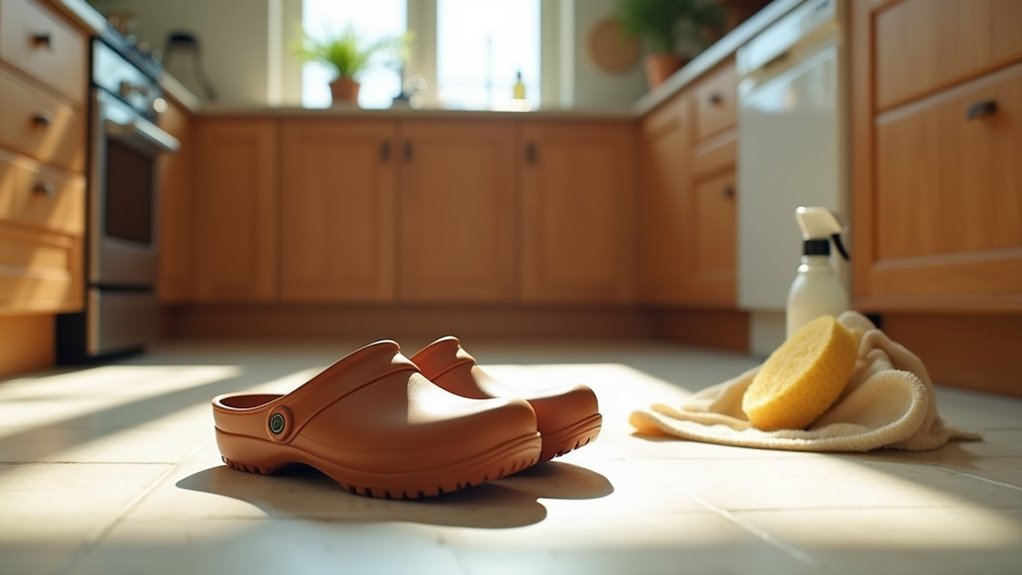
Keep your kitchen clogs clean and fresh. Wipe them down daily with a damp cloth.
For clogs that are dishwasher-safe, wash them in the dishwasher regularly. This easy care helps your shoes stay hygienic and looking good.
Regular cleaning also extends the life of your clogs. Establishing a consistent cleaning schedule can help you enjoy your clean, comfortable footwear!
Daily Wipe Downs
Kitchen clogs need regular cleaning to stay fresh and safe. Wipe them down daily with a damp cloth or sponge. This removes food bits and stains. Keeping hygiene a top priority is important.
For deeper cleaning, mix mild soap with water. Rinse well to get rid of soap residue. Use a disinfectant spray on rubber or synthetic clogs sometimes. This helps kill bacteria and odors.
After cleaning, let your clogs air dry completely. This stops dampness, which can cause mold and bad smells. Taking care of your kitchen clogs helps them last longer and look good. Regular cleaning makes a big difference.
Dishwasher-Safe Options
Dishwasher-safe kitchen clogs make life easier in the kitchen. The Calzuro Classic Clog is a great option. These clogs are easy to clean. Just put them in the dishwasher. This method sanitizes your clogs and removes bacteria and odors.
Washing clogs regularly is important. Busy kitchens have grease and food particles. Keeping footwear clean helps maintain hygiene.
Most dishwasher-safe clogs are made from strong rubber or plastic. These materials handle high temperatures and detergents well. They keep their shape even after many washes.
To care for your clogs, place them on the top rack of the dishwasher. Avoid high-heat drying cycles. These steps reduce cleaning time. Chefs can spend more time cooking instead of cleaning shoes. Additionally, regular cleaning helps prevent the buildup of bacteria that can lead to odors.
Finding the Right Fit for Your Feet
Finding the right fit for your kitchen clogs is key for comfort and support. Long hours on your feet require the best clogs.
Consider these important factors:
- Foot Shape: Different styles fit different shapes. Find one that suits yours.
- Size and Width: Clogs come in many sizes and widths. A snug fit stops slipping.
- Toe Box: A spacious toe box allows your toes to move freely.
- Adjustable Features: Straps or buckles help you customize the fit for better support.
- Socks: Always wear the socks you plan to use in the kitchen when trying on clogs.
- Material: Opt for clogs made from soft, flexible materials to ensure comfort during long hours.
Choose wisely. Your feet will thank you after a long day!
Frequently Asked Questions
Can I Wear Kitchen Clogs Outside of Work?
Kitchen clogs are great for outside of work! They offer comfort and style. Many clogs are slip-resistant, making them safe for running errands. Cleaning them is a breeze, so no worries about dirt or mud. Enjoy the convenience and comfort of kitchen clogs anytime.
How Do I Know if My Clogs Are Too Tight?
Clogs that pinch or cause discomfort are too tight. If your toes feel restricted, it’s time to check the fit. There should be about a thumb’s width of space in front. Your heel must fit snugly without slipping out. Your feet need support, not restriction. Comfort is key for happy feet.
Are Kitchen Clogs Suitable for All Foot Types?
Kitchen clogs work well for many foot types. They have roomy toe boxes and supportive footbeds. This design helps fit wider feet, high arches, or flat feet comfortably. Many people find them great for long hours in the kitchen. The slip-resistant soles add safety. Easy to clean materials make them practical too. Overall, kitchen clogs offer comfort and support for various foot shapes.
What Brands Are Best for Kitchen Clogs?
For kitchen clogs, Dansko, Birkenstock Super-Birki, Calzuro, Crocs Bistro, and Snibbs stand out. Each brand has special features that boost comfort and safety. They also help keep things clean in your kitchen. Dansko offers great arch support. Birkenstock Super-Birki is easy to clean. Calzuro has a slip-resistant sole. Crocs Bistro is lightweight and flexible. Snibbs provides extra protection with a stylish look. Choosing any of these brands will make your time in the kitchen better.
How Often Should I Replace My Kitchen Clogs?
Replace your kitchen clogs every 6 to 12 months. This depends on how often you use them. Pay attention to signs like slipping or discomfort. These mean it’s time for a new pair. Regular checks can help you stay safe. Good clogs protect your feet and keep you comfortable. Don’t wait too long to change them. Get a new pair to keep working well in the kitchen.
Conclusion
Finding the right kitchen clogs is important for comfort and safety. Good clogs provide support and are easy to clean. Consider features like slip resistance and cushioning. These make a big difference when you stand all day. Comfortable shoes help you enjoy your time in the kitchen. Take your time to try different pairs. Choose the ones that feel best for you. Your feet will thank you!