
Cleaning and Care Guide for Clogs
This post contains affiliate links. As an Amazon Associate, we earn from qualifying purchases.
To effectively care for your clogs, begin by using a horsehair brush to remove dirt and debris. For cork soles, apply a cork sealer in thin layers and allow it to dry for 20 minutes. Clean leather clogs with a damp cloth and apply Apple Protectant Spray annually. For wool clogs, brush in one direction to maintain the integrity of the fibers. If the sole becomes detached, clean both surfaces, apply Barge’s All-Purpose Cement, and press them firmly together. More detailed information on maintaining your clogs is provided below for those interested in further guidance.
Essential Facts in 30 Seconds
- Regularly use a horsehair brush on wool clogs to remove dirt, brushing in one direction.
- Clean polyurethane-coated leather clogs with a damp cloth and mild soap.
- For suede or nubuck clogs, use a horsehair brush and suede foam cleaner.
- Use Barge’s All-Purpose Cement to repair detached soles, ensuring clean surfaces before applying.
- Protect cork soles with Cork Sealer and a protectant spray for enhanced durability.
How to Protect Your Cork Soles
Keep your cork soles in top shape with a Cork Sealer. This special product makes your cork stronger and lasts longer.
First, shake the Cork Sealer bottle well. Use a brush to spread a thin layer on the soles. Wipe off any extra for a smooth finish. Let it dry for about 20 minutes. For new soles, two coats work best.
Regularly using a protectant spray helps keep the cork’s shock-absorbing power. This can help ease foot pain over time. Maintaining non-slip soles is also crucial for safety while working in the kitchen.
After sealing, your soles will look darker and shinier. This improves the overall look of your clogs.
With a little care, your cork soles will stay nice and comfortable.
How to Protect Your Leather Shoes
Leather shoes are stylish and comfortable, but they need protection.
Start by cleaning the shoes to remove dirt and dust. This helps the protectant spray stick better.
Use Apple Leather and Suede Protectant Spray. This spray creates a water-repellent barrier against stains and water spots.
Hold the spray 6-9 inches away and apply it evenly. Let it dry for at least 30 minutes to get the best results.
Reapply the protectant at least once a year. Regular care keeps your leather shoes looking good and lasting longer. Additionally, regular protection from water and dirt helps maintain the appearance and longevity of your shoes.
These simple steps will help your favorite shoes stay fresh and stylish for years.
How to Clean Your Wool Clogs
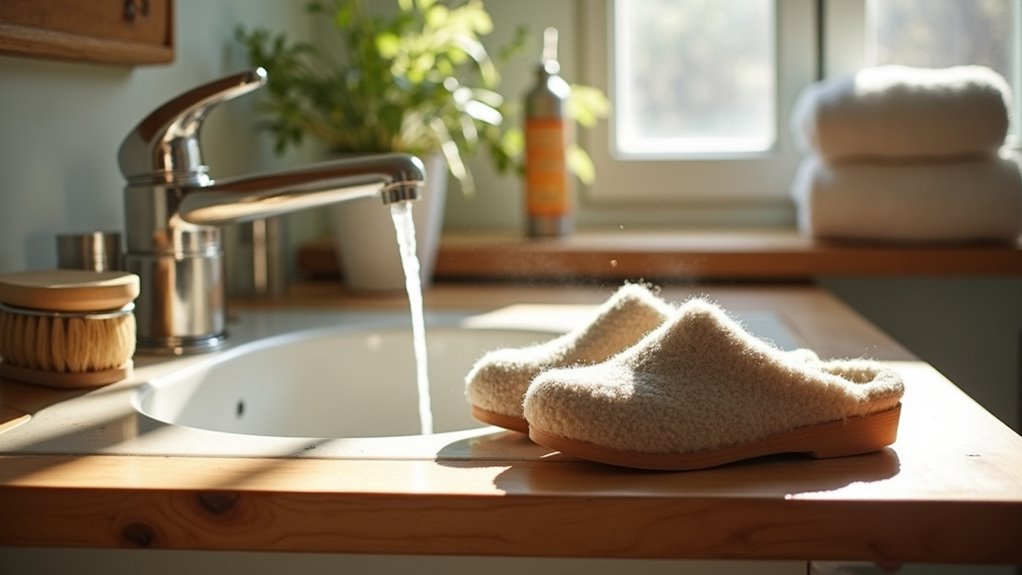
Cleaning your wool clogs keeps them looking great and feeling comfy. Start with a horsehair brush. This brush removes dirt and dust without hurting the wool. Brush in one direction. This lifts away debris and protects the wool fibers. It also helps stop pilling.
Make brushing your clogs a habit after each use. This simple step keeps them fresh. Regular brushing also helps them last longer. It prevents dirt buildup that can damage the material.
How to Repair Your Sole if It Detaches
Clog soles can detach, but fixing them is easy. Start by cleaning both surfaces with soap and water. This step removes dirt and helps the glue stick better.
After they dry, apply Barge’s All-Purpose Cement evenly on the cleaned areas. Cover all parts for a strong bond.
Press the sole back onto the clog firmly. Keep steady pressure while the glue cures. Follow the glue instructions and let it cure for several hours. This ensures the best results.
Check your clogs often for signs of detachment, especially in humid or wet conditions. Regular checks help prevent future problems. Ensure your clogs have a deeper tread pattern for improved grip and safety during use.
With these simple steps, you can keep your favorite footwear in great shape for longer.
Care for Specific Materials
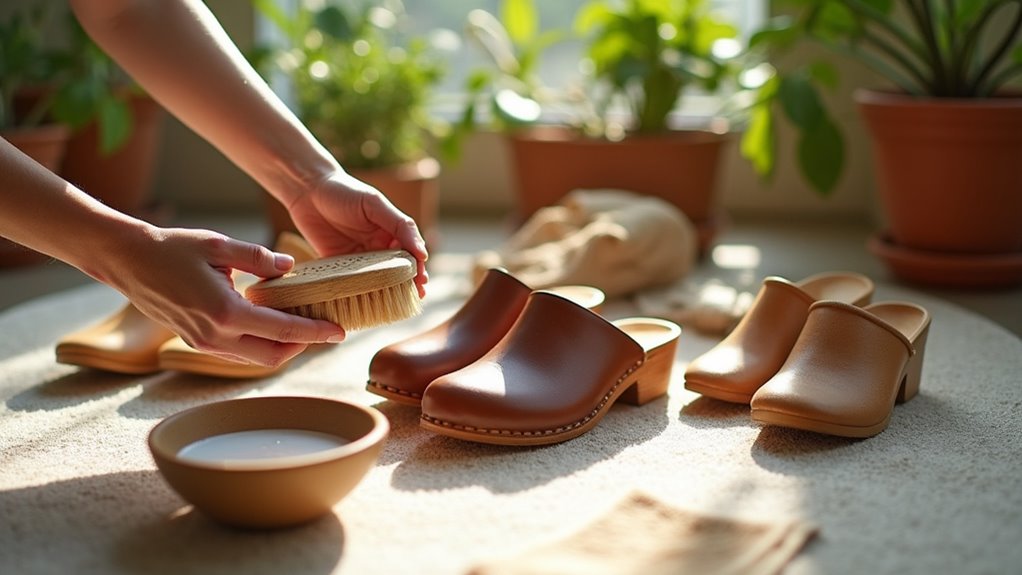
For polyurethane-coated (PU) leather, wipe them with a damp cloth and mild soap. This keeps them fresh and clean.
Suede or nubuck clogs require a horsehair brush. Use suede foam cleaner to remove dirt without damage. To maintain the look of your suede, regularly apply a thin layer of suede protector to prevent stains and water damage.
Oiled leather is different. Rub out scuffs with your fingers. For regular cleaning, use a horsehair brush and suede foam cleaner.
Fur or textile parts need a damp cloth for spot cleaning.
Use the right methods for each material. This helps your clogs last longer.
Follow these tips to keep your clogs looking great for years.
Essential Shoe Care Products
To keep your clogs in top shape, use important shoe care products.
Start with eco-friendly cleaners made for the materials in your clogs. These cleaners help remove dirt and stains. They’re safe for the environment too.
Protectants are also key. They guard your clogs against water and stains. Regular use of these products keeps your clogs looking fresh. It also helps them last longer.
Remember to clean and protect your clogs often. This simple routine can make a big difference. Additionally, conditioning the leather can rejuvenate your clogs and prevent cracking.
Your clogs will stay stylish and comfortable for many seasons. Happy wearing!
Recommended Cleaning Products
Keeping your clogs clean is important. Use the right products for the best results.
Start with Apple Leather and Suede Protectant Spray. This spray protects against water spots, stains, and oils. For suede, the Suede Foam Cleaner works well. It removes dirt and dust easily. A cleaning stone helps with tough stains. It keeps your clogs looking good.
Don’t forget the Cork Sealer! Apply two coats to new cork. This gives a shiny finish and seals well.
Choose eco-friendly, water-based products. They clean effectively and are safe for the planet.
With these products, your clogs will look great and last longer.
Specific Material Care
Caring for your clogs is easy with the right products. For leather clogs, use a thin layer of leather balm. This will keep the leather soft and shiny.
For suede or nubuck clogs, a nubuck brush is your best friend. Brush them regularly to keep them looking great.
Wool clogs need special care too. A felt care brush gently removes dirt and dust.
To protect your clogs from water and stains, use Apple Leather and Suede Protectant Spray. This spray helps them stay strong and last longer.
Got detached soles? Barge’s All-Purpose Cement works well for repairs. It creates a strong bond as it dries.
Finally, use suede foam cleaner to keep your clogs clean and fresh. Following these steps will help your clogs look their best for years.
Eco-Friendly Options
Clogs can look great and help the environment too. Use Apple Leather and Suede Protectant Spray. This spray keeps water spots and stains away. Reapply it once a year for best results.
For fixing detached soles, Barge’s All-Purpose Cement works well. It helps your clogs last longer. Repairing reduces waste and is better than replacing.
Protect cork soles with a special Cork Sealer. This sealer comes from sustainable materials.
For cleaning wool clogs, use a felt care brush. This method keeps materials intact. Your clogs will last longer and stay eco-friendly.
Frequently Asked Questions
Can I Machine Wash My Clogs?
You cannot machine wash your clogs. The agitation and water can harm the materials and glue. It’s best to clean them carefully. Use a damp cloth or a soft brush. This method keeps your clogs in good shape. Regular cleaning will help them last longer. Take care of your clogs, and they will take care of you!
How Often Should I Clean My Clogs?
Clean your clogs often. Monthly cleaning is great, but dirt needs attention right away. If you walk through muddy or rough areas, wipe off the dirt as soon as you can. Regular brushing keeps your clogs looking nice. This is especially important for soft materials. A little care goes a long way to keep your footwear fresh and fabulous.
Are There Specific Products to Avoid on Clogs?
Avoid machine washing your clogs. Harsh chemicals can damage them. Don’t use silicone-based products either. Excessive moisture can ruin your clogs. Keep them away from extreme heat and direct sunlight. This prevents damage, discoloration, and warping. Always use gentle care methods to keep your clogs looking great.
Can I Wear Clogs in Wet Conditions?
Clogs are not a good choice for wet conditions. Dampness can harm the materials. This damage can change how they fit and feel. If clogs get wet, let them air dry. Keep them away from heat sources. Heat can cause even more damage. To keep your clogs in good shape, avoid wearing them in rain or puddles. Enjoy your clogs on dry days instead!
How Do I Remove Scuff Marks From My Clogs?
Removing scuff marks from your clogs is easy. For leather clogs, use a soft cloth. Apply a little cream and gently buff the surface. This helps restore shine and remove marks.
For nubuck clogs, grab a horsehair brush. Brush in one direction to lift dirt and scuffs. Always remember to test a small area first. This way, you ensure no damage occurs. Keeping your clogs clean makes them look new longer. Enjoy wearing your clogs with confidence!
Conclusion
Taking care of your clogs keeps them looking great and lasting longer. Address any issues early. Regular maintenance makes a big difference. Clean cork, leather, or wool with the right products. Protect and repair your shoes to extend their life. Following these tips helps your clogs stay comfortable and stylish for years. Enjoy your cleaning!