
Best Stretches for Foot Arch Pain
This post contains affiliate links. As an Amazon Associate, we earn from qualifying purchases.
To alleviate foot arch pain, effective stretches such as the Plantar Fascia Stretch and Calf Stretches can be highly beneficial. Start with the Plantar Fascia Stretch by sitting down, crossing your affected foot over your knee, holding the heel, and pulling your toes back for 15 to 30 seconds. Next, perform Calf Stretches by leaning forward with straight knees. Additionally, incorporate Heel Raises on a step to strengthen your calves. To further strengthen your arches, try exercises like Marble Pickups and Towel Scrunches. For those interested in a deeper understanding, more detailed explanations and additional exercises will be covered later in the article.
Essential Facts in 30 Seconds
- Perform the Plantar Fascia Stretch by pulling toes back while seated to relieve arch tension.
- Use calf stretch variations to enhance flexibility and blood circulation for foot arch health.
- Incorporate Heel Raises on a Step to strengthen calves and improve foot arch stability.
- Regularly practice Toe Exercises and Towel Scrunches to build arch strength and toe coordination.
- Maintain consistency with 10-15 repetitions of these stretches for long-term foot arch pain relief.
Plantar Fascia Stretch
Foot arch pain can be tough to deal with. The plantar fascia stretch helps ease this pain. It focuses on the plantar fascia ligament, reducing tension and increasing flexibility.
To do the stretch, sit in a chair. Place the affected foot on your opposite knee. Hold your heel with one hand. Gently pull your toes back with the other hand. You’ll feel a stretch along the bottom of your foot.
Hold this position for 15 to 30 seconds. Repeat it 2 to 4 times. This stretch is great for people with plantar fasciitis.
Don’t forget to stretch both feet. This keeps your body balanced and avoids strain. Regular stretching can relieve arch pain and improve foot flexibility.
Calf Stretch Variations
Calf stretch variations help reduce foot arch pain. They focus on your calf muscles and boost flexibility in the Achilles tendon.
Try these three simple stretches:
- Bilateral Stretch with Straight Knees: Stand with your feet on a thick book. Lean forward and hold for 15 to 30 seconds. This increases calf muscle flexibility.
- Knee-Bending Variation: Stay in the same position. Bend your knees as you lean forward. This gives a deeper stretch for your calves.
- Repeat for Results: Do these stretches 2 to 4 times each. This improves blood flow and eases tension in your calves. It can help your foot condition too.
Marble Pickups

Marble pickups help strengthen your toes and improve foot arch stability. To do this, find a supportive chair and gather ten small marbles. Sit comfortably. Use your toes to lift each marble off the floor and place them in a bowl. This exercise works your intrinsic muscles. Stronger toes lead to better foot health.
As you get better, increase the number of marbles. Aim for at least ten per foot. Gradually add more as your strength grows.
Doing marble pickups can relieve pain and improve flexibility. This is especially helpful for foot pain or arch discomfort. Regular practice helps strengthen your toes. Additionally, strong feet contribute to better posture and overall fitness, enhancing your active lifestyle.
It also promotes better foot and arch stability. This leads to a healthier and more active lifestyle.
Towel Scrunch
To do the towel scrunch, lay a towel flat on the floor. Keep your heel on the ground.
Use your toes to pull the towel toward you. Do this 8 to 12 times for each foot.
This exercise is simple but effective. It strengthens your arches. It also improves the coordination of your toes. Incorporating this stretch along with arch support can further enhance the relief from foot pain.
Stronger arches and better toe control can help reduce foot pain. Try it regularly for best results.
It’s an easy way to care for your feet!
Technique for Towel Scrunch
Place a towel flat on the floor. Keep your heel on the towel. Curl your toes to scrunch the towel towards you. Press your heel down. This helps work the arch muscles. It also prevents strain on your foot.
Hold the scrunched position for five seconds on each foot. As you get used to it, try holding longer. Repeat this exercise five times for both feet. It builds strength in your feet.
For an extra challenge, add a weight on the far end of the towel. This simple move can ease foot arch pain. It also improves flexibility in your feet.
Benefits for Foot Health
Regularly practicing towel scrunch exercises brings many benefits for foot health. This simple move strengthens your arch and helps reduce arch pain.
It works the flexor muscles, improving your foot’s flexibility and coordination. Over time, you’ll notice better foot stability. Adding weight to the towel increases resistance and boosts strength. Aim for 8 to 12 repetitions per foot.
This will also improve blood flow, helping your feet recover from fatigue and stress. With consistent practice, you can achieve lasting improvements in arch stability and lessen foot pain. Towel scrunches are an effective way to keep your feet healthy and strong, and they can help address issues associated with flat feet and high arches.
Heel Raise on a Step

The heel raise on a step is an effective exercise for strengthening calf muscles. Use the correct technique for the best results.
Begin with 10 repetitions. Gradually increase the number as your strength improves. This helps you avoid injury while building muscle.
Always hold onto a handrail or wall. This keeps you safe as you lift your heels above and below the step.
Remember to focus on your balance. This exercise is great for improving stability.
Consistency is key for progress. Enjoy the benefits of stronger legs!
Proper Technique Importance
Relieving foot arch pain requires using the right technique during heel raises on a step. Follow these steps for the best results:
- Stand on the edge of the step with the balls of your feet. Let your heels drop below the step for full motion.
- Grab a handrail or wall for balance. This helps you stay safe.
- Raise your heels as high as you can comfortably. Then slowly lower them back down. This works your calf muscles and foot arches.
Aim for 8 to 12 repetitions in each set. Focus on moving slowly and with control.
This method increases flexibility and strength in your arches. Regular practice can significantly reduce arch pain over time.
Gradual Progression Strategy
Gradually progressing in heel raises on a step helps build strength and flexibility safely.
Start by standing on a step with your heels hanging off the edge. Raise your heels and hold the top position for 5 seconds. Aim for 10 repetitions. Keep your heels off the floor between raises. This keeps tension on your foot arches and calves.
As you get stronger, increase the number of repetitions or hold time. This exercise improves flexibility in your Achilles tendon and strengthens your lower legs. Proper footwear with adequate arch support is essential for optimal results in your strengthening routine.
Proper foot care is important. Use a handrail for support, especially at first. Enjoy the journey to stronger legs!
Safety Precautions Required
Safety is key when doing heel raises on a step. Follow these tips to stay safe and avoid injuries:
- Hold onto a handrail. This helps keep you steady while you exercise.
- Start with small movements. It protects your feet and ankles from too much strain.
- Talk to a doctor before starting if you have had foot or ankle injuries.
Use a strong step with enough room for both feet. As you get stronger, you can slowly lift your heels higher.
Always pay attention to your body. Stop if you feel pain or discomfort.
Check your health before starting these exercises to make sure they’re safe for you. Proper arch support is essential when performing these exercises to avoid aggravating foot pain.
Keep these safety tips in mind to exercise confidently and effectively.
Additional Foot Exercises
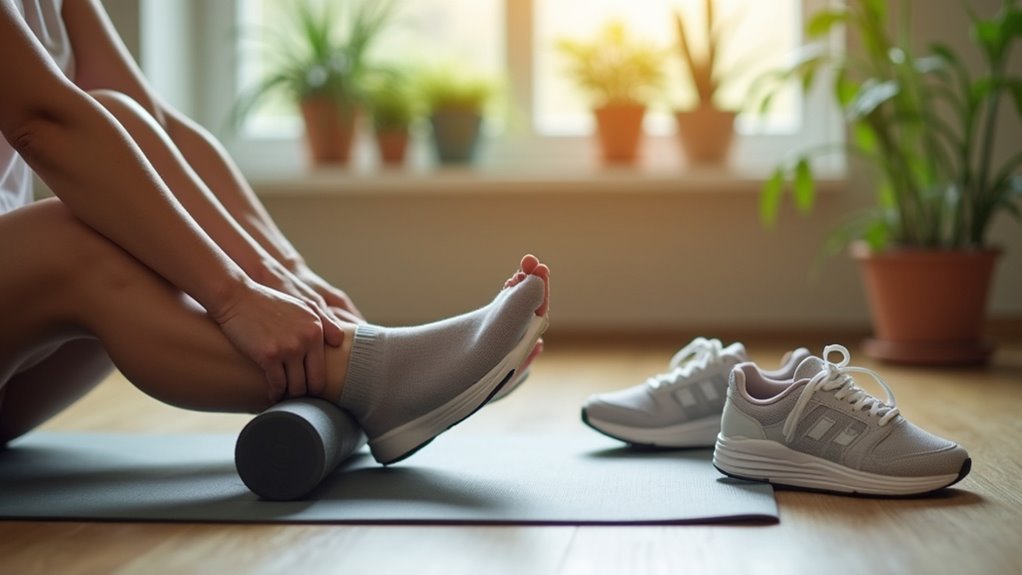
Improving foot health and easing arch pain is possible with simple exercises. Start with toe curls and marble pickups. These strengthen the small muscles in your feet and support your arches.
Rolling a golf ball under your foot helps relieve tension and increases flexibility.
Try heel raises on a step. This exercise builds strength in your calves and arches. The towel scrunch exercise is also effective. Use your toes to pull a towel toward you. This builds strength in your arch.
Calf stretches and arch lifts are important too. Doing these daily can improve flexibility and reduce pain.
Aim for 10-15 repetitions for each exercise to see real benefits. Consistent practice leads to better foot function. You’ll feel great on your feet!
Frequently Asked Questions
How Often Should I Perform These Stretches for Best Results?
For the best results, stretch 3 to 5 times a week. Make it a habit. Doing these stretches regularly helps improve your flexibility and relieve pain. Try to fit them into your daily routine. Consistency really matters. You’ll notice the benefits over time. Stick with it for better health!
Can These Stretches Help With Plantar Fasciitis?
These stretches can help with plantar fasciitis. They make your feet more flexible and reduce tightness. Stronger foot muscles can ease pain and improve how your feet work. Doing these stretches regularly gives the best results. Consistency is important for healing. Many people find relief with these simple exercises. Try to keep a routine for your foot care.
Are There Any Risks Associated With These Stretches?
Stretching can be helpful, but it also has risks. Not paying attention to your body can lead to pain or injury. Always be aware of how your body feels during stretches. It’s wise to talk to a professional for advice. They can help you avoid problems and keep your feet strong and healthy. Prioritize safety while enjoying the benefits of stretching.
Should I Warm up Before Stretching My Feet?
Warming up before stretching your feet is very important. A gentle warm-up boosts blood flow to your muscles. This makes your stretches work better. It also helps keep you safe from injuries. Strong and flexible feet are key for walking and running. Simple warm-up exercises can include walking or moving your toes. Spend a few minutes to prepare your feet for stretching. Your feet will feel better and perform better with a proper warm-up.
How Long Will It Take to Feel Relief From Foot Arch Pain?
Pain relief can happen in just a few days. But if the pain lasts, it might take weeks to feel better. With consistent care, you should see improvement. Stretching helps a lot. Don’t forget to wear supportive shoes too. Be patient and stay active in your recovery!
Conclusion
Incorporating stretches into your daily routine helps ease foot arch pain. Stand tall. Feel your feet getting stronger and more flexible. Roll a marble with your toes. Raise your heels on a step. Each movement reduces tension. Consistent practice cuts discomfort and boosts your foot health. Take a few moments each day to care for your feet. They will thank you later.