
Heels Posture Guide
This post contains affiliate links. As an Amazon Associate, we earn from qualifying purchases.
To wear heels comfortably, ensure your shoes fit well and maintain proper posture. This will help you avoid blisters and walk confidently. Keep your shoulders back, head high, and feet hip-width apart with a slight bend in your knees for stability. Start with lower heels, like kitten heels, to build strength, and practice walking in smaller steps for better balance. Further explanation and tips will follow for those interested in mastering heel-wearing with style.
Essential Facts in 30 Seconds
- Maintain a hip-width stance with feet parallel for stability in heels.
- Keep shoulders back and head high for confidence and good posture.
- Take smaller steps to enhance balance and minimize slips.
- Slightly bend knees for improved comfort and reduced strain.
- Regularly practice walking techniques for a natural heel-wearing experience.
The Importance of Proper Fit
Choosing the right heels is key for comfort and stability. A good fit helps you avoid blisters and pressure points. Shoes that are too big can make you unsteady.
Make sure your toes have room to move. Your heel should feel snug, and the insole should have enough cushioning. This mix helps you walk with confidence.
Measuring your feet often is very helpful. Sizes can change between different brands. Always try on shoes before buying them. Brands like GLORIELLAS offer size guides, including half sizes. This makes it easier to find the right fit.
A firm heel fit keeps your foot in place. This reduces the risk of slipping and injury. Proper fit matters for comfort. It supports every step you take. Additionally, regular foot measurements are essential as foot size can change over time.
Techniques for Maintaining Good Posture
Good posture is key for walking confidently in heels. Keep your shoulders back and your head high. This stance shows confidence and helps you stand tall.
Spread your weight evenly on the balls of your feet. This gives you better balance and stability. Place your feet hip-width apart and parallel. This creates a strong base for your posture and helps prevent wobbling.
Bend your knees slightly. Locked knees can make you uncomfortable and unsteady.
Picture yourself walking in a straight line as you take small steps. Move carefully to walk gracefully while keeping good posture. Take your time with each step. Focus on balance and control. With practice, good posture will feel natural. Wearing block heels can enhance your comfort and stability while maintaining good posture.
Using these techniques will boost your style and confidence in heels. You’ll walk like you own the room.
Walking Mechanics for High Heels

Here are some helpful tips for walking elegantly in high heels:
- Take Smaller Steps: Short strides keep you balanced and reduce slips.
- Lean Back: Slightly leaning back helps keep your weight over your feet.
- Bend Your Knees: A slight bend in your knees aids stability and reduces strain.
- Feet Position: Walk in a straight line with your feet hip-width apart for grace.
Practicing foot strengthening exercises regularly can enhance your overall balance and comfort when wearing heels.
Practice these tips regularly. With time, walking in high heels will feel natural and easy.
Enjoy your stylish look!
Strengthening Foot and Ankle Mobility
Strengthening your foot and ankle mobility makes wearing heels more comfortable.
Regular exercises help improve flexibility and support your feet.
Calf raises build strength in your calves.
Ankle circles enhance your ankle movement.
Stretching these areas reduces discomfort.
With practice, you’ll walk confidently in high heels.
Make these exercises part of your daily routine for the best results.
Incorporating foot strengthening exercises can further enhance your overall foot health.
Enjoy your heels without pain!
Importance of Mobility Exercises
Wearing high heels can be fun, but your feet and ankles need care. Mobility exercises are key. They help your ankles move better and make walking in heels easier.
Here are some great exercises to try:
- Calf Raises: Stand on a step. Lift your heels up, then lower them slowly.
- Ankle Circles: Sit or stand. Move your foot in circles, both ways.
- Toe Taps: While sitting, lift your toes off the ground repeatedly.
- Heel-to-Toe Walks: Walk straight. Place your heel in front of your toes with each step.
Doing these exercises often can help prevent foot problems. Stronger ankles mean more stability. This makes wearing heels a lot more comfortable, especially when paired with supportive heels for flat feet.
Stretching Techniques for Relief
Stretching your feet and ankles brings relief after wearing high heels. Regularly stretching your calves and Achilles tendons helps keep your feet flexible.
Simple moves like ankle circles and toe taps can boost mobility. These exercises strengthen the muscles around your ankles.
Wall sits and calf raises target lower leg muscles. They improve strength and stability for wearing heels comfortably.
Foot rolls using a tennis ball can ease tension in your arches and plantar fascia.
Aim to stretch at least three times a week. This routine makes wearing heels easier. Your feet will feel better, and you’ll enjoy more comfort.
Strengthening Foot Muscles
After stretching your feet and ankles, focus on strengthening your foot muscles.
Strong foot and ankle muscles give you better stability. This helps you walk more comfortably in heels.
Try these exercises:
- Calf Raises: Stand on a step. Lift your heels high, then lower them slowly.
- Ankle Circles: Sit down. Move your foot in circles to help with flexibility.
- Toe Taps: While sitting, tap your toes on the ground quickly to engage your muscles.
- Balance Exercises: Stand on one foot or use a balance board to improve coordination.
Doing these exercises regularly builds strength.
This leads to better support and less discomfort when you wear heels. Additionally, understanding your foot type can help tailor your strengthening exercises for optimal results.
Strengthening your feet is key for comfort and stability.
Tips for Gradually Transitioning to Higher Heels
To transition to higher heels, start with shorter ones, about 1-2 inches tall. This helps build balance and stability. Walk regularly in these lower heels to develop a steady stride. Include exercises like calf raises and ankle circles. These will strengthen your foot and calf muscles. Your body needs to prepare for high heels.
Good posture is important. Keep your shoulders back for better balance and confidence. As you feel more comfortable, slowly increase your heel height. This allows your feet and legs to adjust without pain. Additionally, consider choosing heels with arch support to enhance comfort during your transition.
| Step | Action | Goal |
|---|---|---|
| Start with 1-2″ heels | Choose lower heels | Build balance |
| Practice walking | Walk regularly in them | Develop stability |
| Do exercises | Calf raises, ankle circles | Build strength |
| Focus on posture | Keep shoulders back | Improve confidence |
Recommended Shoe Styles for Comfort and Style
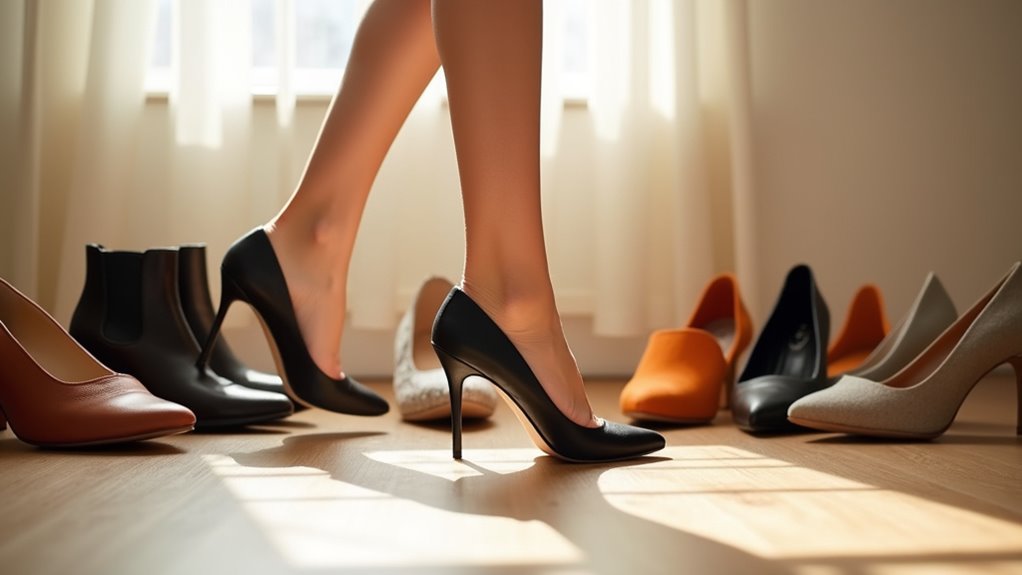
Heels can be both comfortable and stylish. Kitten-heeled pointed slingbacks are a great choice. They combine elegance with support for all-day wear.
Ankle strap sandals also work well. They offer stability and bring sophistication to your look.
Choose shoes that fit well. Look for soft materials that cushion your feet. Pay attention to the heel height. Lower heels provide more comfort.
Try on shoes and walk around before buying. Comfort should always be a priority. With the right pair, you can feel good and look great. Additionally, consider using cushion inserts to enhance the comfort of your favorite heels.
Best Heel Heights
Finding the right heel height matters for comfort and style. Here are some top picks:
- Kitten heels (1-2 inches): Perfect for beginners. They help with balance and reduce strain on your feet.
- Block heels (2-3 inches): These provide good stability. They help distribute weight evenly, which improves posture.
- Ankle strap sandals: These styles offer extra support. They help prevent slipping during long wear.
- Cushioned insoles: Look for shoes with arch support. They keep your feet comfortable and aligned.
Incorporating supportive insoles can significantly enhance foot health and comfort.
Choose wisely for your comfort and confidence!
Stylish Comfort Options
The right shoes can change how you feel all day.
Kitten heels are stylish and comfortable. They’ve pointed toes and slingbacks for added support. Great for those new to heels.
Ankle strap sandals also work well. They look elegant and provide stability for your feet.
Curved heels add a trendy touch. They’re both fashionable and comfy.
For colder weather, mini heels with statement stockings keep you warm and stylish.
Luxurious materials like leather or croco-embossed kitten pumps make any outfit pop. Opting for shoes with a spacious toe box can enhance overall comfort.
Stay comfortable and chic throughout your busy day.
Frequently Asked Questions
Do High Heels Affect My Spine Alignment Over Time?
High heels can change your spine alignment over time. They affect your posture. This can cause misalignments in your body. As a result, you might feel chronic pain. Common areas of discomfort include your back and neck. Wearing high heels regularly can lead to these issues. It’s essential to be aware of how your shoes impact your body. Consider choosing lower heels or comfortable shoes. Your spine will thank you in the long run.
Can I Wear High Heels During Pregnancy?
Wearing high heels during pregnancy is not a good idea. They can lead to discomfort and balance problems. This can increase back pain, making it harder to walk. Supportive shoes are a much better choice. They help keep your feet and body comfortable. Always talk to your doctor about what shoes are best for you. Your safety and comfort matter the most.
How Do I Choose the Right Heel Height?
Choosing the right heel height is all about comfort. Start with heels that are 1-2 inches tall. They offer good stability. As you get used to them, you can try higher heels. Always make sure the fit is snug. A supportive base is key for comfort. Think about the occasion too. For daily wear, lower heels are better. For events, you might want something higher. Pay attention to how your feet feel. Comfort should always come first. Enjoy your heels!
Are There Specific Exercises to Relieve Heel Pain?
Heel pain can be uncomfortable, but you can find relief with some simple exercises. Try calf stretches to loosen tight muscles. Toe curls help strengthen your toes and improve flexibility. Ankle mobility exercises can increase movement in your feet. Yoga poses also provide great stretches for your heels and calves.
Another helpful tip is to roll a tennis ball under your foot. This action massages the plantar fascia and can bring quick relief. Regular practice of these exercises can help reduce heel pain and improve your foot health.
What Should I Do if I Twist My Ankle in Heels?
Twisting your ankle in heels can hurt. Stop moving right away. Check how bad the injury is. Use the R.I.C.E. method for healing. R.I.C.E. stands for Rest, Ice, Compression, and Elevation.
Rest your ankle to avoid more pain. Ice it for 15-20 minutes every hour. This helps reduce swelling. Wrap your ankle with a bandage for support. Elevate it above heart level to decrease swelling.
Do not put weight on your ankle while it heals. This can take days or weeks. If the pain is severe or it looks deformed, see a doctor. They can help you recover faster. Always be careful when wearing heels to avoid injuries.
Conclusion
Wearing high heels can make you look stylish. But how you feel in them is more important. A good fit and right posture help a lot. Practice walking in your heels. Go slow as you try higher heels. Remember, even the tallest heels can’t make up for pain. Comfort is key. Focus on what feels good, and you will look great.