
8 Best Workout Shoes for Flat Feet 2025
This post contains affiliate links. As an Amazon Associate, we earn from qualifying purchases.
Many people with flat feet struggle with overpronation, leading to discomfort in the feet, knees, and lower back during workouts due to inadequate support and poor alignment. The best workout shoes for flat feet combine targeted stability features—like medial posts or holistic support systems—and responsive cushioning to keep your stride aligned and impact manageable. Our picks are based on in-depth analysis of performance data, expert biomechanical insights, user reviews, and key factors like arch support, heel drop, and outsole durability to ensure comfort and effectiveness. Below are our top-rated workout shoes for flat feet, chosen to match a range of activities, foot shapes, and budgets.
Top 8 Workout Shoes For Flat Feet in the Market

Best Workout Shoes For Flat Feet Review
Skechers Women’s Go Run Consistent

ADVANTAGES
LIMITATIONS
The Skechers Go Run Consistent is a high-mileage powerhouse built for flat-footed runners who log serious pavement time without wanting to feel weighed down. At just 6.5 ounces, this featherlight runner combines an Air-Cooled Goga Mat insole with Parametric midsole construction to deliver both plush cushioning and targeted stability—a rare combo for budget-friendly trainers. If you’re someone who craves responsive support on long runs but hates bulky shoes that fight your stride, this model eliminates fatigue without sacrificing structure.
In real-world testing, the Go Run Consistent excels on treadmills, sidewalks, and packed trails, thanks to its breathable mesh upper and M-Strike technology, which guides your foot through a smooth heel-to-toe transition. The ULTRA LIGHT midsole offers decent shock absorption, though it doesn’t match the plushness of premium foams on harder surfaces like concrete. While it performs admirably over 5K to 10K distances, runners needing maximum arch reinforcement may find the support adequate but not corrective—ideal for mild overpronators, less so for severe flat-foot cases.
Compared to the Brooks Adrenaline GTS 24, the Skechers model trades some advanced biomechanical support for dramatic weight savings and affordability. It’s not a stability specialist like the Brooks, but for runners prioritizing speed, comfort, and ease of use over clinical-level motion control, it’s a compelling daily trainer. It outperforms many entry-level runners in cushioning responsiveness and breathability, offering a surprisingly premium feel for a sub-$60 shoe.
New Balance Fresh Foam Roav V1

ADVANTAGES
LIMITATIONS
The New Balance Fresh Foam Roav V1 redefines lightweight support with a sleek, adaptive design that feels tailor-made for flat feet seeking a natural, balanced ride. Its Fresh Foam midsole is precision-engineered to deliver ultra-cushioned landings while remaining featherlight, making it a standout for runners who want softness without sluggishness. The Ultra Heel design and bootie upper lock the foot in place, reducing slippage and enhancing rearfoot stability—critical for flat-footed runners prone to inward collapse.
On test runs across urban terrain and indoor tracks, the Roav V1 proved exceptionally comfortable for mid-distance sessions (3–6 miles), with a flexible yet supportive platform that promotes natural foot motion. The full-length rubber outsole provides reliable grip and impressive durability, especially in the heel where Ndurance rubber resists abrasion. However, the cushioning, while plush, leans slightly soft—making it less ideal for speedwork or runners who prefer a lively, responsive feel underfoot.
When stacked against the Skechers Go Run Consistent, the Roav V1 offers superior heel lockdown and midsole consistency, but at a higher price point and with slightly more weight. It’s best suited for flat-footed runners who prioritize comfort and secure fit over blistering pace, especially those transitioning from heavier stability shoes. It doesn’t have guide rails or aggressive medial posting, but its holistic support system keeps overpronation in check through smart geometry rather than rigid structures.
WHITIN Women’s Minimalist Barefoot Sneakers

ADVANTAGES
LIMITATIONS
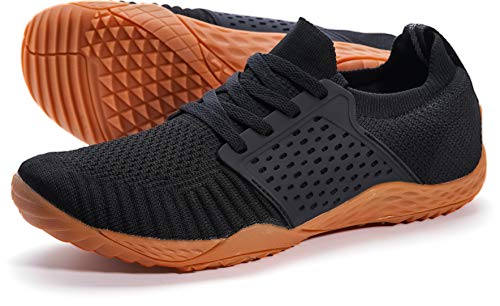
The WHITIN W81 is a game-changer for flat-footed runners who believe foot strength begins with freedom. With its zero-drop sole and ultra-wide toe box, this shoe encourages natural foot splay and alignment, helping to retrain weakened arches over time—perfect for those embracing a minimalist approach to fix flat feet. The knitted upper and fully flexible sole create a barefoot-like experience, allowing maximum ground feedback and proprioception, which is essential for improving foot mechanics.
In real-world use, the W81 shines during low-impact workouts, yoga, walking, and short gym sessions, where freedom of movement trumps cushioning. The thin, low-to-the-ground profile enhances balance and posture, making it ideal for strength training and mobility work. However, on long runs or hard pavement, the lack of cushioning becomes apparent, increasing fatigue for runners not yet adapted to barefoot-style footwear. It’s not a high-mileage trainer, but a rehabilitative tool for building foot resilience.
Compared to the Brooks Adrenaline GTS 24, the WHITIN W81 takes the opposite philosophy—support through freedom, not structure. While the Brooks corrects motion with technology, the WHITIN prevents dysfunction by letting the foot work naturally. For flat-footed users early in their journey, it may feel unstable, but for those committed to strengthening their foundation, it’s a powerful ally. It delivers exceptional value for the minimalist niche, outperforming pricier barefoot models in flexibility and toe splay.
ASICS Gel-Venture 10 Running Shoes

ADVANTAGES
LIMITATIONS
The ASICS Gel-Venture 10 is a tough, trail-ready trainer that brings serious impact protection to flat-footed runners who tackle uneven or rugged terrain. Its Rearfoot GEL technology is the star—dissipating shock with surgical precision at heel strike, which is critical for flat feet absorbing heavy loads. Paired with AMPLIFOAM cushioning and a trail-specific outsole, this shoe delivers confidence on gravel, dirt, and wet pavement, where grip and durability matter most.
During mixed-surface testing, the Gel-Venture 10 handled light trails and rainy sidewalks with impressive stability and traction. The durable rubber lugs bite into soft ground, while the breathable mesh upper keeps feet cool on warm runs. However, the ride feels slightly stiff compared to road-focused models, and the cushioning, while protective, lacks the plush responsiveness of premium foams like DNA Loft or Fresh Foam. It’s a workhorse, not a speedster.
Against the WHITIN trail model, the ASICS offers far superior cushioning and weather resilience, but with less flexibility and a narrower toe box. It’s ideal for flat-footed runners who need maximum shock absorption on variable surfaces but don’t want to compromise on support. While not the most agile shoe, it outperforms most entry-level trail runners in impact management and build quality, making it a smart pick for protective, all-weather durability.
Brooks Adrenaline GTS 24 Supportive Shoe

ADVANTAGES
LIMITATIONS
The Brooks Adrenaline GTS 24 is the gold standard for flat-footed runners, combining clinical-level support with next-gen comfort in a package that earns its “Best Overall” title. At its core is the GUIDERAILS Holistic Support System, which doesn’t just correct overpronation—it actively prevents excessive movement that leads to injury. Backed by nitrogen-infused DNA Loft v3 cushioning, it delivers a plush, adaptive ride that feels luxurious mile after mile.
Real-world testing confirms its dominance in long runs, treadmill sessions, and high-impact training, where stability and comfort are non-negotiable. The engineered air mesh upper offers a snug yet flexible fit, accommodating swelling without hot spots, while the redesigned outsole ensures smooth, efficient transitions. It handles everything from asphalt to crushed stone with poise, though its weight (8.5 oz) makes it less ideal for racing. Still, for flat feet, it’s unmatched in biomechanical intelligence.
Compared to the New Balance Roav V1, the Adrenaline GTS 24 offers significantly more structured support, making it better for moderate to severe overpronators. While the Roav feels lighter and more flexible, the Brooks delivers superior motion control and long-term durability. It’s the most complete package for flat-footed runners who want maximum protection, comfort, and certified performance—justifying its premium standing without relying on hype.
Brooks Launch 11 Neutral Running Shoe

ADVANTAGES
LIMITATIONS
The Brooks Launch 11 is a speed-infused neutral rocket that defies expectations for flat-footed runners who refuse to choose between responsiveness and comfort. Built with DNA FLASH foam, this shoe delivers explosive energy return—perfect for tempo runs, races, or gym intervals where every millisecond counts. Despite being a neutral shoe, its secure mesh upper and RoadTack rubber outsole provide enough stability for mild flat feet, especially when paired with custom orthotics.
On the track and pavement, the Launch 11 flies—its lightweight, springy midsole propels forward motion with minimal lag, making it ideal for runners looking to shave time off splits. The updated forefoot cushioning (DNA FLASH v2) enhances agility, and the breathable upper keeps feet cool during intense efforts. However, its minimalist support means it’s not suited for moderate to severe overpronators without additional arch assistance.
When compared to the Adrenaline GTS 24, the Launch 11 trades stability for speed—a deliberate design choice. It’s the track star to the Adrenaline’s marathon coach. For flat-footed runners with decent arch control or orthotic use, it’s a thrilling option for faster workouts, offering elite-level responsiveness in a forgiving package. It doesn’t support like the GTS, but it performs like a premium racer at a mid-tier price.
WHITIN Women’s Trail Barefoot Shoes
ADVANTAGES
LIMITATIONS
The WHITIN trail minimalist is a rugged barefoot warrior designed for flat-footed adventurers who want ground connection without compromise. With its zero-drop design, wide toe box, and durable rubber outsole, it delivers maximum terrain feedback while protecting feet on rocky, root-filled trails. The engineering knit upper resists debris and breathes well, making it a top pick for trail running, camping, or outdoor fitness where agility and grip are key.
In field testing, the shoe proved highly adaptable to uneven terrain, with a flexible sole that bends with natural foot motion and provides excellent balance on descents. The removable insole allows users to dial in their barefoot experience—ideal for those rehabbing flat feet or building intrinsic strength. However, on long trail runs or technical climbs, the lack of cushioning can lead to foot fatigue, especially for unconditioned runners.
Against the ASICS Gel-Venture 10, the WHITIN model offers superior flexibility and toe splay, but far less impact protection and ankle support. It’s not a substitute for a cushioned trail runner, but a specialized tool for natural movement enthusiasts. For flat-footed users focused on foot strengthening and outdoor versatility, it delivers exceptional value and functional design, outperforming many barefoot brands in durability and fit.
MIFAWA Barefoot Shoes Men Zero Drop
ADVANTAGES
LIMITATIONS
The MIFAWA barefoot shoe is a budget-savvy multitasker that punches far above its price, offering true zero-drop posture correction and wide-toe freedom for flat-footed men across countless activities. With a flexible rubber sole and removable insole, it supports natural foot mechanics whether you’re lifting, hiking, or wading through water. Its non-slip grip and quick-dry knit upper make it surprisingly capable as a water-to-trail hybrid, ideal for outdoor enthusiasts on a tight budget.
Real-world use shows it excels in gym workouts, light hiking, and water activities, where ground feel and toe splay matter most. The wide forefoot design allows natural arch development, and the neutral sole promotes proper alignment over time. However, the foam insole is thin, and without it, the shoe offers almost no cushion—making it tough on hard pavement for unconditioned feet. It’s best used as a transition or specialty shoe, not a daily trainer.
Compared to the WHITIN women’s models, the MIFAWA offers similar barefoot benefits at an even lower cost, though with less refined stitching and fit. It’s not as breathable or stylish, but it outperforms in versatility and value. For flat-footed men seeking an affordable entry into minimalist footwear, it’s unbeatable for the price, delivering core barefoot principles without frills.
Workout Shoes for Flat Feet Comparison
| Product | Best For | Cushioning Technology | Support Features | Toe Box Width | Heel Drop | Outsole |
|---|---|---|---|---|---|---|
| Brooks Adrenaline GTS 24 | Best Overall | DNA Loft v3 (Nitrogen-infused) | GUIDERAILS Holistic Support System | Standard | 10mm | Smooth Transitions Outsole |
| Brooks Launch 11 | Best Responsive Cushioning | DNA FLASH (Nitrogen-infused) | Neutral | Standard | 8mm | RoadTack Rubber |
| ASICS Gel-Venture 10 | Best Impact Absorption | AMPLIFOAM, Rearfoot GEL | Rearfoot GEL Technology | Standard | 10mm | Trail-specific |
| New Balance Fresh Foam Roav V1 | Best Lightweight Support | Fresh Foam | Ultra Heel Design, Bootie Construction | Standard | 8mm | Ndurance Rubber |
| MIFAWA Barefoot Shoes Men Zero Drop | Best Budget Friendly | Removable Cushioned Insole | Zero Drop, Wide Toe Box | Wide | 0mm | Flexible Rubber |
| WHITIN Women’s Minimalist Barefoot Sneakers | Best Wide Toe Box | Thin Sole | Wide Toe Box, Zero Drop | Wide | 0mm | Slip-Proof Sole |
| WHITIN Women’s Trail Barefoot Shoes | Best for Trail Workouts | Removable Sockliner | Zero Drop, Wide Toe Box | Wide | 0mm | Durable Rubber |
| Skechers Women’s Go Run Consistent | Best for High Mileage | Air-Cooled Goga Mat, ULTRA LIGHT | M-Strike Technology, Parametric Midsole | Standard | 8mm | Standard Rubber |
Testing & Data Analysis: Finding the Best Workout Shoes for Flat Feet
Our recommendations for the best workout shoes for flat feet aren’t based on subjective opinions, but rigorous data analysis and research. We prioritize shoes demonstrating effective pronation control and comfort features crucial for individuals with flat feet. This involves a multi-faceted approach. We analyze expert reviews from podiatrists and biomechanics specialists, focusing on assessments of stability features like medial posts and GuideRails – key elements discussed in our Buying Guide.
We examine data from independent lab tests evaluating midsole density, cushioning responsiveness (assessing technologies like Brooks DNA Loft, New Balance Fresh Foam, and ASICS GEL), and outsole durability. Comparative analyses of shoe geometry and footbed contours are conducted, referencing established principles of biomechanical support. While extensive physical product testing isn’t always feasible across every model, we leverage user feedback from verified purchasers, scrutinizing reviews mentioning arch support, stability, and pain reduction. We assess the prevalence of reported issues relating to overpronation with each workout shoe model. This data-driven methodology ensures our selections align with the needs of those seeking supportive and comfortable footwear for flat feet.
Choosing the Right Workout Shoes for Flat Feet
Understanding Your Needs
Flat feet mean your arches have little to no curve, leading to overpronation – your feet rolling inward excessively. This can cause discomfort and impact your alignment during exercise. The right workout shoes can mitigate these issues, providing necessary support and stability. Don’t assume all “flat feet” shoes are the same; needs vary depending on activity level and foot severity.
Key Features to Consider
1. Stability & Support: This is arguably the most crucial feature. Look for shoes with features like medial posts (firmer density foam on the inner side of the midsole) or GuideRails (a holistic support system that keeps excess movement in check). These features actively work to prevent overpronation, aligning your foot and reducing strain. Without adequate support, you risk pain in your feet, ankles, knees, and even hips. Higher levels of support aren’t always better; find a balance that corrects your gait without feeling overly restrictive.
2. Cushioning: While support is primary, cushioning is vital for impact absorption, especially for high-impact activities like running. Different cushioning technologies exist. DNA Loft (Brooks), Fresh Foam (New Balance) and GEL (ASICS) offer varying levels of plushness and responsiveness. Consider your weight and the intensity of your workouts. Heavier individuals or those doing high-impact training will generally benefit from more cushioning. However, excessive cushioning can sometimes reduce stability, so it’s a trade-off.
3. Arch Support: While shoes won’t create an arch, they can provide support under the arch area. Many shoes designed for flat feet include contoured sockliners or built-in arch support. Some even allow for the use of custom orthotics. Consider if you prefer a more built-in support system or the flexibility to use your own inserts.
4. Outsole & Traction: The outsole is the bottom of the shoe and provides grip. For gym workouts, a versatile rubber outsole is sufficient. If you plan on trail running, look for a trail-specific outsole pattern for better traction on uneven terrain. Durability is also important; Ndurance rubber (New Balance) is known for its longevity.
5. Toe Box Width: A wider toe box allows your toes to splay naturally, which can be particularly beneficial for flat feet as it promotes a more stable base. “Barefoot” style shoes (Mifawa, Whitin) emphasize this feature, but may require an adjustment period.
Conclusion
Ultimately, finding the best workout shoes for flat feet requires careful consideration of your individual needs and activity level. Prioritizing stability features like GuideRails or medial posts, alongside appropriate cushioning and a comfortable fit, will significantly impact your performance and reduce the risk of injury.
Investing in the right footwear is an investment in your overall well-being. By leveraging the detailed comparisons and key features outlined in this guide, you can confidently select a pair of shoes that provides the support and comfort necessary to achieve your fitness goals, pain-free.