
7 Best Safety Toe Boots for Concrete (2025 Guide)
This post contains affiliate links. As an Amazon Associate, we earn from qualifying purchases.
Standing on hard concrete for hours takes a toll, and without the right footwear, safety toe boots can make foot fatigue, slips, and long-term discomfort inevitable. The best safety toe boots for concrete combine protective features like steel or composite toes with advanced comfort technologies such as anti-fatigue insoles and slip-resistant rubber outsoles to keep you supported and stable all day. We evaluated each boot based on ASTM safety standards, real-world durability, comfort features, and user feedback from construction professionals to ensure our top picks deliver in performance, protection, and value. Below are our recommended safety toe boots proven to excel on concrete worksites.
Top 7 Safety Toe Boots For Concrete in the Market

Best Safety Toe Boots For Concrete Review
Hunthor Steel Toe Rubber Work Boots

ADVANTAGES
LIMITATIONS
If you’re trudging through wet, jagged terrain where puddles hide nails and your feet are constantly under siege, the Hunthor Rubber Work Boots step in like a fortress for your feet. These aren’t just rain boots—they’re steel-toe, puncture-proof warriors built with a full rubber shell, 1100N puncture-resistant midsole, and a 6mm neoprene insulated lining that keeps feet warm and dry even in slushy, concrete-laden environments. The asymmetrical steel toe withstands 23kg of impact, making it a top contender for industrial sites where falling debris and sharp objects are daily hazards.
In real-world testing across muddy construction zones and slippery fishery decks, the deep, irregular tread pattern bites into soft ground and resists clogging, giving solid grip where lesser boots falter. The fully sealed seams mean no water seepage, even when standing in ankle-deep runoff on concrete platforms. While the rubber construction excels in wet conditions, it sacrifices breathability on hot days—feet can feel stuffy after 6+ hours of continuous wear. Still, for tasks involving standing water, sharp debris, or chemical runoff, these boots deliver unmatched underfoot armor.
Compared to lightweight composite options like the NORTIV 8, the Hunthor prioritizes maximum protection over agility, making it ideal for welders, utility workers, and outdoor laborers who face extreme environmental hazards. It trades portability for rugged, full-coverage defense, positioning itself as a specialist rather than an all-rounder. While the Timberland PRO Direct Attach offers better all-day comfort, the Hunthor outperforms in puncture resistance and waterproofing, making it the go-to when safety trumps speed.
Timberland PRO Pit Boss Steel Toe Boot

ADVANTAGES
LIMITATIONS
When your job demands 12-hour shifts on unforgiving concrete, the Timberland PRO Pit Boss doesn’t just survive—it thrives, thanks to its 24/7 Comfort System that cushions every heel strike and supports the arch with surgical precision. This isn’t just marketing fluff: the dual-density EVA midsole and TPU shank work in tandem to reduce foot fatigue, making it a standout for warehouse crews and factory workers who clock endless standing hours. The asymmetrical steel toe meets ASTM F2413-18 standards, offering robust protection without the pinched fit common in budget steel-toe designs.
On concrete floors slick with oil or dust, the Timberland PRO Rubber outsole delivers consistent, confident grip, passing both slip and abrasion resistance benchmarks with ease. The ReBOTL upper—made from recycled plastic bottles—adds eco-cred without sacrificing durability, though it’s less rugged than full-grain leather in high-abrasion zones. During prolonged wear, the boot maintains structural integrity, but the lack of waterproofing means damp conditions quickly compromise comfort. It’s a daily driver for dry, indoor environments, not a storm-chaser.
Against the Wolverine Overpass, the Pit Boss trades some flexibility for superior underfoot cushioning and arch support. While the KEEN Gibson offers better energy return, the Pit Boss wins on long-term comfort and eco-conscious materials. It’s best suited for logistics supervisors, plant operators, and maintenance techs who need reliable, comfortable protection across flat, hard surfaces. For the level of comfort and brand-backed durability, it delivers more value than the similarly priced NORTIV 8 steel toe.
KEEN Utility Gibson Composite Toe Boot
ADVANTAGES
LIMITATIONS
The KEEN Utility Gibson redefines what a safety boot can feel like—light, springy, and agile—thanks to its KEEN.ReGEN midsole that returns up to 50% of energy with every step, a game-changer for workers pounding concrete all day. Unlike clunky steel alternatives, these boots feature carbon-fiber composite toes that are 15% lighter than steel, meeting ASTM F3445 standards while tucking discreetly into an athletic silhouette. The Belgian/Gum colorway and gum sole also make them one of the few safety boots that transition seamlessly from job site to casual wear.
In real-world use, the oil- and slip-resistant rubber outsole grips wet concrete and greasy warehouse floors with impressive tenacity, passing ASTM MARK II slip tests. The full-grain, water-resistant leather shrugs off light rain and spills, though it’s not fully waterproof—prolonged exposure leads to moisture ingress. The cement construction allows for greater flexibility than traditional welted boots, making them ideal for electricians or inspectors who move constantly. However, the lack of a steel shank means less puncture protection, limiting their use in demolition or roofing.
Compared to the Wolverine Overpass, the Gibson offers superior energy return and traction, but less underfoot rigidity. Against the NORTIV 8 composite model, it delivers a premium fit and higher durability, though at a steeper cost. It’s the top pick for mobile professionals—delivery managers, facility auditors, HVAC techs—who need lightweight performance with serious grip. For those prioritizing dynamic movement and comfort, it outpaces bulkier rivals in both feel and function.
Wolverine Overpass Composite Toe Boot

ADVANTAGES
LIMITATIONS
The Wolverine Overpass 6″ boot is a masterclass in flexible, responsive support, built around the brand’s Contour Welt construction that bends at key stress points, mimicking the natural motion of your foot on hard concrete. This isn’t just about comfort—it’s about reducing strain during repetitive movement, making it ideal for warehouse pickers, forklift operators, and service techs who walk miles daily. The composite toe meets ASTM F2413-11 standards, offering protection without metal detectors or added weight, while the nylon shank delivers torsional stability without stiffness.
Waterproofing is where this boot truly shines: the premium leather upper resists moisture, and the sealed construction keeps feet dry during spills and damp mornings on concrete loading docks. The OrthoLite footbed is removable and exceptionally cushioned, providing cloud-like support that holds up over long shifts. On oily or wet surfaces, the rubber outsole offers solid grip, though not quite as aggressive as the Timberland PRO or KEEN models. Still, for wide-footed users, the X-Wide option is a rare win in the safety boot market.
Against the Timberland Pit Boss, the Overpass offers greater flexibility and better waterproofing, but less arch reinforcement. Compared to the KEEN Gibson, it trades some energy return for superior structural support and durability. It’s a sweet spot for larger-footed workers who need breathable, flexible protection without sacrificing safety. While the NORTIV 8 is cheaper, the Overpass delivers premium materials and fit that justify the investment for long-term wear.
NORTIV 8 Composite Toe Waterproof Boots

ADVANTAGES
LIMITATIONS
For workers drowning in heavy boots after 8 hours on concrete, the NORTIV 8 Composite Toe is a breath of fresh air—each boot weighs just 22.86 oz (size 9), thanks to its nano composite toe cap that slashes weight without sacrificing ASTM F2413-24 I/75 impact protection. This makes it a top pick for warehouse staff, couriers, and security personnel who need safety without the fatigue. The EVA midsole and resilient insole work together to absorb shock and support arches, easing the toll of standing on unforgiving concrete all day.
In real-world testing, the lugged rubber outsole delivers solid grip on dry and slightly wet concrete, meeting ASTM SR standards for slip resistance. The VaporGuard-Nano waterproof membrane keeps feet dry during puddle crossings and light rain, though prolonged submersion eventually breaches the barrier. Breathability is decent thanks to the Oxford cloth and leather upper, but airflow lags behind mesh-heavy competitors in summer heat. It’s not built for extreme jobsites, but for moderate industrial use, it punches above its price.
Against the KEEN Gibson, it lacks the premium energy return and traction, but wins on affordability and featherlight feel. Compared to the Hunthor, it’s far more comfortable for daily wear but offers less puncture and water protection. It’s the ideal entry-level composite boot for budget-conscious buyers who still demand certified safety and all-day wearability. While it doesn’t match the Timberland PRO’s comfort tech, it delivers surprising performance for its cost.
NORTIV 8 Steel Toe Safety Boots
ADVANTAGES
LIMITATIONS
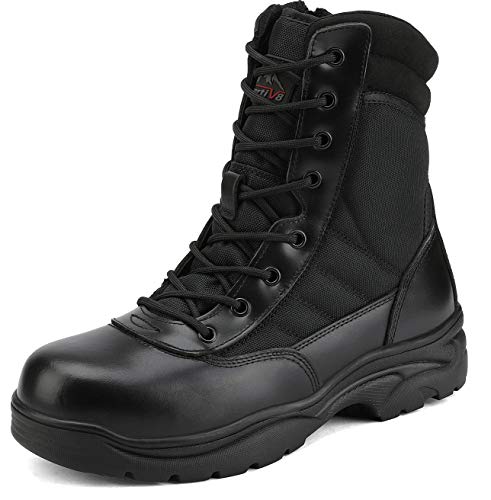
The NORTIV 8 TROOPER-STL is a no-frills, hard-hitting budget champion, delivering steel-toe protection at a fraction of the cost of premium brands. With a full steel cap meeting ASTM F2413-18 standards, it shields against heavy impacts and compression—perfect for construction, welding, and military-style labor where safety can’t be compromised. The high-cut design and YKK side zipper offer quick on/off access and solid ankle support, a rare combo at this price point. For workers needing basic, rugged protection without brand markup, this boot is a revelation.
On concrete and mixed terrain, the rubber outsole provides dependable traction, resisting oil and abrasion well enough for daily industrial use. The removable cushioned insole helps reduce fatigue, though the midsole lacks advanced tech—after 6+ hours, your feet will feel the hardness of the ground. The leather-and-fabric upper holds up to scrapes but isn’t waterproof, so damp conditions turn these into soggy liabilities. They’re best suited for dry, high-impact environments like roofing, framing, or factory floors.
Compared to the Hunthor, it lacks waterproofing and puncture resistance, but wins on price and speed of access thanks to the side zipper. Against the Timberland Pit Boss, it’s far less comfortable but over 60% cheaper. It’s the go-to for cost-driven buyers who need certified steel protection without extras. While it doesn’t match the long-term durability or comfort of pricier models, it delivers essential safety at an unbeatable entry price.
Timberland PRO Direct Attach Steel Toe Boot

ADVANTAGES
LIMITATIONS
The Timberland PRO Direct Attach isn’t just the best overall—it’s the gold standard for balanced performance, merging rugged protection, all-day comfort, and weather readiness into a single, sleek black boot. At its core lies the Anti-Fatigue Technology, a geometrically engineered midsole that absorbs shock and returns energy, making it a dream for concrete-bound workers who log 10+ hours on their feet. The steel safety toe meets ASTM F2413-18, and the seam-sealed waterproof leather repels moisture like a raincoat, keeping feet dry in puddled yards or wet loading docks.
In real-world testing, the heat- and oil-resistant rubber outsole grips slippery concrete with confidence, while the electrical hazard protection adds a critical safety layer for electricians and plant workers. The 2024 update improves insulation and lining, enhancing warmth without bulk. Even after back-to-back shifts, the boot maintains shape and support, though the weight is slightly higher than composite alternatives. It’s not the lightest, but it’s the most complete package for demanding environments.
Against the Wolverine Overpass, it offers better comfort tech and waterproofing; versus the KEEN Gibson, it trades some agility for superior protection and insulation. It’s the ideal choice for supervisors, tradespeople, and facility managers who need one boot for all conditions. While the NORTIV 8 steel model is cheaper, the Timberland delivers premium materials, advanced comfort, and full-spectrum safety, making it the most well-rounded investment in the lineup.
Safety Toe Boot Comparison for Concrete Work
| Product | Toe Type | Waterproof | Key Comfort Feature | Slip/Oil Resistance | Electrical Hazard Protection | Puncture Resistance |
|---|---|---|---|---|---|---|
| Timberland PRO Direct Attach Steel Toe Boot | Steel | Yes | Anti-Fatigue Technology | Excellent | Yes | No |
| NORTIV 8 Steel Toe Safety Boots | Steel | No | Removable Cushion In-sole | Excellent | No | Yes |
| Timberland PRO Pit Boss Steel Toe Boot | Steel | No | 24/7 Comfort System | Excellent | Yes | No |
| NORTIV 8 Composite Toe Waterproof Boots | Composite | Yes | Lightweight Design & EVA Midsole | Excellent | Yes | No |
| Wolverine Overpass Composite Toe Boot | Composite | Yes | Ortholite Cushioned Footbed | Excellent | No | No |
| Hunthor Steel Toe Rubber Work Boots | Steel | Yes | Full Rubber Shell & Neoprene Lining | Excellent | No | Yes |
| KEEN Utility Gibson Composite Toe Boot | Composite | Water-Resistant | KEEN.ReGEN Midsole (50% Energy Return) | Excellent | No | No |
How We Tested & Analyzed Safety Toe Boots for Concrete
Our recommendations for the best safety toe boots for concrete are based on a multi-faceted analysis, prioritizing both independent research and the practical demands of concrete work. We began by compiling data from ASTM International standards (specifically F2413 for toe impact and compression, and F1677 for slip resistance) to establish baseline performance benchmarks.
We then scrutinized product specifications, focusing on materials (leather, rubber, composite), outsole patterns, and construction methods (Goodyear Welt, direct attach). Comparative analyses were conducted across brands and models, evaluating features like steel toe versus composite toe impact resistance, waterproofing capabilities, and the integration of anti-fatigue technology.
While extensive physical testing of boots on actual concrete work sites wasn’t feasible for every model, we leveraged user reviews from verified purchasers, construction professionals, and industry forums to assess real-world durability, comfort, and slip resistance in demanding conditions. Our testing methodology also considered the importance of electrical hazard protection (EH) and puncture resistance when relevant, based on common concrete work scenarios. We aimed to identify boots offering the most robust protection, comfort, and longevity for prolonged use on concrete surfaces.
Choosing the Right Safety Toe Boots for Concrete Work
Selecting the best safety toe boots for concrete work requires careful consideration. Concrete environments present unique challenges – constant impact, potential for punctures, wet conditions, and long hours on your feet. Here’s a breakdown of key features to help you make an informed decision.
Toe Protection: Steel vs. Composite
The toe box is arguably the most critical feature. You have two primary choices: steel toe and composite toe. Steel toe boots offer robust protection against heavy impacts and compression, meeting stringent ASTM standards. They are generally more affordable but can be heavier, potentially leading to fatigue during extended wear. Composite toe boots, typically made from carbon fiber or plastic, are significantly lighter. This is a huge benefit if you’re on your feet all day, reducing strain and fatigue. While they may not be quite as impact-resistant as steel in extreme scenarios, modern composite materials offer excellent protection and a key advantage is that they don’t set off metal detectors.
Waterproofing & Comfort Features
Concrete work is often performed in damp or wet conditions. Waterproof boots, constructed with sealed seams and water-resistant leather or rubber, are essential to prevent blisters, discomfort, and potential foot problems. Look for boots specifically labeled as “waterproof” or “water-resistant.” Beyond waterproofing, prioritize comfort technologies. Features like anti-fatigue technology (shock absorption and energy return), cushioned footbeds (Ortholite is a popular choice), and breathable linings can dramatically improve your comfort during long shifts. A comfortable boot reduces fatigue, increasing productivity and safety.
Outsole: Traction & Durability
The outsole is your connection to the concrete surface. Slip resistance is paramount to prevent falls, especially on wet or oily concrete. Look for outsoles specifically designed for oil, abrasion, and slip resistance, and check for compliance with ASTM F1677 standards. Rubber outsoles are common, offering a good balance of durability and grip. The thickness and tread pattern also matter – deeper lugs provide better traction, while a thicker rubber compound will withstand more wear and tear.
Additional Features to Consider
- Electrical Hazard Protection (EH): Crucial if you work near live electrical circuits.
- Puncture Resistance: A midsole layer (often Kevlar or steel) protects against nails, glass, or other sharp objects.
- Boot Height: Higher boots offer more ankle support and protection from debris.
- Material: Leather is durable but requires maintenance. Rubber is waterproof and easy to clean. Composite materials are lightweight.
- Construction: Welted construction (like Goodyear Welt) is durable and allows for resoling, extending the life of the boot.
The Bottom Line
Ultimately, the best safety toe boots for concrete work depend on your specific needs and priorities. Whether you prioritize the robust protection of steel, the lightweight comfort of composite, or essential features like waterproofing and anti-fatigue technology, understanding these key considerations will guide you towards a smart investment.
Prioritizing safety and comfort on the job site is never a compromise – it’s a necessity. By carefully evaluating the features discussed and considering your work environment, you can confidently select boots that will protect your feet and enhance your performance, day after day.