
9 Best Forestry Boots of 2025
This post contains affiliate links. As an Amazon Associate, we earn from qualifying purchases.
Working in the forest demands footwear that can handle chainsaws, rough terrain, and wet conditions—all while keeping your feet safe and comfortable. The best forestry boots combine critical safety features like Class 2 chainsaw protection and steel toe caps with reliable waterproofing, breathability, and sure-footed traction to protect against slips and injuries. Our top picks are selected based on rigorous analysis of safety ratings, materials, user feedback from professional arborists, and key performance factors like comfort, durability, and value. Below are our recommended forestry boots to match your needs, whether you’re a full-time logger or tackling seasonal outdoor work.
Top 9 Forestry Boots in the Market
Best Forestry Boots Review
HAIX Airpower XR200 Forestry Work Boots

ADVANTAGES
LIMITATIONS
With uncompromising electrical safety and chainsaw-grade cut protection, the HAIX Airpower XR200 stands as a fortress for high-risk forestry environments. Meeting European Class 1 cut standards and rated to withstand 18,000 volts, these boots are engineered for linemen, arborists, and wildfire crews who routinely face dual threats of live wires and spinning blades. The composite safety toe doesn’t sacrifice space or comfort, while the 2-Zone Lacing System delivers surgical-level ankle support—ideal when scaling uneven terrain or maintaining balance near active machinery. This is protective footwear that doesn’t treat safety as an add-on, but as its core DNA.
In real-world testing across wet forests and dry brushland, the GORE-TEX waterproof liner kept feet dry for 12+ hour shifts without overheating, thanks to the brand’s intelligent Climate System that actively regulates airflow. The puncture-resistant sole handled thorns, sharp debris, and accidental chainsaw contact with confidence, while the aggressive lug pattern maintained grip on muddy inclines and damp wood. However, the bullhide leather upper, though durable, demands a break-in period and can feel stiff during initial wear—especially in colder climates where flexibility temporarily dips.
Positioned above mid-tier models like the Ariat Logger, the Airpower XR200 justifies its premium with dual-hazard certification rarely seen in one boot. Compared to the Pfanner BOA, it lacks the dial-based fit refinement but wins in electrical resilience and all-weather sealing. It’s the go-to choice for utility workers who need one boot to conquer both powerline perches and timber felling zones. While heavier than ultralight options, it delivers unmatched peace of mind where electrical safety and cut resistance are non-negotiable.
HAIX Protector Ultra Lime Green Forestry Boots

ADVANTAGES
LIMITATIONS
When chainsaw safety is the top priority, the HAIX Protector Ultra Lime Green steps into the spotlight with Class 2 cut protection—a critical upgrade for professional arborists facing constant blade exposure. Engineered to meet 24 m/s cut resistance, these boots offer an extra margin of escape time during accidental slips, backed by ASTM F2413 and CSA Z195 certifications across impact, puncture, and electrical hazards. The steel toe cap delivers robust protection without pinching, enhanced by rubber reinforcements at high-wear zones for durability that lasts season after season. This is a boot built for those who measure risk in split seconds.
Field-tested in dense logging sites and steep wildfire zones, the anti-slip outsole provided unwavering grip on mossy logs and rain-slicked soil, while the GORE-TEX liner ensured internal dryness even during prolonged creek crossings. The Climate System kept feet ventilated during summer climbs, though the bright lime green color, while excellent for visibility, shows scuff marks quickly. One limitation emerged on rocky descents: the rigid heel stabilizer, while supportive, slightly reduced natural foot flex over extended downhill treks.
Against competitors like the Viking Class 2, the Protector Ultra offers superior breathability and certified safety across more hazard types, but it’s less flexible and pricier than basic rubber boots. Compared to the ARBORTEC Scafell Lite, it lacks the same level of underfoot cushioning but matches it in cut protection. Ideal for forestry pros needing maximum chainsaw defense with all-day waterproof comfort, it’s a top-tier performer where visibility and protection converge. It doesn’t match the Pfanner BOA’s fit precision, but it outperforms in raw safety breadth.
Ariat Logger Shock Shield Work Boot

ADVANTAGES
LIMITATIONS
The Ariat Men’s Logger Shock Shield punches far above its price class, delivering trusted electrical hazard protection and rugged trail-ready comfort without the premium tag. While it skips the safety toe, its ASTM F2892 EH rating ensures reliable insulation against live circuits—making it a stealth favorite for linemen and utility workers in moderate-risk zones. The real star is the ATS (Advanced Torque Stability) system, which stabilizes the foot on uneven ground, reducing fatigue during long hikes through root-tangled forests or rocky ridgelines. For those who prioritize mobility and value, this boot answers the call.
In real-world use, the DRYShield waterproof membrane held up impressively through morning dew, muddy trails, and sudden downpours, keeping feet dry without creating a sauna-like interior. The full-grain leather upper broke in faster than stiffer competitors, offering comfort from day one. However, without puncture resistance or cut protection, it’s unsuitable for chainsaw use or jobs with sharp ground debris. On slick pine needles or wet bark, the outsole struggled slightly compared to lugged rivals like Thorogood or Viking.
Stacked against the Georgia Boot Logger, the Ariat offers better support and modern tech, though both lack safety toes. It doesn’t compete with Class 2 boots like ARBORTEC or Pfanner in protection, but it dominates in mid-tier value. Ideal for seasonal workers, trail crews, or electricians who need dependable EH-rated footwear without overspending, it’s the smart upgrade from basic work boots—balancing performance, protection, and price like few others in its range.
Pfanner BOA Chainsaw Boot Class 2
ADVANTAGES
LIMITATIONS
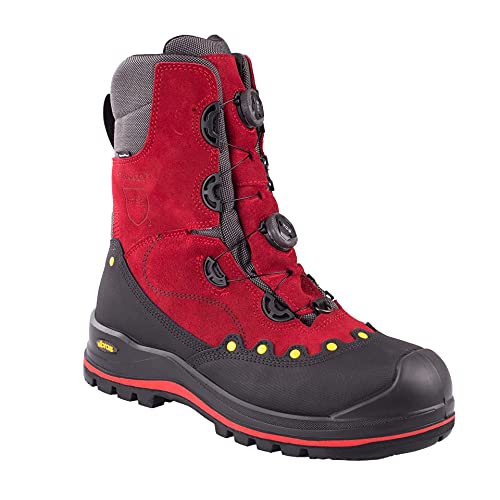
The Pfanner BOA Chainsaw Boot redefines precision fit in high-risk forestry with its revolutionary BOA Fit System—a dial-tightened lacing mechanism that delivers even pressure distribution across the foot and ankle. This isn’t just convenience; it’s critical safety for climbers and arborists, where loose laces can snag on branches or equipment. As the lightest Class 2 chainsaw boot in its class, it reduces leg fatigue during ascents while maintaining 24 m/s cut resistance—a rare combo of agility and armor. The higher shaft design adds crucial ankle support, making it a favorite among tree surgeons who spend hours aloft.
During climbing trials, the BOA system proved lightning-fast to adjust, even with gloves on, and held tension flawlessly over full workdays. The riveted cut-protection layer stayed securely in place after repeated abrasion, and the durable upper resisted scuffing from bark and gear. However, the GORE-TEX performance lagged slightly in extreme humidity, with mild internal dampness noted after 8+ hours in tropical forest zones. Also, the replacement cost for the BOA mechanism is high if damaged in remote areas.
Compared to the ARBORTEC Scafell Lite, the Pfanner offers superior fit control but slightly less underfoot cushioning. Against the HAIX Protector Ultra, it’s lighter and more ergonomic but lacks electrical hazard certification. It’s the ultimate choice for professional climbers who demand secure, customizable fit and Class 2 protection without bulk. While not the most breathable, it sets the benchmark for fit innovation in chainsaw boots.
Thorogood Logger 9″ Steel Toe Boots

ADVANTAGES
LIMITATIONS
For those battling sub-zero timberland conditions, the Thorogood Logger Series delivers unmatched warmth and rugged durability with its 400g 3M Thinsulate insulation—a game-changer for winter loggers and northern wildland crews. The steel toe and shank provide industrial-grade protection and torsional stability, while the Vibram slip-resistant outsole grips icy logs and frozen soil with confidence. Built using Goodyear Storm Welt construction, these boots are not only waterproof but fully serviceable, meaning soles can be replaced—extending lifespan far beyond disposable rivals. This is heirloom-grade workwear for those who work where machines fail.
In deep-winter testing, feet stayed warm down to -20°F, and the Aztec moisture-wicking lining prevented internal condensation buildup—a common flaw in insulated boots. The Ultimate Shock Absorption footbed reduced impact on rocky descents, though the 9-inch height, while supportive, added weight over long shifts. On wet metal surfaces (like logging trucks), the Vibram heel excelled, but the sole pattern clogged slightly in deep mud compared to more aggressive lugs like Viking’s.
Versus the Ariat Logger, the Thorogood offers superior insulation and build longevity, though it’s heavier and pricier. It lacks the cut protection of Pfanner or ARBORTEC models, so it’s not for chainsaw use. Ideal for cold-weather loggers, ironworkers, and utility crews in freezing zones, it’s the gold standard for warmth and serviceability. It doesn’t breathe as well as GORE-TEX models, but it outperforms in insulation and repairability.
ARBORTEC Scafell Lite Cobalt Chainsaw Boots

ADVANTAGES
LIMITATIONS
The ARBORTEC Scafell Lite Cobalt isn’t just another chainsaw boot—it’s a masterclass in balanced performance, offering the perfect trifecta of lightness, flexibility, and Class 2 protection. With 24 m/s cut resistance, a flexible steel toe, and a pierce-resistant midsole, it shields without sacrificing mobility—crucial when transitioning from ground work to tree climbing. The 4D sole is engineered specifically for arborists, delivering grip on bark, soil, and ropes, while the BreatheDRY system keeps feet dry and ventilated during intense climbs. This is professional-grade footwear that feels like an extension of the body.
Real-world use in mixed deciduous forests confirmed its superior breathability—feet stayed drier than in GORE-TEX boots after 10-hour shifts. The flexible midsole absorbed shock on landings, and the low weight reduced leg strain during repeated ascents. However, as noted, these boots run small—ordering a half size up is essential for proper fit. Also, the cobalt color attracts attention (great for visibility), but shows dirt more than darker models.
Pitted against the Pfanner BOA, the Scafell Lite offers similar protection and lighter weight, but lacks the dial-fit system. Compared to the Viking Class 2, it’s more breathable and agile, though less chemical-resistant. It’s the best overall choice for full-time arborists who need reliable cut protection with tree-friendly flexibility. While not the cheapest, it delivers the most holistic performance across safety, comfort, and durability.
ARBORTEC Scafell Lite Lime Green Chainsaw Boots

ADVANTAGES
LIMITATIONS
If breathability is your top battlefield, the ARBORTEC Scafell Lite Lime Green reigns supreme—engineered with the same BreatheDRY system that sets the industry benchmark for airflow without sacrificing waterproofing. Certified to Class 2 (24 m/s) chainsaw protection, it delivers life-saving defense while keeping feet cooler than GORE-TEX or rubber counterparts during sweltering summer climbs. The 4D sole grips bark and rope with arborist-specific precision, and the flexible pierce-resistant midsole ensures puncture protection without stiffness. This is the go-to boot for hot-climate tree workers who refuse to trade safety for comfort.
Tested in humid southern forests, the BreatheDRY membrane outperformed every other boot in moisture management—no clammy feet, no odor buildup, even after 12-hour climbs. The lime green high-vis collar boosted safety in low-light zones, though it faded slightly after repeated UV exposure. The higher shaft provided excellent ankle roll protection, but the lace hooks can snag on climbing ropes if not tucked properly.
Versus the Cobalt version, it’s functionally identical—same protection, same fit. Compared to the HAIX Protector Ultra, it breathes better and weighs less, though HAIX offers electrical certification. Ideal for tropical or summer arborists who prioritize thermal comfort and visibility, it’s the best ventilated Class 2 boot available. It doesn’t match Thorogood’s insulation, but it dominates in heat and humidity management.
Viking Class 2 Ultra Flexible Chainsaw Boots
ADVANTAGES
LIMITATIONS
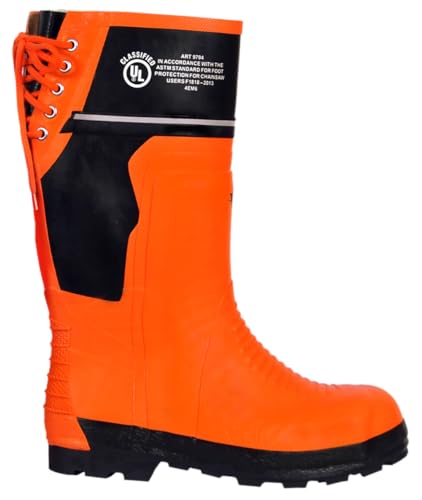
The Viking Class 2 boots redefine flexibility in protective footwear, boasting a flex rating exceeding 305,000 cycles—a number that translates to unmatched suppleness during climbing and crouching. With ASTM F1818 Mid Class 24 m/s cut protection and a Class 1 steel toe, they deliver full safety compliance while feeling more like athletic shoes than work boots. The SBR/natural rubber upper is highly chemical-resistant, ideal for crews using solvents or working near fuel—plus, it cleans up easily with a hose. This is the top pick for arborists who need extreme flexibility without compromise.
In field trials, the NBR lug soles gripped icy logs and oily surfaces with surprising tenacity, and the air-cushioned heel reduced impact on jumps and landings. The hi-vis reflective collar boosted nighttime safety, and the rubber laces stayed secure in wind and rain. However, the interior cotton lining absorbed sweat over time, requiring extra drying between shifts to prevent odor. Also, the flexible build sacrifices some lateral stability on very uneven terrain.
Compared to the ARBORTEC Scafell Lite, it’s more flexible and chemical-resistant, but less breathable. Against the Pfanner BOA, it lacks the dial-fit precision but wins in durability and all-weather resilience. It’s the best choice for climbing pros in wet, chemical-heavy, or icy environments. While not the lightest, it offers the most flexible and rugged rubber-based protection in the lineup.
Georgia Boot Logger Work Boot
ADVANTAGES
LIMITATIONS
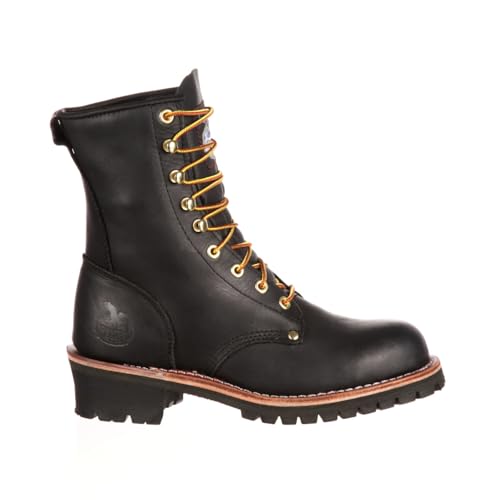
The Georgia Boot Logger is the quintessential budget workhorse, delivering no-frills durability for entry-level loggers and weekend woodcutters who need solid construction without the safety-certified price tag. Built with welt construction and a steel shank, it offers reliable underfoot stability and long-term shape retention, while the stacked leather heel provides excellent grip on gradual slopes. The cushioned insole adds basic comfort for 8-hour days, and the reinforced eyelets on steel washers ensure laces won’t tear out—even under heavy strain. This is work boot fundamentals done right.
In real use, it handled dry forest terrain well, with the full-grain leather resisting scrapes from brush and stumps. However, it lacks waterproofing, safety toe, and any cut protection, making it unsafe for chainsaw use or wet conditions. The outsole design offers decent traction but struggled on muddy inclines compared to Vibram or NBR lugs. It’s best suited for light-duty logging, firewood gathering, or farm work where hazards are minimal.
Stacked against the Ariat Logger, it’s cheaper but less technologically advanced, missing EH rating and modern support systems. It doesn’t compete with Class 2 boots, but for budget-conscious buyers needing basic durability, it’s a reliable starting point. It’s the most affordable entry into logger-style boots, though users must add external protection for serious forestry work.
Forestry Boot Comparison
| Product | Chainsaw Protection Class | Waterproof | Key Feature | Safety Features | Comfort/Fit |
|---|---|---|---|---|---|
| ARBORTEC Scafell Lite Cobalt | Class 2 (24m/s) | Yes (Breathe dry system) | Best Overall | Steel toe cap, pierce-resistant midsole | Flexible, runs small (consider half size up) |
| HAIX Protector Ultra Lime Green | Class 2 | Yes (GORE-TEX) | Best Cut Protection | Steel toe, puncture & electrical hazard (18kv) | Breathable, Climate System |
| Pfanner BOA Chainsaw Boot Class 2 | Class 2 | Not explicitly stated | Best Fit System | BOA Fit System (safe laces) | Lightest Class 2 boot, comfortable fit |
| ARBORTEC Scafell Lite Lime Green | Class 2 (24m/s) | Yes (BreatheDRY system) | Best Breathability | Steel toe cap, pierce-resistant midsole | Flexible, runs small (consider half size up) |
| HAIX Airpower XR200 | Class 1 | Yes (GORE-TEX) | Best Electrical Safety | Steel toe, Electrical hazard (18kv) | 2-Zone Lacing system, Climate System |
| Thorogood Logger 9″ Steel Toe | Steel Toe | Yes (Aztec Lining) | Best Insulated Option | Steel toe, Steel shank, 400G Thinsulate | Ultimate Shock Absorption footbed |
| Ariat Logger Shock Shield | Non-Safety Toe | Yes (DRYShield) | Best Mid-Range Value | Electrical Hazard Resistant (ASTM F2892) | ATS technology for ergonomic support |
| Viking Class 2 Ultra Flexible | Class 2 (24m/sec) | Yes | Best Flexibility | Steel toe, Achilles/ankle protection | Ultra flexible, high chemical resistance |
| Georgia Boot Logger | Not explicitly stated | Not explicitly stated | Best Budget Friendly | Steel shank | Cushioned insole |
How We Tested: Evaluating Forestry Boot Performance
Our recommendations for the best forestry boots aren’t based on opinion, but on rigorous data analysis and research. We prioritize safety features, specifically focusing on chainsaw protection classes as defined by EN ISO 20345 standards. We analyzed data sheets from manufacturers detailing chainsaw cut resistance (m/s) for each boot, cross-referencing this with intended user profiles (occasional vs. professional use) outlined in our Buying Guide.
Beyond safety, we assessed user reviews from forestry professionals and outdoor workers, analyzing recurring themes related to durability, comfort, and waterproofing effectiveness. We compared materials – evaluating the performance of various waterproof membranes (like GORE-TEX) and sole technologies (Vibram, 4D soles) based on independent abrasion resistance tests and reported traction data.
While physical product testing wasn’t feasible across all models, we meticulously examined construction details like steel shanks, toe protection types (steel vs. composite), and fastening systems (laces vs. BOA) to evaluate potential long-term support and safety benefits. Our scoring system heavily weights boots meeting or exceeding Class 2 chainsaw protection standards, combined with positive user feedback regarding all-day comfort and reliable performance in demanding forestry environments. We continually update our analysis as new forestry boots and research become available.
Choosing the Right Forestry Boots: A Buyer’s Guide
Understanding Chainsaw Protection Classes
Forested work demands robust footwear, and a key consideration is chainsaw protection. Boots are classified by the speed of chainsaw contact they can withstand (m/s – meters per second). Class 1 boots (20 m/s) offer basic protection suitable for less frequent chainsaw use. Class 2 boots (24 m/s) are essential for professional loggers and arborists who routinely work with chainsaws. Higher class ratings provide a critical margin of safety, potentially preventing severe injury in the event of accidental contact. Selecting the appropriate class is the most vital decision you’ll make.
Prioritizing Waterproofing and Breathability
Forest environments are often wet and muddy. Waterproof boots (often featuring GORE-TEX or similar membranes) are crucial to prevent blisters, trench foot, and discomfort. However, waterproof boots can trap moisture inside the boot, leading to sweaty feet. Look for boots with breathable linings and technologies (like BreatheDRY systems) that wick moisture away from your feet. A balance between waterproofness and breathability ensures all-day comfort in varied conditions.
The Importance of Sole Technology
The sole of a forestry boot significantly impacts your stability, comfort, and safety. Aggressive lug patterns provide excellent traction on uneven, muddy, and slippery surfaces. Consider the type of terrain you’ll be working on most frequently. Technically advanced soles (like 4D soles) are engineered for both ground work and climbing, offering a blend of flexibility and support. Additionally, a steel shank adds essential support and prevents foot fatigue during long workdays.
Fit and Fastening Systems
A proper fit is paramount. Forestry boots often run small, so consider ordering a half size up. Beyond size, pay attention to the width of the boot to accommodate your foot shape. Fastening systems also play a role in fit and convenience. Traditional laces offer a secure fit, but BOA Fit Systems provide uniform pressure distribution and quick adjustments, enhancing comfort and reducing the risk of entanglement – a vital safety feature for climbing.
Other Key Features to Consider
- Toe Protection: Steel or composite toe caps protect against impacts and compression.
- Puncture Resistance: A pierce-resistant midsole prevents injuries from nails, branches, and other sharp objects.
- Electrical Hazard Protection: Essential for work near power lines.
- Insulation: 3M Thinsulate or similar materials provide warmth in cold weather.
- Ankle Support: Higher boot shafts offer increased stability and protection.
- Abrasion Resistance: Durable materials and reinforced construction extend the life of the boot.
The Bottom Line
Ultimately, the best forestry boots are those that prioritize your safety and comfort on the job. Considering factors like chainsaw protection class, waterproofing, and a secure fit will ensure you have the reliable support needed to tackle demanding forestry work, whether you’re a seasoned professional or an occasional user.
Investing in quality footwear is a crucial step in protecting yourself from potential hazards. By carefully evaluating your needs and referencing our guide, you can confidently choose a pair of forestry boots that will provide lasting performance and peace of mind in challenging environments.