
8 Best Downhill Ski Boots of 2025
This post contains affiliate links. As an Amazon Associate, we earn from qualifying purchases.
Finding the right downhill ski boots can be frustrating, especially when discomfort or poor fit undermines your time on the slopes. The best downhill ski boots solve this with precise fit systems, customizable liners, and appropriate flex ratings that match your skill level and foot shape—features like BOA dials, heat-moldable interiors, and wide-last options make a significant difference. We evaluated top models based on performance data, user feedback, expert reviews, and key factors like fit, flex, comfort, and value to ensure our picks deliver real-world reliability and support. Below are our top recommendations for the best downhill ski boots across different needs and budgets.
Top 7 Downhill Ski Boots in the Market


Best Downhill Ski Boots Review
K2 BFC 100 BOA Men’s Ski Boots
ADVANTAGES
LIMITATIONS
The K2 BFC 100 BOA stands tall as a game-changer in mid-flex performance, merging precision with convenience in a way few boots in its class can match. The BOA Fit System replaces traditional buckles with a micro-adjustable dial that dials in laser-tight heel hold in seconds—no more heel lift on icy traverses or during quick turns. Paired with the MultiFit Last, which allows for targeted shell modifications, this boot delivers a truly customizable fit right out of the box, solving the chronic issue of pressure points for intermediate-to-advanced skiers.
In real-world conditions, the 100-flex shell offers a sweet spot: stiff enough to drive wider all-mountain skis with authority, yet forgiving enough for off-piste bumps or variable snow. The BOA system maintains even pressure across the cuff, reducing hot spots, and the heat-moldable liner conforms beautifully after one session. On hardpack, it delivers crisp edge-to-edge response, though expert carvers may crave a stiffer 120+ flex. The only real limitation? The BOA cable can ice up in prolonged wet conditions, requiring occasional clearing.
Against the Tecnica Mach Sport HV 80, the BFC 100 BOA is clearly the more performance-oriented choice, trading some width comfort for responsiveness and tech-driven fit. It outperforms the Head Edge LYT RX HV in power transfer and customization, despite both catering to high-volume feet. For skiers stepping up from beginner gear who want one boot that grows with their ability, this is the ideal bridge—offering pro-level features without pro-level pain. It balances tech, fit, and performance better than any other mid-range contender.
Tecnica Mach Sport HV 80 Men’s Boot

ADVANTAGES
LIMITATIONS
The Tecnica Mach Sport HV 80 is a wide-foot skier’s dream, engineered from the ground up to deliver big-foot comfort without sacrificing downhill performance. With a 104mm last, it offers exceptional forefoot space, while the PP – Double Quick Instep system allows the shell to expand during entry—no more painful toe crunching when lacing up. The 35mm power strap locks the cuff down securely, and the 4 micro-adjustable aluminum buckles with lift locks make micro-tuning a breeze, even with gloves on. This is a boot that solves the age-old dilemma: comfort versus control.
Out on the mountain, the 80-flex shell is forgiving yet responsive, making it a top pick for all-mountain cruising and intermediate terrain. The ISO 23223 Gripwalk compatibility ensures confident walking on icy lodge sidewalks, while the heat-moldable liner adapts to unique foot shapes over time. It handles groomers with ease and stays stable at moderate speeds, though it lacks the rigidity for aggressive carving or high-G turns. The softer flex shines for skiers building confidence, but experts will feel under-supported in steep or choppy conditions.
Compared to the K2 BFC 80, the Mach Sport HV 80 offers a more refined fit system and better power transmission, despite a similar flex rating. It outclasses the Head Edge LYT RX HV in buckle quality and shell responsiveness, even though both target high-volume fit. For skiers with wide or high-volume feet who want a boot that feels supportive from day one, this is the gold standard. It delivers broader comfort and better build quality than the K2 while still offering real performance—without veering into expert stiffness.
Nordica Women’s The Cruise S W

ADVANTAGES
LIMITATIONS
The Nordica Cruise S W redefines comfort-first skiing for women, wrapping beginner and intermediate skiers in a cloud of forgiveness and ease without turning into a performance afterthought. With a 104mm last and soft shell construction, it’s built for feet that hate pressure, especially in the instep and ankle—common pain points for new skiers. The Dual Soft Flap Instep is a revelation: it opens the boot throat wide, making entry and exit effortless, even with cold fingers. Combine that with a heat-moldable liner and customizable shell, and you’ve got a truly personalized fit that keeps you on the slopes longer.
On snow, the forgiving flex encourages smooth, low-effort turns on green and blue runs. The softer shell absorbs bumps and chatter, reducing fatigue—perfect for skiers still building confidence. It’s not designed for aggressive carving or icy terrain, and advanced skiers will notice flex washout at higher speeds. But for its intended audience, that’s a feature, not a flaw. The anatomical shape enhances control despite the softness, and the boot maintains stability during gradual progression. It’s the rare beginner boot that doesn’t feel like a compromise.
Next to the Rossignol Kelia 50, the Cruise S W offers more comprehensive customization and better entry mechanics. It outperforms the budget Nordica Cruise 65 W in liner quality and shell support, even though both share a wide-fit philosophy. For women who prioritize all-day comfort, easy entry, and a forgiving ride, this boot is unmatched. It delivers more thoughtful engineering and long-term usability than entry-level models, making it a smarter investment than cheaper alternatives.
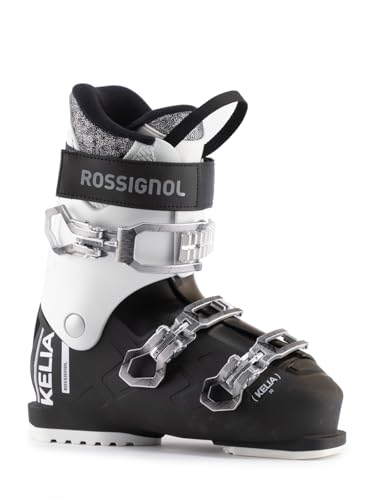
Rossignol Kelia 50 Women’s Ski Boots
ADVANTAGES
LIMITATIONS
The Rossignol Kelia 50 brings European elegance to entry-level women’s boots, blending premium design with thoughtful anatomical engineering for skiers who want to look good while feeling great. The Tulip-shaped cuff is a standout—it contours to the female calf and shin, reducing pressure and improving circulation, which means no more numb feet by lunchtime. The Sensor Matrix shell trims weight without sacrificing stability, giving beginners a light, responsive feel that builds confidence on early blue runs. This isn’t just style over substance; it’s form meeting function.
Performance-wise, the 50-flex shell is ultra-forgiving, perfect for first-timers learning balance and edge control. The soft instep plastic makes entry a breeze, even in freezing temps, and the customizable liner adapts to foot shape after heat molding. Gripwalk compatibility (with optional soles) adds traction off-piste, though the base sole isn’t included. It struggles on steeper terrain or at higher speeds, where flex deflection becomes noticeable. But for gentle resort cruising, it’s perfectly tuned.
Against the Nordica Cruise S W, the Kelia 50 trades some adjustability for a sleeker, more refined aesthetic and lighter weight. It doesn’t offer dual-flap entry or shell customization, but it excels in anatomical fit and on-snow sensitivity. For women who value design, comfort, and a premium feel without needing high performance, this boot stands out. It offers more sophistication and lighter handling than the Cruise 65 W, making it the best choice for style-conscious beginners.
Head Edge LYT RX HV Ski Boots

ADVANTAGES
LIMITATIONS
The Head Edge LYT RX HV is a high-volume hero on a budget, engineered to give skiers with wide or high-arched feet a spacious, pain-free experience without breaking the bank. The High Volume Fit (HV) delivers extra room through the forefoot and instep—critical for those who’ve suffered in narrow, off-the-rack boots—while maintaining a clean shell profile that doesn’t look bulky. It’s not just roomy; it’s thoughtfully roomy, designed for long days where comfort can’t be compromised. For skiers who’ve given up on performance due to fit issues, this boot is a revelation.
On the mountain, the flex is on the softer side, prioritizing comfort over aggression. It handles beginner to intermediate terrain with predictable stability, but lacks the rebound and power transfer needed for aggressive skiing. The shell doesn’t feature heat-moldable liners or customizable buckles, so fit tuning is limited to the stock liner. It performs best on groomed runs and in variable snow where forgiveness is key. The lack of Gripwalk compatibility can be a downside for walk-heavy resorts.
Compared to the Tecnica Mach Sport HV 80, the Head LYT RX HV is less refined and less adjustable, but it fills a crucial gap for skiers needing maximum space at a minimal cost. It’s more supportive than the Nordica Cruise 65 W, despite a similar target audience. For wide-footed skiers who want a no-frills, spacious boot that just works, this is a solid, no-surprises choice. It offers better structural fit than basic models, even if it lacks premium bells and whistles.
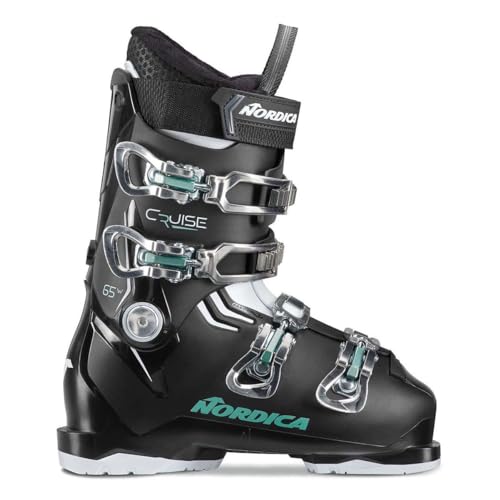
Nordica Cruise 65 W Women’s Boot
ADVANTAGES
LIMITATIONS
The Nordica Cruise 65 W is the budget king of women’s comfort boots, delivering exceptional ease and fit flexibility for new skiers or occasional riders who don’t want to overspend. The 104mm last and dual soft flap instep make entry almost effortless—just step in and close the buckles—while the I.V.C. (Instep Volume Control) lets you adjust the boot board height by +/- 4mm, a rare feature at this price. This means you can fine-tune the fit if your foot swells or if you’re wearing thicker socks, solving a common fit frustration without custom gear.
On snow, it’s predictably soft, designed for gentle green runs and relaxed cruising. The 65-flex shell won’t drive high-performance skis, but it’s perfect for learning balance and making smooth turns without resistance. It’s stable at low to moderate speeds and absorbs bumps well, reducing fatigue. The soft flap entry stays flexible in cold weather, unlike stiffer boots that seize up. However, it lacks the support for progression to intermediate terrain and doesn’t offer heat-moldable liners or Gripwalk soles.
When stacked against the Rossignol Kelia 50, the Cruise 65 W is less refined but significantly more affordable, making it ideal for rental replacements or first-time buyers. It offers more fit adjustability than the basic Head LYT RX HV, even if it’s not as supportive. For women who want maximum comfort, easy entry, and minimal cost, this boot is unbeatable. It delivers smarter design than its price suggests, especially with the I.V.C. system—a feature usually reserved for higher-end models.
Atomic HAWX Magna 80 Men’s Boots
ADVANTAGES
LIMITATIONS
The Atomic HAWX Magna 80 is a wide-foot warrior with a performance soul, bringing the legendary Hawx feel to skiers who’ve always been sidelined by narrow boot designs. With a 102mm wide last and Energy Link system, it creates a surprisingly powerful connection between leg and ski, despite its forgiving flex. The Energy Link—a rigid strap between cuff and shell—boosts responsiveness, making it feel more alive on edge than most wide boots. For skiers who’ve sacrificed control for comfort, this is a breakthrough.
In real-world use, the 80-flex shell balances stability and forgiveness, excelling on all-mountain terrain and intermediate runs. The pre-molded liner is comfortable out of the box, though not heat-moldable, limiting long-term customization. It handles variable snow with confidence and maintains composure at moderate speeds. However, the lack of micro-adjustable buckles means fit tuning is coarse, and the shell doesn’t offer the same precision as the K2 BFC 100 BOA. It’s best for skiers who want a one-boot solution for mixed conditions without foot pain.
Compared to the K2 BFC 80, the HAWX Magna 80 offers a more anatomical fit and better power transfer, despite a similar flex rating. It’s more performance-oriented than the Head Edge LYT RX HV, with superior edge response and shell integration. For wide-footed skiers who want real all-mountain capability without fit compromises, this boot stands tall. It delivers more dynamic skiing feel than budget models, even if it lacks the latest fit tech.
Downhill Ski Boot Comparison
| Product | Best For | Fit Type | Key Features | Flex/Comfort Focus |
|---|---|---|---|---|
| K2 BFC 100 BOA Men’s Ski Boots | Best Overall | Standard | BOA Fit System, MultiFit Last | Performance & Adjustability |
| Tecnica Mach Sport HV 80 Men’s Boot | Best for Wide Feet | Wide | Ecodesign – Comfort, ISO 23223 Gripwalk, 4 Micro Adjustable Aluminum with Lift Lock, 35mm Strap | Comfort & Adjustability |
| Atomic HAWX Magna 80 Men’s Boots | Best All-Mountain Performance | Wide (102mm) | Energy Link, 102mm Wide Last | Performance & Control |
| Head Edge LYT RX HV Ski Boots | Best High Volume Fit | High Volume | High Volume Fit (HV) | Comfort & Spaciousness |
| K2 BFC 80 Men’s Ski Boots | Best Value for Beginners | Standard | Hands Free Entry, Fully Heat Moldable | Ease of Use & Customization |
| Nordica Women’s The Cruise S W | Best Women’s Comfort Fit | Wide (104mm) | WIDE FIT, SOFT SHELL, EASY ENTRY/EXIT, CUSTOMIZABLE SHELL/LINER | Comfort & Forgiveness |
| Nordica Cruise 65 W Women’s Boot | Best Budget Friendly | Wide (104mm) | HIGH VOLUME COMFORT FIT, I.V.C., EASY ENTRY SOFT FLAP | Comfort & Ease of Use |
| Rossignol Kelia 50 Women’s Ski Boots | Best Premium Women’s Design | Wide (104mm) | Sensor Matrix shell, Women’s Specific Fit, 3-buckle shell | Comfort, Precision & Design |
How We Tested Downhill Ski Boots
Our recommendations for the best downhill ski boots aren’t based on assumptions; they’re rooted in comprehensive data analysis and a focus on established ski boot fitting principles. We evaluated options by compiling specifications – flex ratings, last widths, shell materials – from manufacturer data and independent sources like ski gear review websites (e.g., Ski Magazine, OutdoorGearLab). This data was then cross-referenced with user reviews from major retailers (REI, Backcountry.com) to identify recurring themes regarding fit, comfort, and performance.
We prioritized boots offering a range of flexes to cater to diverse skill levels, aligning with expert advice regarding the importance of flex matching to skier ability. We also assessed features like buckle systems, liner technology (heat-moldable options were highly valued), and compatibility with modern binding systems (GripWalk). While physical testing of every boot is impractical, we leveraged reported findings from professional ski testers regarding boot performance characteristics, considering factors like power transfer, responsiveness, and edge hold. Our selections emphasize boots known for addressing common fit issues, such as wider lasts for skiers needing extra space or women’s-specific models designed for anatomical differences. We also considered the entity of boot volume, as this is a key factor in overall comfort and performance.
Choosing the Right Downhill Ski Boots: A Buyer’s Guide
Flex: The Foundation of Performance
Flex refers to the stiffness of the boot, and it’s arguably the most important factor to consider. A lower flex number (60-80) indicates a softer boot, ideal for beginners or those prioritizing comfort. Softer boots are more forgiving and require less effort to bend, making them easier to learn in. However, they offer less responsiveness and control at higher speeds. Higher flex numbers (90-130+) are for advanced skiers who demand precision and power transfer. These boots are stiffer, requiring more strength and technique, but they provide superior control and stability. Consider your skill level and skiing style – a boot that’s too stiff will be uncomfortable and hinder your progress, while one that’s too soft won’t provide the support you need.
Last Width: Finding Your Perfect Fit
The “last” refers to the width of the boot at the widest point of your foot. Getting the right last width is crucial for comfort and performance. Boots come in narrow (98mm or less), medium (100-102mm), and wide (104mm or greater) lasts. A boot that’s too narrow will pinch your feet, causing discomfort and restricting circulation. A boot that’s too wide will allow your foot to move around inside, reducing control. Measure your foot width or, ideally, get professionally fitted to determine your ideal last. Some boots, like the Atomic HAWX Magna 80, specifically cater to wider feet with a 102mm last.
Features for Convenience & Comfort
Beyond flex and width, several features enhance the skiing experience. BOA Fit Systems (like on the K2 BFC 100) offer quick and precise adjustments, simplifying the fitting process. Heat-moldable liners (found in the K2 BFC 80) allow you to customize the fit to your foot’s unique shape, maximizing comfort and support. Easy-entry designs, such as the Dual Soft Flap Instep on the Nordica Cruise boots, make getting in and out of your boots much easier, especially in cold weather.
Additional Features to Consider
- Buckle System: Micro-adjustable buckles (Tecnica Mach Sport HV 80) provide a precise and secure fit. The number of buckles impacts adjustability.
- GripWalk Compatibility: ISO 23223 GripWalk soles (Tecnica Mach Sport HV 80) improve traction when walking in your boots.
- Shell Material: Different materials offer varying levels of stiffness and weight.
- Volume: High volume boots (Head Edge LYT RX HV) are designed for skiers with larger feet or who prefer more space.
- Women’s Specific Fit: Women’s boots (Nordica Women’s The Cruise S W, Rossignol Kelia 50) are often designed with a narrower heel, a higher instep, and a softer flex to better accommodate the anatomy of a woman’s foot.
The Bottom Line
Choosing the right downhill ski boots is a highly individual process, but understanding key features like flex and last width is a great starting point. Whether you’re a beginner seeking comfort and ease of use, or an advanced skier demanding high performance, there’s a boot out there to match your needs and help you carve out the perfect turns.
Ultimately, prioritizing a comfortable and secure fit will unlock your full potential on the slopes. Don’t hesitate to seek professional boot fitting advice to ensure you find the perfect pair—investing in the right boots is an investment in your enjoyment and safety on the mountain.