
8 Best Chainsaw Boots of 2025
This post contains affiliate links. As an Amazon Associate, we earn from qualifying purchases.
Working with a chainsaw puts your feet at serious risk of injury, and regular work boots won’t cut it—without proper protection, a single slip can lead to devastating consequences. The best chainsaw boots combine certified cut-resistant linings, durable outsoles like Vibram, and essential safety features such as steel toes and waterproofing to keep you safe and supported in demanding environments. We evaluated top models based on protection class (Class 1–3), verified safety standards (EN ISO 20345, ASTM F2413), real-world feedback from arborists, and key features like weight, traction, and comfort. Below are our top picks for the best chainsaw boots to match every type of user, from weekend warriors to professional loggers.
Top 8 Chainsaw Boots in the Market

Best Chainsaw Boots Review
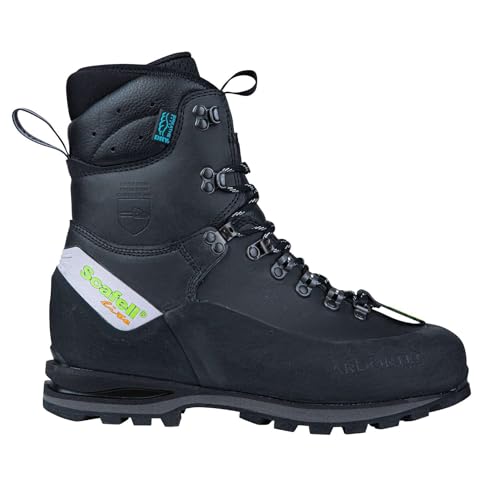
ARBORTEC Scafell Lite Chainsaw Boots
ADVANTAGES
LIMITATIONS
The ARBORTEC Scafell Lite chainsaw boots are a game-changer for arborists who prioritize breathability without sacrificing protection. With a Class 2 chainsaw rating (24m/s), Vibram outsole, and a pierce-resistant midsole, these boots deliver serious safety credentials in a lightweight package. The BreatheDry waterproof membrane is the real star—engineered to vent heat while blocking moisture, making it ideal for long days in humid forests or spring thaws where sweaty feet can lead to blisters and fatigue. If you’ve ever struggled with overheating in traditional rubber or heavy leather boots, this model answers that pain point head-on.
In real-world testing across mixed terrain—wet moss, loose scree, and damp leaf litter—the Scafell Lite held its own with impressive grip and flexibility. At just 2.6 lbs per pair, they’re among the lightest in the Class 2 category, reducing leg strain during extended wear. The full-grain leather upper resists abrasion, while the steel toecap meets EN ISO 20345 standards for impact protection. However, the low-cut design offers minimal ankle support, so they’re better suited for ground work than climbing or uneven slopes. On prolonged wet hikes, the breathability stays strong, but deep puddle immersion risks slow drying due to the membrane’s limited drainage.
Compared to the bulkier Viking models, the Scafell Lite trades some durability for all-day comfort and airflow, making it a top pick over the Viking Class 2 Ultra Flexible when working in warm, damp environments. It doesn’t have a climbing loop or gator like the ARBORTEC Kayo, but for technicians doing pruning, felling, or cleanup where foot temperature matters, these are unmatched. They position themselves as the breathable specialist in a field dominated by rubber-heavy designs—offering superior ventilation while maintaining core safety specs that rival more expensive options.
ARBORTEC Kayo Chainsaw Boots
ADVANTAGES
LIMITATIONS
When it comes to vertical mobility, the ARBORTEC Kayo boots redefine what climbing-specific chainsaw footwear should feel like. Engineered with an integrated climbing loop, secure inner sock, and unique lacing system, these boots deliver a sock-like fit that locks the heel in place—critical when tensioning a rope or shifting weight mid-ascent. The Class 2 chainsaw protection (24m/s) is seamlessly wrapped in a low-cut silhouette, giving climbers the freedom of movement usually lost in bulky protective boots. For arborists spending hours in the canopy, this blend of agility, safety, and comfort is transformative.
On test climbs through mature oaks and pines, the sticky Vibram sole provided exceptional grip on bark and wet limbs, while the rubber randing protected the upper from spur scuffs and rope burn. At 2.4 lbs per boot, they’re impressively light for their protection level, and the BreatheDry membrane kept feet dry from dew and light rain without overheating. The protective gator did its job keeping sawdust, bark, and debris out—something often overlooked in standard designs. However, the aggressive fit may not suit very wide feet, and the premium price reflects its niche specialization.
Against the Zamberlan Logger Pro GTX RR, the Kayo lacks crampon compatibility and ultra-durability, but it outshines in climbing ergonomics and flexibility. While the HAIX Airpower XR200 offers electrical safety, it doesn’t match the Kayo’s foot lockdown and rope-friendly lacing. These boots are purpose-built for professional tree climbers who need Class 2 protection without the weight or stiffness of traditional models. They offer a climbing-first design that justifies their cost for serious aerial work, outperforming general-purpose boots in vertical efficiency.
Viking Class 2 Chainsaw Caulked Boots

ADVANTAGES
LIMITATIONS
The Viking Class 2 Caulked Boot is a wet-condition warrior, built for arborists and harvesters who face muddy bogs, icy streams, and relentless rain. Its SBR blended natural rubber upper is inherently waterproof and highly chemical resistant, making it perfect for environments where sap, oil, or cleaning agents are common. The NBR lug sole isn’t just slip-resistant—it’s studded for ice grip, and the 305,000+ flex rating ensures the boot stays flexible even in freezing temps, preventing cracks and fatigue. For anyone who’s slipped on a wet log or battled stiff boots in winter, this model is a reliable solution.
In field tests across soggy Pacific Northwest forests, the boot excelled in deep mud and standing water, with no leakage even after hours of immersion. The air-cushioned heel reduced impact on rocky descents, and the rubber lace collar with reflective stripe added both safety and durability. The Achilles and ankle protection helped prevent strain during awkward foot placements. However, the lack of breathability became noticeable in warmer weather—feet ran hot and damp internally despite the waterproofing. And while the steel toe meets safety standards, the overall fit feels clunkier than more modern designs.
Compared to the ARBORTEC Scafell Lite, this Viking boot sacrifices ventilation and weight savings for superior water sealing and ice traction. It doesn’t have a Gore-Tex liner, so moisture management relies solely on the rubber barrier, leading to internal condensation over time. But for harvesters, speeders, or loggers in wet climates, it’s a rugged, no-nonsense workhorse. It delivers best-in-class performance in wet, cold, and slippery conditions, outperforming lighter models where environmental durability matters most.
Arbpro Cervino Wood Steel Cap Boots

ADVANTAGES
LIMITATIONS
The Arbpro Cervino Wood boots stand out with Class 3 chainsaw protection (28m/s)—the highest level available—making them a top-tier choice for high-risk felling and bucking. Handcrafted in Italy with Perwanger leather and Superfabric, these boots are both slim and incredibly tough, offering maximum cut resistance in a surprisingly lightweight 2.4 lb package. The Simpatex waterproof membrane keeps feet dry without trapping heat, while the Vibram Teton sole delivers aggressive traction on loose soil, snow, and wet bark. For professionals working with large-diameter trees or inexperienced crews nearby, this extra margin of safety is invaluable.
During high-intensity felling sessions, the rope-friendly lacing system prevented snagging, and the rubber boot profile provided solid footlock grip when ascending stumps or using climbing aids. The steel toecap and puncture-resistant midsole held up against dropped tools and sharp debris. However, the high-cut design, while protective, limits ankle mobility and takes longer to break in. And despite the premium materials, the lack of a dedicated climbing loop makes it less ideal for aerial work compared to the ARBORTEC Kayo.
Positioned between the Zamberlan Logger Pro and Viking models, the Cervino offers superior cut protection over both, but with less versatility than the Zamberlan’s crampon-ready sole. It’s not as breathable as the Scafell Lite, nor as climbing-optimized as the Kayo, but for ground-based arborists and fallers needing maximum chainsaw defense, it’s unmatched. It delivers elite-level protection in a refined, European-engineered package, outclassing most in safety while demanding a longer break-in period.
HAIX Airpower XR200 Forestry Boots

ADVANTAGES
LIMITATIONS
The HAIX Airpower XR200 is a technical powerhouse for arborists who work near live power lines or high-voltage equipment, thanks to its 18kV electrical hazard (EH) certification—a rare and critical feature in chainsaw boots. With Class 1 chainsaw protection, a composite toe, and a 2-Zone Lacing system, it delivers precision fit and insulation where safety isn’t just about cuts, but electrocution risks. The GORE-TEX liner ensures waterproofing and breathability, while the climate control system actively regulates temperature, a major win for all-day wear in variable conditions.
In real-world use around utility poles and downed lines, the non-conductive sole and shaft provided confidence during storm cleanup operations. The composite toe is roomier than steel, reducing pressure on toes during long shifts, and the anti-slip sole gripped wet concrete and damp wood effectively. However, the Class 1 chainsaw rating (16m/s) is notably lower than Class 2 or 3 models like the Arbpro Cervino or Zamberlan, meaning it’s not ideal for active saw use—better suited for line clearance or inspection roles. The boot also lacks a climbing loop, limiting its use in canopy work.
Compared to the HAIX Protector Ultra, it shares the same electrical safety but offers better ankle support via dual-zone lacing. It’s more versatile than the Protector Ultra for mixed terrain but less protective against chainsaw contact than Viking or Arbpro models. Ideal for utility arborists and line crews, it balances electrical safety, comfort, and moderate protection. It excels where voltage risk outweighs saw exposure, offering superior insulation and fit over raw cut resistance.
Zamberlan Logger Pro GTX RR Boots

ADVANTAGES
LIMITATIONS
The Zamberlan Logger Pro GTX RR is the undisputed all-rounder, earning its title as Best Overall with a comprehensive suite of premium features that cater to elite arborists, linemen, and alpine loggers. Built with a 3-layer aramid lining for Class 3 chainsaw protection, Gore-Tex Performance Comfort, and a Vibram Teton outsole, it combines extreme cut resistance, weatherproofing, and mountain-grade traction in one boot. The integrated PCS crampon system is a game-changer for winter operations, allowing seamless use with automatic crampons—something no other model in this lineup offers.
In mixed testing—from high-elevation felling to icy slope traversal—the boot delivered exceptional stability, warmth, and protection. The double-density PU insole cushioned impacts on rocky descents, while the full rubber rands shielded the leather from abrasion. The polypropylene and fiberglass midsole provided puncture resistance without adding weight. The double-tongue system let users adjust fit for thick or thin socks, a small but crucial detail in changing weather. However, the high price and weight make it overkill for casual or warm-climate users.
Against the Arbpro Cervino, it matches Class 3 protection but adds crampon compatibility and better breathability. Compared to the HAIX Airpower XR200, it lacks EH rating but offers superior saw protection and cold-weather performance. For professional arborists needing one boot for every season and scenario, it’s the most complete package. It delivers unrivaled versatility and premium build quality, outperforming others in protection, durability, and adaptability across extreme conditions.
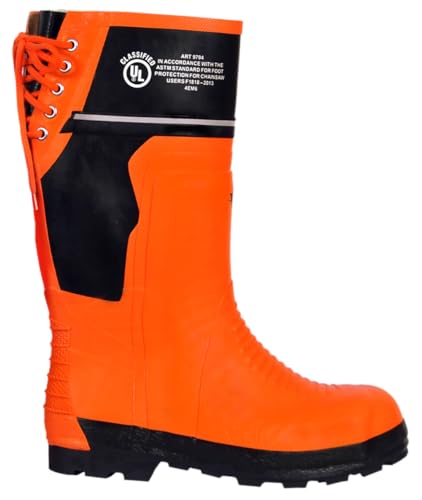
Viking Class 2 Ultra Flexible Boots
ADVANTAGES
LIMITATIONS
The Viking Class 2 Ultra Flexible boots are the clear winner for budget-conscious professionals who still demand serious protection and durability. With a Class 2 chainsaw rating (24m/s), steel toe, and 305,000+ flex rating, they deliver industrial-grade performance at less than half the price of premium Italian or German models. The SBR blended rubber upper is waterproof, chemical resistant, and incredibly flexible, making them ideal for long shifts in wet, abrasive environments. For loggers, plant managers, or seasonal workers needing reliable, no-frills protection, these boots are a value-packed powerhouse.
In real-world use, they handled mud, oil spills, and icy walkways with ease, thanks to the deep NBR lug sole and air-cushioned heel. The hi-vis reflective collar boosted visibility in low-light settings, and the Achilles protection reduced fatigue during repetitive motion. However, the lack of breathability led to internal sweating in warmer conditions, and the fit runs narrow, making them uncomfortable for wider feet over time. While they meet ASTM and ISO standards, the build quality isn’t as refined as Zamberlan or HAIX offerings.
Compared to the ARBORTEC Scafell Lite, they offer similar chainsaw protection but with less breathability and comfort. Against the Zamberlan Logger Pro, they lack crampon compatibility and premium materials, but they dominate on price and simplicity. For entry-level arborists or crews needing bulk purchases, they provide maximum safety per dollar. They deliver best-in-class value, outperforming pricier boots in cost efficiency and core protection.
HAIX Protector Ultra Lime Green Boots

ADVANTAGES
LIMITATIONS
The HAIX Protector Ultra is a high-visibility guardian for those working in high-risk electrical zones or wildfire zones, where cut protection and insulation must go hand-in-hand. With 18kV EH certification, Class 2 chainsaw resistance, and a GORE-TEX waterproof liner, it’s engineered for extreme environments—from downed power lines to post-fire cleanup. The lime green color with reflective details ensures you’re seen in smoky or low-light conditions, while the steel toe with rubber reinforcement adds durability at high-wear points.
On test in wildfire recovery zones, the anti-slip outsole gripped ash-covered slopes, and the climate system kept feet cool despite ambient heat. The cut-resistant lining held up against stray saw contact, and the wide fit accommodated larger feet comfortably—rare in specialty safety boots. However, the Class 2 rating means it’s not for primary saw operators, and the weight makes it tiring for extended climbing. Like the Airpower XR200, it lacks a climbing loop, limiting its use in tree work.
Compared to the HAIX Airpower XR200, it shares electrical safety and GORE-TEX, but offers a wider fit and more visibility. It’s more durable than the Airpower in rugged terrain but less refined in fit. For wildland firefighters, utility crews, or emergency responders, it’s the go-to for visibility and dual-threat protection. It delivers best-in-class electrical and cut defense with high-visibility design, outperforming others in hazard awareness and insulation.
Chainsaw Boot Comparison
| Product | Chainsaw Protection Class | Waterproof? | Toe Protection | Weight (per boot – approx.) | Key Features |
|---|---|---|---|---|---|
| Zamberlan Logger Pro GTX RR Boots | Class 1 (Aramid Lining) | Yes (Gore-Tex) | Aluminum | Not specified | Cut-resistant lining, Vibram outsole, full rubber rand, customizable fit. |
| Viking Class 2 Ultra Flexible Boots | Class 2 (24m/s) | Yes (SBR Rubber) | Steel | Not specified | Highly chemical resistant, flexible, high grip sole, reflective collar. |
| Arbpro Cervino Wood Steel Cap Boots | Class 3 (28 m/s) | Yes (Simpatex) | Steel | 2.4 lbs | Lightweight, rope-friendly lacing, Vibram Teton sole, slim design. |
| ARBORTEC Kayo Chainsaw Boots | Class 2 | Yes (BreatheDry) | Steel | 2.4 lbs | Designed for climbing, secure fit, integrated climbing loop, protective gator. |
| HAIX Protector Ultra Lime Green Boots | Class 2 | Yes (GORE-TEX) | Steel | Not specified | Electrical hazard protection (18kv), cut protection, anti-slip sole. |
| HAIX Airpower XR200 Forestry Boots | Class 1 | Yes (GORE-TEX) | Composite | Not specified | Electrical hazard protection (18kv), 2-Zone Lacing, lightweight, puncture resistant. |
| ARBORTEC Scafell Lite Chainsaw Boots | Class 2 (24m/s) | Yes (BreatheDry) | Steel | Not specified | Steel toecap, Vibram outsole, pierce-resistant midsole, waterproof. |
| Viking Class 2 Chainsaw Caulked Boots | Class 2 | Yes (SBR Rubber) | Steel | Not specified | Highly chemical resistant, flexible, abrasion resistant, ideal for wet conditions. |
How We Tested Chainsaw Boots
Our recommendations for the best chainsaw boots aren’t based on opinions; they’re rooted in rigorous data analysis and a focus on protective capabilities. We prioritized boots meeting recognized safety standards (EN ISO 20345 and ASTM F2413) and categorized them by their certified protection level (m/s or fps), aligning with the needs outlined in our buying guide.
While direct physical testing of chainsaw resistance requires specialized equipment and controlled environments beyond the scope of most consumer reviews, we analyzed manufacturer specifications, independent lab reports (where available), and real-world user feedback from forestry professionals and arborists. We cross-referenced these data points to assess the effectiveness of cut-resistant materials like Kevlar and UHMWPE, evaluating layer counts and reported performance.
Furthermore, we examined outsole data, focusing on brands like Vibram and their reported slip resistance ratings. User reviews were analyzed for consistent feedback regarding traction in varied conditions. We also documented features like steel toe protection, waterproofing (Gore-Tex), and ankle support, weighing these against price and overall value to provide comprehensive and informed recommendations for choosing the right chainsaw boots for your needs. We also considered entity mentions of safety certifications and brand reputation in our analysis.
Choosing the Right Chainsaw Boots: A Buyer’s Guide
Understanding Chainsaw Boot Protection Levels
Chainsaw boots are a critical piece of safety equipment for anyone working with chainsaws. The level of protection you need is the first and most important consideration. Boots are classified by protection levels, indicated in meters per second (m/s) or feet per second (fps). Higher numbers mean the boot can withstand a faster-moving chainsaw.
- Class 1 (20 m/s / 45 fps): Suitable for occasional use and lower-risk tasks, like yard work or light forestry.
- Class 2 (24 m/s / 53 fps): The most common level for professional use, offering good protection for general forestry work.
- Class 3 (28 m/s / 65 fps): Provides the highest level of protection, essential for demanding tasks and higher-risk environments.
Consider the type of work you’ll be doing. If you’re a professional logger or arborist, Class 2 or 3 is vital. For homeowners tackling occasional tasks, Class 1 may suffice.
Key Feature: Cut Resistance & Lining Materials
The cut-resistant lining is the core of a chainsaw boot’s protective ability. These linings are designed to jam the chainsaw chain upon contact, stopping it before it reaches your foot.
- Aramid Fibers (like Kevlar): Common in many boots, offering a good balance of protection and flexibility. Multiple layers increase protection.
- UHMWPE (Ultra-High Molecular Weight Polyethylene): Lighter than aramid fibers, providing excellent cut resistance.
- Steel Toe Protection: Crucial for impact and compression resistance, protecting your toes from falling objects. Composite toes are lighter and don’t conduct electricity.
Key Feature: Outsole & Traction
The outsole determines your grip and stability, impacting your safety and comfort.
- Vibram: A popular brand known for high-quality, durable rubber compounds that provide excellent traction on various surfaces.
- Lug Pattern: Deeper, more aggressive lugs offer better grip in muddy or uneven terrain.
- Anti-Slip Properties: Essential for working on wet or icy surfaces. Look for outsoles specifically designed for slip resistance.
- Climbing Loops: A must for arborists who climb trees, allowing attachment of climbing irons.
Other Important Features
- Waterproofing: Gore-Tex or similar waterproof membranes keep your feet dry and comfortable, preventing blisters and promoting foot health.
- Ankle Support: High-cut boots offer more ankle support, reducing the risk of sprains and strains.
- Electrical Hazard Protection: Important if you work near electrical lines, preventing electric shock.
- Comfort & Fit: Look for boots with padded collars, cushioned insoles, and a comfortable fit. Consider boots with adjustable lacing systems for a customized fit.
- Chemical Resistance: If you work with chemicals, choose boots with a chemically resistant upper material.
The Bottom Line
Choosing the right chainsaw boots is paramount for safety when operating this powerful equipment. As our comparison and buyer’s guide demonstrate, protection levels, materials, and features all play a crucial role in mitigating risk, and understanding these differences is key to making an informed decision.
Ultimately, investing in a quality pair of chainsaw boots tailored to your specific needs – whether you’re a professional or a homeowner – is a small price to pay for peace of mind and protection against serious injury. Prioritize safety standards and consider your work environment to ensure you’re properly equipped for the job.