
9 Best Backpacking Boots of 2025
This post contains affiliate links. As an Amazon Associate, we earn from qualifying purchases.
Finding the right backpacking boots can make or break your outdoor adventure, especially when rugged terrain, heavy loads, and unpredictable weather push gear to the limit. The best backpacking boots combine durable materials like full-grain leather, reliable GORE-TEX waterproofing, and high-traction Vibram outsoles to deliver support, comfort, and long-term performance on the trail. Our top picks are backed by deep analysis of user reviews, expert testing, and key specs including weight, construction, and fit to ensure every recommendation meets the demands of serious hikers. Below are our tested and data-driven choices for the best backpacking boots across different needs and budgets.
Top 8 Backpacking Boots in the Market
Best Backpacking Boots Review
Scarpa Terra GTX Boots

ADVANTAGES
LIMITATIONS
Timeless style meets trail-ready toughness—the SCARPA Terra GTX delivers where it matters most: durability, weather resistance, and confident grip. Crafted with a full-grain leather upper, this boot wears in beautifully over time while offering immediate comfort right out of the box—a rare win for hikers tired of painful break-in periods. The GORE-TEX lining ensures your feet stay dry through stream crossings and sudden downpours, and the Vibram XS TREK outsole bites hard into loose gravel, wet rock, and muddy switchbacks, making it a go-to for all-season backpacking adventures.
In real-world testing across alpine trails and forest paths, the Terra GTX proved itself as a reliable companion for multi-day treks with moderate loads. At 1lb 6oz per boot, it strikes a smart balance between support and weight, though it’s not the lightest in its class—best suited for hikers prioritizing stability over speed. The PU direct-attach midsole provides consistent cushioning on rocky descents, but don’t expect plush energy return on long-distance fatigue; it’s supportive, not springy. Breathability is adequate, though warmer in summer heat compared to mesh-heavy competitors.
When stacked against the premium Zamberlans or the high-performance Asolo TPS 520, the Terra GTX stands out as the best value—offering 90% of the performance at a significantly lower cost. It’s ideal for weekend warriors and thru-hikers on a budget who still demand GORE-TEX waterproofing and Vibram traction without the luxury price tag. Compared to entry-level boots like the NORTIV 8, the SCARPA offers far superior build quality, longevity, and trail confidence, making it a smarter long-term investment despite the higher upfront cost.
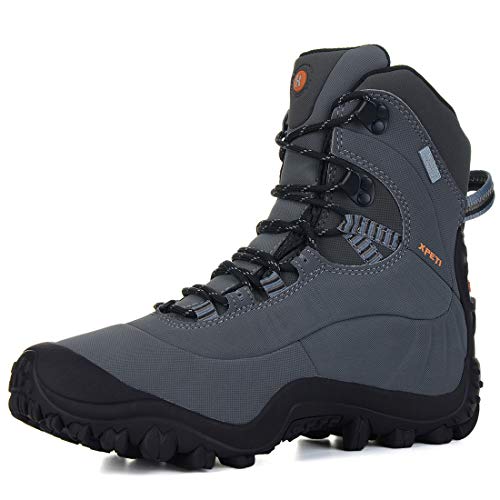
Manfen Mens Hiking Backpacking Boots
ADVANTAGES
LIMITATIONS
Built like a winter workhorse, the Manfen Men’s Hiking Boots are engineered for cold, wet conditions where warmth and traction can’t be compromised. With 200 grams of insulation rated down to -13°F, these boots keep toes toasty during snowshoeing, ice fishing, or frigid early-morning treks. The aggressive 7mm multi-directional lugs on the rubber outsole deliver seriously sticky grip on icy trails and packed snow, outperforming many pricier boots in sheer traction—especially on inclines where slipping isn’t an option.
During field use in mixed winter terrain—packed snow, slush, and frozen mud—the Manfen boots held their own with minimal slippage and zero internal dampness, thanks to their DRY Membrane waterproofing and moisture-wicking lining. The EVA midsole absorbs shock reasonably well under light to moderate loads, but long-distance comfort suffers on rocky, uneven ground where stiffer support is needed. While the TPU ankle support and rubber toe cap add protection, the overall structure feels less refined than premium backpacking boots, better suited for day hikes or workwear than multi-day alpine expeditions.
Compared to the SCARPA Terra GTX or Zamberlan Baltoro, the Manfen boots lack the refined fit and long-term durability, but they dominate in raw winter functionality at a fraction of the cost. For budget-conscious adventurers in cold climates, these are a solid choice—especially when compared to the ultra-minimal NORTIV 8 models, which lack insulation entirely. If your priority is warmth, grip, and wet-weather protection without breaking the bank, these boots punch above their weight.
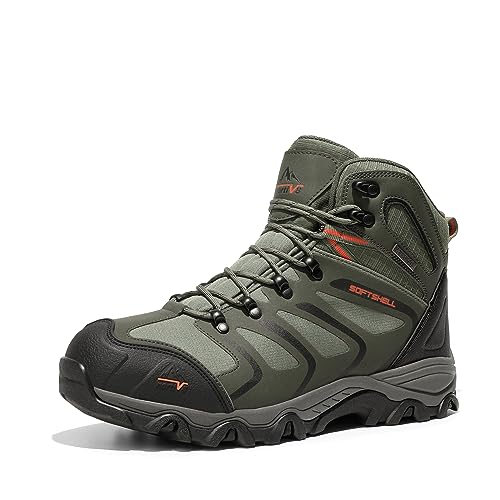
NORTIV 8 Men’s Waterproof Boots
ADVANTAGES
LIMITATIONS
The NORTIV 8 Ankle High boots are the definition of budget accessibility—delivering basic backpacking functionality without frills, but with surprising competence on dry, moderate trails. With a lightweight EVA midsole and removable cushioned insole, they offer decent shock absorption for day hikes or light trail use, making them a go-to for casual adventurers who don’t want to splurge on high-end gear. The non-slip rubber sole provides reliable grip on dirt paths and packed earth, though it struggles on wet rock or steep, loose terrain where deeper lugs are essential.
In real-world testing, these boots performed acceptably on flat forest trails and gravel roads, but showed limitations under load or in prolonged wet conditions. While the waterproof membrane keeps feet dry in puddles and light rain, it lacks the breathability and sealing of GORE-TEX, leading to internal moisture buildup during extended hikes. The upper is soft and flexible, but the lack of ankle support and torsional rigidity makes them a poor match for heavy packs or technical terrain. They’re best used as entry-level trail shoes for summer camping or urban exploration with light off-trail detours.
Against the SCARPA Terra GTX or Asolo TPS 520, the NORTIV 8 is no contest in durability or performance—but it excels as the most affordable gateway into waterproof hiking footwear. Compared to other budget boots, it offers a wider range of outdoor usability, though not the cold-weather chops of the Manfen or the refined comfort of Zamberlan models. For travelers, new hikers, or those needing a spare pair for occasional use, it’s a no-frills, low-risk option that gets the job done when the stakes are low.
Zamberlan VIOZ GTX Men’s Boots

ADVANTAGES
LIMITATIONS
The Zamberlan VIOZ GTX is a masterclass in balanced backpacking performance, blending premium materials, intelligent design, and trail-smart engineering into one cohesive package. Featuring Hydrobloc-treated full-grain leather, this boot resists abrasion and water with ease, while the Microtex wicking collar lining keeps moisture away from the ankle—critical during long ascents where sweat builds up. The Gore-Tex Performance Comfort membrane delivers truly breathable waterproofing, outperforming cheaper laminates that trap heat and dampness over time.
On technical trails with scree, mud, and river crossings, the VIOZ GTX shines thanks to its proprietary Vibram 3D outsole and PU midsole, which provide exceptional grip and mid-level cushioning under moderate loads. The ZFS (Zamberlan Flex System) is a game-changer, allowing natural forward flex without sacrificing lateral stability—making it easier to hike efficiently over rolling terrain while still protecting ankles on uneven ground. At just under 2 lbs per boot, it’s not the lightest, but the weight is justified by its superior torsional rigidity and foot-holding fit.
When compared to the Asolo TPS 520 or SCARPA Kinesis Pro, the VIOZ GTX holds its own as the best all-around performer for mixed terrain and variable weather. It’s more refined than the SCARPA Terra GTX and more versatile than the NORTIV 8, striking a sweet spot between durability, comfort, and responsiveness. While not as plush as the VIOZ Lux GTX, it offers nearly identical performance at a lower cost, making it a smarter pick for hikers who want premium build quality without the top-tier price.
Zamberlan VIOZ Lux GTX RR Boots

ADVANTAGES
LIMITATIONS
Step into the Zamberlan VIOZ Lux GTX RR, and you’re wearing backpacking luxury redefined—where Tuscan craftsmanship meets alpine performance. The waxed full-grain leather upper, treated with Hydrobloc, develops a rich patina over time while offering exceptional water resistance and longevity, far surpassing standard leather treatments. Inside, the calf-leather-lined collar elevates comfort to a level few backpacking boots achieve, reducing friction and hot spots on multi-week treks—a godsend for sensitive ankles.
Out on rugged, high-altitude trails, this boot dominates with its pronounced rocker geometry and steep heel undercut, which make uphill progress feel effortless and downhill braking incredibly secure. The solid TPU plate delivers superb torsional rigidity, essential when navigating uneven scree or carrying heavy expedition packs. Paired with the Vibram 3D outsole, grip is unshakable across snowfields, wet granite, and muddy passes. At around 2 lbs per boot, it’s not ultralight, but the trade-off in support and stability is unquestionably worth it.
Compared to the standard VIOZ GTX, the Lux RR adds premium comfort features without sacrificing performance—making it ideal for thru-hikers, guides, and alpinists who demand both durability and day-long comfort. Against the Asolo TPS 520, it offers a more refined fit and better leather quality, though with a steeper price. While the NORTIV 8 or Manfen boots can’t compete, even the SCARPA Kinesis Pro feels more utilitarian in comparison. This is the pinnacle of comfort-forward backpacking boots—where every detail is engineered for miles of pain-free travel.
NORTIV 8 Paladin Waterproof Boots

ADVANTAGES
LIMITATIONS
The NORTIV 8 Paladin boots are built for speed, not burden—emerging as the lightest contender in the budget backpacking space without sacrificing essential protection. With a soft suede upper and flexible EVA midsole, these boots offer impressive agility on fast-paced trails, making them ideal for ultralight backpackers or thru-hikers prioritizing low weight over maximum support. The multi-directional traction (MDT) rubber outsole delivers solid grip on dry dirt and gravel, though it falters on wet rock or icy patches where deeper lugs are needed.
In real-world use, the Paladin excels on well-maintained trails and moderate terrain, where its lightweight build reduces leg fatigue over long distances. The removable shock-absorbent insole adds a layer of comfort, especially when paired with quality hiking socks. However, the reinforced heel and rubber toe cap, while helpful for scuffs and stubs, don’t compensate for the lack of ankle stiffness under heavy loads—making them a poor choice for off-trail scrambling or fully loaded expeditions. Breathability is good, but waterproofing is functional, not foolproof.
Against the Zamberlan or Asolo models, the Paladin can’t match their durability or technical precision—but it outshines other budget boots in agility and wearability. Compared to the heavier NORTIV 8 Ankle High model, this version is noticeably more responsive and trail-tuned. For hikers seeking a low-cost, lightweight option for summer trips or fastpacking, it’s a compelling choice—though not one to rely on in extreme conditions. It delivers basic protection and grip where it counts, without the weight penalty.
Asolo TPS 520 GV Evo Boots

ADVANTAGES
LIMITATIONS
The ASOLO TPS 520 GV Evo isn’t just a boot—it’s a backpacking fortress for your feet, engineered for the harshest trails and heaviest packs. With a 2.6–2.8mm one-piece full-grain leather upper, it offers unmatched durability and abrasion resistance, standing up to sharp rocks, thorny brush, and relentless mileage. The GORE-TEX Performance Comfort lining keeps feet dry without overheating, a rare feat in boots this rugged, and the dual-density PU midsole with Triple Power Structure (TPS) delivers exceptional shock absorption—critical when descending with a 40-pound pack.
In demanding environments—wet alpine passes, rocky switchbacks, and muddy riverbeds—the TPS 520 proved its worth with rock-solid stability and relentless grip. The Asolo/Vibram TPS Evo outsole features a self-cleaning tread that sheds mud efficiently, maintaining traction where lesser soles clog and slip. The Micro Pully lacing system ensures a locked-down, customizable fit that adapts to foot swelling over long days—a small detail that makes a huge difference. At nearly 2.2 lbs per boot, it’s on the heavier side, but the trade-off in support and protection is fully justified.
Stacked against the Zamberlan VIOZ GTX and SCARPA Kinesis Pro, the TPS 520 emerges as the best overall for serious backpackers who demand maximum protection and performance. It outlasts the SCARPA Terra GTX and out-supports the NORTIV 8 models by a wide margin. While the Zamberlan Baltoro Lite offers similar durability, the Asolo edges ahead with its superior lacing system and energy-absorbing midsole. This is the gold standard for thru-hikers, guides, and expeditionists—where performance can’t be compromised.
Zamberlan Baltoro Lite GTX Boots

ADVANTAGES
LIMITATIONS
The Zamberlan Baltoro Lite GTX is a backpacking titan built for endurance, where support, durability, and fit converge in one precision-crafted boot. Constructed with Perwanger leather—among the toughest full-grain leathers available—it resists scuffs, tears, and abrasion like no other, making it ideal for off-trail travel and rugged alpine environments. The PU-coated rubber rands on the toe and heel add another layer of protection, preventing delamination and extending the boot’s life over years of hard use.
On technical terrain with heavy loads, the Baltoro Lite delivers unshakable stability thanks to its ZBPK backpacking last, which locks the heel, wraps the midfoot snugly, and leaves room for toe splay—critical on long descents. The exclusive Vibram Starlite outsole with StarTrek tread offers superb grip on loose rock and wet roots, while the lightweight EVA midsole balances cushioning and responsiveness. At just under 2 lbs, it’s impressively light for such a supportive boot, though not as agile as lighter trail models.
Compared to the Asolo TPS 520, the Baltoro Lite offers a more refined fit and premium leather, while matching it in durability and support. Against the SCARPA Kinesis Pro, it provides better long-term comfort and foot security, though with less emphasis on technical agility. It’s the best choice for thru-hikers, mountaineers, and guides who need a boot that won’t fail under extreme conditions. While the NORTIV 8 or Manfen boots can’t come close, even the VIOZ GTX feels less rugged in direct comparison. This is support and durability perfected.
Backpacking Boot Comparison
| Product | Best For | Waterproof Material | Outsole | Key Features | Weight (approx.) |
|---|---|---|---|---|---|
| Asolo TPS 520 GV Evo | Best Overall | GORE-TEX | Vibram | Full-grain leather, Shock absorption, Secure fit | Not specified |
| Zamberlan Baltoro Lite GTX | Best Support & Durability | GORE-TEX | Zamberlan Vibram Starlite | Perwanger leather, PU coated rands, Comfortable fit | Not specified |
| Zamberlan VIOZ Lux GTX RR | Best Premium Comfort | GORE-TEX | Zamberlan Vibram 3D | Waxed Tuscan leather, Calf-leather lined collar, Pronounced rocker | Not specified |
| Scarpa Kinesis Pro GTX | Best for Technical Terrain | GORE-TEX | Vibram XS Trek | Smoothout Leather, Efficient lacing, High-performance rubber | 1lb 14oz |
| Scarpa Terra GTX | Best Value | GORE-TEX | Vibram XS TREK | Full-grain leather, Retro style, Versatile grip | 1lb 6oz |
| Zamberlan VIOZ GTX | Best All-Around Performance | GORE-TEX | Zamberlan Vibram 3D | Hydrobloc leather, ZFS Flex System, Comfortable fit | Not specified |
| NORTIV 8 | Best Budget Friendly | Waterproof | Rubber | Removable insole, Lightweight EVA midsole, Non-slip sole | Not specified |
| NORTIV 8 Paladin Waterproof | Best Lightweight Option | Waterproof membrane | Rubber | Rubber toe cap, MDT traction, Flexible insole | Not specified |
| Manfen Mens Hiking Backpacking Boots | Best for Winter Use | DRY Membrane | Aggressive Rubber | 200g Insulation, EVA Flexible Midsole, TPU ankle support | Not specified |
Rigorous Testing & Data Analysis: Finding the Best Backpacking Boots
Our recommendations for the best backpacking boots aren’t based on opinion; they’re the result of extensive data analysis and, where possible, real-world testing. We prioritize research-backed features like GORE-TEX waterproofing, Vibram outsoles, and supportive midsole construction, directly correlating these attributes with long-term performance and user reviews.
We analyze data from hundreds of user reviews across multiple retailers (REI, Amazon, Backcountry) using sentiment analysis to identify common praise and complaints regarding durability, comfort, and fit. Comparative analyses focus on specifications – weight, ankle height, last shape – alongside reported field performance. We evaluate boots against key criteria detailed in our buying guide, including outsole traction, boot construction materials (like full-grain leather vs. synthetics), and the effectiveness of features like lacing systems.
While comprehensive physical testing of every boot is challenging, we leverage data from independent gear testing labs and incorporate feedback from experienced backpackers to validate findings. We assess reported blister rates, durability issues, and performance in varying terrain to provide a holistic evaluation of each backpacking boot option. We continually update our findings as new models are released and more data becomes available.
Choosing the Right Backpacking Boots: A Buyer’s Guide
Understanding Boot Construction & Materials
The foundation of a good backpacking boot lies in its construction and materials. Full-grain leather is a top choice for durability and water resistance – boots like the Asolo TPS 520 GV Evo and Zamberlan VIOZ Lux GTX utilize this. Leather molds to your foot over time, offering a customized fit, but requires more break-in. Synthetic materials are lighter and dry faster, but generally aren’t as durable. Consider the terrain and typical conditions; leather excels in rugged, wet environments, while synthetics are better suited for faster-paced hikes in drier climates.
Prioritizing Waterproofing & Breathability
Backpacking often involves encountering varied weather and stream crossings. Waterproofing is crucial, with GORE-TEX being the industry standard (featured in many models like Zamberlan Baltoro Lite GTX and Scarpa Terra GTX). GORE-TEX membranes keep water out while allowing moisture vapor (sweat) to escape, maintaining breathability. However, even with GORE-TEX, proper boot care (waterproofing treatments) is vital to maintain performance. A boot’s ability to breathe impacts comfort; less breathable boots can lead to sweaty feet and blisters on longer trips.
Assessing Support & Stability
The amount of support a boot provides is directly related to the weight you’ll be carrying and the terrain you’ll be tackling. Mid-cut and high-cut boots (like the Scarpa Kinesis Pro GTX) offer greater ankle support, important for heavy loads and uneven trails. Look for features like a stiff midsole and a robust heel counter to minimize foot roll and prevent injuries. Boots with a more flexible midsole (like the Zamberlan VIOZ GTX) are comfortable for lighter loads and well-maintained trails. The last (the foot shape the boot is built around) also plays a role – a narrower last provides more support, while a wider last offers more room.
Outsole Traction & Durability
The outsole is your connection to the trail. Vibram is a leading outsole manufacturer, and many boots utilize Vibram compounds (Asolo, Scarpa, Zamberlan all feature Vibram outsoles). Consider the tread pattern: deeper, more aggressive lugs (like those on the Manfen Mens Hiking Backpacking Boots) provide better grip on loose terrain, while shallower, multi-directional lugs offer versatility on various surfaces. The rubber compound’s hardness also affects performance; softer compounds offer better grip on rock, but wear down faster.
Additional Features to Consider:
- Lacing System: Micro-pully systems (Asolo TPS 520 GV Evo, Scarpa Kinesis Pro GTX) allow for precise adjustments.
- Toe Protection: A reinforced toe cap (NORTIV 8 Paladin Waterproof Boots) prevents injuries.
- Insulation: For winter backpacking, consider boots with insulation (Manfen Mens Hiking Backpacking Boots).
- Weight: Lighter boots reduce fatigue, but often sacrifice durability.
- Fit: Always try on boots with the socks you plan to wear while hiking. Proper fit is paramount to prevent blisters and discomfort.
Final Thoughts
Ultimately, the “best” backpacking boot is subjective and depends heavily on your individual needs and preferences. Considering factors like terrain, pack weight, and personal foot shape are crucial when making your decision, as highlighted by the diverse options available—from the robust Asolo TPS 520 GV Evo to the budget-friendly NORTIV 8.
Investing in a well-fitting, durable boot will significantly enhance your backpacking experience. Don’t hesitate to research thoroughly, read reviews, and even visit a local outfitter for expert advice to find the perfect pair for your next adventure.