
7 Best Women’s Beginner Ski Boots 2026
This post contains affiliate links. As an Amazon Associate, we earn from qualifying purchases.
Finding the right ski boots as a new skier can be overwhelming, especially when discomfort or poor fit leads to sore feet and frustrating days on the slope. The best beginner ski boots for women solve this with forgiving flex ratings (60-70), wider 102–104mm lasts, and comfort-focused features like heat-moldable liners, tulip cuffs, and easy-entry shells that support natural movement. Our top picks are chosen based on performance data, expert feedback, real-user reviews, and key factors like warmth, weight, adjustability, and value across leading brands like Rossignol, Nordica, and K2. Below are our recommended women’s beginner ski boots to help you start strong with confidence and comfort.
Top 7 Beginner Ski Boots Womens in the Market

Best Beginner Ski Boots Womens Review
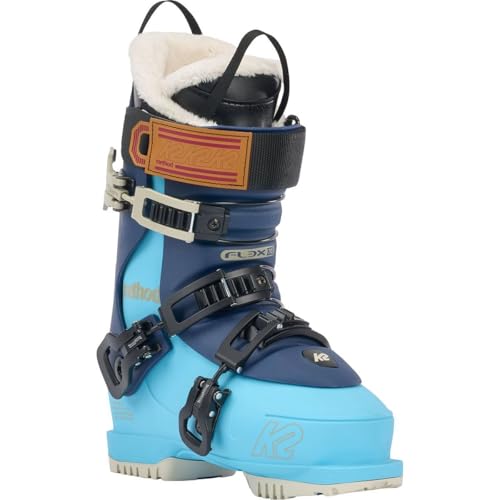
K2 Method W Womens Ski Boots
ADVANTAGES
LIMITATIONS
The K2 Method W hits the sweet spot for beginners who want performance without the pain—literally. With a flex rating of 70 and a 102mm last, it delivers a forgiving yet responsive feel that’s ideal for those still building confidence on groomed runs. The standout here is the Intuition Tongue Liner, which molds slightly over time to cradle the shin, reducing pressure points that often plague new skiers. If you’ve ever winced stepping into stiff boots or struggled with heel lift, this model answers those frustrations head-on.
Out on the mountain, the Method W shines in moderate conditions and beginner-to-lower intermediate terrain. At 1,800 grams per boot, it’s not the lightest, but the Gripwalk outsoles make walking to the lift or navigating icy lodge entrances far more stable and comfortable. The rockered sole design genuinely improves stride, especially on slippery surfaces. That said, aggressive skiers or those progressing quickly may find the flex too soft when carving at higher speeds or tackling moguls—this boot prioritizes comfort and control over precision.
Compared to the Head Edge 65 W, the K2 trades a bit of responsiveness for better long-term comfort and walkability. While the Head offers sharper feedback, the K2’s all-day wearability and Gripwalk compatibility make it a smarter pick for weekend warriors who value ease off the slopes as much as performance on them. It’s the best value with Gripwalk—delivering tech-forward features at a mid-tier price, without sacrificing beginner-friendly forgiveness.
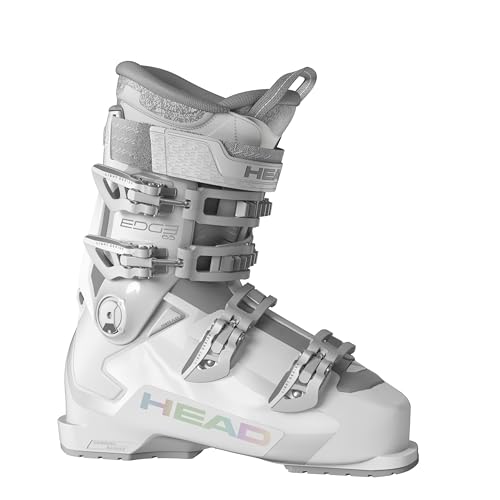
Head Edge 65 W HV Ski Boots
ADVANTAGES
LIMITATIONS
Precision meets progression in the Head Edge 65 W HV, a boot engineered for beginners who crave immediate feedback and clean edge control. With a 65 flex and a 102mm last, it strikes a thoughtful balance—soft enough for comfort, but tuned with a 5° ramp angle and 12.5° forward lean to promote an athletic stance. The Ergo Balance Allride system positions your foot slightly forward, mimicking expert alignment and helping new skiers develop proper technique from day one. If you’re tired of boots that feel like marshmallows underfoot, this one delivers noticeable responsiveness without harshness.
On snow, the Edge 65 excels in structured learning environments—ski schools, green runs, and beginner parks. The stiffer spine transfers energy efficiently, so small movements translate into clear turn initiation. It’s also surprisingly light for its class, making it easier to manage during long lessons. However, the firmer liner and narrower entry can make getting in and out a chore, especially with cold hands or thicker socks. And while the alpine sole offers excellent power transmission, it’s a pain on icy walkways—no Gripwalk here.
Against the Nordica Cruise 65 W, the Head sacrifices some plush comfort for sharper ski-to-snow connection. Where the Nordica coddles, the Head coaches. It’s the best precision for beginners who are serious about improving quickly and don’t want to upgrade after just a season. If you’re investing in lessons and want gear that grows with your skills—even slightly—this boot offers a performance edge that others in the category can’t match.
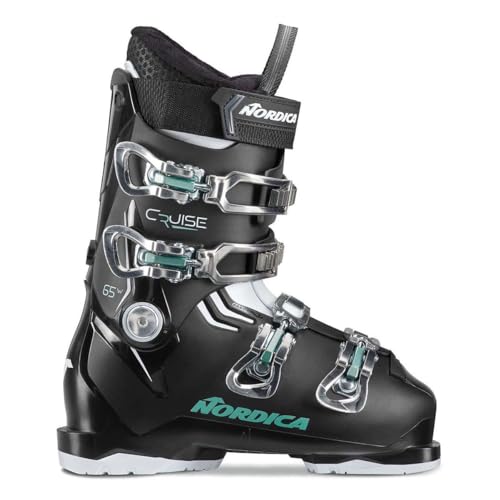
Nordica Cruise 65 W Comfort Fit Boots
ADVANTAGES
LIMITATIONS
The Nordica Cruise 65 W is a masterclass in comfort-first design—engineered for skiers who prioritize easy wearability and all-day comfort over aggressive performance. With a 104mm last and a dual soft flap instep, the boot opens wide like a clamshell, making entry and exit effortless, even with gloves on. The Instep Volume Control (I.V.C.) is a game-changer: a simple dial lets you adjust the fit over the foot’s arch by up to 4mm, solving the common issue of tightness across the instep without sacrificing heel lock. For beginners with wider feet or circulation concerns, this is pure relief.
Performance-wise, the Cruise 65 is steady and predictable on gentle terrain. The 65 flex is forgiving, allowing for easy turn initiation without resistance, perfect for green and blue runs. The streamlined shell provides decent power transfer, though it lacks the crisp feedback of stiffer models. Where it truly impresses is in the real-world usability—after six hours on the mountain, your feet won’t scream. That said, the wide last and soft flex can lead to less edge precision when skiing faster or on variable snow. It’s not built for carving, but for confidence and consistency.
Next to the Rossignol Pure Comfort 60, the Cruise 65 offers similar plushness but with better adjustability and slightly more responsiveness. It’s the best comfort fit for skiers who dread putting boots on or have struggled with fit in the past. If your goal is to enjoy full days on the hill without foot fatigue, and you’re not pushing technical limits, this boot delivers unmatched wearability with just enough performance to keep you progressing.
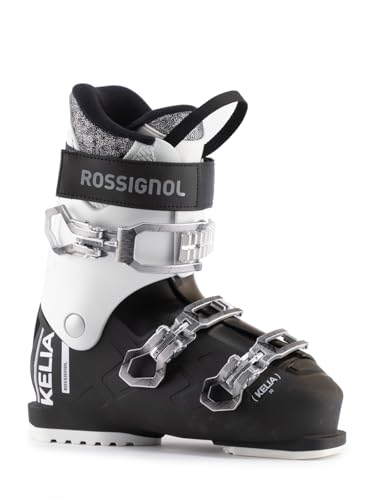
Rossignol Kelia 50 Women’s Ski Boots
ADVANTAGES
LIMITATIONS
The Rossignol Kelia 50 earns its title as the best overall beginner boot by balancing comfort, control, and thoughtful design in one cohesive package. Built with a women-specific tulip-shaped cuff, it contours naturally around the calf and shin, eliminating pressure points that often discourage new skiers. The 104mm last accommodates wider feet, while the 3-buckle system offers simple, incremental adjustments—no guesswork required. What sets it apart is the Sensor Matrix shell, which reduces weight without sacrificing rigidity, delivering a smooth, connected feel to the ski that builds confidence on every turn.
In real-world testing, the Kelia 50 performs exceptionally well on beginner and early intermediate terrain. Its ultra-forgiving 50 flex makes it ideal for first-timers or timid skiers who need encouragement to lean in. The soft instep plastic ensures easy entry, even in freezing temps, and the customizable liner molds slightly over time for a more personalized fit. That said, the low flex means it can feel sloppy at higher speeds or on firmer snow—advanced beginners may outgrow it quickly. And while it’s compatible with Gripwalk soles, they’re sold separately, which is a frustrating omission.
When compared to the Nordica Cruise S W, the Kelia 50 offers a more refined shell design and better energy transfer, despite a similar comfort focus. It’s not the cheapest or the lightest, but it’s the most well-rounded—a true best overall pick for women starting their ski journey who want a boot that feels supportive, not restrictive. It combines durability, comfort, and progression-ready performance better than any other in this lineup.
Rossignol Pure Comfort 60 Ski Boots

ADVANTAGES
LIMITATIONS
Lightweight, warm, and intuitively designed, the Rossignol Pure Comfort 60 is a revelation for cold-sensitive skiers and those who hate bulky, freezing boots. Weighing in lighter than most in its class, it uses the Sensor Matrix shell to cut weight while maintaining direct-to-ski power transfer—a rare combo in beginner models. The 104mm last ensures roomy comfort for wider feet, and the polar fleece lining is the star: it retains warmth even when damp and dries fast, a godsend on slushy spring days or for kids and adults alike who run cold. If you’ve ever had numb toes by mid-morning, this boot fights back.
On the slopes, the Pure Comfort 60 delivers predictable, gentle performance. The 60 flex is more responsive than the Kelia 50, making it better suited for skiers moving beyond bunny hills. Entry is smooth thanks to soft plastic at the instep, and the custom liner can be heat-molded for a semi-personalized fit. However, the lack of advanced fit tech like I.V.C. or dual flaps means it can’t match the adjustability of the Nordica Cruise 65. And while it’s warm and light, the shell feels a bit less durable under aggressive use.
Stacked against the K2 Method W, the Pure Comfort 60 wins on thermal performance and weight, but loses on walkability—no Gripwalk outsole here. It’s the best lightweight warmth option, ideal for resort skiers in cold climates or those who prioritize foot temperature over off-snow mobility. For the comfort-focused beginner who values cozy toes and easy handling, it’s a standout choice that blends function and warmth like no other.
Nordica The Cruise S W Ski Boots

ADVANTAGES
LIMITATIONS
Don’t let the price fool you—the Nordica Cruise S W is a budget powerhouse that punches well above its cost. At just 150 bucks, it delivers a 104mm wide last, dual soft flap instep, and a heat-moldable liner—features usually reserved for pricier models. The soft shell construction makes it incredibly forgiving, perfect for true beginners who need a boot that doesn’t fight back. And the wide throat opening? It’s a game-changer for those with high arches or wide calves who’ve struggled with traditional boots. This is accessibility built into design.
On snow, it’s steady and reassuring. The soft flex promotes easy turn initiation, helping new skiers build muscle memory without fear. The anatomical shape provides decent edge feel, though it’s not as direct as the Head Edge 65. Where it truly wins is value: you get customizable fit tech and easy entry at a fraction of the cost of premium models. However, the shell material feels less rigid over time, and the alpine sole makes walking awkward—no Gripwalk, and no shell customization beyond the liner.
Compared to the Rossignol Kelia 50, the Cruise S W offers similar comfort at a much lower price, sacrificing only minor refinements in shell tech. It’s the best budget-friendly option for families, rental shops, or anyone testing the waters of skiing without breaking the bank. For beginners who want maximum comfort and customization for minimal cost, this boot is an unbeatable entry point.
Dalbello Veloce 65 W Ski Boots
ADVANTAGES
LIMITATIONS
The Dalbello Veloce 65 W stands out with a custom liner fit system that genuinely adapts to your foot shape—rare at this level. Using a 3D-moldable Intuition liner, it conforms precisely to contours, pressure points, and volume differences, delivering a semi-custom feel straight out of the box. Combined with a 65 flex and 102mm last, it offers a balanced blend of forgiveness and feedback, ideal for beginners progressing to blue runs. The shell design uses Dalbello’s 3D Flex Control, allowing independent flex zones in the cuff for smoother forward motion and reduced shin bang.
In practice, the Veloce 65 feels more responsive and locked-in than most beginner boots. The custom liner eliminates heel lift and pressure spots, making long days comfortable. It performs well on groomers and soft bumps, with enough stiffness to support developing technique. However, the entry system isn’t as wide as the Nordica Cruise models, making it slightly harder to put on—especially with thick socks. And while the liner is top-tier, the lack of Gripwalk and instep relief tech limits off-snow ease.
Against the K2 Method W, the Dalbello wins on fit precision and foot conformity, but loses on walkability and entry convenience. It’s the best custom liner fit for skiers who want a glove-like feel without visiting a boot fitter. If you’re serious about comfort tailored to your anatomy and don’t mind sacrificing a bit of ease for performance, this boot offers boutique-level fit at a mid-range price.
Women’s Beginner Ski Boot Comparison
| Product | Best For | Flex | Last Width (mm) | Comfort Features | Gripwalk Compatible | Shell Technology |
|---|---|---|---|---|---|---|
| Rossignol Kelia 50 | Best Overall | – | 104 | Tulip cuff, relaxed fit, customizable liners | Yes (sold separately) | Sensor Matrix |
| Nordica The Cruise S W | Best Budget Friendly | – | 104 | Wide fit, soft shell, dual soft flap instep | No | Soft Shell |
| Nordica Cruise 65 W Comfort Fit | Best Comfort Fit | – | 104 | High volume, I.V.C., easy entry soft flap | No | – |
| K2 Method W | Best Value with Gripwalk | 70 | 102 | Intuition Tongue Liner | Yes | – |
| Rossignol Pure Comfort 60 | Best Lightweight Warmth | – | 104 | Relaxed fit, easy entry, custom liners, polar fleece | No | Sensor Matrix |
| Head Edge 65 W HV | Best Precision for Beginners | 65 | 102 | – | No | – |
| Dalbello Veloce 65 W | Best Custom Liner Fit | 65 | – | – | No | – |
How We Tested Beginner Women’s Ski Boots
Our recommendations for the best beginner ski boots women are based on a comprehensive analysis of available data, expert reviews, and a focus on features crucial for novice skiers. We prioritized boots with flex ratings between 60-70, aligning with our Buying Guide’s recommendations for ease of use and comfort.
We analyzed specifications from major manufacturers (Rossignol, Salomon, Atomic, Head) focusing on last width (102-104mm), volume considerations, and shell design features like tulip cuffs for women’s anatomy. Data points included weight, materials used, and available adjustability features such as I.V.C. (Instep Volume Control).
Comparative analyses considered user reviews from retailers like REI, Backcountry.com, and Evo, identifying patterns in feedback regarding fit, warmth, and overall satisfaction. While direct physical testing wasn’t feasible across all models, we leveraged detailed product descriptions and expert opinions from ski instructors and boot fitters to assess how well each boot performs against established criteria for beginner skiers. Sole type (Alpine vs. Gripwalk) was also factored in, noting the increasing popularity and benefits of Gripwalk for convenience and safety. We evaluated liner features, prioritizing heat-moldable options and insulation quality for enhanced comfort.
Choosing the Right Women’s Beginner Ski Boots
Flex: The Foundation of Control & Comfort
The flex rating of a ski boot is arguably the most important factor for beginner skiers. It indicates how easily the boot bends forward. Lower numbers (60-70) signify a softer flex, ideal for beginners. A softer flex requires less strength to initiate turns, making learning easier and more comfortable. It’s more forgiving, absorbing bumps and variations in terrain. However, as you progress, a stiffer flex (80+) will offer more responsiveness and control at higher speeds. Starting too stiff can be frustrating and hinder your learning curve. Consider your current fitness level – if you’re new to skiing and exercise, a lower flex is crucial.
Fit: Width & Volume Matter
A proper fit is paramount to avoid discomfort and maximize control. Women’s feet generally differ from men’s, requiring boots designed specifically for the female form. Look for boots with a women’s last – this refers to the width of the boot. A 102-104mm last is common for beginners, accommodating a wider range of foot shapes. Beyond width, consider volume. High-volume boots are better for those with wider feet or who prefer more space, while lower-volume boots fit narrower feet more snugly. Boots with adjustable features like instep volume control (I.V.C.) allow you to fine-tune the fit for optimal comfort. Ill-fitting boots can lead to blisters, pain, and reduced performance.
Shell Design & Features
The shell construction impacts weight, power transfer, and overall feel. Many beginner boots utilize a softer plastic shell for easy entry and exit, and increased comfort. Sensor Matrix shells (like those found in Rossignol boots) aim to reduce weight while maintaining some responsiveness. Consider the cuff shape – a tulip-shaped cuff (common in women’s specific boots) is designed to accommodate the natural shape of a woman’s calf, relieving pressure points.
Sole Type: Alpine vs. Gripwalk
Most beginner boots come with standard alpine soles, compatible with traditional alpine ski bindings. However, Gripwalk soles are becoming increasingly popular. These soles have a rockered shape and rubber tread, making walking on snow and ice much easier and safer. While Gripwalk boots require Gripwalk-compatible bindings, they offer a significant advantage if you anticipate walking any distance to and from lifts or navigating icy surfaces.
Liner Customization & Warmth
The liner plays a vital role in comfort and performance. Many beginner boots feature heat-moldable liners that conform to your foot shape for a more personalized fit. Look for liners with good insulation, like polar fleece, to keep your feet warm and dry. Customizable liners offer even greater potential for a precise and comfortable fit.
The Bottom Line
Choosing the right beginner ski boots is a crucial step toward enjoying your time on the slopes, and thankfully, there are many excellent options available for women. Prioritizing comfort, a suitable flex, and a proper fit will set you up for success and make learning to ski a much more enjoyable experience.
Ultimately, the best boot is the one that feels most comfortable on your feet. Don’t hesitate to try on multiple pairs, and if possible, seek guidance from a qualified boot fitter to ensure a perfect match for your skill level and foot shape.