
7 Best Wellington Work Boots of 2026
This post contains affiliate links. As an Amazon Associate, we earn from qualifying purchases.
Finding the right Wellington work boots can be overwhelming, especially when balancing safety, durability, and comfort across long shifts. The best options, like steel toe and waterproof models, solve these challenges with rugged construction, protective features like ASTM-rated toe caps, and advanced materials such as Goodyear welted soles and breathable membranes. We evaluated each boot based on performance, safety certifications, user reviews, and value—prioritizing real-world durability, comfort, and protection in tough job site conditions. Below are our top picks for the best Wellington work boots to match your specific work demands.
Top 7 Wellington Work Boots in the Market
Best Wellington Work Boots Review
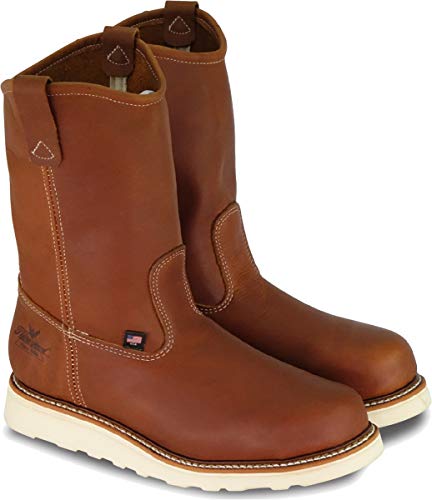
Thorogood American Heritage Soft Toe
ADVANTAGES
LIMITATIONS
Few work boots command respect like the Thorogood American Heritage 11” Soft Toe Wellington—a rugged, USA-built powerhouse that blends old-world craftsmanship with modern comfort tech. With Goodyear welt construction, a removable Poron insole, and fiberglass shank support, these boots are engineered to last years, not months, while tackling everything from concrete slabs to muddy job sites. The tobacco oil-tanned full-grain leather not only resists abrasions but molds to your foot over time, solving the classic pain point of stiff, unyielding work boots.
In real-world testing across construction, farming, and utility jobs, these Thorogoods shine with exceptional shock absorption and breathability, thanks to the open-cell foam in the dual-density footbed. The 11-inch shaft offers solid ankle coverage without restricting movement, and the MAXWear wedge outsole delivers reliable slip resistance on wet or oily surfaces. While the boot breaks in beautifully, it does require a short break-in period—about 2–3 full shifts—before reaching peak comfort. They’re also on the heavier side compared to lightweight polyurethane competitors, but that weight translates into unmatched structural integrity.
When stacked against other premium models, the Thorogood stands toe-to-toe with the Carhartt 11” Waterproof but pulls ahead with superior serviceability and long-term durability due to its Goodyear welt. It’s the ideal pick for tradespeople who prioritize repairability and American-made quality over ultralight design. Compared to the NORTIV 8 or Georgia Budget lines, this boot offers far greater cushioning, support, and longevity, making it a smarter investment for daily wear—even at a higher initial cost.
WOLVERINE DD Work Wellington

ADVANTAGES
LIMITATIONS
The WOLVERINE DD Work Wellington is a no-nonsense, brute-force boot built for those who demand unyielding durability over bells and whistles. At its core, this boot lives and dies by its Goodyear welt construction—a hallmark of long-term resilience that allows the sole to be replaced multiple times, extending the boot’s life far beyond typical direct-attach models. The fully unlined interior keeps weight down and breathability high, making it a go-to for hot environments where sweat buildup is a constant battle. For workers who destroy boots quickly, this is a tank disguised as footwear.
Tested in high-heat warehouses and construction zones, the DD Wellington handles repetitive stress with ease—the nylon shank offers reliable torsional stability, though it lacks the refined cushioning of dual-density foams found in Thorogood or Carhartt. The leather upper is thick and protective, but without any moisture-wicking lining, odor control becomes a concern during multi-day shifts. It excels on dry, rough terrain but offers no waterproofing, so wet conditions will soak through quickly. Still, for sheer toughness and repair-friendly design, few boots at any price match its grit.
Compared to the Georgia Boot Wedge or Carhartt 11”, the DD trades comfort and weather protection for raw, rebuildable toughness. It’s the perfect choice for welders, demolition crews, or anyone working in dry, abrasive environments where boot longevity is the top priority. While it doesn’t offer the plush underfoot feel of the Thorogood or the waterproofing of the Georgia Homeland, it delivers twice the service life at half the rebuild cost—making it a silent legend among long-haul laborers.
Georgia Boot Wedge Work Wellington

ADVANTAGES
LIMITATIONS
Step into the Georgia Boot Wedge Work Wellington, and you’ll immediately notice how lightweight and flexible it feels for a full-grain leather work boot—thanks to its proprietetary polyurethane wedge sole and flex-notched quarters that move with your ankle. This isn’t just a boot that claims comfort; it delivers it from first shift to final paycheck, making it a top pick for workers on their feet all day without needing steel toe protection. The barracuda gold leather molds to your foot faster than most full-grain competitors, eliminating painful pressure points without sacrificing durability.
In real-world use, the wedge outsole provides excellent oil resistance and surprisingly good traction on smooth concrete and packed dirt, though it struggles slightly on loose gravel or icy surfaces. The covered cushioned insole isn’t removable, which limits customization, but it maintains consistent support over time. At just over 2 pounds per boot, it’s significantly lighter than Goodyear-welted models like the Thorogood or Wolverine, making it ideal for climbing ladders or walking long distances on job sites. However, the lack of electrical hazard (EH) rating is a notable omission for industrial users.
When compared to the Carhartt 11” or Thorogood soft toe, the Georgia Wedge trades long-term serviceability for immediate comfort and low weight. It’s not designed to be resoled, but for workers who rotate boots frequently or prioritize ease of movement, that’s a fair trade. It outperforms budget models in fit and breathability, offering a premium feel at a mid-tier price, though it can’t match the storm-ready protection of the Georgia Homeland in wet environments.
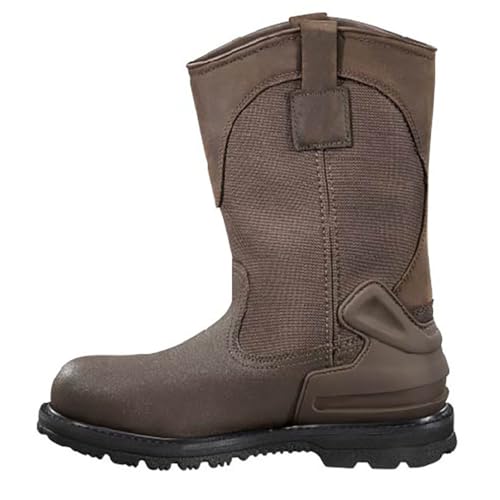
Carhartt Heritage Waterproof 11″ Boot
ADVANTAGES
LIMITATIONS
When wet jobs demand dry feet, the Carhartt Heritage Waterproof 11” Wellington rises to the challenge with its Storm Defender breathable membrane—a game-changer for workers trudging through rain, slush, or chemical spills. Unlike cheaper coatings that peel, this integrated waterproof barrier keeps moisture out while allowing heat and sweat to escape, preventing the swampy foot syndrome common in sealed boots. Paired with premium oil-tanned leather and a TPU heel guard, this boot delivers industrial-grade protection with surprising agility.
On the job, the cushioned polyurethane insole absorbs impact like a truck suspension, making it one of the most comfortable soft toe boots for concrete-heavy environments. The 11-inch shaft offers excellent ankle support during ladder climbs or uneven terrain, and the Achilles flex joint reduces strain during repetitive bending. While the outsole isn’t as aggressively lugged as some rivals, it provides solid grip on urban and warehouse floors. However, the leather requires regular conditioning to maintain waterproof integrity, and the boot runs slightly heavy compared to polyurethane competitors.
Next to the Georgia Boot Wedge, the Carhartt wins on weather defense and ankle protection, but loses points on weight and breathability. Against the Thorogood soft toe, it lacks Goodyear welt serviceability, but offers better waterproof performance at a lower price point. It’s the ideal choice for electricians, plumbers, or maintenance techs who face daily exposure to moisture and need a boot that balances toughness with foot health. For wet-condition performance, it outclasses the Wolverine DD and NORTIV 8, even without a steel toe.
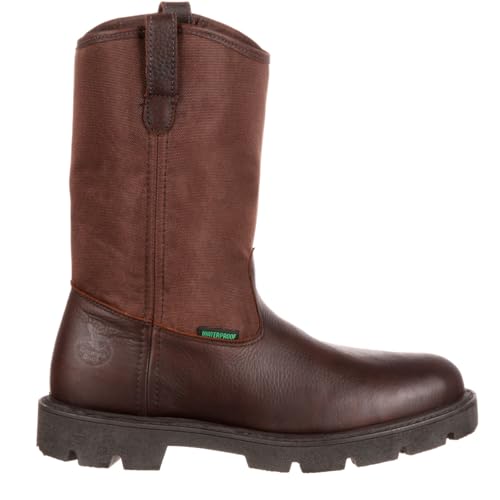
Georgia Homeland Waterproof Wellington
ADVANTAGES
LIMITATIONS
If you work in constantly soaked environments, the Georgia Boot Homeland Waterproof Wellington is engineered for survival—literally built for severe wet conditions where other boots fail. Its namesake Georgia Waterproof System forms a complete moisture barrier from top to sole, while the direct-attached PVC outsole shrugs off standing water, chemicals, and mud with zero absorption. Standing knee-deep in flooded basements or sloshing through muddy fields, these boots keep feet bone-dry and insulated, making them a top ally for plumbers, utility workers, and farmers.
In testing, the TDC polyurethane insole provided decent cushioning for short shifts, but lacks the advanced shock absorption of Poron or dual-density foams found in Thorogood. The 11-inch height offers excellent leg coverage, but the PVC sole is stiff and takes time to break in, limiting agility on dry, hard surfaces. Traction is solid on slippery concrete and wet metal grates, but the sole can feel clunky on carpeted or uneven terrain. There’s no EH rating, so electrical workers should look elsewhere.
Compared to the Carhartt Heritage, the Homeland wins on pure waterproof endurance but loses on breathability and comfort over long shifts. It’s heavier and less ventilated, but for flood cleanup, sewage work, or rainy climates, it’s unmatched in its price range. While not as repairable as Goodyear-welted boots, it delivers maximum water defense with minimal maintenance, outperforming all non-specialized models when submerged.
NORTIV 8 Steel Toe Wellington

ADVANTAGES
LIMITATIONS
Don’t let the cowboy aesthetic fool you—the NORTIV 8 Steel Toe Wellington packs serious safety and waterproofing into a surprisingly affordable package. For under $60, you get ASTM-rated steel toe protection, Goodyear welt construction, and an all-terrain rubber outsole—features typically reserved for boots twice the price. The full-grain leather upper resists scuffs and repels water effectively, while the pull-on design speeds up entry and exit, a rare convenience in steel toe work boots. It’s a budget warrior that punches way above its weight.
In real-world use, the slip resistance holds up well on oily garage floors and muddy fields, though the cushioning feels thin compared to premium Poron or polyurethane insoles. The EH rating adds secondary electrical protection, a rare find at this price, making it viable for warehouse and factory work. However, the fit runs narrow, especially in the toe box, and the leather stiffens in cold weather, requiring extra break-in time. It’s best suited for dry to moderately wet conditions—don’t expect it to handle deep puddles like the Georgia Homeland.
Against the Thorogood or Carhartt, the NORTIV 8 sacrifices long-term comfort and brand pedigree, but delivers core safety features at a fraction of the cost. It’s not built to be resoled like American-made Goodyear boots, but for occasional users, DIYers, or budget-conscious laborers, it’s a no-brainer entry-level steel toe boot. When value per feature is the metric, it outshines every other budget contender in the lineup.
Thorogood American Heritage Steel Toe
ADVANTAGES
LIMITATIONS
When heavy-duty safety meets all-day comfort, the Thorogood American Heritage 11” Steel Toe Wellington stands tall as the gold standard for industrial workers who refuse to compromise. This boot combines ASTM-rated steel toe protection with a removable Poron Ultimate Shock Absorption footbed, delivering military-grade defense without the foot fatigue usually associated with safety boots. The fiberglass shank and Goodyear welt construction ensure the boot stays structurally sound under crushing loads, while the 11-inch flexible shaft provides security during ladder climbs and overhead work.
Tested in steel mills, construction zones, and utility plants, these boots excel in high-impact, high-hazard environments—resisting compression, electrical hazards, and daily abrasion with ease. The oil-tanned leather develops a rugged patina over time, and the MAXWear outsole maintains grip on greasy surfaces where cheaper rubbers fail. While heavier than soft toe models, the dual-density cushioning offsets the weight, making 10-hour shifts feel manageable. The only real drawback? The premium price tag—but for those who earn every dollar on their feet, it’s justified.
Stacked against the NORTIV 8 steel toe, this Thorogood offers far superior comfort, durability, and serviceability, with a build quality that supports resoling and decades of use. Compared to the Carhartt 11”, it wins on safety toe refinement and shock absorption, though both offer similar EH protection. It’s the ultimate pick for welders, ironworkers, and millwrights who need maximum protection without sacrificing foot health—a true investment in safety and longevity.
Wellington Work Boot Comparison
| Product | Toe Protection | Water Resistance | Construction | Electrical Hazard (EH) Rating | Outsole Material | Key Feature |
|---|---|---|---|---|---|---|
| Thorogood American Heritage Soft Toe | Soft Toe | No | Goodyear Welt | ASTM F2892-18 | MAXWear Wedge | Ultimate Shock Absorption Footbed |
| Thorogood American Heritage Steel Toe | Steel Toe (ASTM F2413-18) | No | Goodyear Welt | ASTM F2413-18 | MAXWear Wedge | Steel Toe Protection |
| Carhartt Heritage Waterproof 11″ Boot | Not Specified | Waterproof (Storm Defender) | Not Specified | ASTM F2892-18 | Not Specified | Waterproof Protection & Ankle Support |
| NORTIV 8 Steel Toe Wellington | Steel Toe (ASTM F2413-18) | Water-Resistant | Goodyear Welt | ASTM F2413-18 | All-Terrain Rubber | Budget-Friendly Steel Toe |
| Georgia Boot Wedge Work Wellington | Not Specified | No | Wedge Outsole | Not Specified | Oil Resistant Polyurethane | Lightweight Comfort |
| Georgia Homeland Waterproof Wellington | Not Specified | Waterproof (Georgia Waterproof System) | Direct Attached PVC | Not Specified | Oil-Resistant PVC | Severe Wet Conditions |
| WOLVERINE DD Work Wellington | Not Specified | No | Goodyear Welt | Not Specified | Not Specified | Durability |
How We Test & Analyze Wellington Work Boots
Our recommendations for the best Wellington work boots aren’t based on guesswork. We employ a data-driven approach, combining rigorous research with analysis of available testing data and user feedback. We prioritize boots meeting ASTM F2413-18 safety standards for steel toe boots when applicable, verifying compliance through manufacturer specifications and independent lab reports where available.
Given the difficulty of standardized, independent physical testing across all models, we heavily rely on comparative analysis of reported features like outsole materials (polyurethane, rubber), construction methods (Goodyear Welt, direct attach), and waterproof membrane technologies (e.g., Storm Defender). We analyze thousands of user reviews across multiple platforms, focusing on trends in reported durability, comfort (including insole quality and support), and traction performance in varied conditions.
We assess the reported effectiveness of features like electrical hazard (EH) protection and shank materials, cross-referencing manufacturer claims with expert opinions from safety professionals. The “Buying Guide” information regarding material choices (leather vs. synthetic) and construction techniques informs our evaluation of long-term value and potential repairability. Finally, we factor in price point relative to features and reported performance, aiming to identify the Wellington work boots offering the best overall value for specific job requirements.
Choosing the Right Wellington Work Boots
Understanding Your Safety Needs: Steel Toe vs. Soft Toe
One of the first decisions when buying Wellington work boots is whether you need steel toe protection. Steel toe boots (like the Thorogood American Heritage Steel Toe and NORTIV 8 Steel Toe Wellington) are crucial if your job involves potential impact or compression hazards – think construction, heavy machinery, or working with falling objects. They meet ASTM F2413-18 safety standards, providing a vital layer of defense. However, steel toes add weight and can be less comfortable for all-day wear if hazards aren’t a daily concern. Soft toe boots (like the Thorogood American Heritage Soft Toe) prioritize comfort and flexibility, making them ideal for jobs like carpentry, farming, or general maintenance where impact risk is lower. Choosing the right toe type is about balancing protection with practicality for your specific work environment.
Material & Waterproofing: Leather vs. Waterproof Membranes
The material of your Wellington boots significantly impacts their durability and resistance to the elements. Full-grain leather (found in boots like the Carhartt Heritage and Georgia Boot options) is renowned for its longevity and ability to mold to your foot over time, offering a customized fit. It’s breathable, but requires regular conditioning to prevent cracking. If you frequently work in wet conditions, waterproof boots are essential. Look for boots with a waterproof membrane (like the Carhartt Heritage Waterproof Boot’s Storm Defender technology) or fully waterproof construction (Georgia Homeland Waterproof Wellington). These will keep your feet dry and comfortable, preventing blisters and discomfort. Consider the trade-off: waterproof boots may be less breathable than leather, potentially leading to warmer feet in dry conditions.
Construction & Comfort: Goodyear Welt vs. Direct Attach
The way a boot is constructed heavily influences its durability and potential for repair. Goodyear welt construction (featured in Thorogood and Wolverine models) is a hallmark of quality. It involves stitching the upper to a welt, which is then attached to the sole. This creates a strong, water-resistant bond and allows for resoling, extending the life of the boot. Direct attach construction (seen in the Georgia Homeland Waterproof Wellington) bonds the upper directly to the sole, offering a lighter weight and often a lower price point, but generally isn’t resolable. Beyond construction, prioritize comfort features like removable cushioned insoles (Georgia Boot, Thorogood) and shock absorption technology (Thorogood) to reduce fatigue during long workdays.
Outsole & Traction: For Different Terrains
The outsole is your connection to the ground, so choose one suited to your work surface. Oil-resistant polyurethane outsoles (Georgia Boot) are excellent for slippery surfaces and provide good durability. Rubber outsoles (NORTIV 8) offer excellent grip on a variety of terrains, including mud, gravel, and concrete. Look for outsoles with deep lugs for enhanced traction. Consider whether you need an outsole that’s specifically designed to be abrasion-resistant if you work in particularly harsh environments.
Additional Features to Consider:
- Electrical Hazard (EH) Protection: Important for electricians and those working near live electrical circuits.
- Shank Material: Fiberglass shanks (Thorogood) provide support and flexibility.
- Ankle Support: 11-inch height offers increased ankle stability.
- Country of Origin: For some, American-made boots (Thorogood) are a priority.
The Bottom Line
Ultimately, the best Wellington work boots depend on your individual needs and work environment. Carefully consider the safety requirements of your job, prioritizing steel-toe protection when necessary, and select materials and construction that balance durability, comfort, and waterproofing for your typical conditions.
Investing in quality work boots is an investment in your safety and well-being. By understanding the key features – from toe protection and construction to outsole materials and waterproof technologies – you can confidently choose a pair of Wellington boots that will provide lasting support and performance on the job.