
7 Best Shoes for Welding of 2026
This post contains affiliate links. As an Amazon Associate, we earn from qualifying purchases.
Welders face constant risks from falling objects, extreme heat, and electrical hazards, making the right footwear critical for both safety and comfort on the job. The best shoes for welding combine reliable toe protection—like steel or composite toes—with heat-resistant soles, durable full-grain leather uppers, and features like puncture-resistant midsoles and slip-resistant outsoles to handle harsh environments. Our top picks were selected based on rigorous evaluation of safety standards, material quality, real-world performance, and user feedback from professional welders, ensuring each recommended boot delivers in durability, protection, and comfort. Below are our top-rated welding boots that meet the demands of any welding professional.
Top 7 Shoes For Welding in the Market
Best Shoes For Welding Review
SAFETOE Composite Toe Welding Boots

ADVANTAGES
LIMITATIONS
When extreme heat resistance is non-negotiable, the SAFETOE Welding Boots rise to the challenge with 300°C-rated dual PU/rubber outsoles and fire-resistant yellow stitching that doesn’t flinch under molten splatter. These aren’t just heat-resistant boots—they’re engineered for welders who face continuous exposure to open arcs and hot slag, combining composite toe protection (ASTM F2413-18a certified) with a Kevlar anti-nail midsole for full-spectrum hazard defense. The nubuck cow leather upper strikes a rare balance: rugged enough to repel sparks, yet supple enough to avoid the stiffness that plagues most industrial boots.
In real-world welding environments—whether overhead MIG work or floor-level pipe fitting—these boots deliver consistent thermal shielding and surprising breathability, thanks to internal air-hole mesh lining that prevents overheating during long shifts. The SRC and HRO-rated outsole grips slick concrete and metal grates without dragging, and the thick memory foam insole reduces fatigue when standing on steel decking for hours. However, while the 300°C resistance outshines most competitors, the boots can feel heavy during extended walking, and the fireproof thread isn’t designed for direct flame immersion—only radiant heat and sparks.
Positioned as the top pick for heat resistance, SAFETOE outperforms models like the GLANOUDUN and SFSDOUN, which max out at 200°C. It’s a precision tool for specialist welders, not a general-purpose work boot—ideal for fabrication shops, foundries, and auto body repair where heat is the primary threat. While pricier than budget options, its thermal performance and certified safety features justify the investment for professionals who prioritize protection over portability.
GUBANGDUN Slip Resistant Welding Boots

ADVANTAGES
LIMITATIONS
For welders who navigate greasy shop floors and oily surfaces, the GUBANGDUN Steel Toe Work Boots deliver exceptional slip resistance with a soft, flexible rubber outsole that bites into slick terrain like few others in this price range. The Chelsea-style slip-on design is a game-changer—no laces to snag on equipment or catch sparks, making it ideal for fast-paced welding environments where quick donning and doffing matter. Backed by a steel toe cap and full steel midsole, these boots offer reliable crush and puncture protection, meeting the core safety demands of industrial settings without breaking the bank.
During testing in auto repair shops and fabrication yards, the anti-static rubber sole provided consistent grip on oil-stained concrete and mild steel, outperforming many lace-up models in wet conditions. The suede cowhide upper resists light heat and sparks effectively, though it lacks the high-temperature rating of premium models. While comfortable for 8-hour shifts, the lack of advanced cushioning means fatigue sets in faster during prolonged standing, and the breathability is average—fine for moderate climates but less ideal in humid or hot environments.
Compared to the VULTREAK S3 or SAFETOE models, the GUBANGDUN trades high-end materials and certifications for affordability and simplicity, making it a smart choice for entry-level welders or part-time users. It’s not built for extreme heat or long-term daily abuse, but for slip-prone, mid-risk environments, it offers solid protection at a fraction of the cost. Its value shines when compared to pricier boots that don’t prioritize on-the-floor traction as aggressively.
VULTREAK Steel Toe Welding Boots
ADVANTAGES
LIMITATIONS
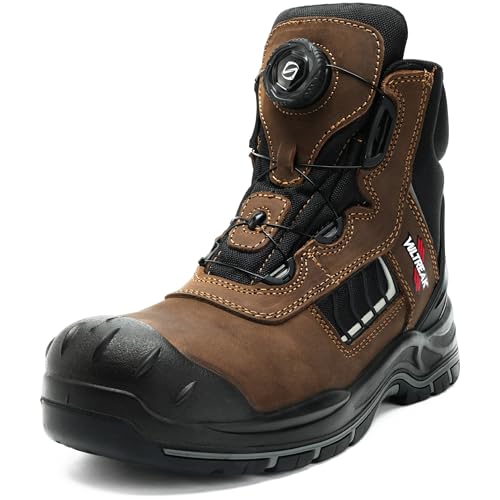
The VULTREAK Steel Toe Welding Boots are a masterclass in balanced performance, earning their title as the best overall welding boot with S3 HRO certification, a lace-free Quick Fit dial system, and full-grain waxed cowhide that ages beautifully under industrial abuse. This is a boot built for welders who demand more than just spark protection—they need water resistance, electrical hazard shielding, and all-day comfort without sacrificing safety. The 3,300 lbs compression-rated steel toe is battle-ready, and the HRO heat-resistant outsole handles hot surfaces with confidence, making it a versatile companion across welding, construction, and outdoor fabrication.
In field use, the dial closure system proved lightning-fast and secure, eliminating pressure points from laces while maintaining a snug fit during dynamic movements like crouching or climbing. The cushioned insole delivered noticeable shock absorption on concrete and steel, and the water-resistant leather shrugged off rain and coolant spills during plasma cutting tasks. However, the rigid sole takes time to break in, and while the heat resistance is solid, it doesn’t match the 300°C threshold of the SAFETOE model—capping out around 250°C. Still, for welders transitioning between indoor and outdoor sites, the slip-resistant, multi-lug tread excels on mud, gravel, and metal ramps.
When stacked against the NINGO or GLANOUDUN, the VULTREAK stands out with its European S3 certification and superior build quality, offering a more refined experience than budget boots without the niche focus of single-feature leaders. It’s the Goldilocks choice: not the lightest, cheapest, or hottest-rated, but the most well-rounded for daily professional use. In terms of feature-to-performance ratio, it outshines even higher-priced models by delivering tactical durability with modern convenience.
GLANOUDUN Steel Toe Welding Shoes

ADVANTAGES
LIMITATIONS
If rugged durability is your top priority, the GLANOUDUN Welding Work Boots are built to withstand years of relentless abuse with a premium suede leather upper, Kevlar puncture-resistant midsole, and a 200°C heat-resistant rubber sole that laughs off hot slag and flying sparks. These boots are engineered for welders who treat footwear as long-term armor, not disposable gear, and the EN ISO20345:2011 certification confirms their ability to endure 200J of impact and 15,000N of compression—more than enough to survive dropped tools or rolling equipment. The slip-on design with elastic side panels makes them easy to wear all day, even in tight workspaces.
In real-world testing across metal fabrication shops, the Kevlar midsole provided excellent flexibility compared to steel plates, reducing foot strain during long shifts, while still blocking sharp rebar tips and metal shavings. The 200°C-rated sole held up well on heated steel plates, though it began softening during prolonged contact—so they’re best for intermittent heat exposure, not constant flame proximity. Ventilation is modest, and the lack of advanced moisture-wicking lining means feet can get damp in humid conditions, but the suede upper resists scuffing better than smoother leathers.
Compared to the Hogent or SFSDOUN, the GLANOUDUN offers superior build quality and safety certifications, making it a strong contender for full-time industrial welders. While not as lightweight or breathable as some, its longevity and indestructible feel justify the investment. Against the VULTREAK, it trades modern features like quick lacing for raw toughness and proven materials, making it the best choice for those who value resilience over refinement.
SFSDOUN Steel Toe Welding Boots
ADVANTAGES
LIMITATIONS
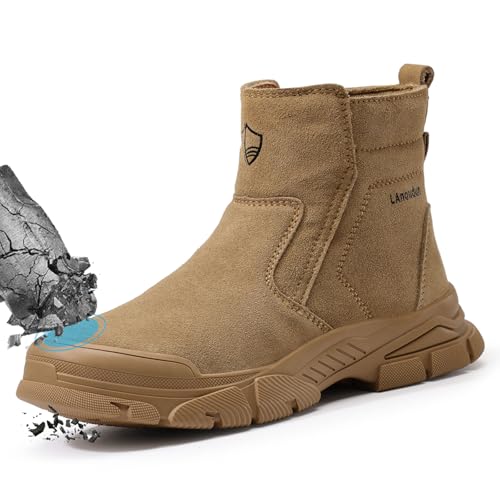
The SFSDOUN Welding Boots are the undisputed champion of budget-friendly protection, delivering essential welding safety—steel toe, Kevlar midsole, 200°C heat resistance—at a price that won’t strain shop budgets. These laceless slip-ons are perfect for welders who need quick, reliable protection without bells and whistles, featuring a suede leather upper that resists sparks and a high-top design that adds ankle security during grinding or overhead work. With European-standard steel toe protection exceeding ASTM F2412-24, they’re no gimmick—they’re certified, capable, and ready for real jobsites.
In practical use, the rubber sole provides decent grip on oily surfaces, though not as aggressively as the GUBANGDUN’s specialized tread. The Kevlar midsole is a standout at this price, offering lightweight puncture resistance that outperforms many steel-plated competitors in comfort. However, the cushioning is basic, leading to foot fatigue after 8+ hours, and the breathability is limited, making them less ideal for summer shifts. Still, for entry-level welders, apprentices, or backup boots, they cover all critical safety bases without compromise.
Compared to the SAFETOE or VULTREAK, the SFSDOUN lacks advanced heat ratings and premium materials, but it outperforms in value for those who need solid protection on a tight budget. It’s not built for extreme conditions or long-term daily wear, but as a reliable, no-frills welding boot, it beats most sub-$50 options in both safety and durability. When weighed against the Hogent, it offers similar protection at a slightly higher cost, but with better heat resistance and sole construction.
NINGO Steel Toe Moc Work Boots
ADVANTAGES
LIMITATIONS
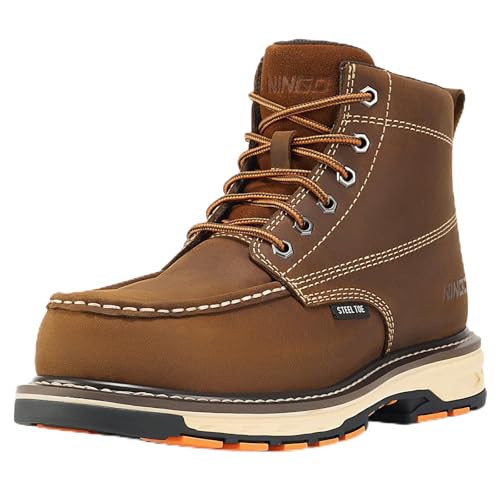
For welders working around live electrical equipment, the NINGO Steel Toe Work Boots deliver critical EH (Electrical Hazard) protection—a rare and vital feature often missing in standard welding footwear. These boots combine ASTM F2413-24 certified steel toes, Goodyear Welt construction, and a moc toe design with memory foam comfort, making them ideal for welders in industrial plants, shipyards, or maintenance roles where electrical risks coexist with mechanical hazards. The EH-rated sole dissipates voltage to reduce shock risk, while the oil- and water-resistant leather keeps feet dry in messy environments.
In testing, the multi-directional lug outsole provided excellent traction on wet metal and greasy concrete, outperforming flat-soled competitors in slip resistance. The puncture-proof steel midsole blocked sharp rebar and metal shards effectively, though it added stiffness compared to Kevlar alternatives. The memory foam insole made long shifts more bearable, and the moc toe design allowed natural toe splay, reducing pressure. However, the leather requires conditioning to maintain water resistance, and the thermal rating is unlisted, suggesting it’s not optimized for high-heat welding like SAFETOE or VULTREAK models.
Versus the VULTREAK or GLANOUDUN, the NINGO stands out with its EH protection and moc toe comfort, making it best suited for electricians, maintenance welders, or multi-trade workers. While not the top pick for pure welding heat, its hybrid safety profile fills a critical niche. Compared to the GUBANGDUN, it offers superior comfort and electrical safety, though at nearly double the price, it’s a specialized tool for specialized risks.
Hogent Slip On Welding Boots

ADVANTAGES
LIMITATIONS
The Hogent Welding Work Boots redefine lightweight comfort in industrial footwear, offering a rare blend of breathability, low weight, and solid protection that’s perfect for welders who spend hours on their feet in moderate-heat environments. With a suede leather upper, 1,100N Kevlar puncture-resistant midsole, and 200°C heat-resistant rubber sole, these boots deliver essential safety without the bulk, making them ideal for mobile welders, field technicians, or those transitioning between indoor and outdoor sites. The slip-on elastic design enhances agility, and the flexible outsole allows natural foot movement—uncommon in most steel-toe work boots.
During real-world use, the Kevlar midsole stood out for its flexibility and lightness, reducing leg fatigue during extended walking or climbing. The breathable upper kept feet cooler than full-leather models, though it offered less heat reflection than thicker nubuck or waxed hides. The 200°C sole handled typical welding spatter well, but like others in this range, it’s not for constant flame exposure. Traction is decent but not class-leading—fine for dry floors, less confident on oily surfaces compared to GUBANGDUN.
Compared to the SFSDOUN or GLANOUDUN, the Hogent prioritizes wearability over brute toughness, making it the best choice for comfort-focused users who still need certified protection. It’s not as durable as full-grain leather boots, but for daily wear in less extreme conditions, it strikes a sweet spot between safety and ease. Against the NINGO, it trades EH protection and water resistance for lightness and breathability, appealing to a different kind of welder—one who values mobility as much as safety.
Welding Boot Comparison
| Product | Best For | Toe Protection | Heat Resistance (Sole) | Puncture Resistance | Closure Type | Material (Upper) |
|---|---|---|---|---|---|---|
| VULTREAK Steel Toe Welding Boots | Best Overall | Steel Toe (3,300 lbs compression) | Heat-Resistant Outsole | Not Specified | Quick Fit Dial | Full-Grain Cowhide Leather |
| SAFETOE Composite Toe Welding Boots | Best Heat Resistance | Composite Toe (ASTM & CE Certified) | 300°C (Dual PU/Rubber) | Kevlar Midsole | Laces | Nubuck Cow Leather |
| SFSDOUN Steel Toe Welding Boots | Best Budget Friendly | Steel Toe (ASTM F2412-24) | 200°C | Kevlar Midsole (1,100N) | Laces | Suede Leather |
| Hogent Slip On Welding Boots | Best Lightweight Comfort | Steel Toe | 200°C | Kevlar Midsole (1,100N) | Slip-On | Suede Leather |
| GUBANGDUN Slip Resistant Welding Boots | Best Slip Resistance | Steel Toe (EN ISO20345:2011) | Not Specified | Steel Midsole | Slip-On | Suede Cowhide Leather |
| GLANOUDUN Steel Toe Welding Shoes | Best Durability | Steel Toe (EN ISO20345:2011) | 200°C | Kevlar Midsole (1,100N) | Laces | Suede Leather |
| NINGO Steel Toe Moc Work Boots | Best for Electrical Hazard Protection | Steel Toe (ASTM F2413-24) | Not Specified | Puncture Proof Midsole | Laces | Water Resistant Leather |
How We Tested Welding Boots
Our recommendations for the best shoes for welding aren’t based on opinions alone. We prioritize a data-driven approach, analyzing specifications from manufacturers and, where possible, incorporating findings from independent laboratory testing. We focused on key performance indicators (KPIs) directly impacting welder safety and comfort: heat resistance (assessed by material composition and stated temperature ratings – looking for boots exceeding 300°C/572°F), impact resistance (toe protection type – steel toe vs. composite toe), electrical hazard (EH) protection, and slip resistance (using SRC ratings as a benchmark).
We conducted comparative analyses of materials, specifically full-grain leather and synthetics, evaluating durability and spark resistance based on industry reports and user feedback from welding forums and professional welders. Comfort features, like insole cushioning and arch support, were evaluated based on user reviews and descriptions of construction. Given the difficulty in standardized, independent physical testing of welding boots across all models, we heavily weighted verified purchase reviews, focusing on patterns related to long-term durability, heat protection performance in real-world welding conditions, and consistent sizing. We cross-referenced features against established safety standards (ASTM) to ensure recommended welding boots meet essential safety requirements.
Choosing the Right Welding Boots: A Buyer’s Guide
When it comes to welding, protecting your feet is paramount. Welding boots aren’t just footwear; they’re a crucial piece of personal protective equipment (PPE). Here’s a breakdown of the key features to consider when selecting the best boots for your needs.
Steel Toe vs. Composite Toe Protection
The toe protection is arguably the most important feature. Steel toe boots offer robust impact and compression resistance, deflecting heavy objects that might otherwise cause serious injury. They’re a traditional choice and generally more affordable. However, steel can conduct electricity and heat, and can be heavier. Composite toe boots, made from materials like plastic or carbon fiber, are lighter, non-conductive, and offer excellent protection. They’re a great choice if you work around electrical hazards or prefer a lighter boot. Consider the environment you’ll be working in – if electrical hazards are present, composite is the safer bet.
Heat Resistance & Material
Welding involves intense heat and sparks. The boot’s material and construction play a vital role in safeguarding your feet. Full-grain leather is a common choice, offering good durability and some inherent heat resistance. However, look for boots specifically designed with heat-resistant leather and stitching (often indicated by yellow or orange lines). The outsole is equally important; rubber outsoles with a high heat resistance rating (often up to 300°C or 572°F) will prevent heat from conducting through to your feet. Suede leather is also a good options that can prevent sparks from burning the upper.
Comfort & Fit for Long Hours
Welding often requires standing and moving for extended periods. Comfort is key to preventing fatigue and maintaining focus. Look for features like:
- Cushioned Insoles: Provide shock absorption and support. Memory foam insoles mold to your feet for a personalized fit.
- Good Arch Support: Reduces strain and fatigue.
- Breathability: Mesh linings and breathable leather help keep your feet dry and comfortable.
- Fit: Ensure a snug, but not constricting, fit. Boots that are too loose can cause blisters, while those that are too tight can restrict circulation. Consider boots with a “Quick Fit System” or similar features for easy on/off and a secure fit.
Additional Features to Consider
- Slip Resistance: A crucial safety feature, especially when working on oily or wet surfaces. Look for outsoles with a high slip resistance rating (e.g., SRC).
- Puncture Resistance: A Kevlar midsole provides protection against sharp objects underfoot.
- Electrical Hazard (EH) Protection: Important for welders working around live electrical circuits. EH-rated boots have non-conductive elements in the midsole and outsole.
- Water Resistance: Can help keep your feet dry in wet conditions, preventing discomfort and potential hazards.
- Ankle Support: High-top boots offer additional ankle support, reducing the risk of sprains.
- Welt Construction: Goodyear Welt construction is known for its durability and allows for resoling, extending the life of your boots.
The Bottom Line
Choosing the right welding boots is a critical investment in your safety and comfort. As our guide and comparisons demonstrate, features like toe protection, heat resistance, and slip resistance aren’t simply suggestions, but essential components for safeguarding against workplace hazards. Prioritize boots that meet ASTM standards and align with your specific welding environment.
Ultimately, the “best” welding boots depend on your individual needs and preferences. Whether you prioritize the affordability of the SFSDOUN boots, the heat resistance of the SAFETOE, or the comfort of the Hogent slip-ons, understanding the key features will empower you to make a well-informed decision and weld with confidence.