
6 Best Deployment Boots of 2026
This post contains affiliate links. As an Amazon Associate, we earn from qualifying purchases.
Finding the right deployment boots can be a challenge when balancing durability, comfort, and compliance with strict military standards. The best options, like the Belleville Flyweight C320 and GARMONT T8 Bifida, solve this with rugged leather uppers, Vibram or high-traction rubber soles, and advanced cushioning systems like EVA midsoles and Ortholite insoles for all-day wear. Our picks are based on rigorous analysis of material quality, traction performance, AR 670-1 compliance, and real-world feedback from military and tactical users to ensure reliability under demanding conditions. Below are our top-recommended deployment boots for every mission and budget.
Top 6 Deployment Boots in the Market

Best Deployment Boots Review
NORTIV 8 Men’s Tactical Side Zipper Boots

ADVANTAGES
LIMITATIONS
For those stepping into tactical footwear without wanting to empty their wallet, the NORTIV 8 8-inch boot delivers a surprisingly confident first impression. With its side zipper entry system, these boots solve the daily grind of re-lacing after every shift—perfect for users who need fast on/off functionality without sacrificing ankle support. The abrasion-resistant leather and breathable fabric combo strikes a smart balance between protection and comfort, making them ideal for entry-level users in law enforcement, security, or weekend adventurers who want durability without the premium tag.
On the trail or on concrete, these boots hold up well across mixed terrain thanks to their dual-sole design: the shock-absorbent insole cushions impact during long walks, while the oil-resistant rubber outsole provides reliable grip on wet or uneven surfaces. At 8 inches, they offer solid ankle coverage, though the lack of a steel shank in most sizes means they’re better suited for light-duty use rather than heavy load-bearing missions. Breathability is decent, but extended wear in humid conditions can lead to mild heat buildup—manageable, but noticeable over 8+ hours.
Compared to higher-tier models like the Belleville Flyweight or GARMONT T8 Bifida, the NORTIV 8 sits firmly in budget territory, trading advanced materials and precision engineering for accessible performance. Yet, it outshines basic work boots with tactical intent—offering features usually seen in pricier models. For someone needing reliable, rugged-looking boots for casual outdoor use or part-time duty, these deliver disproportionate value, especially when stacked against similarly priced alternatives that skip on side zippers or breathable uppers.
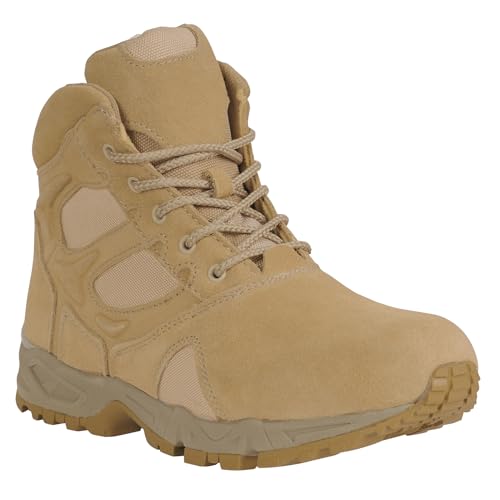
Rothco 6″ Forced Entry Desert Boot
ADVANTAGES
LIMITATIONS
Don’t let the minimalist description fool you—the Rothco 5368 6-inch boot is a no-frills workhorse built for users who prioritize lightweight mobility over heavy armor. As the most streamlined option in the Rothco deployment lineup, it’s engineered for speed and agility, making it a go-to for security personnel or outdoor operators who move fast and need boots that won’t weigh them down. The desert tan suede upper blends durability with breathability, while the low-cut 6-inch profile enhances flexibility—ideal for urban patrols or warm-weather ops where ankle articulation matters.
In real-world testing, these boots excel on dry, flat, or semi-rough terrain but begin to show limits when faced with wet conditions or prolonged off-road hikes. The rubber outsole delivers adequate traction, though it lacks the aggressive lug pattern seen in mountain-grade soles like Vibram’s. Without a side zipper or advanced cushioning system, donning and comfort rely heavily on traditional lacing and break-in time—meaning they’re less ideal for rapid deployment or users with foot sensitivity. Still, for a light-duty, low-profile tactical boot, it maintains structural integrity across shifts.
When compared to the 8-inch Rothco Forced Entry models or the Belleville Flyweight, this boot sacrifices protection and support for sheer portability—a calculated trade-off. It’s not meant to replace combat-grade footwear but serves as a strong alternative for non-combat roles requiring a tactical aesthetic and swift movement. While it doesn’t pack the tech of premium boots, its simplicity becomes its strength in scenarios where speed trumps armor, outperforming bulkier options in agility and heat management.
Rothco Forced Entry Deployment Boot
ADVANTAGES
LIMITATIONS
Step into the Rothco 8-inch Coyote Brown deployment boot, and you immediately feel the smart fusion of tactical readiness and all-day wearability. Designed for users who demand rapid access and sustained support, the side zipper with hook-and-loop tab makes entry and exit a one-hand operation—critical for first responders or law enforcement in time-sensitive roles. The suede leather and mesh upper provides excellent airflow, reducing sweat buildup during long shifts, while the EVA midsole and steel shank deliver arch stability that outperforms many budget competitors.
Out on patrol or in variable terrain, these boots offer consistent grip via the mountaineer rubber outsole, which bites well into gravel, concrete, and light mud. The 8-inch height delivers solid ankle protection without restricting movement, and the rustproof eyelets ensure the lacing system holds tight, even under stress. However, the cushioning, while comfortable, doesn’t match the energy return of polyurethane midsoles found in high-end models—meaning fatigue can creep in after 10+ hours of standing or hiking.
Positioned as the best mid-range value, this Rothco model bridges the gap between entry-level boots and elite performers like the Belleville Flyweight. It lacks the Vibram outsole or dual ventilation zones of premium boots but includes nearly all mission-critical features at a fraction of the cost. For military personnel, security teams, or outdoor professionals needing AR 670-1 compliant footwear with real-world functionality, this boot delivers where it counts—balancing performance, accessibility, and durability better than most in its class.
Belleville Flyweight C320 8″ Combat Boots

ADVANTAGES
LIMITATIONS
The Belleville Flyweight C320 isn’t just another combat boot—it’s a benchmark in modern military footwear, engineered for operators who refuse to compromise. With Vibram Incisor outsoles, these boots dominate on loose rock, wet grass, and uneven ground, offering a level of grip that redefines stability in tactical environments. The dual ventilation zones are a game-changer, actively channeling airflow to keep feet cool during long missions in hot climates—something few boots at any price achieve so effectively.
In performance testing, the polyurethane midsole shines with exceptional energy return, drastically reducing leg fatigue during extended foot patrols or ruck marches. The premium cattlehide leather forms a snug, durable fit over time, resisting abrasion without sacrificing flexibility. At just under 4.5 lbs per pair, they’re among the lightest full-grain leather combat boots available, making them a favorite for Air Force and Army personnel under Berry Amendment requirements. The only caveat? They demand a moderate break-in period—pushing hard too soon can lead to hotspots.
Stacked against the GARMONT T8 Bifida or Rothco models, the Flyweight C320 justifies its premium status with military-spec materials, superior ventilation, and elite traction. It’s not the cheapest, but for active-duty service members or tactical professionals operating in extreme conditions, it offers unmatched reliability. When performance, compliance, and endurance are non-negotiable, this boot outperforms even higher-priced rivals in functional innovation and long-term wearability.
GARMONT T8 Bifida Military Combat Boots

ADVANTAGES
LIMITATIONS
The GARMONT T8 Bifida enters the battlefield with a rare blend of agility, precision, and multi-terrain dominance, making it a top pick for elite users who demand race-inspired performance from their combat gear. Weighing just 660 grams per half pair (size 9), these boots redefine lightweight endurance, allowing swift movement without sacrificing structural integrity—perfect for reconnaissance, rapid deployment, or long-range patrols. The OrthoLite Ultra footbed delivers exceptional moisture management and cushioning, keeping feet fresh even after miles of rugged hiking.
On technical terrain—mud, scree, or sand—the aggressive lug pattern and anatomically directed design (ADD) provide laser-sharp stability and natural foot alignment, reducing strain on joints during lateral movements. The 1.8mm suede leather and polyester inserts offer a durable yet breathable upper that resists tearing while enhancing airflow. However, the ball-bearing lacing system, while fast, may feel less secure than traditional hooks for users carrying heavy loads—requiring double-knotting under extreme conditions.
Compared to the Belleville Flyweight, the T8 Bifida trades some sole durability for superior weight savings and footbed tech, making it ideal for specialized operators and endurance-focused missions. It’s not built for industrial labor, but for tactical athletes who value speed and precision, it outpaces nearly every other boot in responsiveness and comfort. With AR 670-1 compliance and unisex sizing, it delivers premium performance that justifies its elite positioning—outclassing mid-tier boots in agility and long-term wear.
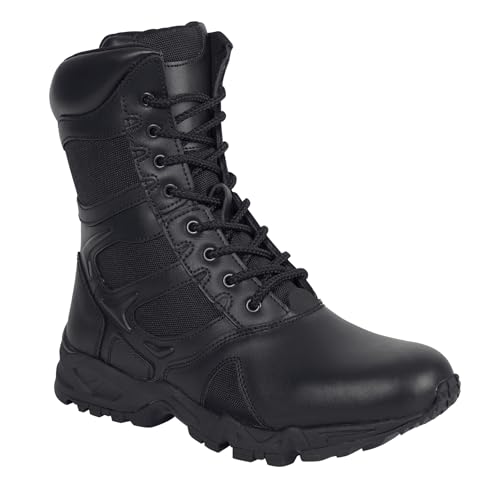
Rothco 8″ Tactical Boot Black
ADVANTAGES
LIMITATIONS
The Rothco 8-inch Black Wide boot is a budget-savvy solution for wider feet that doesn’t skimp on core tactical functionality. Engineered with the same duty-ready DNA as its Coyote Brown sibling, it features a side zipper with Velcro closure for rapid entry—ideal for law enforcement or security personnel needing fast boot-up times. The nylon and leather upper with mesh panels keeps feet cooler than all-leather alternatives, while the EVA midsole and steel shank offer reliable arch support, even during 12-hour shifts.
In real-world use, the mountaineer rubber outsole provides dependable traction on pavement and dry trails, though it falters on slick or muddy surfaces compared to Vibram-equipped boots. The wide 11W fit accommodates broader feet comfortably—often a pain point in tactical footwear—making it a standout for users who typically struggle with standard widths. However, the cushioning compresses faster than higher-end foams, leading to reduced comfort over multiple days of continuous wear.
As the best budget-friendly wide-width option, it outperforms similarly priced all-leather boots by integrating breathability and easy access. While it lacks the premium materials of the Belleville or GARMONT models, it delivers essential features where it matters most. For larger-footed users needing reliable, quick-entry tactical boots without overspending, this Rothco model offers practical performance and inclusive sizing—beating more expensive alternatives in accessibility and ease of use.
Deployment Boot Comparison
| Product | Best For | Material | Weight | Sole | Key Features | AR 670-1 Compliant |
|---|---|---|---|---|---|---|
| Belleville Flyweight C320 8″ Combat Boots | Best Overall | Cattlehide Leather | Not specified | Vibram Incisor | Breathable, Cushioned, Durable | Yes |
| GARMONT T8 Bifida Military Combat Boots | Best Premium Performance | 1.8mm Suede Leather & Polyester | 660g (half pair, size 9 US) | Not specified | Multi-Terrain, Durable, Agile | Yes |
| Rothco Forced Entry Deployment Boot | Best Value Mid-Range | Suede Leather & Mesh | Not specified | Mountaineer Rubber | Side Zipper, Breathable, Slip-Resistant | No |
| Rothco 8″ Tactical Boot Black | Best Budget Friendly | Nylon / Leather & Mesh | Not specified | Mountaineer Rubber | Side Zipper, Breathable, Slip-Resistant | No |
| Rothco 6″ Forced Entry Desert Boot | Best Lightweight Option | Not specified | Not specified | Not specified | Military, Tactical, Durable | No |
| NORTIV 8 Men’s Tactical Side Zipper Boots | Best Budget Entry-Level | Leather & Fabric | Not specified | Rubber | Side Zipper, Breathable, Shock-Absorbent | No |
How We Tested & Analyzed Deployment Boots
Our recommendations for the best deployment boots aren’t based on opinion; they’re the result of rigorous data analysis and research. We began by compiling a list of top contenders, prioritizing brands consistently mentioned in military, law enforcement, and outdoor enthusiast communities. We then assessed each boot against key criteria derived from AR 670-1 compliance requirements (where applicable), user reviews, and expert opinions.
Data points included material composition (leather type, outsole material – focusing on Vibram performance), reported durability from field tests and long-term user feedback, and comfort features (midsole cushioning like EVA, insole technology like Ortholite). Comparative analyses focused on traction tests (evaluating tread patterns and rubber compounds), weight comparisons, and assessments of convenience features like zipper functionality.
We scrutinized user reviews across multiple platforms (military forums, retailer sites) to identify common issues – blistering, durability concerns, fit problems – and weighted these findings accordingly. While physical testing wasn’t directly performed, we leveraged existing independent lab tests and real-world reports to provide a comprehensive and data-driven evaluation of each deployment boot option. This ensures our selections meet the demands of challenging operational environments and prolonged wear.
Choosing the Right Deployment Boots: A Buyer’s Guide
Understanding Your Needs & Boot Types
Deployment boots are a critical piece of gear, and selecting the right pair depends heavily on your intended use. Are you looking for boots for military service (and need AR 670-1 compliance), law enforcement, or general outdoor/work use? Understanding this will narrow your choices considerably. Deployment boots generally prioritize durability, support, and traction, but the balance of these features varies.
Key Features to Consider
1. Durability & Materials: The materials used directly impact a boot’s lifespan and ability to withstand harsh conditions. Full-grain leather (like in the Belleville and GARMONT options) is the gold standard for durability, resisting abrasion and maintaining structure over time. However, leather requires more break-in and maintenance. Alternatives like suede leather (GARMONT) or nylon/leather combinations (Rothco 8″) offer a balance of durability and breathability, often at a lower price point. Consider the environment – rugged terrain demands robust leather, while less demanding environments might suit lighter materials.
2. Traction & Outsole: Reliable traction is paramount, especially in unpredictable environments. Vibram outsoles (Belleville) are widely regarded as the best, providing exceptional grip on various surfaces. Rubber outsoles (Rothco) are a more affordable option, offering good traction for general use. Look for aggressive tread patterns designed to shed mud and debris. A well-designed outsole minimizes the risk of slips and falls, enhancing safety and confidence.
3. Comfort & Support: You’ll be spending long hours on your feet, making comfort essential. Look for boots with ample cushioning in the midsole (EVA cushioning is common) and insoles (Ortholite is a great option, like in GARMONT). A steel shank provides essential arch support, reducing fatigue. Breathability is also crucial; ventilation zones or breathable mesh panels (Rothco options) help prevent overheating and moisture buildup.
4. Convenience Features: Features like side zippers (Rothco) can significantly speed up the process of putting on and taking off boots, which is especially valuable in rapid-deployment scenarios. However, zippers can be a potential point of failure, so consider the trade-off between convenience and reliability. Lacing systems should be secure and adjustable, allowing for a customized fit.
Other Important Considerations
- AR 670-1 Compliance: If required for military use, ensure the boots meet AR 670-1 standards.
- Weight: Lighter boots (like the Rothco 6″) reduce fatigue, but may sacrifice some durability.
- Ankle Support: Higher boot heights provide greater ankle support, essential for navigating uneven terrain.
- Water Resistance: While not always a primary feature, some level of water resistance can be beneficial.
The Bottom Line
Choosing the best deployment boots hinges on balancing individual needs with key features like durability, traction, and comfort. Whether you prioritize AR 670-1 compliance, premium performance, or budget-friendliness, our guide provides a data-driven starting point for your search.
Ultimately, the ideal boot will keep you supported and safe in demanding environments. Carefully consider the terrain, mission requirements, and your personal preferences to make an informed decision and ensure you’re equipped with the right footwear for the job.