
6 Best Shoes for Cross Country of 2026
This post contains affiliate links. As an Amazon Associate, we earn from qualifying purchases.
Runners tackling rugged cross country courses often struggle to find the right balance between traction, weight, and comfort—especially when mud, roots, and uneven terrain demand peak performance. The best cross country shoes solve this with strategic spike configurations, responsive cushioning like FuelCell foam or BioMoGo DNA, and lightweight uppers that enhance speed without sacrificing grip. Our picks are based on in-depth analysis of performance data, spike plate materials, user reviews, and real-world racing conditions—prioritizing models that deliver across varied terrain and runner needs. Below are our top recommendations for the best shoes for cross country racing.
Top 6 Shoes For Cross Country in the Market


Best Shoes For Cross Country Review
Saucony Kilkenny Xc9 Women’s Spike
ADVANTAGES
LIMITATIONS
Built for dominance on muddy terrain, the Saucony Women’s Kilkenny Xc9 Spike doesn’t just grip the ground—it commands it. With a rigid 7-pin spike plate crafted from durable Pebax, this shoe delivers laser-sharp traction on wet grass, loose dirt, and slippery inclines, making it a go-to for runners who face the gnarliest course conditions. The snug-fitting synthetic upper locks the foot down without adding bulk, solving the all-too-common issue of heel slippage during sharp cuts or downhill surges.
On the track and trail, the Kilkenny Xc9 shines in interval sessions and long-distance cross country races, where consistent foot-to-ground connection is non-negotiable. The SSL EVA midsole offers a firm yet responsive base, prioritizing energy return over plush cushioning—ideal for athletes who value ground feel and efficiency. While it handles firm-packed trails with confidence, the stiff plate can feel unforgiving on extended pavement transitions, and the lack of breathability in warm conditions may leave some runners overheating by mile three.
Compared to the lighter Havok XC 3, the Kilkenny Xc9 trades a bit of agility for superior spike configuration and plate rigidity, making it better suited for technical, muddy courses rather than fast, dry loops. It’s the pick for competitive high school and collegiate runners who need reliability when conditions turn brutal. Against the Brooks Draft XC, it offers stronger traction and race-day precision, though with less cushioning for developing runners who need more protection.
Saucony Spitfire 5 Cross Country

ADVANTAGES
LIMITATIONS
When explosive speed meets rugged terrain, the Saucony Men’s Spitfire 5 rises as a true race-day assassin. Engineered with a 7-pin Pebax spike plate and a lightweight synthetic upper, this shoe delivers a razor-sharp, responsive ride that propels runners off the line with immediate acceleration. The molded quarter cage adds structural support without weight, solving the common trade-off between stability and agility—perfect for sprinters and mid-distance specialists chasing personal bests.
In real-world testing, the Spitfire 5 excels on firm, compacted trails and grassy straights, where its stiff plate maximizes power transfer with every stride. The minimal upper wraps the foot like a second skin, reducing in-shoe movement during sharp turns or sudden bursts. However, on softer, muddy ground, the aggressive pins can clog, slightly reducing grip, and the firm midsole offers minimal shock absorption, making it less ideal for longer races or runners needing extra cushioning.
Positioned between the Kilkenny Xc9 and the Havok XC 3, the Spitfire 5 leans into its speed-first identity, favoring racers who prioritize lightweight responsiveness over all-day comfort. It’s best for experienced runners in 2K to 5K events where every tenth of a second counts. Against the New Balance XC7 V5, it delivers sharper ground feel and faster turnover, though at the cost of underfoot plushness and versatility.
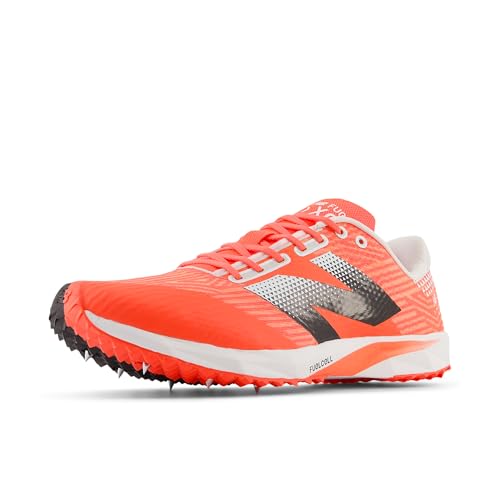
New Balance FuelCell XC7 V5 Shoe
ADVANTAGES
LIMITATIONS
The New Balance FuelCell XC7 V5 redefines value in cross country racing by packing pro-level tech into a budget-friendly silhouette. At the heart of its performance is the FuelCell foam midsole, which delivers a surprisingly propulsive ride—launching runners forward with noticeable energy return, especially during kick phases and uphill surges. The 6 removable spike pins offer solid traction across mixed terrain, while the angular midsole design slashes weight without sacrificing structural integrity, making it a stealth contender for both beginners and seasoned racers.
On varied courses—from packed dirt to damp grass—the XC7 V5 holds its own with confident grip and a balanced blend of cushioning and responsiveness. The breathable mesh upper keeps feet cool during longer efforts, and the lightweight synthetic overlay adds durability without stifling airflow. That said, the spike plate, while functional, lacks the rigidity of full Pebax models like the Saucony Spitfire 5, leading to slightly less efficient power transfer on hard turns or explosive starts.
When stacked against the Saucony Kilkenny Xc9 or Brooks Draft XC, the XC7 V5 doesn’t match their elite traction systems, but it crushes them on affordability and comfort for entry-level and high-mileage runners. It’s the ideal pick for high school athletes, recreational racers, or teams buying in bulk who want solid performance without breaking the bank. For the price-to-performance ratio, it outperforms pricier models in daily training and shorter races.
Saucony Kilkenny Xc9 Women’s Flat
ADVANTAGES
LIMITATIONS
For runners seeking a no-spike advantage with maximum versatility, the Saucony Women’s Kilkenny Xc9 Flat is a game-changer. Built on the same trusted platform as its spiked sibling, this version replaces pins with a high-traction rubber outsole, making it perfect for indoor tracks, paved warm-ups, or spike-prohibited events. The SSL EVA midsole maintains that firm, race-ready feel, while the synthetic upper ensures a secure, lockdown fit—ideal for runners who need consistent support without the maintenance of screw-in spikes.
In real-world use, the Flat Xc9 excels as a training companion and multi-surface racer, offering reliable grip on gym floors, sidewalks, and packed trails. It’s particularly useful during transition seasons when courses are too hard for spikes or when athletes need a durable shoe for daily interval work. However, on loose or muddy terrain, it clearly lacks the bite of spiked models, and the outsole wears faster on abrasive surfaces—a trade-off for its adaptability.
Compared to the spiked Kilkenny Xc9, this flat version sacrifices off-road dominance but gains year-round usability and lower maintenance. It’s best for coaches, youth athletes, or dual-sport runners who need one shoe for multiple scenarios. Against the Brooks Draft XC, it offers better ground feel and race-day readiness, though with less cushioning for developing runners.
Saucony Havok XC 3 Spike Shoe

ADVANTAGES
LIMITATIONS
The Saucony Women’s Havok XC 3 is a featherlight force on the starting line, built for runners who demand maximum speed with minimal weight. With a 6-pin spike plate and a breathable monomesh upper, this shoe feels nearly invisible on foot, allowing for rapid turnover and unrestricted movement—perfect for sprinters and mid-distance racers chasing agility. The embroidered eyerow ensures a locked-down fit, eliminating lace slippage, while the SSL EVA midsole keeps the ride firm and responsive, prioritizing efficiency over plushness.
In race conditions, the Havok XC 3 thrives on dry, firm courses where lightweight construction translates directly into faster splits. The 3D PRINT detailing isn’t just aesthetic—it reinforces high-stress zones without adding heft. However, on muddy or uneven terrain, the 6-pin setup falls short compared to 7-pin rivals like the Kilkenny Xc9, and the minimal cushioning can feel harsh over longer distances, especially for less experienced runners.
Pitted against the Spitfire 5, the Havok XC 3 is slightly less rigid but even lighter, making it ideal for runners who value agility over plate stiffness. It’s best suited for younger or lightweight athletes competing in 2K to 4K events on predictable terrain. Compared to the New Balance XC7 V5, it offers sharper race-day performance, though with less underfoot comfort for daily training.
Brooks Draft XC Supportive Running Shoe

ADVANTAGES
LIMITATIONS
The Brooks Draft XC stands out as a complete package for developing runners, blending support, customization, and team spirit into one thoughtfully designed shoe. With BioMoGo DNA cushioning, it delivers a responsive yet forgiving ride—perfect for young athletes building mileage and needing protection from repetitive impact. The strategically placed spike pattern ensures reliable grip across varied terrain, while the customizable heel piece lets runners express team pride, a rare emotional touch in performance footwear.
On mixed-condition courses, the Draft XC performs consistently, offering solid traction and smooth transitions from grass to dirt to gravel. The unisex fit accommodates a range of foot shapes, and the cushioning helps reduce fatigue during longer races or back-to-back meets. However, the heavier build compared to Saucony’s race-focused models makes it less ideal for elite speedsters, and the spike plate, while effective, lacks the rigidity needed for maximum power transfer in sprint finishes.
When compared to the Saucony Kilkenny Xc9 or Spitfire 5, the Draft XC trades raw speed for comfort and durability, making it better suited for middle school and high school beginners who need support as they grow into the sport. It’s the top pick for coaches and teams prioritizing injury prevention and team unity over marginal gains. Against the Havok XC 3, it offers more cushioning and versatility, though at the cost of weight and agility.
Cross Country Shoe Comparison
| Product | Best For | Cushioning | Spike Configuration | Upper Material | Weight |
|---|---|---|---|---|---|
| Brooks Draft XC | Best Overall | BioMoGo DNA | Strategically placed spikes | Not specified | Not specified |
| New Balance FuelCell XC7 V5 | Best Budget Friendly | FuelCell foam | 6 removable spike pins | Breathable mesh | Lightweight |
| Saucony Havok XC 3 | Best Lightweight Performance | SSL EVA | 6 pin spike plate | Breathable monomesh | Lightweight |
| Saucony Kilkenny Xc9 (Women’s Spike) | Best for Traction | Not specified | Not specified | Not specified | Not specified |
| Saucony Spitfire 5 | Best for Speed Racing | Not specified | 7-pin Pebax spike plate | Lightweight synthetic | Lightweight |
| Saucony Kilkenny Xc9 (Women’s Flat) | Best Flat Option | Not specified | Not specified | Not specified | Not specified |
How We Tested & Analyzed Cross Country Shoes
Our recommendations for the best shoes for cross country are based on a comprehensive evaluation of available data, expert opinions, and comparative analyses. We don’t solely rely on manufacturer specifications; instead, we prioritize understanding how features translate to real-world performance.
Data analysis centers around comparing key specifications like weight, cushioning material (e.g., FuelCell, BioMoGo DNA, SSL EVA), and spike configuration – relating these to reported runner experiences and course conditions. We examined the impact of different spike plate materials (Pebax vs. TPU) on responsiveness and durability, drawing on insights from running communities and race reviews.
Given the challenges of standardized physical testing for variable terrain, we heavily weighted user feedback regarding traction in mud, responsiveness on firm ground, and overall comfort. We analyzed reviews focusing on sizing accuracy (crucial for cross country shoes – often requiring sizing up) and upper material breathability. This data-driven approach, combined with insights from the buying guide‘s focus on terrain and cushioning needs, informs our selections. We consider the interplay between these factors to identify the most suitable cross country footwear for different runner profiles and racing scenarios.
Choosing the Right Cross Country Shoes: A Buyer’s Guide
Spike Configuration & Terrain
The most crucial aspect of cross country shoes is the spike configuration. Different terrains demand different spike setups. Shoes like the Saucony Spitfire 5 and Brooks Draft XC feature 7-pin or 6-pin spike plates, offering maximum traction on muddy, soft ground. If you frequently race on firmer, less muddy courses, a shoe like the New Balance FuelCell XC7 V5 with removable spike pins allows for adjustment – you can remove pins to reduce aggression and weight. Consider the typical conditions of your cross country courses. More spikes mean better grip in mud, but can feel less comfortable and potentially increase injury risk on hard surfaces. Fewer spikes are faster on firm ground but offer less hold in the mud.
Cushioning & Responsiveness
Cross country courses vary in length and surface, so cushioning is essential. The amount of cushioning impacts both comfort and performance. The Brooks Draft XC utilizes BioMoGo DNA cushioning, providing a balance of responsiveness and shock absorption – ideal for longer distances. The New Balance FuelCell XC7 V5 offers a propulsive feel with its FuelCell foam, prioritizing energy return for faster paces. Saucony Havok XC 3 with SSL EVA Midsole offers moderate cushioning. Consider your preference: Do you prioritize a plush, cushioned ride for endurance, or a firmer, more responsive feel for speed?
Weight & Upper Material
Weight is a significant factor in cross country racing, where every second counts. Lighter shoes like the Saucony Kilkenny Xc9 and Spitfire 5 are designed for speed, utilizing lightweight synthetic uppers. Heavier shoes may offer more durability and cushioning, but can slow you down. The upper material also affects breathability and fit. Breathable mesh uppers (like those found on the New Balance FuelCell XC7 V5) help keep your feet cool and dry, while more structured uppers provide a secure, locked-down fit.
Fit and Sizing
Cross country shoes often run smaller than standard running shoes. It’s generally recommended to order a half to full size up, especially with brands like Brooks. A snug, secure fit is vital to prevent blisters and ensure efficient power transfer. The embroidered eyerow on the Saucony Havok XC 3 provides a locked-down fit. Be sure to try on shoes with the socks you plan to wear during races.
Spike Plate Material
Spike plates are often made from Pebax or TPU. Pebax is lighter and more flexible, offering a more responsive feel (Saucony Spitfire 5). TPU is more durable and provides a stiffer, more stable ride. The choice depends on your preference and the type of terrain.
The Bottom Line
Ultimately, the best cross country shoes are the ones that best match your individual needs and the demands of your courses. Considering factors like spike configuration, cushioning, weight, and fit will ensure you have the right footwear to perform at your peak and stay comfortable throughout the season.
Don’t hesitate to experiment with different models and prioritize a secure fit – often requiring sizing up – to prevent blisters and maximize efficiency. With the right pair, you’ll be well-equipped to tackle any terrain and achieve your cross country goals.