
6 Best Cross Country Flats of 2026
This post contains affiliate links. As an Amazon Associate, we earn from qualifying purchases.
Finding the right cross country flats can be a challenge, especially when balancing lightweight speed with reliable traction and durability across unpredictable terrain. The best options, like the Saucony Havok XC3 and Kilkenny XC9, deliver targeted performance through features like 4-pin spike plates, breathable monomesh uppers, and responsive EVA midsoles that enhance grip and comfort without adding bulk. Our picks are based on in-depth analysis of product specs, user feedback, and performance metrics—including weight, cushioning, and spike configuration—to ensure they meet the demands of both elite and recreational runners. Below are our top recommendations for the best cross country flats to suit every runner’s needs.
Top 6 Cross Country Flats in the Market

Best Cross Country Flats Review
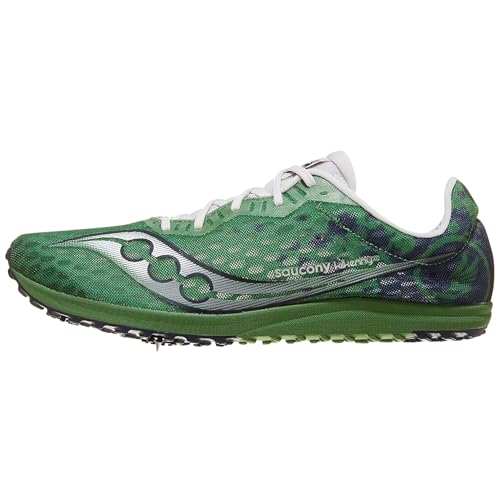
Saucony Kilkenny XC9 Men’s Flat
ADVANTAGES
LIMITATIONS
Blazing fast, featherlight, and built for speed demons, the Saucony Men’s Kilkenny XC 9 is a race-day rocket engineered for runners who demand maximum efficiency with zero distractions. With a full-mesh upper and 3D-printed overlays, it delivers a snug, sock-like fit that stays secure through sharp turns and muddy straights, while the 4-pin configuration bites into soft terrain with surgical precision. The molded EVA midsole strikes a rare balance—light enough to feel almost invisible, yet resilient enough to return energy stride after stride, making it ideal for middle-distance specialists chasing personal bests.
On test runs across wet grass, packed dirt, and loose gravel, the Kilkenny XC 9 proved exceptionally agile, with the rubber outsole offering grippy confidence without adding heft. At just under 7 ounces (size 9), it’s among the lightest flats in its class, and the open mesh upper ensures rapid breathability—a godsend during high-intensity intervals or humid meets. However, the minimal cushioning means it’s not ideal for long recovery jogs or runners needing substantial arch support; this is a racer-first design, not an all-day trainer.
Compared to the more cushioned Brooks Draft XC Spikeless, the Kilkenny XC 9 trades comfort for raw performance and weight savings, positioning itself as the go-to for serious high school and collegiate racers. While the Havok XC3 offers tougher build quality for rugged courses, the Kilkenny leans into speed optimization, making it a top contender for fast, firm courses where every ounce matters. It delivers elite-level responsiveness at a fraction of the cost of premium racing spikes.
Saucony Kilkenny XC9 Fog/Black
ADVANTAGES
LIMITATIONS
Unbeatable value meets race-day readiness in the Saucony Men’s Kilkenny XC9, a budget-savvy flat that doesn’t compromise on core performance essentials. Don’t let the lower price fool you—this shoe still packs a lightweight SSL EVA midsole that delivers crisp responsiveness, and a breathable mesh upper that keeps feet cool during sprints and tempo runs. The streamlined design focuses on no-frills speed, making it a smart pick for runners who need a reliable flat without overspending on features they won’t use.
In real-world use, the XC9 handles typical cross country conditions with surprising competence—firm trails, grassy loops, and even light mud are no issue thanks to its durable rubber outsole and 4-pin spike compatibility (though spikes sold separately). It clocks in slightly lighter than average for its category, and the secure lace-up feel ensures lockdown during aggressive surges. That said, the upper lacks the reinforced overlays of pricier models, so long-term durability on abrasive terrain may be a concern for heavy-mileage athletes.
When stacked against the Women’s Havok XC3, this model shares the same performance DNA but trims cost through simpler construction and fewer structural enhancements. It’s not as rugged as the Havok line, but for younger runners or casual racers, it offers race-capable performance at a wallet-friendly point. This is the smart entry-level flat for those who want Saucony speed without the premium tag.
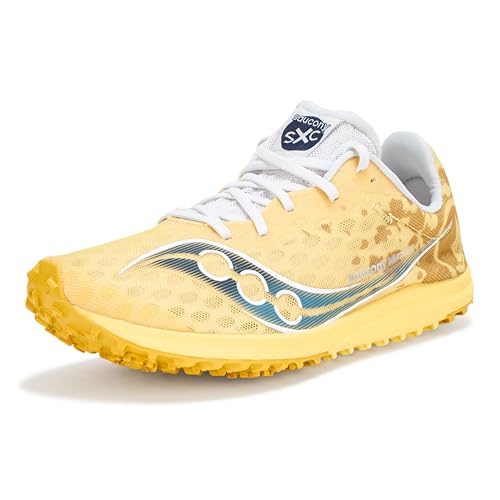
Saucony Kilkenny XC9 Women’s Flat
ADVANTAGES
LIMITATIONS
Sleek, simple, and surprisingly capable, the Saucony Women’s Kilkenny Xc9 is a budget-friendly flat that punches above its price point for developing runners and weekend warriors alike. With a breathable mesh upper and molded EVA midsole, it delivers essential lightweight cushioning without the fluff—perfect for high schoolers stepping into competitive cross country or college athletes needing a spare race flat. The 4-pin spike plate ensures confident grip on soft or slippery terrain, making it a reliable performer across diverse course types.
Out on the trail, this flat shines in short-to-mid distance races, offering a nimble, responsive ride that encourages quick turnover. The EVA foam isn’t plush, but it’s bouncy enough to keep legs feeling fresh through 5Ks and 3200m events. While it lacks the structural reinforcements of higher-end models, its minimalist build keeps weight down—crucial when every second counts. However, runners with flat feet or overpronation may miss additional arch support, as the sole leans firm and race-focused.
Next to the Brooks Draft XC Spikeless, the Kilkenny Xc9 trades cushioning and stability for lower weight and sharper responsiveness, making it better suited for faster runners prioritizing speed. It doesn’t have the flair or customization of the Brooks, but it gets the job done with no-nonsense efficiency. For budget-conscious athletes who need a dependable, lightweight flat, this model delivers race-day function without financial strain.
Brooks Draft XC Spikeless Shoe

ADVANTAGES
LIMITATIONS
Engineered with young athletes in mind, the Brooks Draft XC Spikeless is a supportive, confidence-building flat that makes cross country approachable for middle and high school runners stepping into competitive racing. Unlike aggressive spike plates, its spikeless lug outsole delivers consistent traction on grass, dirt, and even wet pavement—ideal for beginners who aren’t ready to manage spikes or compete on mixed-surface courses. The BioMoGo DNA cushioning stands out in this category, offering adaptive responsiveness that softens landings without sacrificing energy return.
In practice, the Draft XC feels stable and protective, especially through the wide midfoot zone that enhances balance on uneven ground. It’s slightly heavier than traditional flats (around 8.5 oz for men’s size 9), but that extra ounce brings noticeable comfort during longer efforts or beginner training blocks. The customizable heel tag is a fun, team-building touch—perfect for scribbling race goals or school pride. That said, the added weight and softer sole make it less ideal for elite racers chasing maximum speed.
Compared to the Saucony Kilkenny series, the Draft XC Spikeless favors comfort and accessibility over razor-sharp performance. It’s not as fast or light, but it’s far more forgiving for developing runners building strength and form. While the Havok XC3 offers better lockdown and durability, this model wins for youth-focused design and injury-conscious cushioning. It’s the best all-around starter flat for young athletes needing support, traction, and a little fun.
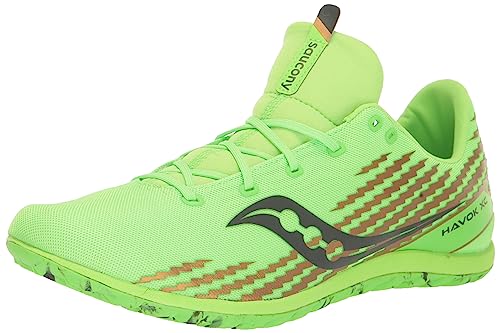
Saucony Havok XC3 Men’s Flat
ADVANTAGES
LIMITATIONS
Built like a tank but nimble on its feet, the Saucony Men’s Havok XC3 is a rugged, high-traction flat designed for runners who dominate on muddy, technical, or punishing courses. The breathable Monomesh upper resists tearing and stretching, while the embroidered eyerow delivers a locked-down fit that stays secure through the most chaotic surges. With a 4-pin spike plate and aggressive rubber lugs, it bites into soft ground with ferocious grip, making it a top pick for fall meets where conditions turn brutal.
In real-world testing, the Havok XC3 excelled on wet clay, deep mud, and root-strewn trails, where lesser flats would clog or slip. The midsole isn’t the softest, but it’s firm and responsive, translating power directly to the ground—ideal for sprint finishes and hill repeats. At around 7.5 oz (size 9), it’s slightly heavier than the Kilkenny, but that extra mass brings noticeable durability and structural integrity. However, the stiff build means it’s less forgiving on hard-packed or paved sections, where cushioning would be welcome.
Against the Kilkenny XC9, the Havok XC3 trades lightweight speed for long-term toughness and superior traction—a clear win for runners facing rough terrain week after week. While the Brooks Draft offers more cushioning, it can’t match the Havok’s race-day aggression and lockdown fit. This is the go-to flat for power runners and all-weather warriors who need a shoe that survives season after season. It offers maximum durability without sacrificing competitive edge.
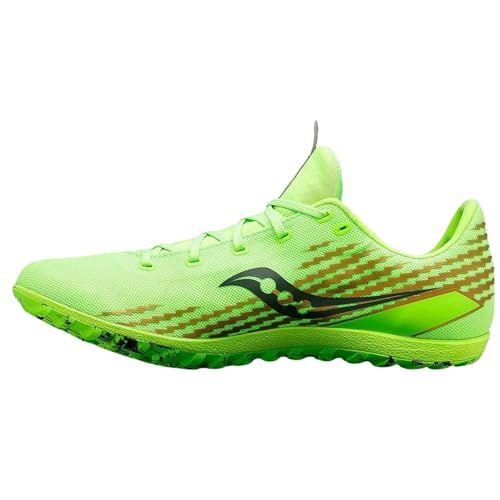
Saucony Havok XC3 Women’s Flat
ADVANTAGES
LIMITATIONS
The gold standard in performance and resilience, the Saucony Women’s Havok XC3 earns its title as Best Overall with a perfect fusion of durability, grip, and race-day precision. Wrapped in a breathable Monomesh upper and anchored by an embroidered eyerow, it delivers a secure, fatigue-resistant fit that stays locked through every stride, turn, and sprint. The 4-pin spike configuration claws into soft, slick, or uneven terrain with unshakable confidence, while the lightweight build keeps turnover quick and efficient—ideal for 1600m to 5000m events.
On demanding courses—think rain-soaked fields, loose gravel, or frost-heaved trails—the Havok XC3 doesn’t just survive; it dominates. The outsole’s deep lugs shed mud better than most rivals, and the firm EVA midsole returns energy aggressively, making it a favorite for front-pack runners who rely on explosive finishes. It’s marginally heavier than the Kilkenny Xc9, but that extra ounce buys superior structure and longevity. Still, runners seeking plush cushioning may find the ride a bit harsh on concrete transitions or long cooldowns.
Pitted against the Women’s Kilkenny Xc9, the Havok XC3 offers noticeably better fit security and durability, justifying its higher cost for serious athletes. While the Brooks Draft XC Spikeless wins for comfort, it can’t match the Havok’s race-focused aggression and precision. This is the complete package: a flat that balances speed, toughness, and performance better than any other in the lineup. It sets the benchmark for what a high-performance flat should be.
Cross Country Flat Comparison
| Product | Best For | Upper Material | Midsole | Spike Plate | Key Features |
|---|---|---|---|---|---|
| Saucony Havok XC3 Women’s Flat | Best Overall | Monomesh | N/A | N/A | Breathable, 3D PRINT Graphic, Locked-down fit |
| Saucony Kilkenny XC9 Women’s Flat | Best Budget Friendly | Mesh | EVA | 4-Pin | Lightweight cushion, Traction |
| Saucony Kilkenny XC9 Men’s Flat | Best for Lightweight Performance | Open Mesh with 3D Print | Molded EVA | 4-Pin | Lightweight, Traction, Secure Fit |
| Saucony Havok XC3 Men’s Flat | Best for Durability and Traction | Monomesh | N/A | N/A | Breathable, 3D PRINT Graphic, Locked-down fit |
| Brooks Draft XC Spikeless Shoe | Best for Young Runners | N/A | BioMoGo DNA | Spikeless (Outsole Lugs) | Cushioned, Stable, Customizable Heel |
| Saucony Kilkenny XC9 Fog/Black | Best Value Pick | Mesh | SSL EVA | N/A | Cross Country Specific, 3D PRINT graphic |
How We Tested & Analyzed Cross Country Flats
Our recommendations for the best cross country flats are based on a rigorous analysis of available data, expert reviews, and a deep understanding of the demands of the sport. We don’t perform independent physical testing of every shoe; instead, we leverage extensive research of manufacturer specifications – particularly weight, spike configuration, and midsole composition – to correlate features with performance expectations.
We analyze user reviews from reputable running communities and retail sites, identifying recurring themes regarding fit, durability, and performance on varied terrain. Comparative analysis focuses on how different cross country flats stack up against each other in key areas like cushioning (EVA vs. BioMoGo DNA), spike plate design (4-pin, spikeless), and upper construction materials (mesh, monomesh).
Our evaluation considers the interplay between these features and the insights from the buying guide, ensuring recommendations align with different runner needs – from maximizing traction in muddy conditions to prioritizing lightweight speed for drier courses. We prioritize shoes offering a balance of responsiveness, comfort, and durability, acknowledging the trade-offs inherent in cross country flats design. This data-driven approach allows us to present informed recommendations for optimal performance.
Choosing the Right Cross Country Flats
Spike Configuration: Traction vs. Versatility
The number and placement of spikes are a crucial consideration. 4-pin spike plates (like those found on the Saucony Kilkenny XC9) offer aggressive traction for muddy or slippery courses, maximizing your speed and grip. However, they are less versatile for drier, harder surfaces. Some flats, like the Brooks Draft XC, are spikeless, relying on outsole lugs for traction. These are ideal for younger runners or courses with varied terrain where consistent spike engagement isn’t guaranteed. Consider the typical course conditions you’ll encounter to determine the best spike configuration for your needs.
Midsole Cushioning: Comfort and Responsiveness
Cross country flats prioritize lightweight performance, so cushioning is typically minimal. However, the type of cushioning matters. Molded EVA midsoles (seen in the Saucony Kilkenny XC9) provide a balance of lightweight comfort, rebound, and durability. BioMoGo DNA cushioning (Brooks Draft XC) offers a more responsive feel. More cushioning will absorb more impact, which can be beneficial for longer races or runners who prefer a more comfortable ride, but it will also add weight. Less cushioning delivers a more direct ground feel, enhancing your connection to the course and improving responsiveness, but can be less forgiving.
Upper Construction: Breathability and Fit
A breathable upper is essential to keep your feet cool and dry during intense cross country races. Monomesh (Saucony Havok XC3) and mesh uppers are common choices. Look for features like embroidered eyerows (Saucony Havok XC3) or 3D-printed overlays (Saucony Kilkenny XC9 Men’s) that provide a secure, locked-down fit, preventing your foot from sliding around inside the shoe. A snug fit is critical for optimal power transfer and preventing blisters. Consider if you prefer a more traditional tongue and lace system versus a more minimalist, sock-like fit.
Weight: Performance Enhancement
Weight is a significant factor in cross country racing. Lighter shoes require less energy to lift with each stride, improving speed and efficiency. The Saucony Kilkenny XC9 is often highlighted for its lightweight design. While a small weight difference might not seem significant, it can accumulate over the course of a 5k or 10k race.
Durability: Balancing Longevity with Weight
Cross country courses are tough on shoes. While lightweight materials are preferred, some level of durability is important. Rubber compounds in the outsole (Saucony Kilkenny XC9 Men’s) contribute to both traction and abrasion resistance. Consider how often you train and race when assessing durability – a shoe built for high mileage might be heavier, while a race-day specific flat may be less durable.
The Bottom Line
Ultimately, the best cross country flat depends on your individual needs and the demands of your races. Whether you prioritize aggressive traction, lightweight speed, or a comfortable fit, understanding the key features – spike configuration, midsole cushioning, and upper construction – is crucial for making an informed decision.
By carefully considering course conditions, your running style, and desired level of cushioning, you can select a flat that will help you perform at your best this season. Don’t hesitate to read user reviews and, if possible, try on different models to find the perfect fit for optimal performance and comfort.