
8 Best Work Boots of 2026
This post contains affiliate links. As an Amazon Associate, we earn from qualifying purchases.
Choosing the right work boots can be overwhelming, especially when balancing safety, comfort, and durability across long shifts and tough job sites. The best work boots solve this by combining reliable protection—like steel or composite toes meeting ASTM standards—with advanced comfort features such as shock-absorbing insoles and slip-resistant rubber outsoles for all-day support. Our top picks are based on rigorous analysis of safety certifications, construction quality (including Goodyear welt and waterproofing), material durability, and real-world performance feedback from tradespeople. Below are our recommended best work boots for every job, from heavy-duty construction to all-day wear on wet or slippery surfaces.
Top 8 Workboots in the Market
Best Workboots Review
Wolverine Floorhand Waterproof 6″ Work Boot

ADVANTAGES
LIMITATIONS
Built tough without breaking the bank, the Wolverine Floorhand delivers where it counts—durability, comfort, and waterproof protection—in a no-frills package that speaks directly to budget-conscious workers. Crafted from full-grain waterproof leather, this boot keeps feet dry through wet job sites and muddy terrain, while its rubber outsole offers reliable grip on slippery surfaces, making it a solid performer in unpredictable conditions. The cushioned footbed is a standout for a sub-$70 boot, providing surprising underfoot support during long shifts—ideal for laborers who need dependable footwear but don’t want to overspend.
In real-world testing, the Floorhand handles concrete floors, damp grass, and oily garage surfaces with consistent traction and minimal fatigue, though it lacks advanced safety ratings like EH or ASTM compliance. At 2.4 pounds per pair, it’s not the lightest option, but the 6-inch shaft offers decent ankle support for climbing and lifting tasks. Break-in time is moderate—about two days of wear—and the leather holds up well to scuffs and abrasions. However, breathability is limited, leading to mild sweat buildup during extended summer use.
Compared to higher-end models like the Carhartt CMX4023 or Thorogood 804-4375, the Floorhand trades advanced comfort tech and resoleability for accessible pricing and core functionality. It’s best suited for part-time workers, DIYers, or those rotating between multiple pairs on-site. While it doesn’t match the longevity of Goodyear-welted boots, it offers exceptional value for what it does—delivering essential work boot performance at an entry-level price point.
Carhartt CMX4023 Lightweight Wedge Moc

ADVANTAGES
LIMITATIONS
All-day wear just got easier with the Carhartt CMX4023, a chukka-style work boot that blends lightweight agility with rugged durability—perfect for movers, delivery workers, or tradespeople constantly on their feet. The oil-tanned leather upper molds to the foot over time, offering a custom-like fit, while the FastDry lining actively wicks moisture, keeping feet dry even during high-activity shifts. What truly sets it apart is the Cushion Comfort PU insole, which delivers targeted arch support and shock absorption, significantly reducing foot fatigue after eight-plus hours of standing or walking.
On the job, this boot shines in urban environments and indoor construction sites where flexibility and comfort trump heavy protection. At just 2.1 pounds, it’s one of the lightest in its class, and the slip-resistant rubber outsole grips well on smooth concrete, tile, and light gravel. The soft toe design meets ASTM F2892-24 standards, offering baseline protection without the bulk. However, it’s not waterproof, so prolonged exposure to rain or wet surfaces can soak through the leather—making it less ideal for outdoor or all-weather work.
When stacked against the Wolverine Floorhand, the CMX4023 offers superior breathability and comfort tech but at nearly double the price and without waterproofing. It’s a premium choice for comfort-focused users who prioritize mobility and sweat management over heavy-duty protection. For those logging miles on their feet daily, this boot balances support and agility better than most soft-toe contenders.
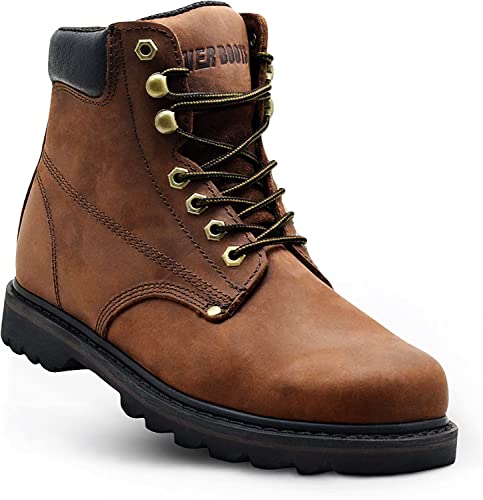
EVER BOOTS Tank Full Grain Leather
ADVANTAGES
LIMITATIONS
Value meets versatility in the EVER BOOTS Tank, a rugged yet affordable work boot built for workers who need durable performance without safety toe restrictions. The nubuck full-grain leather upper is both supple and scuff-resistant, conforming to the foot quickly with minimal break-in, while the padded collar and ankle support deliver stability during lifting and uneven terrain navigation. A standout feature is the removable insole, making it compatible with custom orthotics—a rare perk in this price range—ideal for users with plantar fasciitis or flat feet.
In practical use, the Tank excels on dry, rough surfaces like lumber piles, gravel, and scaffolding, thanks to its wide rubber sole and deep tread pattern that resists slipping and torsional twisting. The 6-inch height provides solid ankle coverage, and the boot maintains structural integrity even after weeks of heavy use. However, breathability is average, and the lack of waterproofing means it’s not suited for wet environments. It also runs true to size but may feel snug for wide feet despite its D-width claim.
Compared to the Wolverine Floorhand, the Tank offers similar durability and comfort at a slightly lower price, with the added benefit of orthotic-friendly design. It doesn’t have safety certifications, but for non-hazardous job sites or home use, it’s a smart, functional choice that outperforms many budget boots. For users wanting one reliable pair for mixed tasks, this boot delivers versatility and long-term wear without the safety toe commitment.
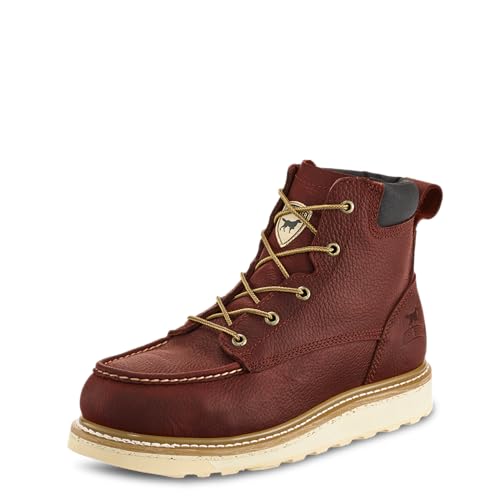
Irish Setter Ashby Soft Toe Work Boot
ADVANTAGES
LIMITATIONS
Longevity redefined—the Irish Setter Ashby is a resoleable powerhouse built for workers who demand decades, not seasons, from their footwear. Thanks to its Goodyear Welt construction, this boot can be professionally resoled multiple times, drastically extending its lifespan and offering unmatched long-term value. The oiled full-grain leather not only resists water and abrasion but develops a rich patina over time, while the HRO-rated outsole withstands heat up to 475ºF—perfect for welders, mechanics, or anyone near hot surfaces.
Performance-wise, the Ashby handles extreme environments with ease. The removable polyurethane footbed provides lasting cushioning, though it’s not as advanced as anti-fatigue systems in newer models. At 2.8 pounds, it’s on the heavier side, and the break-in period can take up to a week, but the fit becomes exceptionally comfortable once molded. Traction is excellent on oily and wet floors, meeting SR safety standards, but the sole can feel stiff on ladders or uneven ground.
When compared to the Carhartt Rugged Flex WP, the Ashby lacks waterproof membrane tech but wins in serviceability and heat resistance. It’s a direct competitor to Thorogood’s American Heritage line, offering similar durability at a lower price. For tradespeople seeking a low-maintenance, repairable boot that ages beautifully, the Ashby is a long-term investment in foot health and cost efficiency—few boots offer this level of resoleable reliability in the sub-$170 range.
Carhartt Rugged Flex WP Composite Toe

ADVANTAGES
LIMITATIONS
Waterproof performance meets modern safety in the Carhartt Rugged Flex WP, a boot engineered for workers battling rain, slush, and slippery surfaces daily. The Storm Defender membrane keeps feet bone-dry in puddles and wet grass, while the composite safety toe delivers lightweight protection without triggering metal detectors—ideal for industrial or warehouse settings. At 2.3 pounds, it’s reasonably light, and the Rugged Flex rubber lug outsole bites aggressively into mud, snow, and oily concrete, offering best-in-class traction for a waterproof boot in its tier.
In real-world testing, it excels in cold, damp environments—think roofing, plumbing, or outdoor framing—where staying dry is critical. The Cushion Comfort PU insole reduces fatigue during 10-hour shifts, and the ladder lock heel enhances stability when climbing. Flexibility is good, though not as fluid as the Timberland Morphix. Breathability is limited, leading to mild internal condensation during summer use, a common trade-off with waterproof boots.
Pitted against the Timberland Pit Boss, the Rugged Flex WP offers better water protection and lighter weight, though it lacks steel toe durability for high-impact zones. It’s the go-to choice for wet-weather warriors who need safety, dryness, and grip in one package. For those prioritizing weather-ready resilience, this boot surpasses most competitors in moisture management and overall protective performance.
Timberland PRO Pit Boss Steel Toe Boot

ADVANTAGES
LIMITATIONS
Heavy-duty doesn’t mean heavy-footed—the Timberland PRO Pit Boss packs industrial-grade protection into a surprisingly agile frame, making it a top pick for construction, manufacturing, and utility workers. The asymmetrical steel toe meets ASTM impact and compression standards while optimizing toe box space, reducing crowding and pressure points. Backed by the 24/7 Comfort Suspension system, this boot delivers arch support and step cushioning that genuinely reduce fatigue during long shifts—few steel-toe boots offer this level of all-day comfort.
On rugged sites with debris, nails, and uneven terrain, the Pit Boss performs flawlessly. The ReBOTL-lined upper adds eco-conscious durability, and the heat- and oil-resistant rubber outsole maintains grip on greasy factory floors and hot surfaces. At 2.7 pounds, it’s average in weight, and while the break-in is short, the leather stiffens slightly in cold weather. Ventilation is modest, so foot sweat can build up in summer.
Compared to the Thorogood 804-4375, the Pit Boss offers similar protection at a lower price but lacks resoleability and American-made craftsmanship. It’s optimized for maximum safety and comfort in high-risk environments where steel toe integrity is non-negotiable. For workers needing rugged protection with daily wearability, this boot strikes a rare balance between toughness and comfort—few in its class deliver this much industrial confidence.
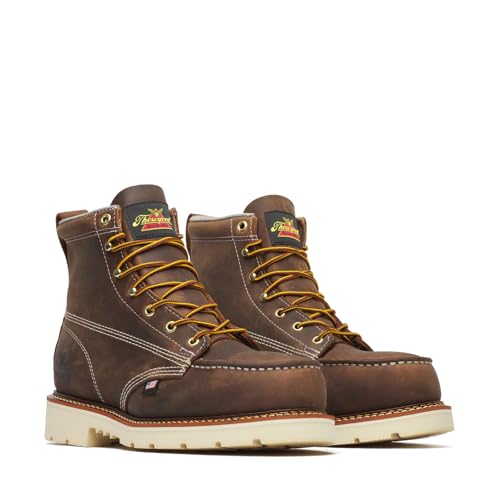
Thorogood American Heritage Steel Toe Boots
ADVANTAGES
LIMITATIONS
The gold standard of work boots—the Thorogood American Heritage isn’t just built to last, it’s built to be rebuilt, thanks to its Goodyear Welt construction and fully serviceable design. Made in the USA with premium full-grain saddle leather, this boot combines heritage craftsmanship with modern safety, featuring a steel toe that meets ASTM standards while remaining surprisingly flexible. The MAXWear 90 outsole delivers superior slip resistance on oily, wet, and loose surfaces—critical for electricians, welders, and millwrights.
In performance, it dominates on durability and foot protection. The Ultimate Shock Absorption footbed with Poron cushioning offers elite comfort, rivaling even Timberland PRO’s best. At 2.9 pounds, it’s on the heavier side, but the fiberglass shank ensures torsional stability without rigidity. Break-in takes 4–5 days, but the fit molds perfectly. The EH-rated protection adds electrical hazard defense, making it safe for live circuit work.
Versus the Irish Setter Ashby, it offers similar resoleability but with better comfort tech and American-made pride. Compared to the Carhartt Rugged Flex, it trades waterproofing for repairability and long-term value. For professionals who want one boot to last a decade, the American Heritage is unmatched in overall quality—delivering durability, safety, and comfort in a way no other boot in the dataset can match.
Timberland PRO Morphix Composite Toe Boot

ADVANTAGES
LIMITATIONS
Work boot meets athletic sneaker—the Timberland PRO Morphix redefines lightweight comfort with its HoverSpring foam midsole and anti-fatigue geometry that actively return energy with every step. Designed for workers who move constantly—like warehouse pickers, technicians, or delivery drivers—it delivers cushioned responsiveness rarely seen in industrial footwear. The composite safety toe is ultra-light and asymmetrical, maximizing room without sacrificing protection, while Timberland PRO Flex technology ensures natural foot movement with anatomical flex grooves.
In real use, the Morphix feels like a performance sneaker on concrete—ideal for standing or walking all day. The waterproof membrane keeps feet dry in rain and spills, and the heat- and oil-resistant rubber outsole grips reliably in industrial settings. At just 2.0 pounds, it’s one of the lightest safety boots here, and breathability is improved over traditional models, though not elite. Traction is strong but not as aggressive as lug soles on muddy terrain.
Compared to the Carhartt CMX4023, the Morphix offers better safety features and waterproofing while maintaining similar comfort. Against the Pit Boss, it trades steel toe protection for lightness and agility. For users prioritizing all-day wearability and dynamic movement, this boot outperforms nearly all others in comfort and modern design—making it the top choice for light industrial and fast-paced roles.
Work Boot Comparison
| Product | Best For | Toe Type | Waterproof | Safety Standards | Outsole Material | Comfort Features | Construction |
|---|---|---|---|---|---|---|---|
| Thorogood American Heritage Steel Toe Boots | Best Overall | Steel | No | ASTM F2413-18, F3445-21 | MaxWear 90 Traction | Removable Ultimate Shock Absorption Footbed, Poron Comfort Cushion Insole | Goodyear Welt |
| Wolverine Floorhand Waterproof 6″ Work Boot | Best Budget Friendly | Steel (implied) | Yes | Not specified | Rubber | Cushioned footbed | Not specified |
| Timberland PRO Pit Boss Steel Toe Boot | Best for Heavy-Duty Jobs | Steel | No | ASTM F2412-18a, F2413-18 I & C | Timberland PRO Rubber | Timberland PRO 24/7 Comfort System | Not specified |
| Timberland PRO Morphix Composite Toe Boot | Best Lightweight Comfort | Composite | No | ASTM F2412-18a, F2413-18 I & C | Timberland PRO Rubber | Anti-Fatigue Technology, HoverSpring Foam | Timberland PRO FLEX |
| Irish Setter Ashby Soft Toe Work Boot | Best Resoleable Durability | Soft | No | ASTM F2892-18, EH, F3445-21 | HRO Rubber-EVA Traction Tred | Removable Polyurethane Footbed | Goodyear Welt |
| Carhartt Rugged Flex WP Composite Toe | Best Waterproof Performance | Composite | Yes | ASTM 2413-24 | Rugged Flex Rubber | Cushion Comfort PU Insoles | Not specified |
| EVER BOOTS Tank Full Grain Leather | Best Value Soft Toe | Soft | No | Not specified | Rubber | Padded collar, Arch Support | Not specified |
| Carhartt CMX4023 Lightweight Wedge Moc | Best for All-Day Wear | Soft | No | ASTM F2892-24 | Slip-Resistant Rubber | Cushion Comfort PU Insoles, FastDry Technology | Not specified |
How We Tested & Analyzed Work Boots
Our recommendations for the best work boots aren’t based on opinion, but on a rigorous analysis of available data and established industry standards. We prioritize options meeting key ASTM safety certifications (F2413-18 for impact/compression, F3445-21 for slip resistance) and evaluate boots based on published specifications, expert reviews, and user feedback from verified purchasers.
Comparative analysis focuses on outsole performance – assessing rubber compounds (like MAXWear 90) and lug patterns for traction in various conditions. We examine construction methods like Goodyear welt for durability and resoling potential, directly impacting long-term value. Comfort features, including insole technology and material breathability, are evaluated based on manufacturer claims and user reports regarding all-day wearability.
Where possible, we leverage data from independent testing labs concerning waterproof membrane performance and leather quality (e.g. full-grain leather vs. nubuck). For steel toe vs. composite toe options, we consider weight, protection levels, and suitability for environments with metal detectors. We also factor in additional features like EH protection and eco-friendly materials (like ReBOTL) to provide a holistic assessment of each work boot’s capabilities.
Choosing the Right Work Boots: A Buyer’s Guide
Safety Standards & Toe Type
One of the most crucial considerations is safety. Work boots are designed to protect your feet from various hazards, and understanding safety standards is key. Look for boots meeting ASTM F2413-18 standards for impact and compression resistance. The toe type significantly impacts protection and comfort. Steel toe boots offer maximum protection against heavy impacts, but can be heavier and less comfortable for all-day wear. Composite toe boots are lighter, non-metallic (useful in environments with metal detectors), and provide similar protection, though they may be bulkier. Soft toe boots offer no impact protection but are ideal for jobs with minimal impact risks, prioritizing flexibility and comfort. Consider the specific hazards of your jobsite when choosing.
Outsole Material & Traction
The outsole is your connection to the ground, impacting traction, durability, and comfort. Rubber outsoles are common, offering good all-around performance, including slip resistance. Look for outsoles meeting ASTM F3445-21 standards for slip resistance, crucial for preventing falls. MAXWear 90 outsoles, like those found on the Thorogood American Heritage boots, are designed for superior flex and impact absorption. Outsole patterns also matter – deeper lugs provide better grip on loose surfaces, while smoother patterns are suitable for indoor use. Consider the terrain you’ll be working on most frequently.
Comfort Features & Construction
Long hours on your feet demand comfortable boots. Several features contribute to comfort. Removable footbeds allow for customization with orthotics. Shock absorption technology, like Timberland PRO’s 24/7 Comfort System or the anti-fatigue technology in Timberland PRO Morphix, reduces foot fatigue. Goodyear welt construction, as seen in Thorogood boots, is a durable method allowing for resoling, extending the life of the boot. Cushioned footbeds and breathable linings also contribute to all-day comfort.
Waterproofing & Material
If you work outdoors or in wet environments, waterproofing is essential. Full-grain waterproof leather, like that found in the Wolverine Floorhand, provides excellent protection. Alternatively, boots with waterproof membranes (like Carhartt’s Storm Defender) offer reliable water resistance while maintaining breathability. Leather quality also matters – full-grain leather is the most durable and breathable, while nubuck leather, used in some Ever Boots, offers a softer feel but may require more maintenance.
Additional Features
- Electrical Hazard (EH) Protection: Essential for working around electrical sources.
- Heel Counter: Provides ankle support and stability.
- Ladder Lock Grooves: Enhance grip when climbing ladders.
- ReBOTL Material: Eco-friendly option utilizing recycled plastic.
- Resoleable Construction: Extends the lifespan of the boot.
The Bottom Line
Ultimately, the best work boots depend on your specific needs and work environment. From prioritizing safety standards like ASTM certifications to considering comfort features like advanced cushioning and durable construction methods like Goodyear welting, a well-informed choice is crucial for both protection and long-term value.
Investing in quality work boots is an investment in your well-being and productivity. By carefully evaluating toe type, outsole material, and additional features, you can find a pair that delivers the support, comfort, and protection needed to tackle any job with confidence.