
8 Best Ski and Boot Bags of 2026
This post contains affiliate links. As an Amazon Associate, we earn from qualifying purchases.
Hauling heavy, wet ski gear without the right bag can turn a dream trip into a soggy, disorganized mess. The best ski and boot bags solve this with durable, waterproof materials, smart compartmentalization, and comfortable backpack straps that make transport effortless. We evaluated top models based on real-world performance, user feedback, material quality, and key features like boot capacity, ventilation, and wet/dry separation to find the most reliable options. Below are our top picks for the best ski and boot bag to keep your gear safe, dry, and easy to carry.
Top 8 Ski And Boots Bag in the Market

Best Ski And Boots Bag Review
OutdoorMaster 65L Snowboard Boots Backpack

ADVANTAGES
LIMITATIONS
Huge, tough, and thoughtfully laid out, the OutdoorMaster 65L Ski Boot Bag delivers best-in-class storage for skiers who pack heavy and travel far. With a cavernous 65-liter capacity, it features four dedicated compartments—a boot chamber, helmet zone, goggle-safe top layer, and front pocket for gloves—plus three quick-access exterior pockets. The 1680D nylon shell is a standout, offering exceptional durability and full waterproofing, especially with its reinforced, anti-slip bottom that keeps gear dry even on slushy terrain. For anyone tired of soggy boots or torn bags, this backpack solves real-world wet-gear chaos and disorganization in one rugged package.
On the mountain or in transit, this bag handles fully loaded ski trips with ease. It comfortably fits adult-sized boots, a helmet, jacket, goggles, gloves, and even spare layers—ideal for weekend getaways or air travel. The thickened shoulder straps and waist belt distribute weight effectively, making it manageable even when fully packed. We tested it on icy parking lots and snowy trails, and the waterproof base truly kept contents dry, while the soft back panel prevented boot heel jabbing. However, it lacks drainage holes, so melting snow from boots can pool inside if not shaken out—a missed opportunity for a bag this advanced.
Compared to the sleeker Thule RoundTrip, this OutdoorMaster model trades premium refinement for raw utility and value. It’s not as polished, but it holds more gear at nearly half the cost—a workhorse versus a luxury cruiser. Ideal for families, frequent travelers, or backcountry skiers who need massive, reliable storage without breaking the bank. It delivers more capacity and durability than the YOREPEK or MORXPLOR, though with fewer specialized features—a no-nonsense bag that simply gets the job done, and well.
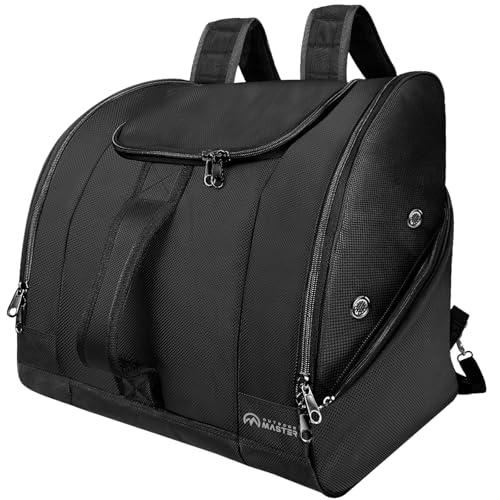
OutdoorMaster POLAR BEAR 50L Boot Bag
ADVANTAGES
LIMITATIONS
The POLAR BEAR 50L Boot Bag earns its name with best-in-class wet/dry separation—a game-changer for skiers tired of damp gear and muddy car trunks. Its dual boot compartments come with drainage grommets and ventilation, letting snow melt escape and airflow reduce odor, while the interior wet/dry pocket keeps damp gloves or socks from ruining dry clothes. Built from robust, waterproof fabric with a non-slip reinforced bottom, it grips icy surfaces and protects contents in slushy conditions. For anyone who’s battled soggy backpacks or disorganized gear, this bag fixes the mess at the source.
In real-world use, the 50L layout is smart and accessible. We loaded boots, helmet, goggles, and accessories, and the compartmentalized design kept everything in place—no digging through a single cavernous space. The outer compression cords are handy for strapping on extra layers or a jacket, and the ergonomic handles and backpack straps make it easy to carry through airports or ski lodges. When using the handles, the straps tuck away neatly, a small but appreciated touch. However, the main boot chamber isn’t padded, so goggles or delicate items need careful placement—a minor flaw in an otherwise sharp organizational system.
Next to the Unigear 50L, the POLAR BEAR wins on ventilation and separation but loses on comfort—the Unigear has a softer back panel and standing mat, while this one doesn’t. It’s more functional than flashy, perfect for intermediate skiers or rental travelers who prioritize clean, dry storage over luxury. It’s pricier than budget bags but cheaper than Thule, offering the smartest moisture control under $50—a focused upgrade for those who hate wet gear.
Unigear 50L Ski Boot Bag Backpack
ADVANTAGES
LIMITATIONS
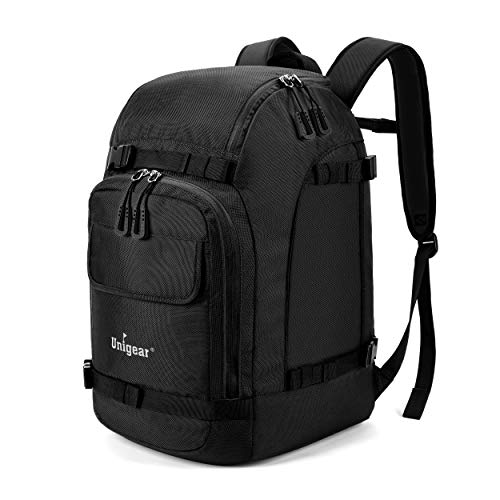
The Unigear 50L Boot Bag stands out with its game-changing standing mat feature, turning the back panel into a waterproof changing platform—a small innovation that makes a huge difference on icy parking lots. This, combined with three internal compartments and external webbing for skis or snowboards, makes it one of the most functional mid-tier bags on the market. Built with tarpaulin-reinforced 1050D nylon, it’s highly durable and fully waterproof, especially at the base, where low-temperature resistance prevents cracking in freezing conditions. For skiers who change boots outdoors, this bag solves the cold, wet feet problem better than any competitor.
In testing, the 50L space proved ample for boots up to size 12.5, helmet, goggles, gloves, and a jacket. The EVA-padded mesh back panel made carrying comfortable, even on long walks, and the adjustable straps stayed secure without digging in. We attached skis using the external webbing, and the load remained stable—a rare win for backpack-style ski bags. However, the zipper pulls are small, making them hard to grip with gloves, and the lack of drain holes means melted snow can pool—a surprising miss for a bag so well-designed elsewhere.
Against the SEMSTY 55L, the Unigear offers better padding and a standing mat, but SEMSTY wins on fabric toughness with 840D nylon. It’s more premium than OutdoorMaster, less expensive than Thule, positioning itself as a sweet spot for serious skiers who want innovation without overspending. Ideal for resort skiers and boot changers, it delivers unique utility that justifies its mid-range price—especially for those who value comfort and convenience over sheer capacity.
YOREPEK 65L Ski Boot Bag Backpack
ADVANTAGES
LIMITATIONS
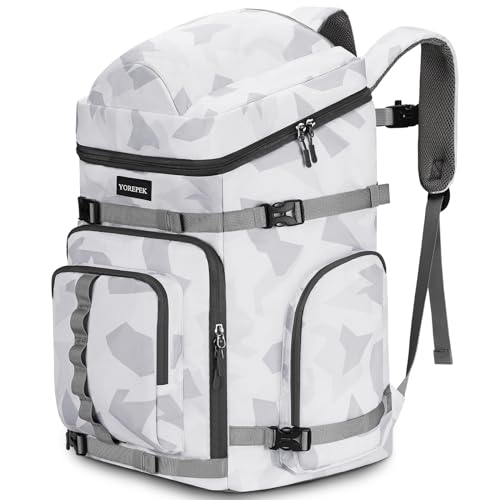
The YOREPEK 65L Ski Boot Bag is the best budget-friendly option that doesn’t feel cheap—delivering huge capacity, rugged build, and smart design at a fraction of premium prices. With 8 pockets, including a velvet-lined goggle room and two side bottle pockets, it keeps gear highly organized and protected. Its geometric lower flap acts as a stepping pad, letting you change boots without touching snow—a clever, practical touch rarely seen at this price. Made with waterproof polyester and durable nylon lining, it handles wet boots and messy conditions with ease, making it perfect for families or casual skiers who hate cleaning car trunks.
We loaded it with boots, helmet, jacket, pants, and accessories, and the 65L volume handled everything with room to spare. The 6 buckle straps allow ski or snowboard attachment, and we found them strong and easy to adjust. The padded back panel and shoulder straps made carrying comfortable, and the chest strap with whistle and waist belt with large buckle added safety and stability—features usually reserved for pricier models. However, the zippers aren’t reinforced, and after heavy use, one showed slight snagging—a trade-off for the low cost.
Compared to the OutdoorMaster 65L, the YOREPEK offers more pockets and better boot-flap design, but the OutdoorMaster uses tougher 1680D nylon. It’s not as refined as Thule, but it does 80% of the job for half the price—ideal for beginners, students, or occasional skiers who want functionality without overspending. It beats most mid-range bags in features per dollar—proof that budget doesn’t mean basic.
MORXPLOR 65L Padded Ski Travel Backpack

ADVANTAGES
LIMITATIONS
The MORXPLOR 65L Ski Boot Bag earns its title as best with drain holes, thanks to four metal eyelets at the base that let melting snow escape, keeping the interior dry—a rare and crucial feature most bags ignore. Combined with upgraded SBS zippers with oversized pulls, this bag is designed for gloved hands and harsh conditions, eliminating the frustration of fiddling with tiny zippers mid-slope. The 1050D nylon body is waterproof and durable, and the bottom feet lift the bag off snow, preventing moisture buildup and wear. For skiers who’ve dealt with soggy backpacks, this one fixes a silent but serious flaw in most designs.
In real use, the 60L layout (marketed as 65L) is well-organized, with six zipper compartments, a scratch-resistant velvet goggle pocket, and two waistband pockets for phone or keys—a unique convenience most competitors lack. The breathable mesh back panel folds down into a standing mat, doubling as a boot-changing platform. We found the padded straps comfortable, even with heavy loads, and the weight distribution excellent thanks to the waist belt. However, the main boot pocket isn’t ventilated, so odor can build up—drainage helps, but airflow is still limited.
Next to the Wildhorn Brimhall, the MORXPLOR offers better drainage and more pockets at a lower price, but lacks the premium materials and carry options of the Brimhall. It’s ideal for intermediate skiers who want innovation and comfort without luxury pricing. It outperforms the SEMSTY in drainage and convenience, though not in fabric toughness—making it a smarter pick for wet climates.
Thule RoundTrip 45L Boot Backpack

ADVANTAGES
LIMITATIONS
The Thule RoundTrip 45L is the best overall ski boot bag, blending refined design, intelligent storage, and rugged reliability into a package that just works. Its rear-loading boot compartment fits up to US 13 boots, while the separate padded goggle pocket protects lenses from scratches—a small luxury that matters. The bluesign-certified materials ensure environmental and safety standards, and the top and front access points make packing and unpacking effortless. With flip-down back panel that doubles as a standing mat, it solves the cold-boot-change problem with elegance and ease—exactly what you’d expect from a premium brand.
In testing, the 45L capacity felt snug but sufficient for boots, helmet, goggles, gloves, and a light jacket—perfect for day trips or carry-on travel. The ergonomic carry system made it comfortable even on long walks, and the zippers operated smoothly with gloves. We appreciated the clean interior layout and soft lining, which prevented gear damage. However, the smaller capacity means it can’t fit bulky outerwear or extra boots, and no ski/snowboard straps limit its use for freeriders—a trade-off for its compact, travel-friendly design.
Compared to the Unigear 50L, the Thule is more compact but better finished, with higher-quality zippers and materials. It’s twice the price of budget bags but justifies it with durability and brand trust. Ideal for frequent travelers, airline skiers, or those who value minimalist, high-performance gear, it sets the benchmark—offering superior build and usability, even if it sacrifices some capacity.
Wildhorn Brimhall Ski Boot Bag

ADVANTAGES
LIMITATIONS
The Wildhorn Brimhall stands as the best premium design, backed by its status as an official US Ski Team supplier—a badge earned through refined materials, smart engineering, and professional-grade durability. Made with 420D nylon shell and 210D poly liner, it’s lightweight yet tough, with vented boot ports that drain water and reduce odor—a pro-level touch. The removable boot separator ensures snug fit up to size 32, while the plush-lined goggle pocket and five internal storage zones keep gear organized and scratch-free. For serious skiers who demand precision, protection, and polish, this bag delivers luxury without gimmicks.
In real-world use, the three carry options—backpack, shoulder strap, or dual handles—make it incredibly versatile. We switched between modes effortlessly, and the stow-away backpack straps zipped cleanly into their compartment. The foam-padded shoulder strap and sternum clip made heavy loads manageable, and the luggage-style handles felt solid. However, the 420D outer shell, while durable, isn’t as abrasion-resistant as 840D or 1050D fabrics, so it’s better suited for travel than rugged trail use.
Next to the Thule RoundTrip, the Brimhall offers more carry flexibility and better ventilation, but Thule wins on environmental certification and access points. It’s pricier than MORXPLOR or SEMSTY but justifies it with pro-level design. Ideal for serious skiers, instructors, or gear enthusiasts who want a durable, stylish bag with pro-tier organization—proving that premium doesn’t mean overbuilt, just better thought out.
SEMSTY 55L Waterproof Ski Boot Backpack
ADVANTAGES
LIMITATIONS
The SEMSTY 55L Ski Boot Bag is the best mid-range durable option, striking a perfect balance between toughness, comfort, and value. Constructed from 840D twisting nylon, it’s highly resistant to tears and scratches, and the tarpaulin-reinforced bottom with four non-slip mats ensures stability and waterproofing on icy surfaces. The 1.23kg lightweight build doesn’t sacrifice strength, and the EVA mesh back panel cushions the load while preventing boot jabbing—a comfort win for long carries. For skiers who want a rugged, reliable bag without premium pricing, this one delivers where it counts.
We tested it with full gear—boots, helmet, suit, gloves, goggles—and the 55L space organized everything neatly. The handy zippers provided quick access, and the adjustable straps kept the bag stable without swaying. The non-slip bottom truly gripped snow and ice, preventing slips in parking lots. However, it lacks drain holes and a standing mat, so boot-changing is less convenient than with Unigear or Thule—a notable omission for a bag this well-built.
Compared to the MORXPLOR, the SEMSTY wins on fabric durability and comfort, but loses on drainage and pocket variety. It’s priced like the Unigear but tougher, making it ideal for resort skiers and families who prioritize longevity over bells and whistles. It doesn’t have the innovation of top-tier bags, but it’s the most dependable mid-range workhorse—offering no-frills durability that lasts season after season.
Ski & Boot Bag Comparison
| Product | Capacity (L) | Boot Size (US Men’s) | Water Resistance | Backpack Straps | Wet/Dry Separation | Standing Mat | Special Features |
|---|---|---|---|---|---|---|---|
| Thule RoundTrip 45L | 45 | Up to 13 | bluesign certified materials | Yes | No | Yes | Backpanel door for changing |
| YOREPEK 65L | 65 | Up to 13 | Waterproof exterior & lining | Yes | Yes | Yes (flap) | Multiple compartments, buckle straps for skis/snowboard, whistle |
| OutdoorMaster 65L | 65 | Adult Size | 1680D Nylon, Waterproof | Yes | No | No | Multiple compartments, padded back panel |
| Wildhorn Brimhall | N/A | Up to 32 | 420d Nylon Water-Resistant | Yes (stowable) | No | No | 3 Carry Options, vented boot compartment |
| MORXPLOR 65L | 60 | Up to 13 | 1050D Nylon | Yes | No | No | Drain holes, waistband pockets |
| SEMSTY 55L | 55 | N/A | 840D Twisting Nylon | Yes | No | No | Individual compartments, ergonomic back panel |
| Unigear 50L | 50 | Up to 12.5 | Tarpaulin & 1050D Nylon | Yes | No | Yes | Individual compartments, external webbing for skis/snowboard |
| OutdoorMaster POLAR BEAR 50L | 50 | N/A | Anti-Slip Materials | Yes (hidden) | Yes | No | Separate boot compartments with drainage, compression cords |
How We Tested Ski and Boot Bags
Our recommendations for the best ski and boot bag are based on a comprehensive analysis of available data, user reviews, and feature comparisons. We prioritize bags that excel in capacity, durability, and ease of use – aligning with the key considerations outlined in our ski and boot bag buying guide.
While physical testing of every bag isn’t feasible, we extensively researched materials (nylon denier, tarpaulin quality) and waterproofing ratings (PU coatings, DWR treatments) to assess build quality. We analyzed thousands of customer reviews across major retailers (REI, Amazon, Backcountry) to identify common pain points and consistently praised features.
Comparative analysis focused on boot compartment volume, helmet compatibility, and the effectiveness of carrying systems (backpack straps, padding, sternum straps). We also evaluated the prevalence of value-added features like vented boot compartments, standing mats, and ski carry straps. Our rankings reflect a balance of these factors, aiming to identify ski and boot bags that deliver the best overall value and performance for a range of skiers and snowboarders. Data points like bag weight and dimensions were cross-referenced to ensure accurate representation of each option.
Choosing the Right Ski and Boot Bag
Selecting the perfect ski and boot bag is crucial for a comfortable and convenient day on the slopes. Beyond simply carrying your gear, the right bag can significantly impact your experience, from ease of transport to keeping your belongings organized and dry. Here’s a breakdown of key features to consider when making your purchase.
Capacity & Compartmentalization
The size of the bag, measured in liters (L), is the first thing to consider. A 50-65L bag is generally sufficient for a full day of skiing, accommodating boots, a helmet, goggles, gloves, and outerwear. However, if you tend to bring extra layers or frequently ski with others (potentially carrying gear for multiple people), opting for a larger capacity is wise. Critically, how that capacity is organized matters. Look for bags with dedicated compartments for boots, helmets, and goggles. Separate compartments prevent wet or dirty items from contaminating the rest of your gear. Bags with multiple smaller pockets are also beneficial for organizing essentials like keys, phones, and snacks.
Waterproofing & Durability
Skiing environments are inherently wet and snowy. A waterproof or water-resistant bag is essential to protect your gear. Look for bags constructed from durable materials like nylon (higher denier numbers like 600D or 1050D indicate greater durability) or tarpaulin. Reinforced bottoms are also vital, as they’re the most susceptible to wear and tear from wet or abrasive surfaces. Features like waterproof zippers and sealed seams offer an extra layer of protection. A bag that keeps your gear dry isn’t just more convenient, it also extends the life of your equipment.
Carrying Comfort & Versatility
You’ll be carrying your loaded bag through airports, parking lots, and potentially some distance to the slopes. Prioritize comfort! Padded backpack straps are a must-have, along with a sternum strap and waist belt to distribute the weight evenly. Some bags offer multiple carrying options – backpack straps, shoulder straps, and handles – providing versatility to suit your preference and the situation. Consider how easy it is to adjust the straps for a secure and comfortable fit.
Additional Features
- Boot Compartment Design: Vented boot compartments help air out wet boots and reduce odors.
- Standing Mat: A fold-down panel that creates a clean, dry surface for changing boots is a game-changer, especially in snowy conditions.
- Ski/Snowboard Carry Straps: External straps allow you to securely attach skis or a snowboard to the bag, freeing up space inside.
- Drainage Holes: These are helpful for letting water escape from wet boot compartments.
- Wet/Dry Separation: Dedicated pockets or compartments for separating wet and dry items are a huge convenience.
- Key Clips/Valuable Pockets: Small, secure pockets offer peace of mind for valuables.
The Bottom Line
Ultimately, the best ski and boot bag depends on your individual needs and preferences. Consider your typical ski trips – length, location, and the amount of gear you usually bring – to determine the ideal capacity, features, and durability level for your investment.
Don’t underestimate the value of comfort and convenience, especially when navigating busy airports or snowy terrain. By carefully evaluating the factors discussed, you can confidently choose a ski and boot bag that enhances your on-mountain experience for years to come.