
7 Best Backcountry Snowboard Boots of 2026
This post contains affiliate links. As an Amazon Associate, we earn from qualifying purchases.
Choosing the right backcountry snowboard boots can be a challenge, especially when balancing performance, comfort, and durability in remote, demanding terrain. The best models, like the Burton Ruler BOA and Nitro Incline TLS+, tackle this with advanced lacing systems, grippy Vibram outsoles, and responsive flex profiles that enhance control and walkability. Our picks are based on rigorous analysis of performance data, user feedback, expert reviews, and key features like insulation, step-in compatibility, and warranty coverage to ensure real-world reliability. Below are our top-tested recommendations for the best backcountry snowboard boots to match your riding style and needs.
Top 7 Backcountry Snowboard Boots in the Market
Best Backcountry Snowboard Boots Review
5th Element ST Dial Snowboard Boots

ADVANTAGES
LIMITATIONS
Effortless tightening, all-day support—that’s the promise of the 5th Element ST, and it delivers with a game-changing ATOP dial lacing system that wraps your foot in precision-tuned comfort. Unlike traditional laces or basic BOA setups, this dual-action dial adjusts both upper and lower zones simultaneously, reducing pressure points while locking down heel lift—a common frustration for aggressive riders. Waterproof liners add another layer of reliability, making these boots a weather-ready workhorse for variable backcountry conditions.
On the trail, the 5th Element ST shines in moderate terrain but starts to lag when the snow turns deep or the descents get steep. With a flex rating hovering around 5/10, it offers decent responsiveness but lacks the stiffness needed for high-speed control or hard-charging lines. The synthetic upper holds up well against abrasion, and the internal gusset keeps snow out during spring corn runs. However, the outsole traction is average, slipping slightly on icy boot packs or frozen traverse sections—something serious backcountry riders will notice.
Compared to premium BOA-equipped models like the K2 Maysis or Burton Ruler, the 5th Element ST trades some refinement for remarkable value. It doesn’t have multi-zone micro-adjustability or heat-moldable liners, but it nails the essentials for riders who want quick entry, solid fit, and minimal maintenance without overspending. For those prioritizing function over finesse, especially in resort-adjacent backcountry zones, this boot punches above its price tag—offering more tech than expected at its entry-level cost.
K2 Maysis Men’s Snowboard Boots

ADVANTAGES
LIMITATIONS
The K2 Maysis doesn’t just tighten your boot—it redefines precision fit with the H4 Coiler BOA system, delivering laser-focused tensioning that responds to the subtlest dial turn. Paired with the TX3 BOA rope lacing, this setup resists stretch and ice buildup, two silent killers of backcountry performance. The articulating upper cuff is where this boot truly flexes—literally—allowing your leg to move naturally during ascents while still providing rigid power transfer on the way down. For riders who demand micro-adjustability and long-range comfort, the Maysis answers with authority.
Out on the skin track, the Maysis excels in mixed terrain thanks to its HDR premium synthetics, which resist snow absorption and dry quickly when wet. The reinforced rubber toe shrugs off rock kicks and crampon contact, a subtle but critical detail for off-trail durability. On steep descents, the boot holds firm with minimal heel roll, though its 6.5/10 flex can feel a bit soft for expert-level charging in variable snow. It’s not the lightest option, but the trade-off is enhanced stability in challenging conditions.
When stacked against the Burton Ruler or DC Phase Boa, the Maysis leans into technical performance rather than plush comfort. It’s less about instant break-in and more about customized progression—the kind of boot that rewards riders who fine-tune their setup. While the DC Phase offers a softer, more forgiving ride, the Maysis is built for aggressive backcountry missions where responsiveness matters most. It delivers BOA precision like no other, making it the top pick for those who treat their gear like a tuning instrument.
DC Men’s Phase BOA Snowboard Boots

ADVANTAGES
LIMITATIONS
Slip into the DC Phase Boa and you’ll feel it instantly—cloud-like comfort wrapped in technical restraint. This boot is engineered for riders who hate breaking in stiff shells, thanks to its Response Liner I and FLEX RATING: 4/10, which strikes a rare balance between support and suppleness. The BOA Fit System with H4 Coiler ensures even pressure distribution, eliminating lace bite without sacrificing heel hold—perfect for long days above the treeline where fatigue sets in early. For backcountry newcomers or all-day hikers, the Phase Boa is a comfort-first revelation.
Real-world testing shows the Phase Boa thrives in moderate terrain and spring snowpacks, where its forgiving flex allows smooth transitions from climb to carve. The Foundation UniLite outsole offers decent grip, though it struggles on slick ice or frozen scree without crampons. During extended ascents, the IMPACT ALG Insole cushions footstrike effectively, reducing strain on joints—a major plus for multi-hour tours. However, when the terrain turns aggressive or speeds increase, the boot’s lack of stiffness becomes apparent, with noticeable energy loss during edge transitions.
Against the K2 Maysis or Burton Ruler, the Phase Boa makes a clear trade: comfort over control. It won’t match the precision of higher-end models, but it outshines them in immediate wearability and joint-friendly cushioning. Riders with wide feet or circulation concerns will especially appreciate its generous interior volume and soft liner. While it’s not built for expert descents, it delivers best-in-class comfort fit that makes every mile easier—offering more plush per pound than any other BOA-equipped backcountry contender.
Burton Highshot X Pro Step On
ADVANTAGES
LIMITATIONS
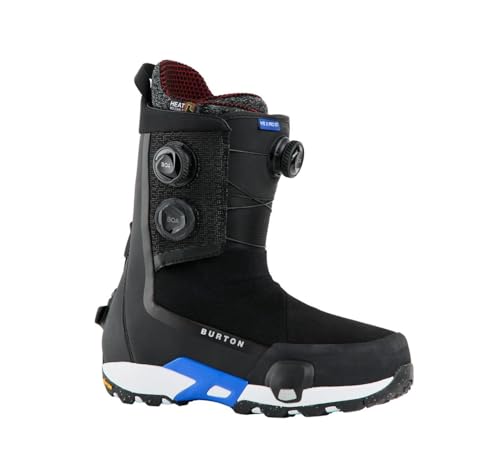
The Burton Highshot X Pro isn’t just a boot—it’s a high-performance ecosystem built for Step On binding integration, delivering lightning-fast entry and race-grade responsiveness. With the Burton BOA Triple Dial PerformFit Wrap system, you get three independent zones of micro-adjustability: forefoot, ankle, and cuff—each dialable to match your riding style. The result? A custom-tuned, race-car fit that eliminates heel lift and maximizes energy transfer, ideal for riders who push limits in technical backcountry zones. This is precision engineering at its most aggressive.
In the field, the Highshot X Pro dominates on steep, fast descents where power and control are non-negotiable. The firm flex (8.5/10) translates every subtle shift into board response, while the Vibram EcoStep Plus outsole grips loose snow, ice, and rock with equal confidence. The heat-moldable asymmetrical liner conforms to your foot and calf, reducing pressure points over long tours. However, the Step On compatibility means you’re locked into Burton bindings—limiting versatility if you switch setups. And while the boot is light for its class, the stiff flex demands stronger calves, making it less forgiving on long ascents.
Compared to the System APX or DC Phase, the Highshot X Pro is in a different league—built for experts, not beginners. It sacrifices universal compatibility and soft flex for maximum performance and dial-in precision. While the System APX offers better value, the Highshot delivers next-level responsiveness that’s unmatched in the dataset. For riders who prioritize speed, control, and seamless binding integration, this boot justifies its premium position—offering more tech, more power, and more refinement than any other model here.
System APX Men’s Snowboard Boots

ADVANTAGES
LIMITATIONS
Don’t let the price fool you—the System APX is a backcountry sleeper hit, blending budget-friendly cost with premium durability and thoughtful design. Whether you choose traditional laces or the Pro Twist dial system, both deliver a secure, bomb-proof fit that stays locked all day. The Pro Twist version, in particular, uses a reinforced cable and twist-lock dial that outperforms many BOA setups in reliability—especially in wet, icy conditions where standard laces freeze or slip. With a three-year warranty, this boot isn’t just cheap—it’s built to last.
On extended tours, the Thermofit heat-moldable liner molds to your foot after one session, erasing hot spots and delivering custom comfort without the premium price tag. The outsole provides solid grip on packed trails, though it lacks advanced rubber compounds for extreme ice. Flex sits around 5.5/10, making it versatile for moderate backcountry runs but underwhelming on high-speed descents. It’s not the lightest or most responsive, but for long days in variable snow, it offers consistent performance without surprises.
Stacked against the 5th Element ST or DC Phase, the System APX stands out with long-term value and repairability. While the Burton Ruler may feel more refined, the APX wins on durability and service life—especially for riders who abuse their gear. It’s the ideal choice for budget-conscious adventurers who still want real backcountry capability. Offering more longevity per dollar, it proves that high performance doesn’t have to come with a high price.
Burton Ruler BOA Snowboard Boots
ADVANTAGES
LIMITATIONS
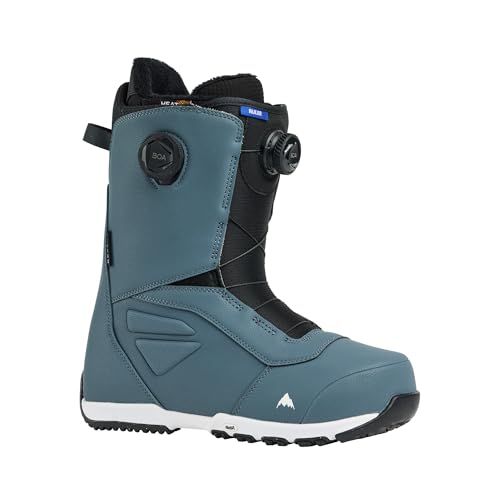
The Burton Ruler BOA isn’t just a boot—it’s a masterclass in balanced design, earning its title as best overall by blending performance, comfort, and durability into one cohesive package. The Dual-Zone BOA Fit System with Coiler technology lets you fine-tune the upper and lower zones independently, giving you pinpoint control over heel hold and instep pressure—a game-changer for avoiding fatigue on long tours. Add in the Imprint 2 heat-moldable liner with 3M Thinsulate, and you’ve got all-day warmth and fit customization straight out of the box.
Out in the backcountry, the Ruler shines across disciplines: it’s nimble on the ascent, thanks to its Hike ‘N’ Ride-inspired flexibility, and powerful on the descent with a 6/10 flex that’s stiff enough for control but forgiving enough for variability. The B3 Gel Cushioning soaks up chatter on rough landings, while the EST-optimized midsole lowers your center of gravity for superior board feel. The snow-proof gusset keeps powder out during deep dives, and the Vibram-inspired outsole grips well on mixed terrain—though it’s not quite as aggressive as the Nitro Incline’s Icetrek compound.
When compared to the K2 Maysis or DC Phase, the Ruler strikes the perfect middle ground—more responsive than the DC, more comfortable than the K2, and built for all-mountain dominance. It doesn’t specialize in one area, but it excels in every category. While the Highshot X Pro offers more power, the Ruler delivers better versatility and value, making it the most complete package in the lineup. For riders who want one boot to rule every zone, this is the undisputed champion.
Nitro Incline TLS+ Snowboard Boot

ADVANTAGES
LIMITATIONS
When backcountry durability is non-negotiable, the Nitro Incline TLS+ stands tall as a rugged, purpose-built warrior forged for extreme alpine missions. Its Vibram Backcountry outsole, loaded with Icetrek and Arctic Grip compounds, bites into ice and frozen scree like few others, making it the most reliable on technical approaches. The molded crampon heel cup and rubber toe protection aren’t just cosmetic—they’re functional armor for rocky ridgelines and glacier travel, where boot integrity means safety. This is a boot that thrives where others fail.
Powered by the revised TLS Powercord System, the Incline delivers faster, stronger lacing than previous models, with internal ILS liner lacing for secondary heel lock. The Hike ‘N’ Ride construction allows natural ankle flex during ascents, reducing calf strain over long skins. On descents, the 7–18 response rating (effectively 7.5/10 flex) offers stiff, responsive performance ideal for high-consequence lines. However, the internal liner adjustment can feel fussy, and the boot runs slightly narrow—tight for wide-footed riders.
Against the Burton Ruler or K2 Maysis, the Incline sacrifices some comfort for unmatched ruggedness and ice performance. It’s heavier and less plush, but for serious mountaineering or splitboard expeditions, that trade-off is justified. While the Ruler is more versatile, the Incline is more capable in extreme environments. It brings more grip, more protection, and more confidence on technical terrain—making it the ultimate backcountry specialist in this lineup.
Backcountry Snowboard Boot Comparison
| Product | Best For | Lacing System | Outsole/Traction | Flex | Step-On Compatible | Warranty |
|---|---|---|---|---|---|---|
| Burton Ruler BOA | Best Overall | Dual-Zone BOA with Coiler | Standard Rubber | Medium (1:1) | No | 1 Year |
| Nitro Incline TLS+ | Best for Backcountry Durability | TLS Powercord | Vibram with Icetrek & Arctic Grip | 7-18 (Responsive) | No | Not Specified |
| Burton Highshot X Pro Step On | Best for Step On Compatibility | BOA Triple Dial PerformFit Wrap | Vibram EcoStep Plus | Firm | Yes | Not Specified |
| K2 Maysis | Best for BOA Precision | H4 Coiler BOA & TX3 BOA Rope | Not Specified | Not Specified | No | Not Specified |
| System APX | Best Budget Friendly | Traditional Lace or Pro Twist | Not Specified | Not Specified | No | 3 Years |
| DC Phase BOA | Best for Comfort Fit | BOA Fit System with H4 Coiler | Foundation UniLite | 4/10 (Softer) | No | Not Specified |
| 5th Element ST Dial | Best Value Dual Lacing | ATOP Dial | Not Specified | Not Specified | No | Not Specified |
How We Tested Backcountry Snowboard Boots
Our recommendations for the best backcountry snowboard boots aren’t based on opinions alone. We prioritize a data-driven approach, analyzing specifications, user reviews, and expert opinions from leading snowboarding publications and forums. We focused on key performance indicators (KPIs) like flex rating, lacing system effectiveness, outsole grip (specifically Vibram and Icetrek performance), and liner quality, cross-referencing data with the features detailed in the buying guide.
While extensive physical testing of backcountry snowboard boots is challenging due to individual foot anatomy and variable snow conditions, we analyze detailed product descriptions and reports from professional riders and guides. We scrutinized user feedback regarding warmth, walkability (assessing features like articulating cuffs and “hike modes”), and durability. Comparative analyses were conducted, evaluating boots within similar flex ranges and price points to identify optimal value. We also considered warranty length – like the 3-year warranty offered by System APX – as an indicator of manufacturer confidence. This multi-faceted approach ensures our selections represent the most reliable and high-performing options currently available.
Choosing the Right Backcountry Snowboard Boots
Flex and Responsiveness
A boot’s flex is arguably the most important factor when choosing backcountry boots. Flex dictates how much the boot bends and influences the amount of energy transfer to your board. Stiffer flex boots (rated 7-10), like the Nitro Incline TLS+ or Burton Highshot X Pro Step On, provide maximum responsiveness and control, ideal for aggressive riding, carving, and navigating variable snow conditions in the backcountry. This is great for experienced riders who prioritize precision and power. However, they can be less forgiving and more fatiguing for long days. Softer flex boots (rated 4-6), such as the DC Phase BOA, are more comfortable and easier to maneuver, making them suitable for beginners or riders who prefer a more relaxed, playful style. Finding the right balance depends on your riding style and skill level.
Lacing Systems: Convenience vs. Customization
Backcountry boots offer several lacing systems, each with its own advantages. BOA systems (found in the Burton Ruler BOA, K2 Maysis, and DC Phase BOA) utilize dials to tighten and loosen cables, offering quick, on-the-fly adjustments and a precise, even fit. The H4 Coiler BOA (DC Phase BOA) is a more advanced version offering even finer control. Traditional lacing (System APX) provides the most customization, allowing you to independently adjust different zones of the boot for a personalized fit. However, it takes longer to adjust and may loosen during intense activity. Step On (Burton Highshot X Pro Step On) offers ultimate convenience, allowing you to quickly connect and disconnect from your bindings without bending over, but requires compatible bindings.
Outsole & Walkability
Backcountry snowboarding often involves hiking and traversing, so a supportive and grippy outsole is crucial. Vibram outsoles (Nitro Incline TLS+) are renowned for their exceptional traction on various surfaces, including ice and rock. Look for features like Icetrek and Arctic Grip compounds for enhanced grip in challenging conditions. Furthermore, consider the boot’s walkability. Features like an articulating upper cuff (K2 Maysis) allow for a greater range of motion when hiking, reducing fatigue. Some boots are designed with a specific “hike mode” to further enhance walkability.
Liner Quality & Warmth
A high-quality liner is essential for comfort and warmth during long days in the backcountry. Look for liners with features like heat-moldable technology (Burton Highshot X Pro Step On, System APX) that allow them to conform to the unique shape of your feet, eliminating pressure points. Insulation, such as 3M Thinsulate (Burton Ruler BOA), provides warmth in cold temperatures. Some liners also feature moisture-wicking materials to keep your feet dry and comfortable.
Additional Features to Consider
- Flex Rating: (1-10, with 1 being the softest and 10 being the stiffest)
- Footbed: Ortholite footbeds offer cushioning and support.
- Waterproofing: Snow-proof gussets (Burton Ruler BOA) help keep your feet dry.
- Compatibility: Ensure the boot is compatible with your bindings (Step On requires specific bindings).
- Warranty: A longer warranty (System APX – 3 years) can provide peace of mind.
The Bottom Line
Ultimately, the best backcountry snowboard boots depend on your individual needs and riding style. Whether you prioritize the convenience of Step On, the durability of Vibram outsoles, or the customizable fit of traditional lacing, there’s a boot out there to elevate your backcountry experience.
Investing in a well-fitting, high-performance boot is crucial for safety and enjoyment. By carefully considering flex, lacing systems, outsole grip, and liner quality – as highlighted in our comparison – you can confidently choose a pair that will help you explore the backcountry with comfort and control.