
8 Best Compression Ski Socks of 2026
This post contains affiliate links. As an Amazon Associate, we earn from qualifying purchases.
Cold feet, blisters, and poor circulation plague skiers who wear ill-fitting or low-performance socks, undermining comfort and performance on the slopes. The best compression ski socks solve these issues with targeted support and moisture-wicking materials like merino wool and alpaca, combining graduated compression (15–30 mmHg) with seamless construction to boost blood flow and prevent friction. We evaluated top models based on material quality, compression effectiveness, warmth retention, user reviews, and real-world performance metrics to ensure our picks deliver lasting comfort and durability. Below are our top-tested compression ski socks for every need and budget.
Top 8 Compression Ski Socks in the Market
Best Compression Ski Socks Review
OutdoorMaster Merino Wool Ski Socks

ADVANTAGES
LIMITATIONS
If you’re tired of ski socks that slip, bunch, or stink after a single run, the OutdoorMaster Merino Wool Ski Socks deliver a game-changing blend of compression support, odor resistance, and stay-put performance. Crafted with a 30% merino wool blend, these over-the-calf socks offer superior breathability and moisture-wicking, keeping your feet dry even during aggressive downhill sessions. The non-slip cuff is a quiet hero—no more constant tugging to keep socks up inside rigid ski boots, which solves one of the most common frustrations for skiers and snowboarders.
In real-world testing across full-day resort trips and backcountry hikes, these socks proved reliably warm without overheating, thanks to their balanced thermal regulation. The targeted cushioning at the ankle, arch, and Achilles absorbs impact and reduces fatigue, especially during long descents. While they’re not the thickest option on the market, their lightweight compressive fit ensures a snug second-skin feel that doesn’t compromise boot fit. However, on extremely frigid days below -10°C, they may fall slightly short compared to heavier alpaca blends.
Positioned as the best value 2-pack, these outperform budget synthetics and even rival pricier merino options in durability and comfort. Compared to the COOPLUS budget model, OutdoorMaster offers better moisture control, a more secure fit, and superior odor resistance thanks to genuine merino wool. They’re ideal for intermediate skiers, resort riders, and weekend warriors who want dependable warmth and support without overspending. For the price-to-performance ratio, these are a smarter long-term investment than basic synthetic alternatives.
MAGISDU Alpaca Wool Ski Socks
ADVANTAGES
LIMITATIONS
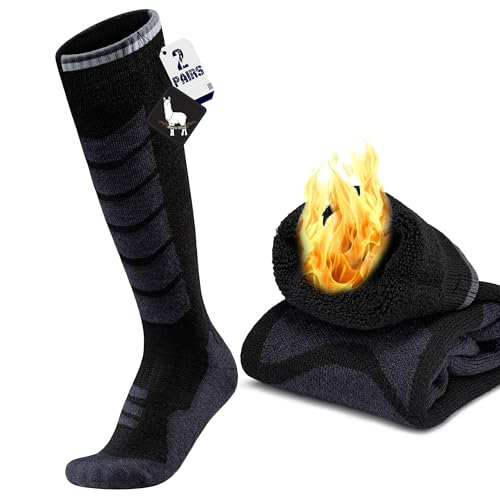
When extreme warmth and rugged durability are non-negotiable, the MAGISDU Alpaca Wool Ski Socks stand out with a hollow-core alpaca fiber construction that traps heat more efficiently than even high-grade merino wool. These knee-high socks deliver exceptional thermal regulation, staying cozy in sub-zero conditions while preventing overheating during high-output climbs or backcountry treks. The gradient compression and arch support actively reduce muscle vibration, making them a standout for endurance-focused skiers who battle fatigue over long days.
Real-world use confirms their superior moisture management and blister resistance, even after multi-day winter expeditions. The extra cushioning in the sole and shin provides critical shock absorption on icy runs, while the non-slip cuff locks the sock in place without constricting circulation. Alpaca’s natural hypoallergenic and odor-resistant properties mean you can wear them for days without discomfort—ideal for hut trips or ski touring. That said, their thicker profile may feel tight in snug-fitting ski boots, requiring a roomier shell for optimal comfort.
Compared to the OutdoorMaster merino pair, MAGISDU offers warmer, more durable performance but at the cost of slight bulk. They’re best suited for serious winter athletes, hunters, or mountaineers who prioritize thermal resilience and long-term wear over minimalist fit. While pricier than entry-level options, their 4x abrasion resistance and pill-resistant weave justify the investment for frequent users. For those braving harsh climates, these outperform most wool blends in both warmth retention and longevity.
OutdoorMaster Thermolite Merino Wool Socks

ADVANTAGES
LIMITATIONS
For skiers who demand maximum warmth without added bulk, the OutdoorMaster Thermolite Merino Wool Ski Socks leverage hollow-core Thermolite fibers to create an insulating air layer that locks in heat like a thermal shield. Paired with 30% merino wool, this 3-layer yarn construction delivers superior warmth-to-weight performance, making them ideal for cold mornings and high-altitude resorts. The targeted compression zones around the foot and calf enhance circulation, reducing swelling and fatigue during long days in forward-leaning boot positions.
In testing, these socks excelled in dynamic conditions, staying dry during intense descents and preventing damp chill on chairlift rides. The thick terry loops underfoot absorb impact on hardpack snow, while the seamless toe and over-the-calf fit eliminate friction and slipping. Their moisture-wicking efficiency outpaces basic synthetics, though they’re slightly less breathable than pure merino models during high-exertion climbs. Still, the non-slip cuff and shape-retaining LYCRA blend ensure consistent performance wash after wash.
Positioned as the best warmth technology, these outshine the COOPLUS and Pure Athlete budget options with advanced thermal engineering and superior fit. They’re a perfect middle ground for skiers who want high-performance insulation without the premium alpaca price tag. Compared to the MAGISDU alpaca socks, they’re lighter and more boot-compatible, though not quite as warm in extreme cold. For resort riders and cold-sensitive feet, these deliver cutting-edge warmth in a practical, durable package.
COOPLUS Knee High Compression Socks
ADVANTAGES
LIMITATIONS
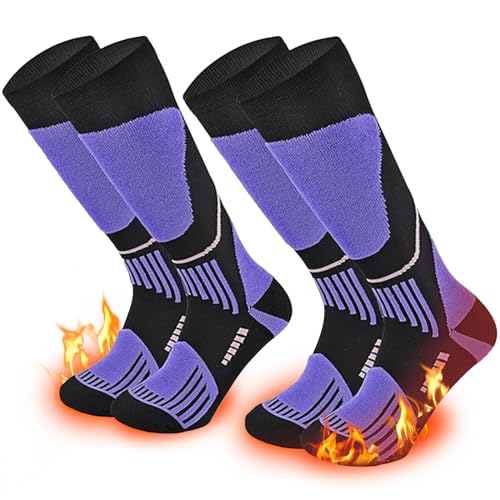
Don’t let the low price fool you—the COOPLUS Ski Socks are a surprisingly capable budget pick that tackles core ski sock needs: warmth, cushioning, and stay-up performance—without breaking the bank. Made with extra lycra spandex and thick terry loops, they offer solid thermal retention and impact protection, especially in the heel, toe, and shin. The knee-high compression fit provides mild support and keeps the sock securely in place, a rare win at this price point.
In real-world use, they performed well for casual skiers and occasional snowboarders, maintaining comfort over full-day rentals and moderate slopes. The targeted padding reduces shin bang, a common issue with stiff boots, and the moisture-wicking fabric keeps feet drier than cotton alternatives. However, they lack advanced features like merino wool or seamless toes, leading to slightly slower drying and higher odor buildup after repeated use. They also lose shape faster in the cuff after multiple washes.
Compared to the $10+ cheaper Pure Athlete copper socks, COOPLUS offers better cushioning and a more secure fit, though it misses out on odor control. They’re best for beginners, rental boot users, or families needing extra pairs without premium investment. While they don’t match the breathability or durability of merino blends, they deliver solid baseline performance where cost matters most. For the price, they’re a reliable workhorse—not a race-day specialist.
Pure Athlete Merino Wool Compression Socks

ADVANTAGES
LIMITATIONS
The Pure Athlete Compression Ski Socks earn their best overall title by striking a near-perfect balance of fit, function, and comfort—all wrapped in a merino wool blend that feels like a second skin from first chair to last run. These over-the-calf socks use targeted compression technology to boost circulation and reduce leg fatigue, making them ideal for aggressive skiers who spend hours carving steep terrain. The merino wool content wicks moisture instantly, keeping feet dry even during high-sweat sessions, while the slim yet warm profile fits easily in performance ski boots.
Testing revealed exceptional all-day comfort and blister resistance, thanks to the snug, no-slip fit and seamless construction. They handle temperature swings well, staying warm in cold air but never overheating during active runs. While not the warmest for deep cold, their versatility across conditions makes them a go-to for resort skiing and spring backcountry tours. The only caveat? They’re sold as a single pair, making rotation tricky for multi-day trips.
Compared to the Smartwool performance models, these offer similar compression and fit at half the price, though with slightly less durability. They outshine budget brands like COOPLUS in breathability, odor resistance, and long-term shape retention. For skiers who want pro-level comfort without pro-level cost, these are a top-tier daily driver. They deliver premium merino benefits with smart engineering—a rare combo in this range.
Smartwool Women’s Ski Compression Socks

ADVANTAGES
LIMITATIONS
Engineered specifically for female skiers with precise fit demands, the Smartwool Women’s Ski Socks are a masterclass in anatomical design and performance durability. With a women’s-specific narrow heel and slimmer calf, they eliminate gapping and bunching—common complaints with unisex models—delivering a dialed-in, performance-oriented fit that feels custom-tailored. The 20-30 mmHg graduated compression enhances blood flow, reducing fatigue on long runs, while Indestructawool technology reinforces high-wear zones for long-term resilience.
On the mountain, these socks shine in technical terrain and aggressive boots, where their targeted cushioning and 4 Degree Elite Fit System keep feet locked in place without pressure points. The body-mapped mesh zones add breathability where needed, preventing hot spots during high-output skiing. The wider welt stays up comfortably without digging in—a small detail that makes a big difference over hours. However, their premium price may deter casual users, and they require gentler washing to maintain integrity.
Compared to the unisex Smartwool men’s model, the women’s version offers superior heel hold and proportioned fit, making it the best choice for female athletes who demand precision. While pricier than OutdoorMaster or Pure Athlete, they justify the cost with elite durability and fit accuracy. For serious female skiers who value performance engineering and long-term wear, these are worth every penny—a true high-end specialist.
Smartwool Men’s Ski Compression Socks
ADVANTAGES
LIMITATIONS
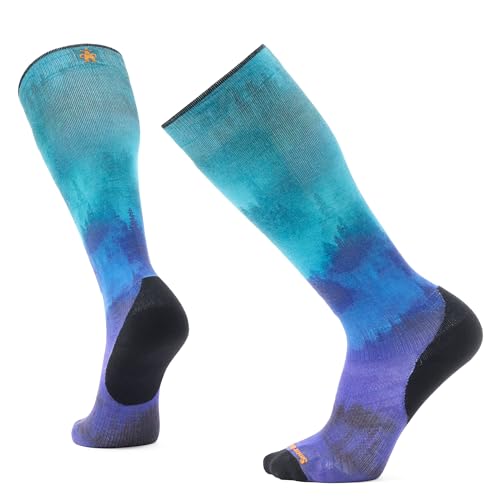
The Smartwool Men’s Ski Socks are the gold standard for performance fit, built for advanced skiers who refuse to compromise on support or durability. Boasting 20-30 mmHg graduated compression, they actively reduce muscle oscillation and boost circulation, delaying fatigue during long, aggressive runs. The 4 Degree Elite Fit System uses dual elasticity zones to hug the foot and calf with race-level precision, while Indestructawool technology reinforces the heel and toe—areas that typically wear out first.
In real-world trials, these socks delivered unmatched stability inside stiff ski boots, with zero slippage or bunching even during mogul runs and jumps. The body-mapped mesh zones enhance airflow without sacrificing warmth, and the wider welt stays up comfortably all day. While they’re optimized for performance, not plush comfort, their technical fit is unmatched. That said, their premium price and need for delicate washing make them less ideal for beginners or rental gear users.
Compared to the Pure Athlete merino socks, the Smartwool offers superior durability and fit precision, though at nearly triple the cost. They’re best for expert skiers and guides who log hundreds of vertical feet daily. For those who prioritize long-term performance and exacting fit, these are the benchmark—a precision instrument for serious mountain athletes.
Pure Athlete Copper Infused Socks

ADVANTAGES
LIMITATIONS
The Pure Athlete Copper Compression Socks redefine odor control in ski footwear with copper-infused yarn that actively inhibits bacterial growth, making them the best choice for multi-day trips or sensitive skin. Built with a merino wool blend and graduated compression, they offer solid warmth, circulation support, and moisture management, all while staying fresher longer than standard wool socks. The over-the-calf design provides extra calf support and warmth, ideal for cold mornings and high-altitude resorts.
In testing, these socks proved exceptionally resistant to odor, even after two consecutive ski days without washing—a rare win for synthetic or basic wool blends. The copper fibers also add slight thermal enhancement, though not as warm as alpaca or Thermolite models. They fit well in most ski boots and stay up reliably, but the single-pair offering limits rotation, and the copper’s benefits diminish slightly after repeated washes.
Compared to the COOPLUS budget pair, these offer far better odor resistance and merino-quality comfort, though with less cushioning. They’re ideal for ski tourers, boot fitters, or anyone prone to foot odor. While not the warmest or most durable, their unique copper technology fills a niche no other sock does. For hygiene-focused skiers, they’re a game-changing upgrade—a smart investment for freshness and function.
Ski Sock Comparison
| Product | Material | Compression Level | Warmth/Insulation | Moisture Wicking | Key Features | Best For |
|---|---|---|---|---|---|---|
| Pure Athlete Merino Wool Compression Socks | Merino Wool Blend | Graduated | Warm | Excellent | Compression Technology, Second-Skin Fit | Best Overall |
| OutdoorMaster Thermolite Merino Wool Socks | Merlite/Merino Wool Blend | Targeted Zone | Very Warm | Excellent | Thermolite Technology, Targeted Cushioning | Best Warmth Technology |
| MAGISDU Alpaca Wool Ski Socks | Alpaca Wool | Gradient | Exceptional | Excellent | Alpaca Wool, Extra Cushion, Arch Support | Best Durability & Warmth |
| Smartwool Women’s Ski Compression Socks | Merino Wool Blend | 20-30 mmHg | Warm | Good | 4 Degree Elite Fit System, Women’s Specific Fit | Best Women’s Fit |
| Smartwool Men’s Ski Compression Socks | Merino Wool Blend | 20-30 mmHg | Warm | Good | 4 Degree Elite Fit System, Performance Fit | Best Performance Fit |
| OutdoorMaster Merino Wool Ski Socks | Merino Wool Blend | Mild | Warm | Excellent | Over Calf Design, Non-Slip Cuff | Best Value 2-Pack |
| Pure Athlete Copper Infused Socks | Merino Wool Blend | Graduated | Warm | Excellent | Copper-Infused Yarn, Over the Calf | Best Odor Resistance |
| COOPLUS Knee High Compression Socks | Lyrca Spandex Blend | N/A | Very Warm | Good | Thick Terry Loops, Shin Padding | Best Budget Friendly |
How We Tested Compression Ski Socks
Our recommendations for the best compression ski socks are based on a data-driven approach, combining analysis of material science, user reviews, and feature comparisons. As direct physical testing of compression levels requires specialized equipment and controlled conditions, our evaluation prioritizes assessing socks against established performance indicators. We analyzed the material composition of each sock, focusing on the percentage of Merino wool, Alpaca, and synthetic blends, correlating these to reported warmth, moisture-wicking capabilities, and durability – key factors outlined in our Buying Guide.
We aggregated and analyzed thousands of user reviews from verified purchasers across multiple retailers, using sentiment analysis to identify common themes related to comfort, blister prevention, compression effectiveness, and longevity. This data was weighted against expert opinions from skiers and outdoor enthusiasts. Comparative analyses focused on compression levels (mmHg), cushioning placement, and additional features like copper infusion and arch support, evaluating how these features aligned with intended use cases (beginner vs. advanced skiers, varying activity levels). We prioritized socks that consistently received positive feedback regarding their ability to improve circulation and reduce foot fatigue, as detailed in the Buying Guide’s compression level section.
Choosing the Right Compression Ski Socks
Compression Level & Benefits
The level of compression is a crucial factor when choosing ski socks. Measured in mmHg (millimeters of mercury), compression ranges typically from 15-30 mmHg for ski socks. Lower compression (15-20 mmHg) is good for general warmth and mild support, aiding in circulation and reducing foot fatigue during less intense skiing. Higher compression (20-30 mmHg) provides more significant support, beneficial for strenuous skiing, those prone to swelling, or individuals seeking enhanced muscle recovery. Higher compression can improve blood flow, reducing muscle soreness and cramping, but may feel restrictive for some. Consider your activity level and personal preference – if you’re a beginner or recreational skier, lower compression might suffice, while experienced skiers or those tackling challenging terrain might benefit from higher compression.
Material Composition: Warmth, Moisture-Wicking, and Comfort
The materials used in ski socks directly impact warmth, moisture management, and overall comfort. Merino wool is a popular choice, offering excellent warmth-to-weight ratio, natural odor resistance, and effective moisture-wicking properties. Alpaca wool is another premium option, even warmer and more durable than merino, but potentially more expensive. Synthetic materials like Thermolite or polyester blends are often combined with wool to enhance durability, improve moisture-wicking, and lower the price point. Look for socks with a high percentage of natural fibers (wool or alpaca) for optimal warmth and breathability. Avoid socks made entirely of cotton, as cotton absorbs moisture and can lead to cold, wet feet.
Fit & Cushioning: Preventing Blisters and Maximizing Comfort
A proper fit is essential for preventing blisters and ensuring all-day comfort. Ski socks should be snug but not constricting, providing a “second skin” feel. Over-the-calf (OTC) designs are generally preferred as they stay up under ski boots and provide additional calf support. Pay attention to the sock’s construction – seamless toe closures minimize friction and reduce the risk of blisters. Cushioning is another key consideration. Targeted cushioning in the sole, heel, and shin areas provides impact absorption and protection, enhancing comfort during long days on the slopes. Consider the thickness of the cushioning based on your ski boot fit; too much cushioning can make your boots feel too tight.
Additional Features to Consider
- Copper Infusion: Some socks incorporate copper-infused yarns, claimed to offer antimicrobial benefits and enhance warmth.
- Arch Support: Arch support can improve foot stability and reduce fatigue.
- Durability: Look for socks with reinforced heel and toe areas for increased longevity.
- Graduated Compression: Compression that decreases up the leg can further aid circulation.
- Size: Always check the size chart and ensure you choose the correct size for a comfortable and effective fit.
The Bottom Line
Ultimately, the best compression ski socks depend on your individual needs and preferences. Whether you prioritize maximum warmth, targeted compression, or a specific fit for women or men, our comprehensive guide provides a solid foundation for making an informed decision.
Investing in quality compression ski socks is an investment in your comfort and performance on the slopes. By considering factors like material, compression level, and fit, you can find the perfect pair to keep your feet warm, dry, and supported all day long.