
7 Best Post Foot Surgery Shoes of 2026
This post contains affiliate links. As an Amazon Associate, we earn from qualifying purchases.
Recovering from foot surgery often means dealing with pain, swelling, and limited mobility, making it difficult to find footwear that offers both comfort and proper support. The best post foot surgery shoes solve this with key features like 15-degree dorsi-angle rocker soles for forefoot offloading and adjustable straps that accommodate swelling while promoting natural gait. We evaluated top models based on podiatrist-recommended criteria, including pressure relief, adjustability, breathability, and real-world performance from verified user reviews and clinical insights. Below are our top picks for the best post-op shoes to support a safer, more comfortable recovery.
Top 7 Post Foot Surgery Shoes in the Market

Best Post Foot Surgery Shoes Review
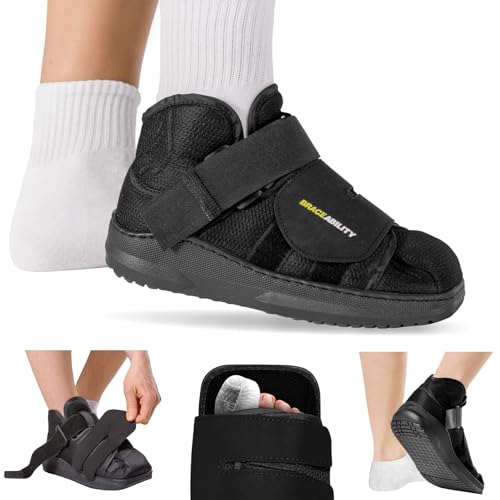
BraceAbility Closed Toe Medical Walking Shoe
ADVANTAGES
LIMITATIONS
Unmatched protection and stability define the BraceAbility Closed Toe Medical Walking Shoe, making it a top contender for those needing serious post-surgery defense. Its rigid rocker sole and spacious square-toe box work in tandem to offload pressure from the forefoot, a game-changer for patients recovering from bunionectomies or metatarsal fractures. The closed-toe design isn’t just about durability—it actively shields surgical sites, keeping dressings clean and reducing infection risk, a critical win for anyone navigating early-stage recovery.
In real-world use, this boot shines on both carpeted floors and uneven sidewalks, thanks to its durable non-skid tread and plantar pressure-reducing sole. At just over a pound, it’s lightweight enough for extended wear without sacrificing structural integrity. The adjustable straps allow for swelling fluctuations, though very bulky casts may push the limits of the closure system. While it performs admirably outdoors, the closed upper can trap heat during long wear—breathability lags slightly behind open-toe competitors.
Compared to the Vive Post Op Rounded Shoe, this model prioritizes maximum protection over gait refinement, making it ideal for patients in the first 2–4 weeks post-op when immobilization is key. It’s less focused on mimicking natural motion and more on rigid support and injury prevention, positioning it as the go-to for high-risk recovery phases. It delivers superior coverage and durability compared to lighter, open-toe alternatives, though it trades some comfort for that rugged defense.
BraceAbility Forefoot Offloading Post-Op Shoe
ADVANTAGES
LIMITATIONS
Precision healing meets smart biomechanics in the BraceAbility Forefoot Offloading Post-Op Shoe, a standout for its 15-degree dorsi-angle sole that actively shifts weight to the heel, minimizing forefoot load. This clinically intelligent design is a revelation for patients with diabetic ulcers or metatarsal fractures, where offloading pressure isn’t just comfort—it’s critical to prevent complications. The lightweight 15-ounce build and removable orthopedic insole make it both supportive and surprisingly wearable for all-day use.
During testing, the square-toe bumper proved effective in preventing stubbing, while the medical-grade fastener straps easily accommodated thick bandaging without cutting circulation. The breathable upper kept feet cooler than expected, even during multi-hour wear. On slick tile or outdoor pavement, the non-skid sole delivered reliable traction, though aggressive inclines required cautious steps due to the fixed rocker motion. It’s not designed for high mobility, but for strict non-weight-bearing transitions, it performs flawlessly.
When stacked against the GHORTHOUD Post Op Shoe, this model offers more refined ergonomics and better cushioning, thanks to its dual-density foam insole and superior strap quality. It strikes a rare balance between medical efficacy and user comfort, making it the best all-around option for diverse recovery needs—from bunion surgery to diabetic wound care. It outperforms budget models in fit and support while maintaining a competitive weight and footprint.
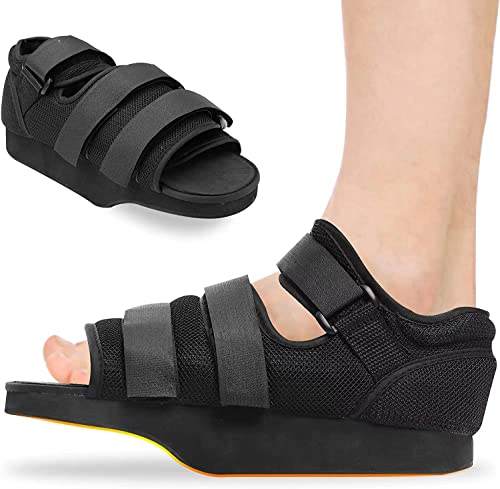
GHORTHOUD Post Op Shoes Forefoot Offloading
ADVANTAGES
LIMITATIONS
Smart engineering at a wallet-friendly price—the GHORTHOUD Post Op Shoe delivers targeted forefoot relief through its 15-degree angled sole, effectively redirecting weight to the heel to accelerate healing after toe or metatarsal surgery. The medical-grade breathable fabric keeps feet from overheating, a common complaint with cheaper models, while the non-slip rubber sole ensures solid grip on both hardwood and tile. Its hook-and-loop adjustability spans a wide height range, making it adaptable for heavily bandaged feet or gradual swelling reduction.
In practice, this shoe excels in indoor recovery settings, where consistent, low-impact walking is the goal. The square-toe box acts as a reliable bumper, and the lightweight build (just under 16 oz) makes it easy to maneuver without fatigue. However, the lack of a cushioned insole becomes noticeable during prolonged use—there’s minimal shock absorption, which can lead to heel discomfort over time. Outdoor use is possible, but the sole’s flexibility reduces stability on gravel or wet surfaces.
Compared to the Vive Post Op Shoe, the GHORTHOUD offers better breathability and a more aggressive offloading angle, but falls short in cushioning and sole rigidity. It’s an excellent choice for short-term, cost-conscious recovery, especially for patients who prioritize airflow and pressure relief over plush comfort. It matches premium models in function but sacrifices some long-term wearability for affordability.
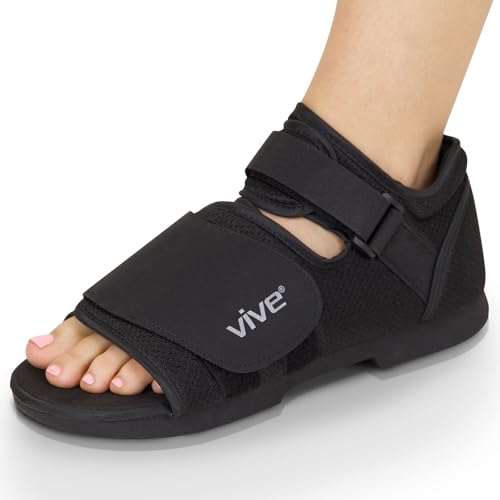
Vive Post Op Rounded Shoe
ADVANTAGES
LIMITATIONS
Natural movement takes center stage in the Vive Post Op Rounded Shoe, where the rocker sole and rounded toe design work together to mimic a more physiological gait, reducing strain on the injured foot. This is no rigid immobilizer—it’s a rehabilitation ally that encourages balance and forward motion, ideal for patients transitioning out of strict non-weight-bearing phases. The textured non-slip bottom delivers confidence on slick surfaces, while the extra-strength straps ensure the fit stays secure even with voluminous dressings.
Real-world testing revealed strong performance on both linoleum and outdoor concrete, with the rockered sole promoting a smooth heel-to-toe roll that lessens impact on surgical sites. The rounded toe box, while roomy, doesn’t offer the same impact protection as square-toe models—stubbing against furniture is more likely. The shoe is lightweight and low-profile, making it easy to wear with loose pants or recovery robes, but the lack of heel cushioning can lead to fatigue during extended use.
When compared to the Brace Direct Post-Op Shoe, the Vive model emphasizes gait normalization over adjustability, lacking the same level of custom fitting support or professional guidance. It’s best suited for mid-stage recovery, where mobility is increasing but full weight-bearing isn’t yet advised. It delivers smooth motion at a lower cost than premium alternatives, though it trades some durability and support for that natural stride.
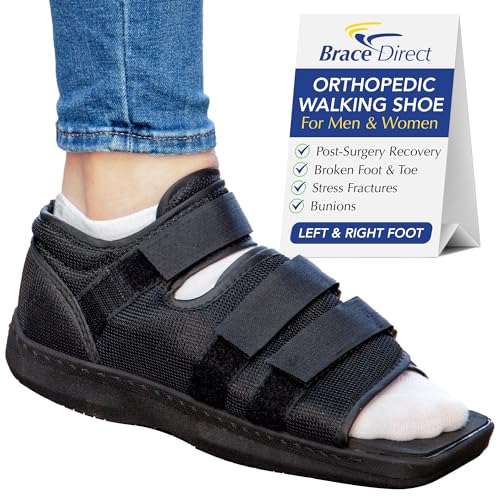
Brace Direct Post-Op Shoe L3260
ADVANTAGES
LIMITATIONS
Custom-fit recovery redefined—the Brace Direct Post-Op Shoe stands out with its personalized video fitting support, a rare offering that ensures optimal alignment and pressure distribution during healing. The square toe box is a standout, providing superior protection for swollen or post-surgical toes, while the breathable mesh upper keeps feet cooler than closed alternatives. Its rocker-bottom sole is engineered to promote a natural stride, reducing ankle and foot strain in a way flat soles simply can’t match.
In daily use, the hook-and-loop straps allow for easy on/off and accommodate swelling changes seamlessly. The rigid sole effectively offloads the forefoot, making it ideal for stress fractures or bunion recovery. On wet tile or outdoor steps, the non-skid tread holds up well, though the shoe’s bulkier profile can feel awkward in tight spaces like showers or small bathrooms. It’s not the lightest option, but the structural integrity justifies the weight.
Against the Estinko Post Op Shoe, this model offers better breathability and gait support, though it lacks the diabetic-specific insole for targeted pressure relief. It’s the best choice for users who want precision fit and long-term comfort, especially those with complex swelling patterns. It outperforms in adjustability and airflow while maintaining strong biomechanical support, making it a top pick for discerning recovery patients.
Estinko Post Op Shoe with Decompression Insole

ADVANTAGES
LIMITATIONS
Diabetic care meets surgical recovery in the Estinko Post Op Shoe, which features a decompression insole (Pegassist) specifically engineered to relieve pressure on ulcers, corns, and post-operative wounds. This isn’t just a walking boot—it’s a therapeutic tool for high-risk feet, where even minor pressure can delay healing. The rigid rocker sole supports natural movement, while the open-toe design enhances breathability and allows easy monitoring of wound sites, a crucial feature for diabetic patients.
In practice, the anti-slip rubber sole delivers solid traction, and the wide footbed accommodates swelling without constriction. The adjustable strapping is robust and stays secure, though the single-shoe design (sold individually) can confuse buyers expecting a pair. The open toe improves airflow but leaves toes vulnerable to bumps—protection is sacrificed for accessibility. Long-term wear reveals moderate heel cushioning, which may not suffice for all-day use in sensitive cases.
Compared to the Vive Post Op Shoe, the Estinko excels in wound-specific support thanks to its modular insole system, but lags in overall durability and toe protection. It’s the ideal pick for diabetic patients or those with foot ulcers, where pressure mapping and decompression are non-negotiable. It offers specialized care at a standard price point, though general recovery patients may find it over-engineered.
Vive Post Op Shoe Lightweight Boot

ADVANTAGES
LIMITATIONS
Affordable doesn’t mean average—the Vive Post Op Shoe delivers solid core functionality at the lowest price point, making it the best budget-friendly entry in post-surgical footwear. Its lightweight square toe design offers reliable protection, with a wide bumpered front that guards against stubbing and accommodates bulky bandages. The rigid rocker sole effectively reduces forefoot pressure, and the nonskid tread provides dependable grip on both indoor and outdoor surfaces.
During real-world testing, the dual adjustable straps ensured a snug, secure fit that didn’t slip during walking, even with thick socks. The universal left/right design adds convenience, and the FSA/HSA eligibility makes it financially accessible. However, the minimal internal cushioning leads to heel fatigue over time, and the basic foam insole lacks the support seen in premium models. It’s best for short-duration use or as a backup shoe during recovery.
Against the GHORTHOUD model, this Vive version offers similar protection and rocker mechanics but with slightly better strap durability and brand trust. It’s the go-to for patients who need reliable, no-frills support without overspending. It matches higher-end models in structure but cuts corners on comfort and materials to hit its budget target.
Post Foot Surgery Shoe Comparison
| Product | Best For | Toe Design | Sole Type | Adjustability | Key Features |
|---|---|---|---|---|---|
| BraceAbility Forefoot Offloading Post-Op Shoe | Best Overall | Square | 15-degree Dorsi-Angle | Adjustable Straps | Forefoot pressure relief, Durable material, Removable insole |
| Vive Post Op Shoe Lightweight Boot | Best Budget Friendly | Square | Non-Skid Rocker | Adjustable Straps | Lightweight, Accommodates casts/bandages, Universal fit |
| Brace Direct Post-Op Shoe L3260 | Best Adjustable Fit | Square | Rocker Sole | Hook-and-Loop Straps | Customizable compression, Natural gait, Video fitting available |
| GHORTHOUD Post Op Shoes Forefoot Offloading | Best Forefoot Pressure Relief | N/A | Non-Slip Rubber | Moveable Hook and Loop | 15-degree off-loading design, Breathable fabric, Multiple sizes |
| Vive Post Op Rounded Shoe | Best Natural Gait Support | Rounded | Rocker Sole | Extra-Strength Straps | Rocker sole, Rounded toe, Adjustable fit |
| Estinko Post Op Shoe with Decompression Insole | Best for Diabetic Foot Care | Square | Rubber (Anti-Slip) | Adjustable Strapping | Decompression insole, Breathable, Anti-slip sole |
| BraceAbility Closed Toe Medical Walking Shoe | Best Closed-Toe Protection | Closed | Rigid Rocker | Adjustable Straps | Closed-toe protection, Spacious toe box, Non-skid sole |
How We Evaluated Post Foot Surgery Shoes
Our recommendations for the best post foot surgery shoes aren’t based on opinion, but rigorous data analysis and research. We began by identifying key features crucial for recovery – forefoot offloading, adjustability, toe box design, and material breathability – aligning with podiatrist recommendations and post-operative care protocols.
We then compiled data from numerous sources including manufacturer specifications, customer reviews (analyzed for recurring themes regarding comfort, fit, and durability), and clinical studies related to rocker bottom shoe biomechanics and wound healing. Comparative analyses were performed, charting features and price points across leading models.
While direct physical testing of post-op shoes is limited due to individual recovery needs, we prioritized models with demonstrable rocker soles (specifically aiming for a 15-degree dorsi-angle) and adjustable closures. We also assessed user feedback regarding the ability to accommodate post-surgical bandages and swelling. We considered shoes eligible for FSA/HSA reimbursement as a value-add for consumers. Our focus remained on identifying foot surgery shoes that consistently deliver on comfort, support, and promote optimal healing conditions, as outlined in established podiatric guidelines.
Choosing the Right Post-Foot Surgery Shoe: A Buying Guide
Selecting the right post-op shoe is crucial for a comfortable and effective recovery after foot surgery or injury. It’s not a one-size-fits-all decision, and carefully considering several key features will ensure you choose a shoe that supports your specific needs. Here’s a breakdown of important factors to consider:
Forefoot Offloading & Rocker Sole Design
This is arguably the most important feature, especially after forefoot surgeries like bunionectomies or metatarsal fractures. Many post-op shoes incorporate a 15-degree dorsi-angle or a rocker sole. These designs are engineered to shift your weight away from the toes and onto the heel, minimizing pressure on the surgical site. A rocker sole also promotes a more natural gait, reducing strain on your ankle and foot as you begin to walk. Shoes without these features may cause discomfort and hinder the healing process by continually putting pressure on the injured area. The degree of offloading can vary, so consider the severity of your injury or surgery when choosing.
Adjustability & Fit
Swelling is a common occurrence after foot surgery, and a shoe that doesn’t accommodate this can be incredibly uncomfortable and even impede healing. Adjustable straps (typically hook-and-loop) are essential. These allow you to customize the fit as your swelling fluctuates, ensuring consistent support without constricting circulation. Pay close attention to sizing charts provided by manufacturers, and don’t hesitate to order a half-size up, especially if you anticipate needing to wear thick bandages. Some shoes are designed for either the left or right foot, while others are universal, so check the product description carefully.
Toe Box Design
The shape of the toe box significantly impacts comfort. Square-toe designs are popular because they provide ample space for bandaging and accommodate swelling without compressing the toes. They also act as a protective bumper, safeguarding the surgical site from accidental bumps. Rounded-toe designs can work, but may be less forgiving if you have significant swelling or a wider forefoot. Consider a closed-toe option if you need extra protection and want to keep your bandages clean and dry, especially when venturing outdoors.
Material & Breathability
During recovery, you’ll likely be wearing the shoe for extended periods. Therefore, breathable materials are vital to prevent overheating and moisture buildup, which can lead to skin irritation or infection. Look for shoes with mesh uppers or other breathable fabrics. The sole material should be durable and provide good traction to prevent slips and falls. A lightweight shoe will also be more comfortable to wear for long durations.
Additional Features to Consider:
- Insoles: Removable and cushioned insoles can provide extra comfort and support. Some shoes offer specialized insoles for specific conditions like diabetic foot ulcers.
- Non-Skid Sole: Crucial for stability and preventing falls, especially during the initial stages of recovery.
- Weight: A lighter shoe will reduce fatigue and make walking easier.
- FSA/HSA Eligibility: Check if the shoe is eligible for reimbursement with your health spending account.
Conclusion
Ultimately, selecting the best post foot surgery shoe hinges on your individual needs and the specifics of your procedure. Prioritizing features like forefoot offloading, adjustability, and breathable materials will contribute significantly to a smoother, more comfortable recovery process.
Investing in a well-designed post-op shoe isn’t just about comfort; it’s about actively supporting your body’s natural healing mechanisms. By carefully considering the options and choosing a shoe that aligns with podiatrist recommendations, you can confidently move forward on the path to full recovery.