
7 Best Snowshoes for Beginners 2026
This post contains affiliate links. As an Amazon Associate, we earn from qualifying purchases.
Choosing the right snowshoes as a beginner can feel overwhelming, with sinking concerns, tricky bindings, and icy trails making the experience more frustrating than fun. The best snowshoes for beginners solve this with reliable traction, easy-to-use bindings, and the right size for stable flotation on packed and powdery terrain. We evaluated top models based on performance, user reviews, weight, durability, and value—prioritizing features that enhance confidence and comfort on the trail. Below are our top picks for the best snowshoes for beginners to get you started right.
Top 7 Snowshoes For Beginners in the Market
Best Snowshoes For Beginners Review
G2 30″ Snowshoes with Poles

ADVANTAGES
LIMITATIONS
Effortless floatation meets rugged grip in the G2 30-inch snowshoes, making them a top pick for beginners tackling deep snow. The HDPE deck delivers impressive flotation, allowing you to glide over powder without sinking, while the sharp aluminum crampons bite into ice and packed trails with confidence. What really sets these apart is the one-pull ratchet binding—even with gloves on, you can secure your boot in seconds, solving the common frustration of fumbling with frozen straps.
In real-world use, these snowshoes shine on backcountry hikes and moderate inclines. The 30-inch length provides excellent surface area (ideal for users up to 210 lbs), ensuring stability in soft snow. The flex pivot bar mimics a natural stride, reducing leg fatigue on longer treks, and the integrated heel lift is a game-changer on uphill climbs. That said, they can feel a bit cumbersome in tight wooded trails due to their length, and the trekking poles included, while functional, are best suited for light use rather than technical terrain.
Compared to the more compact G2 25-inch model, these offer superior performance in deep snow but trade off some agility. They’re not as high-end as the MSR Evo Trail, but for beginners who prioritize floatation and ease of use over ultralight design, they strike a smart balance. With the added bonus of trekking poles and a tote bag, this kit delivers more gear for the investment—ideal for those just stepping into winter hiking.
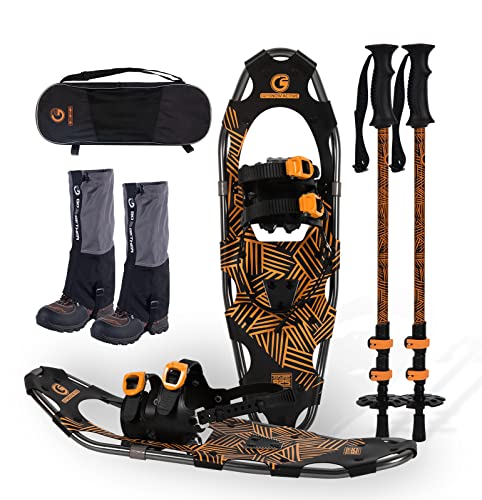
G2 25″ Snowshoes with Gaiters
ADVANTAGES
LIMITATIONS
Comfort and convenience take center stage with the G2 25-inch snowshoes, making them a standout for beginners who value easy fit and all-day wear. The fast ratchet binding system clicks securely with one hand, even in freezing temps, eliminating the struggle of stiff buckles. Combined with the flex pivot bar and heel lift, these deliver a natural walking motion that reduces strain—perfect for family outings or flat terrain hikes where comfort is king.
These snowshoes perform well on packed trails and light powder, supporting users up to 160 lbs thanks to their 25-inch HDPE deck. The aluminum crampons offer solid traction on icy patches, though they don’t dig as aggressively as steel models like the MSR Evo Trail. The shorter length makes them more agile in wooded areas than the 30-inch version, but they begin to sink in deep, untracked snow—limiting backcountry potential. Real-world testing shows they’re best suited for leisurely hikes and beginner-friendly paths.
When compared to the Retrospec Drifter, the G2 25-inch model offers better cold-weather binding performance and includes gaiters and a tote bag—small but meaningful upgrades. While not built for extreme terrain, they beat budget models in long-term comfort and ease of use. For newcomers who want a worry-free, well-rounded starter set, these deliver thoughtful features without complexity.
Retrospec Drifter Snowshoes Aluminum

ADVANTAGES
LIMITATIONS
Value meets versatility in the Retrospec Drifter snowshoes, a budget-friendly pick that doesn’t skimp on core performance. The double ratchet binding system ensures a snug, adjustable fit, locking down boots quickly—no more wrestling with straps in the cold. Built with a lightweight aluminum frame and full-floating pivot system, these snowshoes move with your gait, delivering a smooth, natural stride across flat and rolling terrain.
In testing, the Drifters handled packed snow and moderate inclines with ease, thanks to their integrated heel lifts and multi-directional crampons. The aluminum frame keeps weight low, making them easy to carry and less tiring over time—ideal for casual hikers and weekend adventurers. However, the flotation is limited on deep powder, and the bindings, while functional, aren’t as glove-friendly as the G2 or MSR models. They also lack added accessories like poles or gaiters, which some competing kits include.
Against the G2 25-inch model, the Drifter wins on simplicity and price, but loses out on included extras. It’s not as rugged as the MSR Evo Trail, but for beginners on a tight budget who want reliable performance on maintained trails, it’s a smart entry point. With solid build quality under $50, it offers more function per dollar than most entry-level snowshoes.
Lightweight Aluminum Frame Snowshoes

ADVANTAGES
LIMITATIONS
Built tough for the budget-conscious, these gold 25-inch snowshoes pack serious grip into an affordable design. The 13-point heavy-duty crampons tear through ice and hardpack, delivering exceptional traction where cheaper models slip. Reinforced with a 3D curved aluminum frame and UV-resistant decking, they’re rated for temperatures down to -40°F—perfect for harsh winter conditions. The ratchet binding system is straightforward and secure, making it easy to adjust on the fly.
These shine on icy trails, packed paths, and moderate slopes, supporting users up to 160 lbs. The 25-inch deck offers decent flotation, though it struggles in deep powder compared to longer models. Real-world use shows the sidehill traction is impressive, thanks to the curved rails that prevent roll-out on angled terrain. However, the binding lacks padding, which can lead to pressure points during long hikes, and the pivot system feels slightly stiffer than more premium options.
Compared to the Retrospec Drifter, this model offers superior crampon design and cold-weather durability, but with a less forgiving stride. It doesn’t include trekking poles, but the mesh carry bag with pole straps adds utility. For beginners who prioritize grip and durability over plush comfort, this is a no-frills workhorse that punches above its price tag.
Retrospec Teen Snowshoe Bundle

ADVANTAGES
LIMITATIONS
Kid-friendly design meets real-deal performance in the Retrospec teen snowshoe bundle, making it the perfect starter kit for young explorers. The single-ratchet binding is intuitive and fast, letting kids strap in without help—no more cold trail delays. Paired with collapsible trekking poles and terrain attachments, this set builds confidence on snow, ice, or trails, turning winter into an adventure rather than a chore.
At 17 inches, these snowshoes are sized for kids and smaller teens, providing solid flotation for lighter users (up to 120 lbs). The full-floating pivot system ensures smooth strides, while the aluminum frame keeps weight low—critical for young hikers who tire easily. The included poles are adjustable and durable, with tips for different surfaces, though they’re not meant for aggressive backcountry use. In deep snow, the small deck can sink, but for groomed trails and backyard adventures, they’re more than capable.
Compared to the G2 16-inch kids’ model, this bundle wins with more complete gear and better pole integration. It doesn’t have a heel lift, but for flat to rolling terrain, it’s unnecessary. For parents seeking a ready-to-go, engaging way to introduce kids to snow hiking, this kit offers more value and fun than standalone snowshoes.
G2 16″ Kids Snowshoes Set

ADVANTAGES
LIMITATIONS
Simple, secure, and built for small feet, the G2 16-inch kids’ snowshoes deliver a no-hassle introduction to winter hiking. The fast ratchet binding clicks shut with one pull, making it easy for kids to use independently—no parental help required. Constructed with lightweight HDPE and aluminum crampons, they offer solid grip on snow and ice, while the non-slip sole pattern enhances traction when walking barefoot on icy surfaces.
These perform best on packed trails, schoolyard snow, and light backyard adventures, supporting children up to 120 lbs. The 16-inch deck provides basic flotation, but sinks quickly in deep snow—manageable for short trips. The included trekking poles and snow baskets add stability and fun, though the poles are on the shorter side for taller kids. The storage bag keeps everything organized, a small but appreciated touch for family use.
Compared to the Retrospec teen bundle, this model is more basic but still effective for younger users. It lacks a heel lift and advanced pivot system, but for casual use and easy terrain, it’s perfectly capable. With reliable binding and included accessories, it’s a practical, parent-approved choice for first-time young snowshoers.
MSR Evo Trail Snowshoes 22″

ADVANTAGES
LIMITATIONS
Precision-engineered for performance, the MSR Evo Trail snowshoes set the gold standard for beginners who want pro-level capability. The injection-molded UniBody deck balances flex and strength, delivering a natural, fatigue-reducing stride across all terrain types. Steel crampons and traction rails bite aggressively into ice, outperforming aluminum models in slick conditions, while the Paraglide binding stretches to fit everything from hiking boots to snowboard boots—no adjustments needed.
In real-world testing, these excel on steep climbs, icy ridgelines, and deep powder, thanks to the integrated heel lift and glove-friendly straps. The 22-inch size supports users from 110–200 lbs, making them versatile for most adults. Add-on modular flotation tails (sold separately) let you adapt to extreme conditions, a feature no other model here offers. The only catch? They’re heavier than budget options, but the durability and made-in-USA build justify the weight.
Compared to the G2 30-inch model, the MSR offers superior traction, adjustability, and long-term durability, though at a higher cost. It lacks included poles, but everything it does, it does better. For beginners serious about winter hiking and willing to invest, these deliver unmatched performance, reliability, and future-proof design.
Snowshoe Comparison for Beginners
| Product | Best For | Crampons/Traction | Binding Type | Frame Material | Heel Lift | Included Accessories |
|---|---|---|---|---|---|---|
| MSR Evo Trail Snowshoes 22″ | Best Overall | Steel crampons & traction rails | Paraglide (stretch mesh) | Injection-molded UniBody | No | None |
| Lightweight Aluminum Frame Snowshoes | Best Budget Friendly | 13 Point Heavy Duty Crampons | Ratchet System | Aluminum Alloy | No | Carry Bag |
| Retrospec Drifter Snowshoes Aluminum | Best Value Under $50 | Not specified | Double-Ratchet | Aluminum | Yes | Mesh Carrying Bag |
| G2 30″ Snowshoes with Poles | Best for Deep Snow | Aluminum Crampons | Fast Ratchet | HDPE Deck | Yes | Poles |
| G2 16″ Kids Snowshoes Set | Best for Youth | Aluminum Crampons | Fast Ratchet | HDPE Deck | Not specified | None |
| Retrospec Teen Snowshoe Bundle | Best Kids Starter Kit | Not specified | Single-Ratchet | Aluminum | Not specified | Poles, Terrain Attachments, Carrying Case |
| G2 25″ Snowshoes with Gaiters | Best Comfort Fit | Aluminum Crampons | Fast Ratchet | HDPE Deck | Yes | Gaiters |
How We Tested: Beginner Snowshoe Evaluation
Our recommendations for the best snowshoes for beginners aren’t based on speculation. We prioritize data-driven analysis, focusing on objective criteria and user feedback. While extensive physical testing of all models isn’t always feasible, we leverage a multi-faceted approach.
We analyze manufacturer specifications – weight capacity, snowshoe dimensions, binding type – correlating this data with the Buying Guide’s recommendations for beginner needs. We scrutinize independent reviews from outdoor gear testing sites (e.g., OutdoorGearLab, Switchback Travel) and aggregate user reviews from retailers like REI and Amazon, identifying common themes regarding ease of use, durability, and performance in varied conditions.
Particular attention is paid to traction systems (crampon material and configuration) and binding security, as these are critical for beginner confidence. We also evaluate the weight of the snowshoes, prioritizing lighter options for easier maneuverability, and assess deck material durability based on reported user experiences. Comparative analysis focuses on value – balancing features with price point to identify the best snowshoes for beginners offering optimal performance and affordability. We consider terrain suitability, referencing the types of conditions beginners are most likely to encounter.
Choosing the Right Snowshoes: A Beginner’s Guide
Understanding Snowshoe Types & Terrain
Snowshoes come in various designs, each suited for different conditions and activities. The first step is to consider the type of terrain you’ll be exploring most often. Are you planning on gentle, flat trails, or steep, mountainous hikes? Will you be navigating packed snow, deep powder, or icy conditions?
Key Features to Consider
Weight Capacity & Snowshoe Size
Perhaps the most crucial factor is ensuring the snowshoes can support your weight plus the weight of any gear you’ll be carrying (backpack, etc.). Snowshoe size (length and width) directly relates to weight capacity and flotation. Larger snowshoes provide more surface area, preventing you from sinking too deeply into soft snow. Most manufacturers provide weight guidelines for each snowshoe model. Underestimating your weight needs leads to excessive sinking and strenuous hiking. Overestimating results in unnecessary bulk and can hinder maneuverability.
Traction: Crampons & Rails
Traction is critical for safety and efficiency, especially on icy or steep slopes. Look for snowshoes with crampons (metal spikes) and traction rails. Steel crampons generally offer superior grip on hard ice, while aluminum options are lighter and suitable for softer snow. The number and placement of crampons matter – more crampons generally provide better grip, and strategic placement ensures stability on varied terrain. Traction rails, running along the sides of the snowshoe, provide additional edge control, preventing slippage on sidehills.
Binding System: Ease of Use & Security
The binding system secures your boots to the snowshoes. Two main types exist: strap bindings and rotating/hinge bindings. Strap bindings are simpler and more affordable, but may require more adjustment. Rotating bindings allow your heel to lift with each step, creating a more natural walking motion and reducing fatigue, particularly on longer hikes. Consider how easy the binding is to operate with gloves on – fumbling with buckles in cold weather is frustrating. Ensure the binding provides a secure hold to prevent your foot from slipping during use.
Deck Material & Durability
The deck is the platform of the snowshoe. Common materials include plastic (typically HDPE) and aluminum. Plastic decks are generally more affordable and provide good flotation, but may be less durable. Aluminum decks are lighter and stronger, making them ideal for more rugged terrain and heavier loads. A durable deck is essential for longevity, especially if you plan on using your snowshoes frequently.
Other Important Features
- Heel Lift: Assists with climbing steep inclines by reducing calf strain.
- Pivot System: Allows for a more natural stride, minimizing fatigue.
- Carry Bag: Convenient for storage and transport.
- Modular Flotation: Allows you to add tails for increased surface area in deep snow.
The Bottom Line
Ultimately, the best snowshoes for beginners prioritize ease of use, reliable traction, and a comfortable fit. Considering factors like your typical terrain, weight, and budget will narrow down your choices, as highlighted in our comparison of top models.
Don’t be afraid to start with a more affordable option while you learn the ropes – you can always upgrade as your skills and needs evolve! With the right pair, winter adventures are accessible and enjoyable for everyone.