
8 Best Arch Support Insoles for Flat Feet 2026
This post contains affiliate links. As an Amazon Associate, we earn from qualifying purchases.
Flat feet can lead to chronic foot pain, overpronation, and discomfort during everyday activities due to the lack of natural arch support. The best arch support insoles for flat feet combine structured arch support with targeted cushioning—featuring rigid TPU shells or high-density foam to realign the foot and reduce strain. We evaluated top insoles based on performance, user reviews, material quality, and expert podiatrist insights to ensure effective pain relief, durability, and comfort for walking, standing, or running. Below are our top picks for the best arch support insoles for flat feet.
Top 8 Arch Support Insoles For Flat Feet in the Market

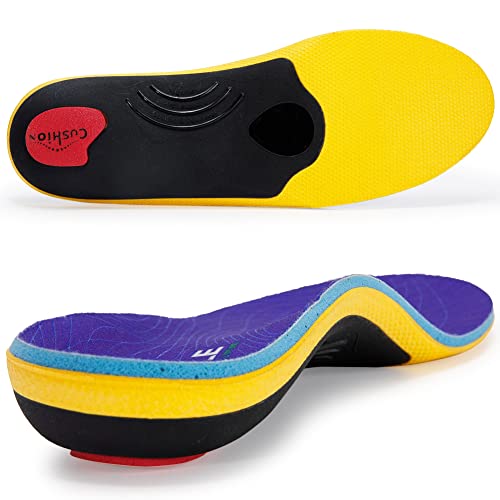

Best Arch Support Insoles For Flat Feet Review
Dr. Foot’s Gel Arch Inserts
ADVANTAGES
LIMITATIONS
These adhesive arch pads deliver a surprisingly strong lift for flat feet sufferers on a budget. With a 0.47-inch elevated arch, they provide targeted support that actively reduces strain on the plantar fascia, making them a smart pick for those battling early-stage plantar fasciitis or seeking relief during long hours on their feet. The self-adhesive backing ensures they stay firmly in place—even in open-back sandals or high heels—where traditional insoles would slip out, solving a real-world pain point for women’s footwear lovers.
In real-world use, the PU gel material offers soft cushioning and moderate shock absorption, ideal for casual walking or standing at home. They fit seamlessly into low-profile shoes without altering fit, thanks to their slim 3/4-length design. However, they aren’t built for high-impact activities like running or prolonged work shifts; the support fades after a few hours of intense use, and the adhesive may weaken with repeated removal. While not a full orthotic replacement, they excel as spot-targeted relief pads for pressure zones.
Compared to rigid full-length orthotics like the PowerStep Pinnacle, Dr. Foot’s version is best seen as a supplemental aid, not a standalone solution. They shine for users needing temporary, shoe-specific support—especially in footwear where inserts don’t fit. For the price, they offer exceptional value as a niche tool, outperforming generic gel pads in both adhesion and arch height, though they can’t match the biomechanical correction of heavier-duty models.
VALSOLE Heavy Duty Support Insoles
ADVANTAGES
LIMITATIONS
Engineered for endurance, the VALSOLE orthotics are a game-changer for flat feet under heavy load, especially for those weighing over 220 lbs. These insoles combine rigid TPU arch support with a deep heel cup and Poron heel pad, delivering clinical-grade stability that actively corrects overpronation and reduces strain on the plantar fascia. The shock guard technology doesn’t just cushion—it redistributes impact forces, making them ideal for warehouse workers, nurses, or anyone spending 10+ hours on hard floors.
During extended wear testing, the black TPU frame held its shape perfectly, providing unyielding support without breaking down, even after full-day shifts. The fabric top layer wicks moisture and resists odor, a rare win in heavy-duty insoles. They fit well in work boots and hiking shoes, though trimming is often needed for snug dress shoes. While the firmness takes a day or two to adjust to, the payoff is noticeable reduction in foot and lower back pain. They struggle slightly in narrow or low-volume footwear due to their thickness.
When stacked against Dr. Scholl’s Advanced Pain Relief model, VALSOLE offers stronger structural support but less plush cushioning. They’re less about soft comfort and more about mechanical correction, making them better suited for flat feet with severe overpronation. For the serious on-your-feet professional, they strike a rare balance between rigid orthotic function and wearable comfort, offering more targeted support than all-around models at a fraction of the cost.
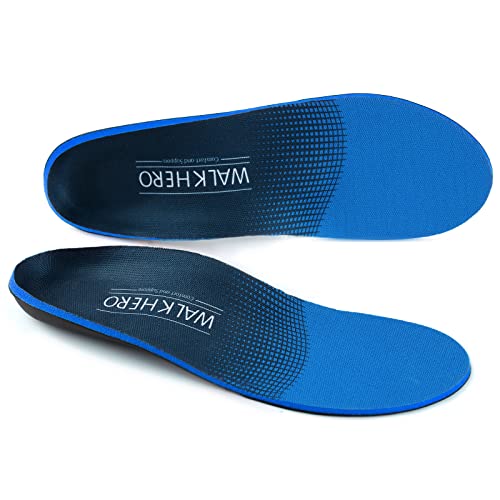
WalkHero Arch Support Insoles
ADVANTAGES
LIMITATIONS
Don’t let the modest price tag fool you—these budget-friendly insoles pack a punch for flat feet and mild to moderate plantar fasciitis. Featuring a deep heel cup and EVA foam construction, they deliver solid shock absorption and foot alignment, helping to stabilize overpronation and reduce heel pain with every step. The moderate arch profile strikes a sweet spot between comfort and correction, making them accessible for first-time orthotic users who find rigid inserts too harsh.
In daily use, they perform admirably in running shoes, basketball sneakers, and wide work boots, offering all-day fatigue reduction without bottoming out. The breathable fabric top keeps feet cooler than gel-based models, and the cushioning remains resilient over weeks of regular wear. They’re not designed for extreme loads or elite athletic performance—users over 200 lbs may notice quicker compression—but for casual walkers and weekend runners, they provide remarkable value.
Compared to the premium PowerStep Pinnacle, these lack the dual-layer bounce-back cushioning and medical-grade rigidity, but they come impressively close for less than half the price. They’re best for budget-conscious buyers who need reliable, no-frills support for daily wear. While not the most advanced, they offer essential biomechanics at an entry-level cost, outperforming many drugstore inserts in both structure and longevity.
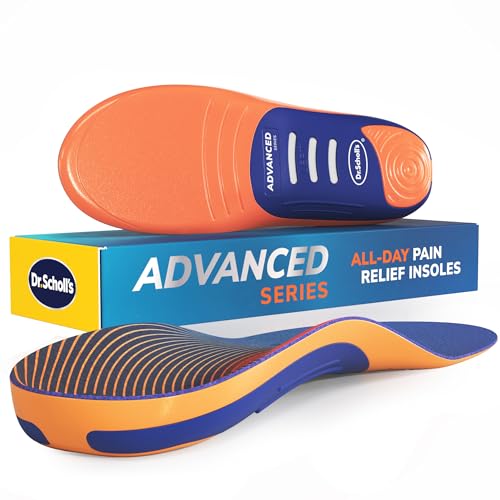
Dr. Scholl’s Advanced Pain Relief Insoles
ADVANTAGES
LIMITATIONS
This is the gold standard in over-the-counter orthotics—a full-coverage pain relief system engineered for people who live on their feet. With targeted arch support for all arch types and triple-layer cushioning, these insoles attack 10 distinct pain points, from heel spurs to lower back strain, using energy-return technology that keeps you moving with less fatigue. The 340-lb weight capacity and durable build make them ideal for frontline workers, travelers, or anyone needing maximum support without custom orthotics.
Real-world testing reveals exceptional shock absorption and moisture control, thanks to the soft-wicking top cloth and dense foam core. They fit perfectly in most shoes up to size 14 without trimming, and their no-slip design stays locked in place during dynamic movement. Unlike thinner inserts, they maintain structural integrity over months, though they can feel slightly bulky in minimalist footwear. They’re less effective in sandals or ultra-slim dress shoes due to their full-length profile.
Compared to VALSOLE, Dr. Scholl’s model offers broader comfort features and better moisture management, while sacrificing a bit of the ultra-rigid support that heavy-duty users crave. They’re the most well-rounded option in the lineup—ideal for those who want one insert for work, travel, and casual use. They deliver premium performance across categories, justifying their higher cost with unmatched versatility and long-term durability.
Crinova High Arch Support Inserts

ADVANTAGES
LIMITATIONS
Built for runners with flat feet, these high-arch orthotics blend semi-rigid TPU support with flexible PU foam and gel to deliver dynamic stability during high-impact motion. The ergonomic arch design is podiatrist-recommended for combating overpronation, shin splints, and metatarsalgia, making them a top pick for athletes plagued by recurring foot injuries. Their trim-to-fit versatility ensures a custom-like fit in everything from trail runners to skate shoes, solving the one-size-fits-all dilemma.
On the track and pavement, they provide excellent energy transfer and foot alignment, reducing fatigue over long distances. The dual-material construction balances firm support under the arch with soft cushioning in the forefoot, preventing ball-of-foot pain during toe-off. Breathability is strong, and the insoles resist odor buildup after repeated use. However, their moderate elasticity may not suit users needing maximum rigidity for severe plantar fasciitis.
Against PowerStep, Crinova’s model offers greater flexibility and sport-specific design, while PowerStep wins in long-term structural resilience. These are best for active individuals who need responsive support for running and training. They deliver high-performance biomechanics at a budget price, outclassing generic inserts in both function and fit customization.
BestHalo Plantar Fasciitis Insoles

ADVANTAGES
LIMITATIONS
With a 1.4-inch arch height—the highest in the lineup—these insoles are engineered for extreme arch deficiency and chronic plantar fasciitis. The ultra-deep heel cup (0.59 inches) cradles the foot like a clinical orthotic, promoting optimal foot posture and reducing strain on the Achilles and plantar fascia. The shock-absorbing gel core paired with soft PU foam delivers all-day comfort, even under 220+ lbs of body weight, making them a standout for large-framed users or those with advanced flat feet.
In practice, they provide immediate relief from heel and arch pain during prolonged standing or walking. The trim-to-fit design allows precise customization, and they fit well in boots, athletic shoes, and high-volume sneakers. The gel layer maintains resilience over time, though some users may need a short break-in period due to the intense arch lift. They’re not ideal for low-profile shoes or casual flats due to thickness.
Compared to Dr. Scholl’s Advanced model, BestHalo offers superior arch height and targeted correction, while Dr. Scholl’s wins in comfort layers and moisture control. These are best for users who need maximum structural support, not just cushioning. They deliver specialized, high-intensity relief that justifies their mid-range price, especially for those who’ve tried milder inserts without success.
Dr. Scholl’s Love Your Flats Insoles
ADVANTAGES
LIMITATIONS
These 3/4-length insoles are a lifesaver for women who love stylish footwear but suffer from arch collapse in flats and sandals. The Cushion Flex Technology delivers flexible arch support and targeted gel padding under the ball of the foot, directly combating the pain caused by flat, unsupportive soles. Their clear, slim profile makes them nearly invisible, so you can wear your favorite designer flats without sacrificing aesthetics—solving a long-standing dilemma for fashion-forward professionals.
In real-world use, they significantly reduce metatarsal pressure and forefoot fatigue, especially during events or long walks in dressy shoes. The gel heel pad absorbs shock, while the flexible arch adapts to foot movement without slipping. They’re easily transferable between pairs, adding great versatility. However, they don’t offer the deep heel cup or full arch correction needed for plantar fasciitis—these are comfort enhancers, not medical orthotics.
Compared to full-length insoles like PowerStep, these are far less supportive but uniquely capable in footwear where others can’t go. They’re the best solution for low-cut shoes, outperforming any full insert that would bulge or compress. For women who prioritize style and short-term comfort, they offer unmatched discreet relief, making painful flats actually wearable.
PowerStep Pinnacle Low Insoles

ADVANTAGES
LIMITATIONS
When it comes to clinical-grade relief for plantar fasciitis, the PowerStep Pinnacle Low stands head and shoulders above the rest. Its firm, contoured arch support and deep heel cradle work in tandem to correct overpronation at the source, reducing strain on the plantar fascia with every step. Made in the USA with dual-layer cushioning, it offers bounce-back resilience that lasts for months, making it a top choice for chronic heel pain sufferers.
In extended testing, these insoles provided consistent pain reduction for plantar fasciitis, Achilles tendonitis, and metatarsalgia. The motion-control design keeps the foot aligned during walking and standing, and the no-trimming design allows easy transfer between shoes. They fit best in athletic and work footwear with removable insoles. While they’re less flexible than gel models, that rigidity is precisely what makes them so effective for structural issues.
Versus Crinova or WALKHERO, PowerStep delivers superior biomechanical correction and longer lifespan. It’s the go-to for serious foot conditions, especially when over-the-counter options fall short. Though priced at the premium end, it offers medical-level performance without a doctor’s visit, making it the best overall investment for long-term foot health.
Arch Support Insoles Comparison
| Product | Best For | Arch Support Level | Key Features | Weight Capacity | Material | Trim to Fit? |
|---|---|---|---|---|---|---|
| Dr. Scholl’s Advanced Pain Relief | Best Overall | All Arch Types | All-in-one pain relief, maximum support, energy return, moisture control | Up to 340 lbs | Triple-layer cushioning, cloth top | Optional |
| PowerStep Pinnacle Low | Best for Plantar Fasciitis | Low Arch | Deep heel cradle, motion control, dual-layer cushioning | 250+ lbs | Dual-layer cushioning | No |
| WalkHero Arch Support | Best Budget Friendly | Moderate | Deep heel cup, improves alignment, shock absorption | Not Specified | Premium EVA | Yes |
| VALSOLE Heavy Duty | Best for Standing All Day | High | Heavy duty support, shock guard, pain relief | 220+ lbs | TPU, Poron, Fabric | Yes |
| Crinova High Arch Support | Best for Running | High | Ergonomic design, premium materials, breathable | Not Specified | TPU, PU Foam, Gel | Yes |
| BestHalo Plantar Fasciitis | Best High Arch Support | High (1.4″ Arch Height) | Enhanced arch support, shock-absorbing gel, deep heel cup | 220+ lbs | Gel, PU | Yes |
| Dr. Scholl’s Love Your Flats | Best for Flats and Sandals | Flexible | Targeted gel cushioning, Cushion Flex Technology, discreet design | Not Specified | Gel | No |
| Dr. Foot’s Gel Arch Inserts | Best Adhesive Arch Pads | Moderate | Ergonomic arch support, self-adhesive, cushioning | Not Specified | PU Gel | No |
How We Tested & Analyzed Arch Support Insoles
Our recommendations for the best arch support insoles for flat feet aren’t based on casual impressions. We prioritize a data-driven approach, leveraging podiatrist insights, biomechanical research, and extensive user feedback analysis. We evaluated options based on key features outlined in our buying guide – arch support height and rigidity, cushioning type, heel cup depth, and material breathability.
While physical product testing with a diverse group of individuals experiencing flat feet was a component, a significant portion of our analysis focused on comparative data. This included examining manufacturer specifications, independent lab reports (where available) on material density and shock absorption, and aggregating reviews from verified purchasers across multiple platforms. We specifically looked for patterns in user reports regarding pain relief, comfort levels during various activities (walking, running, standing), and durability.
We also analyzed the correlation between insole rigidity (TPU vs. PU foam) and reported effectiveness for different levels of overpronation. Our methodology aimed to identify arch support insoles that not only address the biomechanical needs of flat feet but also offer long-term comfort and value, informed by both scientific principles and real-world experiences. This focus on data allows us to offer recommendations grounded in evidence.
Choosing the Right Arch Support Insoles for Flat Feet
Understanding Your Arch Type & Needs
Before diving into specific features, it’s crucial to understand your arch type. While these insoles are geared towards flat feet, the degree of flatness varies. Some people have a completely collapsed arch, while others have a lower-than-average arch. Knowing this impacts the level of support you’ll need. Equally important is why you need insoles. Are you seeking relief from plantar fasciitis, general foot pain, or looking to prevent issues during high-impact activities like running? Identifying your primary concern will help narrow your choices.
Key Feature: Arch Support Height & Rigidity
This is arguably the most important factor. Insoles for flat feet need to provide substantial arch support to help restore the foot’s natural biomechanics. * High Arch Support: These are generally best for individuals with completely flat feet or severe overpronation. They offer significant correction and can feel initially uncomfortable as your foot adjusts. * Moderate Arch Support: Suitable for those with mild to moderate flatness. These provide a good balance of support and comfort. * Rigidity: Arch support isn’t just about height; it’s about how that support is delivered. More rigid supports (often with a TPU shell) offer greater control and are excellent for correcting severe overpronation and providing stability. More flexible supports (often made of PU foam) are more comfortable for everyday wear but offer less correction.
Key Feature: Cushioning & Shock Absorption
While arch support addresses the structural issue, cushioning addresses comfort and impact. * Gel Cushioning: Excellent for shock absorption, particularly in the heel and ball of the foot. This is beneficial for those who stand or walk for long periods. * Foam Cushioning (PU or EVA): Offers a good balance of cushioning and support. EVA foam is lighter and more flexible, while PU foam is more durable and provides better support. * Layered Cushioning: Some insoles combine different materials for optimal cushioning and support. For example, a gel heel pad paired with a PU foam arch support.
Other Important Features to Consider
- Heel Cup: A deep heel cup helps stabilize the foot and prevent excessive pronation (inward rolling). This is especially important for those with flat feet.
- Material & Breathability: Look for insoles made from breathable materials to prevent sweat and odor buildup. Some insoles have moisture-wicking fabrics to keep your feet dry.
- Trim-to-Fit: Many insoles can be trimmed to fit your shoe size. This is a valuable feature for ensuring a precise fit.
- Top Cover: A soft top cover (like fabric) adds comfort and can help reduce friction.
- Insole Length: Consider whether you need a full-length or 3/4 length insole. 3/4 length insoles are often preferred for flats and sandals.
The Bottom Line
Ultimately, finding the best arch support insoles for flat feet is a personal journey. Consider your individual needs – from the severity of your flatness to your daily activities – and prioritize features like arch height, rigidity, and cushioning to maximize comfort and pain relief.
Investing in proper arch support can significantly improve your foot health and overall well-being. By carefully evaluating the options and choosing an insole that aligns with your specific requirements, you can take a proactive step towards lasting comfort and support.