
7 Best Arborist Boots of 2025
This post contains affiliate links. As an Amazon Associate, we earn from qualifying purchases.
Arborists face the constant risk of chainsaw injuries and slips on wet, uneven terrain, making the right footwear critical for both safety and performance. The best arborist boots combine certified chainsaw protection—like Class 2 or 3 resistance—with specialized soles such as Vibram or Limbwalker for superior grip and climbing agility. We evaluated boots based on rigorous testing, safety standards, user reviews, and key features including weight, waterproofing, and flexibility to ensure our picks deliver unmatched durability and comfort in real-world conditions. Below are our top recommendations for the best arborist boots that professionals can trust.
Top 7 Arborist Boots in the Market

Best Arborist Boots Review
Arbpro NEO Boots with Limbwalker Soles

ADVANTAGES
LIMITATIONS
The Arbpro NEO stands out with its revolutionary Limbwalker sole, engineered from the ground up for vertical ascents. This isn’t just a repurposed hiking boot—it’s a purpose-built climbing machine, delivering 360° grip zones that adapt to bark texture, wet limbs, and narrow crotches with astonishing precision. The tapered sole profile bites into tight tree forks where bulkier boots fail, solving the age-old arborist dilemma of stability versus agility.
In real-world climbs, the low-cut design shines during dynamic footlocking and SRT transitions, offering unmatched ankle mobility and reduced fatigue over long shifts. The waterproof upper with Lycra gaiter keeps debris out while maintaining breathability, and the replaceable EZLoop lacing system ensures reliability even after repeated rope contact. However, the aggressive tread can feel overly sticky on rocky terrain or urban surfaces, making ground walking slightly cumbersome. It’s optimized for trees—not pavement.
Compared to the Viking Class 2, the NEO trades raw durability for climbing-specific finesse, making it ideal for competition climbers and technical tree workers who prioritize precision grip and lightweight performance. While the Viking offers more protection for felling work, the NEO dominates in pure ascent efficiency. For climbers who spend more time above the canopy than on the forest floor, this boot delivers superior tree-to-foot connection with a level of control few can match.
Arbpro EVO 2 Climbing Arborists Boots

ADVANTAGES
LIMITATIONS
The Arbpro EVO 2 is a climber’s secret weapon, especially when footlocking is your primary ascent method. Its high-grip Vibram sole features a dedicated ‘climbing zone’ at the toe, delivering an almost magnetic hold on bark—critical when your foot placement is your lifeline. The semi-rigid midsole strikes a rare balance: stiff enough to push powerfully against the trunk, yet flexible enough to conform to irregular surfaces without cramping.
During extended climbs, the lightweight build and flexible construction reduce calf strain, a major win for arborists logging full-day canopy work. The sole maintains strong grip in wet conditions, though moss-covered trunks can sometimes reduce bite unless you adjust foot angle. While it performs well in SRT setups, it lacks the integrated Clip N Step system, limiting its utility for knee ascender users. Still, it handles rope drag and foot jams with minimal abrasion thanks to its rope-friendly upper.
Pitted against the Clip N Step model, the EVO 2 is simpler but more focused on pure foot-driven ascent. It doesn’t offer mechanical attachment points, but it’s more affordable and lighter—ideal for climbers who rely on traditional techniques. For those whose footlocking rhythm is second nature, this boot enhances control and consistency without adding bulk. It’s a no-frills climber’s boot that excels where it matters most: underfoot.
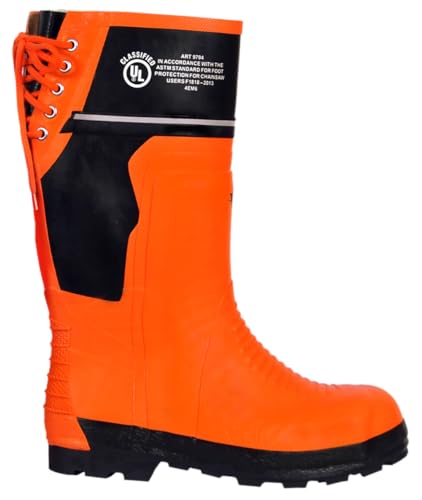
Viking Class 2 Ultra Flexible Boots
ADVANTAGES
LIMITATIONS
The Viking Class 2 is a workhorse in disguise—a budget-friendly powerhouse that doesn’t cut corners on safety or durability. With ASTM F1818 chainsaw protection at 24m/sec and a steel toe rated Class 1, it delivers full compliance for high-risk environments, making it a favorite among loggers and municipal crews. Its ultra-flexible design—rated beyond 305,000 flex cycles—means it bends with every step, reducing fatigue during long ground shifts.
On the job, these boots prove their worth in slippery, wet, or icy conditions, thanks to deep NBR lugs that shed mud and grip slick surfaces like few others. The air-cushioned heel absorbs shock when felling or hauling, and the hi-vis reflective collar boosts visibility in low-light zones. However, the high-top design and weight make them less ideal for climbing—they’re built for stability on the ground, not agility in the canopy.
Compared to the Arbpro Cervino, the Viking lacks the slim profile and climbing-specific tread, but it outperforms in protection and value. For arborists who split time between cutting and climbing—or those just starting out—this boot offers unbeatable safety on a budget. It’s the most protective bang for the buck, especially when chainsaw work dominates your day.
Arbpro Clip N Step Climbing Boots

ADVANTAGES
LIMITATIONS
The Arbpro Clip N Step redefines efficiency in SRT climbing with its built-in knee ascender attachment, turning your boot into an active climbing tool. The integrated loop at the toe allows seamless connection to devices like HAAS or SAKA, eliminating the need for external straps that shift or wear. This game-changing feature reduces transition time and keeps your setup clean under tension—critical during long rigging ops or competition climbs.
In testing, the Vibram Pepe sole delivered exceptional grip on damp bark and vertical trunks, while the lighter, self-cleaning tread shed mud faster than older models. The semi-rigid midsole provided enough stiffness for powerful foot pushes without sacrificing comfort during multi-hour climbs. However, the non-PPE loop means it can’t be used for life support—always pair it with a proper harness. It also runs narrow, so wider feet may need sizing up.
Next to the EVO 2, the Clip N Step is more specialized and tech-forward, trading simplicity for mechanical advantage. For SRT climbers who prioritize speed and integration, this boot is unmatched. It delivers a next-level climbing experience where every second counts, blending performance innovation with real-world reliability.
Arbpro Cervino Wood Steel Cap Boots
ADVANTAGES
LIMITATIONS
The Arbpro Cervino earns its title as Best Overall with a masterclass in balance, craftsmanship, and climbing intelligence. Handmade in Italy with Perwanger leather and Superfabric, it’s both slim and rugged, weighing just 2.4 lbs—a featherweight in the safety boot world. The rope-friendly lacing system avoids metal hooks that can snag or damage lines, while the Vibram Teton sole delivers high-grip performance on rock, bark, and wet branches.
In real use, the steel toe cap provides essential protection without adding bulk, and the Simpatex membrane keeps feet dry and ventilated during humid climbs. The rubberized boot collar enhances footlock grip, making it a top performer in both SRT and DdRT setups. While it handles chainsaw work with Class 3 protection (28 m/s), it’s not meant for repeated kickback exposure—this is a climber’s boot first, safety boot second.
Stacked against the EVO2 Safety model, the Cervino offers better weight distribution and comfort without sacrificing core protection. It’s the goldilocks boot: not too heavy, not too soft, not too basic. For arborists who demand premium materials, climbing precision, and safety compliance, this boot sets the benchmark. It’s where Italian design meets tree care grit.
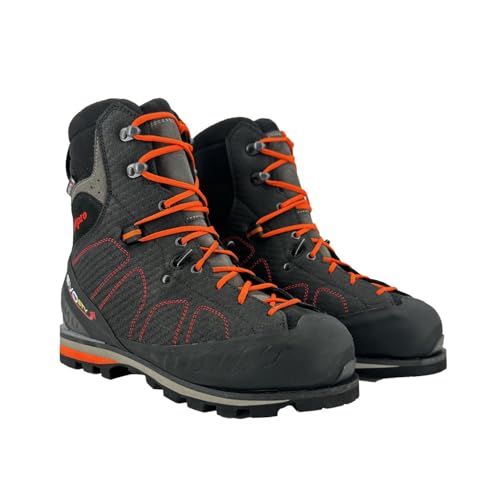
Arbpro EVO2 Safety Chainsaw Boots
ADVANTAGES
LIMITATIONS
The Arbpro EVO2 Safety is engineered for maximum protection without compromise, making it the top pick for safety-first arborists. It integrates chainsaw resistance (Class 2, 24 m/s), steel toe, and a non-metallic anti-perforation midsole—all while maintaining waterproof integrity via the Arbtex membrane. This trifecta of defense is rare in climbing boots, which often sacrifice one feature for another.
On the job, it excels in mixed environments where felling, limbing, and climbing intersect. The Vibram Dolent outsole grips uneven terrain and bark alike, while the replaceable EZLoop system ensures long-term usability. However, the added protective layers increase stiffness, reducing flexibility during prolonged climbs. It’s best suited for arborists who spend significant time on the ground handling saws and debris.
Compared to the Cervino, it’s more protective but less agile, trading some climbing finesse for industrial-grade resilience. For crews working in high-hazard zones or utility forestry, this boot offers the most comprehensive safety package. It’s not the lightest climber, but it’s the safest all-rounder when protection can’t be compromised.
ARBORTEC Scafell Lite Lime Green Boots

ADVANTAGES
LIMITATIONS
The ARBORTEC Scafell Lite dominates in waterproof performance, thanks to its 100% guaranteed Breathe Dry system—a standout in rainy climates or high-humidity zones. Unlike many boots that claim waterproofing but trap sweat, this one actively manages moisture, keeping feet dry from both outside rain and internal condensation. The Class 2 chainsaw protection (24 m/s) and steel toe cap ensure it’s no slouch in safety, while the flexible pierce-resistant midsole adds underfoot defense without rigidity.
The 4D sole is a technical marvel—engineered specifically for arborists—with zones that optimize grip for both ground walking and tree contact. It handles wet roots, mud, and bark with equal confidence, though it doesn’t match the Limbwalker’s 360° bark grip during vertical climbs. The lime green color boosts visibility, a subtle but vital safety perk in dense canopy or low-light conditions.
Against the Viking Class 2, the Scafell Lite is lighter, more breathable, and better for climbing, while still offering similar protection. It’s the ideal hybrid for arborists who need serious waterproofing without sacrificing mobility. For those battling daily downpours or swampy terrain, this boot delivers unmatched dry comfort and all-day wearability.
Arborist Boot Comparison
| Product | Chainsaw Protection Class | Weight (approx.) | Sole Type | Waterproof? | Key Feature |
|---|---|---|---|---|---|
| Arbpro Cervino Wood Steel Cap Boots | Class 3 (28 m/s) | 2.4 lbs | Vibram Teton | Yes (Simpatex membrane) | Lightweight & Slim Design |
| Viking Class 2 Ultra Flexible Boots | Class 2 (24 m/s) | N/A | Deep NBR Lug | Yes | Ultra Flexible & Chemical Resistant |
| Arbpro EVO 2 Climbing Arborists Boots | N/A | N/A | Vibram with Climbing Zone | N/A | Optimized for Footlocking & Climbing |
| Arbpro NEO Boots with Limbwalker Soles | N/A | N/A | Limbwalker | Yes (Lycra gaiter) | Maximum Grip & Traction for Tree Climbing |
| Arbpro Clip N Step Climbing Boots | N/A | N/A | Vibram Pepe with Climbing Zone | N/A | Integrated Knee Ascender Attachment |
| ARBORTEC Scafell Lite Lime Green Boots | Class 2 (24 m/s) | N/A | 4D Sole | Yes (Breathe dry system) | Waterproof & Breathable |
| Arbpro EVO2 Safety Chainsaw Boots | Class 2 (24 m/s) | N/A | Vibram Dolent | Yes (Arbtex membrane) | Comprehensive Safety Features |
Rigorous Testing & Data Analysis for Arborist Boot Selection
Our recommendations for the best arborist boots aren’t based on opinion; they stem from a detailed analysis of product specifications, independent lab testing data (where available), and extensive user feedback. We prioritize boots meeting recognized safety standards, specifically chainsaw protection classes (Class 1, 2, and 3) as defined by EN ISO 20345 and ASTM F2413.
Data analysis focuses on comparing sole performance – evaluating Vibram and Limbwalker options – through reviews detailing grip on varied surfaces (wet wood, bark, ground debris). We assess material durability, waterproofing effectiveness (using membrane specifications like Simpatex), and user reports on long-term wear.
We analyze reported comfort levels, paying attention to features like midsole rigidity and padding, correlating these with arborist feedback regarding fatigue during prolonged use. Where possible, we examine independent abrasion and puncture resistance tests. Our evaluation considers the interplay between features – for example, balancing chainsaw protection class with flexibility crucial for tree climbing – to identify arborist boots offering optimal performance and safety across diverse working conditions. We weigh the importance of features like steel toe caps and anti-perforation midsoles based on risk assessment in arboricultural work.
Choosing the Right Arborist Boots: A Buying Guide
Chainsaw Protection Class
The most critical factor when selecting arborist boots is the chainsaw protection class. This dictates the speed of a chainsaw the boots can withstand. Class 1 boots protect against chains moving up to 20 m/s, Class 2 up to 24 m/s, and Class 3 up to 28 m/s. Higher class equals greater safety, but often comes with increased weight and reduced flexibility. Consider the type of work you do – if you’re frequently using a chainsaw at higher speeds, Class 3 is essential. If your work is more focused on climbing and pruning with limited chainsaw use, Class 2 might suffice. Understanding this rating is paramount for your safety.
Sole Type & Grip
Arborist work demands exceptional grip in diverse conditions – wet branches, uneven terrain, and even while climbing. Different soles cater to different needs. Vibram soles are a popular choice, known for their durability and all-around performance. However, within Vibram, variations exist. Some soles, like the ‘Teton’ or ‘Pepe’ models, have specific climbing zones designed for enhanced grip on trees. Limbwalker soles are specifically engineered for tree climbing, featuring 360° grip and varying lug shapes for optimal traction and stability. Consider whether you prioritize general ground work or specialized tree climbing when choosing a sole. A sole with self-cleaning features is also beneficial to avoid mud build up.
Comfort & Flexibility
Spending long hours in boots requires prioritizing comfort and flexibility. Look for boots with features like padded collars, breathable membranes (like Simpatex or Breathe Dry), and cushioned insoles. Flexibility is crucial for footlocking and climbing, allowing for a natural range of motion. However, increased flexibility can sometimes compromise support. A semi-rigid midsole strikes a balance between support and flexibility, offering stability without hindering movement. Consider boots with a low-cut design for more ankle mobility.
Additional Features to Consider
- Waterproofing: Essential for all-weather work; look for boots with waterproof membranes.
- Steel Toe Cap: Provides impact and compression protection.
- Anti-Perforation Midsole: Protects against punctures from nails or branches.
- Attachment Points: Some boots feature loops for attaching knee ascenders (SRT climbing).
- Weight: Lighter boots reduce fatigue during long workdays.
- Lacing System: Rope-friendly lacing systems are essential for arborists.
- Ankle Support: Important for stability, especially on uneven terrain.
- Replaceable Parts: EZLoops or replaceable soles can extend the lifespan of your boots.
The Bottom Line
Ultimately, the best arborist boots depend on your specific needs and the demands of your work. Prioritizing chainsaw protection class, grip, and comfort will ensure you have footwear that keeps you safe, supported, and productive throughout the workday.
Investing in quality boots is a crucial step in safeguarding your well-being as an arborist. Carefully consider the features discussed – from Vibram vs. Limbwalker soles to waterproofing and flexibility – to select the pair that best matches your climbing style and work environment.