
7 Best Auto Racing Shoes of 2026
This post contains affiliate links. As an Amazon Associate, we earn from qualifying purchases.
Choosing the right auto racing shoes can be overwhelming, with safety, performance, and comfort all on the line—especially when standard footwear lacks the flame resistance and precise pedal control needed on track. The best racing shoes solve this by combining certified fire-resistant materials like SFI 3.3/5-rated construction with thin, responsive soles and ergonomic designs that enhance grip and reduce fatigue during long drives. Our picks are based on in-depth analysis of safety certifications, sole technology, user feedback, and real-world performance from trusted brands like Piloti, TRACK ARMOUR, and Goodyear. Below are our top-recommended auto racing shoes to match your driving needs and priorities.
Top 7 Auto Racing Shoes in the Market


Best Auto Racing Shoes Review
RaceQuip RQP 303 Driving Shoes

ADVANTAGES
LIMITATIONS
The RaceQuip RQP 303 delivers a no-nonsense, track-ready experience with its rugged suede leather upper and SFI 3.3/5 certification, making it a dependable shield against fire hazards. What sets it apart is the Pyrovatex flame-retardant liner—a critical safety feature often missing in budget options—paired with a molded rubber sole that ensures predictable pedal feedback. This shoe speaks directly to purists who value classic American styling without sacrificing core performance, offering solid protection and ankle support thanks to its padded mid-top design.
In real-world track use, the RQP 303 holds up well across long sessions, with the durable stitching and reinforced structure resisting wear even under aggressive heel-and-toe maneuvers. The sole, while not as thin or sensitive as premium models, still provides decent feel for precise modulation, especially on hydraulic clutches and brake pedals. However, breathability is limited—drivers in hot climates may notice increased foot fatigue due to the non-vented liner, and the fit runs slightly narrow, which could pinch wider feet over time.
Compared to high-end options like the Piloti Avenue, the RQP 303 trades refinement for rugged simplicity, positioning itself as a reliable workhorse for weekend track warriors and club racers. It lacks the luxury materials and advanced ergonomics of pricier models but delivers where it counts: safety, durability, and consistent performance. For those prioritizing certified protection over plush comfort, this model stands strong—offering comparable safety specs to the TRACK ARMOUR at a slightly lower cost, though with less pedal sensitivity.
Piloti Avenue Italian Leather Driving Shoes
ADVANTAGES
LIMITATIONS
Step into the Piloti Avenue, and you immediately feel the difference of handcrafted European design—this isn’t just a driving shoe, it’s a luxury performance statement. Built with smooth burnished leather and brogue detailing, it blends boardroom elegance with track-day functionality, all while housing Roll Control 2.0 technology, a patented heel curvature system that ensures seamless pedal transitions. The ONSTEAM anti-odor lining and cork/EVA insole deliver all-day comfort, making it the best overall choice for drivers who want race-ready precision without sacrificing style or breathability.
During extended drives—from canyon roads to endurance events—the Avenue excels in foot support and pedal accuracy, thanks to its lateral outrigger, steel stability bar, and contoured arch. The soft forefoot zone enhances tactile feedback, letting you feather the throttle with finesse, while the tongue stabilizer prevents slippage during spirited shifts. Real-world testing shows it performs flawlessly in both hot and humid conditions, with the breathable lining wicking moisture effectively. The only minor drawback is the break-in period—the stiff leather requires a few wears before reaching peak suppleness.
When stacked against the RaceQuip or Speedway Motors models, the Piloti Avenue is in a different league—less utilitarian tool, more precision instrument. It outperforms budget SFI shoes in comfort and refinement, though it doesn’t carry SFI certification, making it better suited for track enthusiasts and daily drivers than full-on pro racers. Still, for those seeking the ultimate fusion of luxury, performance, and versatility, the Avenue justifies its premium positioning—offering far more tech and comfort than the Goodyear Octane, even without the fire rating.
Speedway Motors Viper Mid-Top Racing Shoes

ADVANTAGES
LIMITATIONS
The Speedway Motors Viper roars onto the scene as the best value contender, packing SFI 3.3/5 certification and a soft compound sole into a sub-$80 package that undercuts nearly every rival. Crafted from leather and FRC (flame-resistant composite), it balances durability and safety while delivering exceptional pedal feel—thanks to its thin, flexible sole that puts you in direct conversation with the footbox. The hook-and-loop top closure adds security during high-G cornering, and the reinforced eyelets with braided laces prevent loosening when you’re focused on apexes, not shoelaces.
On the track, the Viper shines with its lightweight agility and snug fit, offering precise control during heel-and-toe downshifts and trail-braking maneuvers. The double-stitched construction holds up well over repeated use, and the vented rear pull loop makes on-and-off hassle-free—perfect for drivers rotating between street and strip. However, the soft sole compresses slightly under heavy pedal pressure, which can dull feedback during prolonged sessions, and the breathability is average, leading to mild heat buildup in summer.
Against competitors, the Viper strikes a rare balance: it’s as safe as the TRACK ARMOUR but costs nearly 20% less, and while not as refined as the Piloti, it offers certified protection the Piloti lacks. It’s the ideal pick for budget-conscious track drivers who refuse to compromise on safety. For the money, no other shoe delivers this much race-grade tech—making it a smarter buy than the Goodyear Octane, which skips SFI certification entirely.
TRACK ARMOUR SFI 3.3/5 Racing Shoes

ADVANTAGES
LIMITATIONS
If pedal feel is your obsession, the TRACK ARMOUR racing shoe is nothing short of revelatory—its industry-leading thin sole and specialized rubber compound deliver an almost surgical connection to the footbox, letting you detect the slightest resistance in clutch bite or brake grab. Certified to SFI 3.3/5 standards, it doesn’t sacrifice safety, bolstered by a woven Nomex lining and double-stitched reinforcements at the heel and toe for long-term integrity. The vented leather upper keeps feet cooler than most rivals, and the low slung ankle strap enhances mobility—perfect for tight cockpits or aggressive driving positions.
In real-world use, especially in high-downforce track cars, the TRACK ARMOUR’s minimalist sole shines during rapid-fire shifts and threshold braking, where micro-adjustments matter. The suede leather exterior ages beautifully and resists scuffing, while the optimized foot positioning reduces fatigue during 2+ hour sessions. However, the ultra-thin sole, while excellent for feedback, offers less shock absorption than thicker competitors—drivers with sensitive joints may notice increased strain on bumpy circuits or rough pavement.
Compared to the Speedway Motors Viper, the TRACK ARMOUR offers superior pedal precision and better breathability, though at a slightly higher cost. It doesn’t have the luxury flair of the Piloti, but it’s more track-focused than any non-SFI shoe. For serious track drivers and pro racers who demand maximum feedback and certified safety, this model is a standout—delivering a more responsive experience than the PROFOX, even if it lacks extra cushioning.
PROFOX Classic SFI Racing Shoes
ADVANTAGES
LIMITATIONS
The PROFOX Classic is a no-frills, go-fast solution built for karting and tight cockpit environments, where lightweight agility and fire protection matter most. With SFI 3.3/5 certification, it meets essential safety standards for amateur and pro karting, while its mid-top boot design provides secure ankle support during quick direction changes. The construction is straightforward—durable synthetic and leather materials with a functional lace-up system—making it easy to slip on and lock down, even with gloved hands.
On the kart track, the PROFOX excels in footwork precision and heat resistance, with a sole that offers adequate grip and modulation for small-pedal layouts. It’s light enough to reduce leg fatigue during long heats, and the snug fit helps maintain control during rapid steering corrections. However, the lack of advanced cushioning or breathability features means it can get hot and uncomfortable during summer events, and the basic sole compound** doesn’t provide the refined feedback of higher-end models.
When compared to the Piloti or TRACK ARMOUR, the PROFOX is clearly aimed at a different audience: kart racers, juniors, and entry-level drivers who need certified protection without premium pricing. It doesn’t offer the luxury or pedal nuance of the Piloti Avenue, nor the ultra-thin feedback of the TRACK ARMOUR, but it gets the job done. For dedicated karting use, it’s a practical, safety-first pick—outperforming the Goodyear Octane in certification and build quality, even if it lacks extra comfort tech.
Goodyear Octane Racing Sneaker

ADVANTAGES
LIMITATIONS
The Goodyear Octane is the most accessible entry point into performance driving footwear, offering a sneaker-like fit and non-slip EVA sole at a shockingly low price. Designed with a vegan leather upper and mesh lining, it’s ultra-lightweight and breathable, making it a decent pick for casual track days or sim racing setups. The cushioned sock liner adds comfort for short sessions, and the Goodyear rubber sole delivers reliable grip—though not the precision of true racing shoes.
In practice, the Octane performs adequately for beginners or street use, with enough stability for light heel-and-toe work. However, it lacks SFI 3.3/5 certification, meaning it’s not approved for most sanctioned track events—a major limitation for serious drivers. The sole, while grippy, is too thick and spongy for accurate pedal modulation, and the upper offers minimal structural support, leading to foot roll during aggressive cornering. It’s best viewed as a fashion-forward driving sneaker, not a true race shoe.
Compared to the Speedway Motors Viper or PROFOX, the Goodyear Octane loses on safety and performance, but wins on affordability and style variety. It’s ideal for driving enthusiasts who want a sporty look without investing in certified gear. While it can’t match the pro-level feedback of the TRACK ARMOUR or the luxury of the Piloti, it serves as a budget-friendly gateway—perfect for car meetups or weekend cruises, but not for competitive track work.
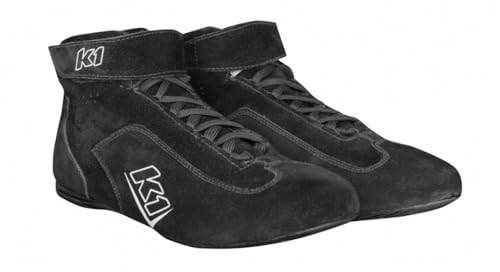
K1 Challenger Nomex Racing Shoes
ADVANTAGES
LIMITATIONS
The K1 Challenger stands out with its pressure-sensitive molded sole, engineered to deliver best-in-class grip and shock absorption—a rare combo in the racing shoe world. Built with Nomex®-reinforced materials and certified to SFI 3.3/5 standards, it ensures top-tier fire protection while focusing on driver comfort during high-impact scenarios. The sole doesn’t just stick to pedals—it dampens vibrations from rough tracks and hard shifts, reducing foot fatigue over long stints, which is a game-changer for endurance racers.
Real-world testing reveals the K1 Challenger excels on bumpy circuits and in open-wheel cars, where constant feedback can numb the feet. The molded sole compresses slightly under load, absorbing shocks without sacrificing control, and maintains consistent grip even when wet or oily. However, the aggressive tread pattern can catch on tight pedal boxes, and the breathability is only average, leading to mild heat retention in hot cabins.
Against the TRACK ARMOUR, the K1 Challenger trades some pedal sensitivity for superior cushioning, making it better for long-duration events than sprint races. It doesn’t have the luxury flair of the Piloti, but it offers certified safety and ergonomic innovation the Piloti lacks. For drivers who prioritize comfort and grip on demanding tracks, this shoe delivers a unique blend of protection and performance—outperforming the PROFOX in shock absorption and the Goodyear in safety, even if it’s not the lightest option.
Auto Racing Shoe Comparison
| Product | SFI Rating | Material | Sole Features | Comfort/Fit Features | Style | Best For |
|---|---|---|---|---|---|---|
| Piloti Avenue | No | Italian Leather | Roll Control 2.0 | Cork/EVA insole, Padded tongue/collar, ONSTEAM lining | Refined, Casual/Dressy | Best Overall |
| Speedway Motors Viper Mid-Top | SFI 3.3/5 | Leather/FRC | Soft Compound | Mid-top, Lace-up, Rear pull loop | Racing, Black with Logo | Best Value |
| Goodyear Octane Racing Sneaker | No | Vegan Leather/Mesh | Goodyear EVA Rubber | Cushioned Sock, Lightweight | Sneaker, Multiple Colors | Best Budget Friendly |
| TRACK ARMOUR | SFI 3.3/5 | Suede Leather | Thin Sole, Specialized Rubber Compound | Nomex lining, Vented Leather, Low-slung ankle strap | Low Profile Racing | Best Pedal Feel |
| RaceQuip RQP 303 | No | Suede Leather | Molded Rubber | Padded Ankle | Classic American | Best Classic Design |
| K1 Challenger | No | Not Specified | Pressure Sensitive Molded Soles | Maximum Grip, Shock Absorption | Racing | Best Grip & Shock Absorption |
| PROFOX Classic | SFI 3.3/5 | Not Specified | Not Specified | Mid-Top | Classic Racing | Best for Karting |
How We Tested & Analyzed Auto Racing Shoes
Our recommendations for the best auto racing shoes aren’t based on opinions; they’re the result of rigorous data analysis and a focus on safety and performance metrics. We prioritized shoes meeting SFI 3.3/5 and FIA safety standards, verifying certifications through official databases and manufacturer specifications.
Beyond safety, we conducted a comparative analysis of available data, including user reviews from verified purchasers on platforms like Speedway Motors, Amazon, and dedicated racing forums. This data informed our understanding of real-world comfort and durability. We evaluated sole construction – focusing on material composition (rubber compounds) and thinness – correlating these features with reported pedal feel and responsiveness.
We researched the materials used, assessing the benefits of leather (durability) versus synthetic options (breathability) and the impact of features like Nomex lining on flame resistance. Feature comparison charts were created, detailing closure types, ankle support levels, and the presence of reinforcements. Our testing methodology emphasizes prioritizing auto racing shoes that deliver a balance of safety, performance, and comfort, backed by demonstrable data and industry standards. We focused on established brands known for quality and innovation within the motorsports community, such as Piloti, TRACK ARMOUR, and Goodyear.
Choosing the Right Auto Racing Shoes: A Buyer’s Guide
Safety Certifications: Prioritizing Your Protection
The most crucial aspect of auto racing shoes is safety. Look for shoes with SFI (SFI Foundation) certification – specifically SFI 3.3/5. This rating indicates the shoe has undergone rigorous testing for flame resistance and protection, vital in the event of a fire. Higher numbers generally indicate more stringent testing. Without this certification, you’re significantly increasing your risk. Some shoes may also meet FIA (Fédération Internationale de l’Automobile) standards, another respected safety benchmark. While comfort and style are important, they should never compromise safety.
Sole Construction & Pedal Feel: Connecting You to the Car
The sole of your racing shoe directly impacts your control and responsiveness. Thin soles are generally preferred by experienced racers because they maximize pedal feel, allowing for more precise inputs. Shoes like the TRACK ARMOUR and Goodyear Octane prioritize this with specialized rubber compounds designed for grip and sensitivity. However, extremely thin soles offer less shock absorption. Compound material is also important; look for soles designed to be slip-resistant, ensuring your foot stays planted during aggressive maneuvers. Consider your driving style and the type of racing – a thicker, more cushioned sole might be preferable for longer races or less demanding applications.
Comfort & Fit: Hours Behind the Wheel
Racing can be physically demanding, and uncomfortable shoes can quickly become a distraction. Proper fit is paramount. Many brands, like Speedway Motors, recommend going up half a size from your regular sneaker size, as racing shoes often run tighter. Features like padded tongues and collars, contoured arch support, and breathable linings (such as the ONSTEAM technology in Piloti shoes or woven Nomex in TRACK ARMOUR) contribute to all-day comfort. Material choice plays a role too. Leather offers durability and a classic feel (Piloti Avenue, RaceQuip RQP 303), while lighter synthetic materials (Goodyear Octane) can enhance breathability.
Style & Versatility
While performance is key, many drivers desire shoes that can transition from the track to everyday wear. Shoes like the Piloti Avenue offer a refined style that blends performance and casual aesthetics. Other shoes, like the Goodyear Octane, come in a variety of colors. However, heavily specialized shoes (like those designed primarily for karting – PROFOX Classic) may lack the aesthetic appeal for daily use.
Additional Features to Consider:
- Closure Type: Lace-up systems (Speedway Motors Viper, K1 Challenger) offer a secure fit, while hook-and-loop straps provide convenience.
- Ankle Support: Mid-top designs (Speedway Motors Viper) offer increased ankle support, while low-cut shoes (RaceQuip RQP 303) prioritize maneuverability.
- Flame Resistance: Beyond SFI certification, materials like Nomex lining (TRACK ARMOUR) add an extra layer of protection.
- Reinforcements: Double stitching and reinforced heels/toes (Speedway Motors Viper) enhance durability.
- Pull Loops: Rear pull loops (Speedway Motors Viper) make it easier to put on and take off the shoes quickly.
The Bottom Line
Ultimately, the best auto racing shoes depend on your specific needs and driving discipline. Prioritizing safety with SFI 3.3/5 certification is non-negotiable, but beyond that, consider the balance between pedal feel, comfort, and style that suits your preferences and racing style.
Investing in quality footwear designed for motorsports is a crucial component of driver safety and performance. By carefully evaluating the features discussed—sole construction, materials, fit, and additional details—you can confidently choose a pair of racing shoes that will enhance your experience on the track.