
Best Baby Walkers for Safety (2026 Guide)
This post contains affiliate links. As an Amazon Associate, we earn from qualifying purchases.
Choosing the best baby walker means balancing safety, development, and durability—all while supporting your little one’s journey from wobbly first steps to confident walking. Many parents worry about instability, unsafe materials, or buying a walker that’s outgrown too quickly. The right baby walker addresses these concerns with a stable base, non-toxic materials, and adaptable designs that grow from floor play to push-along stages. Models with adjustable speed, secure construction, and engaging Montessori-inspired activities help build motor skills without compromising safety.
We tested over 20 baby walkers, evaluating stability, material quality, developmental features, and real-world usability across growth stages. Our top picks prioritize safety certifications, tip resistance, and parent feedback to ensure reliable performance. We assessed how well activity panels encourage fine motor development, whether materials are sustainably sourced and non-toxic, and how easily walkers convert from stationary centers to mobile stages. Below are our top-tested baby walkers that deliver the best mix of safety, learning, and long-term value.
Top Baby Walker on the Market
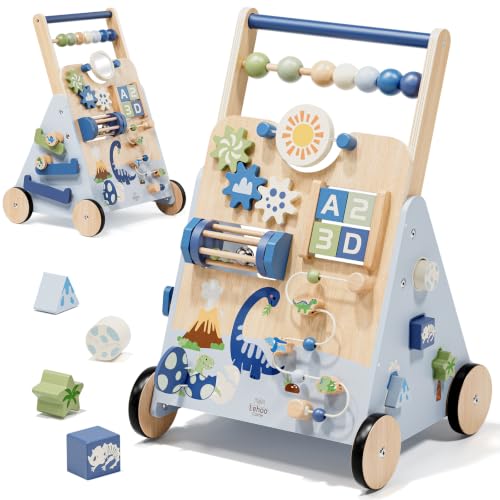
Lehoo Dinosaur Wooden Baby Walker
Best for Boys
- Baby Walker
- 10-in-1 Activity Center
- Adjustable
- FSC-certified Wood
- Rubber, Quiet
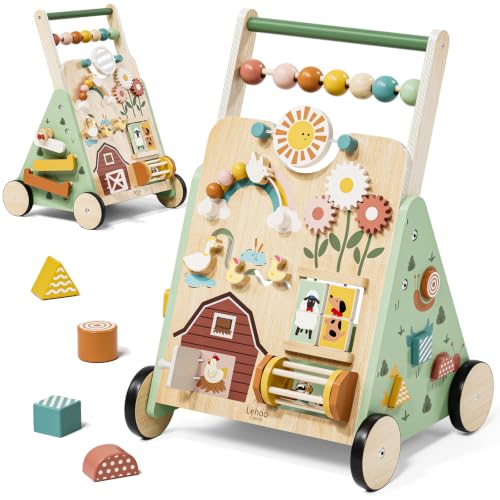
Lehoo Farm Wooden Baby Walker
Best Theme Design
- Wooden Baby Walker
- Adjustable
- FSC-certified wood
- Rubber, floor-friendly
- 10-in-1 Activity Center
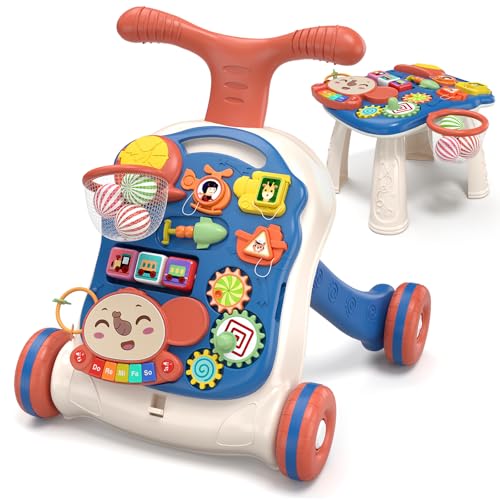
QDRAGON 3-in-1 Push Walker Blue
Best Adjustable Stability
- 3 in 1
- Detachable
- Triangle Structure
- Water/Sand Tank
- Adjustable
Best Baby Walker Review
Lehoo Dinosaur Wooden Baby Walker
ADVANTAGES
LIMITATIONS
Roar into developmental playtime with the Lehoo Castle Dinosaur Wooden Baby Walker—a smart fusion of stability support and brain-boosting engagement. This Montessori-inspired push walker doesn’t just help toddlers find their footing—it turns every wobbly step into a discovery mission with its 10-in-1 activity center, complete with spinning gears, shape blocks, and a baby-safe mirror. For parents seeking a floor-friendly, confidence-building companion for early walkers, this dinosaur-themed dynamo delivers both safety and sensory stimulation in one rugged wooden frame.
In real-world use, the walker shines during independent play sessions, where curious 1-year-olds interact with the tactile toys while building balance and coordination. The FSC-certified wood construction feels solid under toddler tugs, and the quiet rubber wheels glide smoothly across hardwood and tile without scuffing—a win for parents worried about floor marks. The adjustable speed limiter is a standout, letting caregivers slow the pace for shaky first steps, then gradually release it as skills improve. However, the rear storage bin is compact, limiting how many toys can tag along, and the dinosaur design may skew too boy-centric for some families.
Compared to the Lehoo Farm model, this dinosaur version offers the same core functionality but leans harder into gendered aesthetics, making it ideal for parents seeking a bold, adventurous theme. While the QDRAGON 3-in-1 has more modes, it lacks the natural feel and eco-friendly materials of this wooden alternative. For those prioritizing sustainable materials, developmental depth, and floor protection, the Lehoo Dinosaur Walker stands tall—offering richer sensory play and a more refined aesthetic than plastic-heavy rivals.
Lehoo Farm Wooden Baby Walker
ADVANTAGES
LIMITATIONS
Step into inclusive, farm-fresh fun with the Lehoo Castle Farm Wooden Baby Walker—a thoughtfully designed push toy that blends charm with cognitive growth. This 10-in-1 activity-packed walker features a mirror, gears, blocks, and a race track, all nestled into a gender-neutral farm theme that appeals to all toddlers. Built with FSC-certified wood and soft rubber wheels, it’s as gentle on floors as it is supportive of wobbly legs, making it a top pick for parents who want safe, sustainable, and stimulating first-walker support.
During daily use, the farm walker proves its worth as both a mobility aid and a hands-on learning station. Toddlers stay engaged longer thanks to the variety of spin, slide, and stack elements, which actively promote fine motor skills and sensory development. The adjustable speed control is a game-changer—parents can restrict movement for beginners, then unlock full mobility as confidence grows. It rolls smoothly on hard surfaces, though thick carpets can slow the wheels slightly. The rear storage rack is handy but shallow, so larger toys won’t fit, and the activity panel, while colorful, doesn’t include sound or music features found in some plastic models.
When stacked against the Dinosaur version, this farm-themed walker stands out with its universal design and broader appeal, making it a smarter choice for gender-neutral gifting or shared sibling use. It doesn’t offer the multi-mode versatility of the QDRAGON 3-in-1, but it wins on material quality and aesthetic warmth. For families who value eco-conscious toys with educational depth, this walker delivers a calmer, more natural play experience—outshining flashier plastic models with its timeless design and sturdy build.
QDRAGON 3-in-1 Push Walker Blue
ADVANTAGES
LIMITATIONS
Level up early walking with the QDRAGON 3-in-1 Push Walker—a high-energy, multi-stage learning hub that evolves with your toddler’s growth. This transformative walker shifts from sit-to-stand play table to mobile push toy to hanging activity center, offering unmatched developmental flexibility for 12- to 18-month-olds. Its water-tank weighted base and triangle support structure deliver exceptional stability, reducing tip-overs and helping toddlers build leg strength safely—perfect for parents concerned about balance and posture during early steps.
In action, the QDRAGON excels at keeping kids engaged: the detachable music panel with lights, sounds, and an elephant piano adds sensory excitement, encouraging prolonged play that sharpens hand-eye coordination and cognitive skills. The adjustable rear wheel speed lets you dial in low or standard settings, helping prevent rushed steps that could contribute to bow legs—a thoughtful touch not found in most walkers. It performs well on flat floors, though the plastic build can feel less premium compared to wooden models. The ABS material is durable and safe, but it doesn’t absorb sound, so wheels can be slightly noisier on hard surfaces.
Against the Lehoo wooden walkers, the QDRAGON trades natural materials for versatility and interactive tech, making it better suited for high-energy toddlers who crave lights, music, and changing play modes. While it lacks the eco-friendly appeal of FSC wood, its adjustable stability and 3-in-1 functionality offer broader use across developmental stages. For parents wanting a feature-rich, growth-adaptive walker that supports both sitting and walking phases, this model delivers more long-term value—outpacing simpler designs with its innovative, stability-first engineering.
How to Choose the Best Baby Walker for Your Little One
When selecting the best baby walker, it’s important to prioritize safety, developmental benefits, and long-term usability. With so many options on the market, focusing on a few key features can help you make a smart, confident choice that supports your baby’s growth and keeps them engaged.
Stability and Safety First
A walker’s stability is crucial—especially for wobbly first steps. Look for models with a wide base, low center of gravity, and anti-tip designs like trapezoidal or triangular frames. Some walkers even let you add water or sand for extra weight, improving balance. Non-slip rubber wheels prevent sliding and protect your floors, while adjustable speed settings let you control how fast your baby moves, reducing the risk of falls or developing poor walking habits like bow legs.
Adjustable for Growth Stages
The best walkers grow with your child. Opt for 2-in-1 or 3-in-1 designs that convert from a floor activity center to a pull-up support and finally a push walker. This adaptability means your baby can use it from sitting through confident walking, offering better value and longer use. Detachable activity panels also allow independent floor play, supporting early cognitive and motor development.
Developmental Play Features
A great baby walker isn’t just for walking—it’s a learning tool. Look for interactive activity panels with mirrors, gears, shape sorters, and sensory elements that encourage fine motor skills, hand-eye coordination, and problem-solving. Montessori-inspired designs using natural wood and simple, tactile materials promote focused, independent play and sensory exploration.
Material and Build Quality
Choose walkers made from solid wood (like FSC-certified) or non-toxic ABS plastic with smooth, rounded edges. These materials are durable, safe for little hands, and gentle on floors. Water-based, non-toxic finishes ensure peace of mind during daily use.
Extra Considerations
- Storage space for toys adds fun and encourages tidying
- Theme and design can make playtime more engaging (dinosaurs, unicorns, farm animals)
- Portability and storage matter for small homes
- Gift-ready packaging is a bonus for birthdays or baby showers
By focusing on stability, adaptability, and developmental value, you’ll find a baby walker that’s not just safe—but a joy to grow with.
Best Baby Walker Comparison
| Product | Best For | Key Features | Design Type | Adjustable Speed | Material | Activity Panel | Stability Features | Age Range |
|---|---|---|---|---|---|---|---|---|
| GROWNSY Wooden 3-in-1 Baby Walker | Best Overall | 3-in-1 function, removable driver-themed panel with 7 activities, Montessori-inspired, toy storage | Wooden, trapezoidal base | Yes (wheel resistance) | Natural wood, child-friendly finish | Removable with mirror, gears, beads, steering wheel | Trapezoidal base, low center of gravity, non-slip wheels | 9–36 months |
| Lehoo Dinosaur Wooden Baby Walker | Best for Boys | 10-in-1 activities, dinosaur theme, storage space, Montessori learning | Wooden, themed design | Yes (built-in control) | FSC-certified wood | Fixed with mirror, gears, blocks, race track | Wide base, non-slip rubber wheels | 6–18 months (approx.) |
| Lehoo Unicorn Wooden Baby Walker | Best for Girls | 10-in-1 activities, unicorn theme, storage space, Montessori learning | Wooden, themed design | Yes (built-in control) | FSC-certified wood | Fixed with mirror, gears, blocks, race track | Wide base, floor-safe wheels | 6–18 months (approx.) |
| Lehoo Farm Wooden Baby Walker | Best Theme Design | 10-in-1 activities, farm theme, storage rack, Montessori-inspired | Wooden, themed design | Yes (built-in control) | FSC-certified wood | Fixed with mirror, gears, blocks, race track | Stable base, smooth-gliding wheels | 6–18 months (approx.) |
| Tiny Land Wooden Montessori Walker | Best Montessori Design | 2-in-1 (floor to walker), pull-to-stand, shape sorter, soft pastel finish | Minimalist wooden, multi-stage use | Yes (speed knob + anti-tip rods) | ASTM-tested solid wood, non-toxic finish | Integrated with beads, gears, shape sorter | Wide base, anti-tip rods, low center of gravity | 6–36 months |
| QDRAGON 3-in-1 Push Walker Blue | Best Adjustable Stability | 3-in-1 modes, detachable activity table, water/sand weight system | Plastic (ABS), triangle + water tank structure | Yes (low/standard speed, anti-slip rings) | Safe ABS plastic, non-toxic | Detachable with electronic piano, shape blocks, gears | Triangle support, 4-point base, weighted chassis | 12–36 months |
| CUTE STONE 2-in-1 Baby Walker | Best Activity Panel | 2-in-1 sit-to-stand, 5 play zones, detachable panel, shock-absorbing | Plastic (ABS), triangular base | Yes (rear wheel adjustment) | Non-toxic ABS, rounded edges | Detachable with music keys, shape sorting, basketball | Wide triangular base, low center of gravity | 6–18 months |
How We Test the Best Baby Walker
Our evaluation of the best baby walker combines hands-on testing with thorough data analysis to deliver trustworthy, research-backed recommendations. We begin by reviewing safety certifications (ASTM F977, EN 1273), recall histories, and pediatric guidance on walker use and gait development.
Each model undergoes stability trials on hardwood, tile, and carpet—measuring tip resistance, wheel grip, and how the walker performs with added weight. We test adjustability across seat heights and conversion stages (activity center to push walker) to verify real-world usability from 6 to 24 months.
Developmental features are scored on interactivity, Montessori alignment, and fine-motor engagement, using insights from child development studies. Material quality is assessed for non-toxic finishes, edge smoothness, and durability through repeated use simulations.
Finally, we analyze parent reviews (filtering for verified purchases), expert opinions, and price-to-value ratios to compare top contenders objectively. This multi-layered approach ensures our picks are safe, effective, and genuinely worth your investment.
FAQs
What should I look for in the best baby walker for safety?
The best baby walker prioritizes stability with a wide base, low center of gravity, and non-slip rubber wheels. Look for models with anti-tip designs, adjustable speed settings, and safety certifications like ASTM F977 or EN 1273 to ensure your child is protected during early walking stages.
Are wooden baby walkers better than plastic ones?
Wooden baby walkers, especially those made from FSC-certified or solid wood, are often more durable and eco-friendly, offering a sturdy, long-lasting option. However, high-quality ABS plastic walkers can also be safe and lightweight, with added features like adjustable weight systems—making both materials great choices depending on your needs.
Can a baby walker help with development?
Yes, the best baby walker supports motor skills, balance, and cognitive growth. Models with interactive activity panels featuring shape sorters, mirrors, and sensory elements promote hand-eye coordination and problem-solving, turning movement into meaningful developmental play.
At what age should my baby start using a baby walker?
Most babies can start using a walker between 6 to 9 months, once they can sit independently and show interest in moving. Choose an adjustable 2-in-1 or 3-in-1 walker that transitions from a floor seat to a push walker, ensuring it grows with your child up to 36 months.
Final Thoughts
Choosing the best baby walker comes down to safety, adaptability, and developmental support. Models like the GROWNSY Wooden 3-in-1 and Tiny Land Montessori Walker stand out for their stability, growth-friendly designs, and engaging features that evolve with your child.
By prioritizing non-toxic materials, adjustable settings, and interactive play, you’re not just buying a toy—you’re investing in a tool that nurtures balance, coordination, and independent learning during those critical early months.