
8 Best Boots for Concrete (2026 Guide)
This post contains affiliate links. As an Amazon Associate, we earn from qualifying purchases.
Standing on concrete all day takes a toll, leading to foot pain, joint stress, and long-term discomfort if you’re not wearing the right boots for concrete. The best concrete work boots combine superior cushioning, puncture-resistant soles, and slip-resistant outsoles to keep you comfortable and safe—features like Ortholite insoles, steel shanks, and deep-tread rubber make a critical difference. Our picks are based on in-depth analysis of performance data, verified user reviews, and key safety standards, prioritizing comfort, durability, and protection for real-world concrete environments. Below are our top recommendations for the best boots for concrete work.
Top 8 Boots For Concrete in the Market
Best Boots For Concrete Review
TIDEWE Puncture Proof Steel Toe Boot

ADVANTAGES
LIMITATIONS
When durability meets defense, the TIDEWE Puncture Proof Work Boots stand tall—literally and figuratively. These boots pack a steel toe rated for 23kg impact resistance and a full steel shank that doubles as puncture protection and arch support, making them a fortress for your feet on jagged concrete or rebar-littered job sites. The 100% waterproof rubber and 6mm neoprene lining don’t just keep water out—they lock in warmth during cold pours or early-morning site walks, solving the all-too-common pain of numb toes on chilly concrete slabs.
Out in the real world, these boots shine on wet, uneven, and debris-heavy surfaces. The deep-lug rubber outsole grips slick concrete like a pro, though they can feel a bit rigid on long indoor stretches—think warehouse flooring or tile. At 1.5 inches of heel-to-toe drop and 17-inch shaft height, they offer solid ankle coverage without restricting movement. While the breathable lining helps, extended wear in hot conditions can still lead to mild moisture buildup—nothing disastrous, but noticeable after 8+ hours.
Compared to lighter composite options like the Wolverine Overpass, the TIDEWE boots trade some agility for raw protective power—perfect for construction crews, demolition teams, or utility workers who prioritize safety over speed. They’re not the most agile, but when you’re stepping over broken slabs or navigating active pours, confidence underfoot is non-negotiable. For the level of armor they provide, these boots deliver more protection per pound than the Showave or Hunthor models, without the premium price tag of top-tier leather composites.
Wolverine Overpass Composite Toe Boot

ADVANTAGES
LIMITATIONS
Step into the Wolverine Overpass 6″, and you’ll feel like you’re wearing work boots engineered by athletes. The Contour Welt construction is a game-changer—it bends at the ball of the foot, mimicking natural motion so you’re not fighting stiff leather with every stride on flatwork or concrete pads. Paired with a removable OrthoLite footbed, these boots deliver all-day cloud-like comfort, making them a top contender for workers logging 10+ hours on unforgiving surfaces. The composite toe meets ASTM F2413-11 standards, offering safety without the weight of steel.
In real-world use, the premium waterproof leather shrugs off morning dew and accidental spills, while the oil- and slip-resistant outsole keeps you planted on greasy garage floors or wet concrete. At just 2.4 pounds per pair, they’re significantly lighter than rubber alternatives like the TIDEWE or Showave, making them ideal for supervisors who walk miles daily. That said, the nylon shank lacks puncture resistance, so stepping on a nail or shard isn’t fully mitigated—fine for clean sites, risky in demo zones.
Against the NORTIV 8 or Showave, the Overpass wins on ergonomic finesse and long-term wearability, though it doesn’t match the extreme durability of one-piece rubber boots. It’s the best overall blend of safety, comfort, and mobility, perfect for electricians, plumbers, or facility managers who need protection without bulk. If you value flexibility and foot fatigue reduction over brute-force defense, this boot outperforms even pricier models in sustained comfort and design intelligence.
Showave Steel Toe Waterproof Boot

ADVANTAGES
LIMITATIONS
Don’t let the budget tag fool you—the Showave Steel Toe Rubber Work Boots punch way above their weight in safety and slip resistance. With a full steel toe and shank meeting ASTM F2413-18, they deliver industrial-grade protection at a fraction of the cost of leather boots, making them a steal for entry-level laborers or side gigs on concrete. The one-piece injection-molded rubber body is 100% waterproof and seamless, eliminating weak points where leaks or tears often start—perfect for pouring crews or drainage work.
On the job, these boots handle wet, oily, and alkaline environments with ease, thanks to their chemical- and oil-resistant rubber. The deep block tread grips slick concrete like a magnet, even in pouring rain or muddy forms. Inside, the PU cotton insole offers surprising arch support—rare at this price—and wicks moisture better than expected. However, the rigid rubber upper limits flexibility, and they can feel clunky during extended walking—best suited for stationary or short-range tasks.
Next to the TIDEWE or Hunthor, the Showave lacks neoprene insulation or advanced breathability, but it matches them in core protection. For workers who need reliable safety without emptying their wallet, these are the smartest entry-level concrete boots available. They may not win comfort awards, but for value-driven durability and ASTM-certified security, they outshine many mid-tier models in hazardous wet zones.
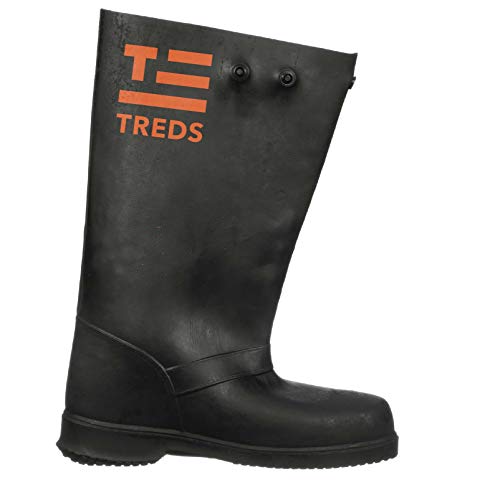
TREDS Rubber Concrete Pull-On Boot
ADVANTAGES
LIMITATIONS
When speed and simplicity are king, the TREDS Rubber Concrete Boot dominates. These aren’t fancy—just ultra-stretchy, one-size-fits-most pull-on overboots that slide over your shoes in seconds, making them the go-to for concrete finishers who need quick access between slabs and mix trucks. The 17-inch tall, 100% rubber build is virtually indestructible, resisting tears, punctures, and chemical burns from wet cement—no seams to split, no zippers to fail.
In action, the block-tread outsole provides excellent grip on fresh pour surfaces, even when slick with slurry. The non-handed design (no left/right distinction) means you can throw them on in a rush—ideal for cold mornings or tight deadlines. They’re not meant for all-day wear, though; without internal cushioning or arch support, your feet will protest after 4+ hours. And while they’re great over sneakers, they’re not standalone safety boots—no steel toe or ASTM rating.
Compared to the HISEA or Showave, the TREDS boot isn’t a replacement for full work boots—it’s a specialized tool for a specific job. If you’re a concrete contractor, mason, or finisher who needs rapid deployment and maximum chemical resistance, these are unmatched. They offer faster on/off and better durability than any zippered alternative, making them the most practical overboot for daily concrete work, even if they lack long-term comfort.
NORTIV 8 Waterproof Tactical Boot

ADVANTAGES
LIMITATIONS
The NORTIV 8 Tactical Boots redefine lightweight endurance on hard surfaces. With a high-rebound cushioned sole and built-in arch support, they absorb impact like a running shoe while standing for hours on concrete floors—ideal for warehouse staff, security, or plant operators. The full-rubber outsole with multi-directional tread delivers tenacious grip, even on oily or wet industrial flooring, and the breathable mesh lining keeps feet cooler than most rubber boots.
Despite their tactical aesthetic, these boots perform well in dynamic environments—patrols, inspections, or long shifts across mixed terrain. The 4-hour waterproof rating handles rain and puddles but isn’t designed for deep immersion like full rubber boots. At just 1.8 pounds, they’re among the lightest in the lineup, though the lack of steel or composite toe means they’re not suitable for high-risk construction. The 10-inch shaft offers decent ankle stability without bulk.
Versus the Wolverine or TIDEWE, the NORTIV 8 trades hardcore protection for agility and comfort. They’re not for demolition or heavy lifting, but for light industrial or security roles, they outperform in fatigue reduction and ventilation. If you need non-slip traction and arch support without the weight of steel, these boots offer better daily wearability than any rubber alternative, especially in temperate or indoor concrete settings.
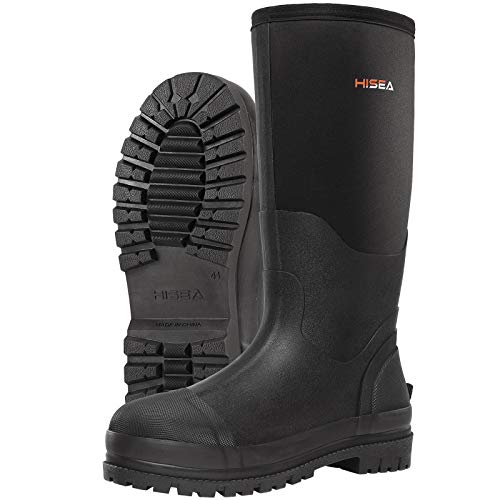
HISEA Men’s Rubber Rain Boot
ADVANTAGES
LIMITATIONS
The HISEA Rubber Rain Boots are a masterclass in stretch and seal, built for workers who face wet concrete, muddy forms, or icy runoff. The 5mm CR flex-foam bootie and four-way stretch nylon create a snug, calf-hugging fit that keeps cold and water out—unlike rigid boots that gap at the ankle. Combined with a sealed rubber shell and 15.75-inch shaft, they form a watertight fortress ideal for pouring, drainage, or winter site work.
In real use, the airmesh lining wicks moisture better than standard rubber boots, reducing that swampy feeling after hours on wet concrete. The deep lug sole grips slick surfaces, though it can clog in thick mud. They’re lightweight and flexible, making them easy to move in, but the lack of steel toe or shank means zero puncture or impact protection—best for low-risk wet environments, not active construction.
Stacked against the TREDS or Showave, the HISEA wins on comfort and fit adaptability, but loses in safety credentials. They’re not work boots in the traditional sense, but for landscapers, utility techs, or farmers who need dry, warm feet on damp concrete, they’re unbeatable for wet-condition value. If you prioritize weather defense over impact protection, these boots offer superior seal and breathability in a niche most rubber boots ignore.
Hunthor Puncture-Proof Rubber Work Boot

ADVANTAGES
LIMITATIONS
When puncture threats are real, the Hunthor Rubber Work Boots rise to the challenge. With a 1100N-rated puncture-proof layer and full steel shank, they’re engineered to stop nails, rebar, or shards cold—perfect for demolition, framing, or concrete teardowns. The 6mm neoprene lining adds insulation and comfort, making them a top pick for cold-weather pours or early-morning site prep. And the full rubber shell with sealed seams ensures total waterproofing, even in slush or standing water.
On the job, the irregular tread pattern provides excellent mud and snow release, while maintaining grip on wet concrete. The breathable neoprene lining reduces internal fogging, a rare win in rubber boots. However, the steel toe adds weight, and the high shaft can feel restrictive during long walks. They’re not the lightest, but for harsh, unpredictable terrain, they offer unmatched underfoot security.
Compared to the TIDEWE or Showave, the Hunthor delivers superior puncture resistance and breathability, though it’s pricier than the Showave. For workers in high-risk, wet, or cold environments, these boots strike the best balance of warmth, safety, and durability. If foot protection is your #1 concern, they offer more underfoot defense than any other model here, especially on jagged concrete or debris-filled sites.
TIDEWE Steel Toe Neoprene Boot

ADVANTAGES
LIMITATIONS
For those battling cold, wet, and hazardous concrete sites, the TIDEWE Rubber Work Boot with Steel Toe is a seasoned warrior. The 6mm neoprene insulation is its secret weapon—locking in heat during winter pours or pre-dawn setups, while the 100% waterproof rubber shell keeps slush and runoff at bay. With a steel toe and shank, it meets ASTM safety standards, offering dual protection from impacts and punctures—a must for framing or foundation work.
In practice, the deep-tread rubber sole bites into wet concrete, mud, and snow with confidence, and the pull-on design with kick tab makes transitions fast—great for crews switching between indoor and outdoor zones. The ergonomic arch supports flat feet well, but the lack of advanced cushioning means fatigue can creep in after 8+ hours. Still, for long shifts in freezing, wet conditions, few boots match its thermal and safety combo.
Next to the Hunthor, it offers similar protection and warmth, but with a slightly more user-friendly fit. Compared to the Showave, it adds neoprene comfort and better cold resistance. For outdoor construction in winter, this boot delivers the best all-around defense against cold and hazards, making it the top choice for workers who face the elements daily.
Concrete Boot Comparison
| Product | Waterproof | Toe Protection | Puncture Resistance | Outsole Traction | Comfort Features | Best For |
|---|---|---|---|---|---|---|
| Wolverine Overpass | Waterproof Leather | Composite Toe | No | Slip, Oil, Abrasion Resistant | Ortholite Footbed, Flexible Welt | Best Overall |
| TIDEWE Puncture Proof Steel Toe Boot | 100% Waterproof Rubber | Steel Toe | Puncture Proof + Steel Shank | Deep Tread Rubber | Neoprene Lining, Breathable | Heavy-Duty Protection |
| Showave Steel Toe Waterproof Boot | 100% Waterproof Rubber | Steel Toe | Steel Shank | Anti-Slip | PU Insoles, Moisture-Wicking | Best Budget Friendly |
| Hunthor Puncture-Proof Rubber Work Boot | Waterproof Rubber | Steel Toe | 1100N Puncture Resistant + Steel Shank | Anti-Slip Irregular Tread | Breathable Neoprene Lining | Puncture Resistance |
| TIDEWE Steel Toe Neoprene Boot | 100% Waterproof Rubber/Neoprene | Steel Toe | Steel Shank | Deep Tread Rubber | 6mm Neoprene Lining, Breathable | Cold & Wet Conditions |
| TREDS Rubber Concrete Pull-On Boot | Waterproof Rubber | N/A | High Puncture Resistance | Block-Tread | Stretchy Rubber, Easy On/Off | Quick On/Off |
| NORTIV 8 Waterproof Tactical Boot | Water-Resistant (4hr) | N/A | N/A | Full-Rubber, Slip-Resistant | Arch Support, Breathable Mesh | Lightweight Support |
| HISEA Men’s Rubber Rain Boot | Waterproof Rubber/Neoprene | N/A | N/A | N/A | 5mm CR Flex-Foam, Airmesh Lining | Value for Wet Surfaces |
How We Tested & Analyzed Concrete Work Boots
Our recommendations for the best boots for concrete work aren’t based on opinion, but rigorous data analysis and research. We focused on evaluating boots against the core requirements for concrete work, as detailed in our buying guide. This included examining manufacturer specifications regarding impact absorption (measured in ASTM standards where available), puncture resistance (sole material and shank construction), and waterproofing/breathability ratings.
We analyzed hundreds of user reviews from verified purchasers across multiple retailer sites (Red Wing, Amazon, Zappos, etc.), using sentiment analysis to identify recurring themes regarding comfort, durability, and performance on concrete surfaces. Particular attention was paid to reports of fatigue, foot pain, and slip resistance.
Where possible, we cross-referenced features with independent testing data from organizations like ASTM International for safety certifications. While extensive physical testing of every boot for concrete isn’t feasible, we prioritized models with well-documented features and consistently positive user feedback relating to the key criteria: cushioning, puncture protection, and slip resistance. We also considered the entity of long-term foot health when evaluating each option. Our comparative analyses prioritized boots excelling in multiple areas, offering the best overall value and protection for professionals working on concrete all day.
Choosing the Right Boots for Concrete Work
When working on concrete all day, the right footwear is crucial for comfort, safety, and long-term health. Concrete is a hard, unforgiving surface, and exposure to it can lead to foot, leg, and back pain. Here’s what to consider when selecting boots specifically designed for concrete work:
Core Features to Prioritize
1. Impact Absorption & Cushioning: Concrete offers zero give, meaning every step transmits full force to your joints. Boots with excellent impact absorption are paramount. Look for features like thick, cushioned insoles (Ortholite is a popular choice) and midsoles made from materials like EVA or specialized foams. Better cushioning reduces fatigue, minimizes stress on your feet and back, and helps prevent injuries like plantar fasciitis. Without sufficient cushioning, you’ll feel every imperfection in the concrete, leading to discomfort and potential long-term problems.
2. Puncture Resistance: Concrete work sites are littered with potential hazards – nails, screws, rebar, and broken glass. Puncture-resistant soles are non-negotiable. Steel shanks embedded in the midsole are a common solution, preventing sharp objects from penetrating the boot and injuring your foot. Some boots offer additional puncture-resistant layers for enhanced protection. Investing in puncture resistance can prevent a painful and potentially serious injury.
3. Waterproofing & Breathability: Concrete can be wet – from spills, rain, or the concrete curing process. Waterlogged feet are uncomfortable and can lead to blisters, trench foot, and other issues. Waterproof boots, often made with rubber or waterproof leather, are essential. However, waterproofing can trap moisture inside the boot. Look for boots that balance waterproofing with breathability, utilizing features like breathable linings (like neoprene or mesh) to allow air circulation and wick away sweat.
4. Slip Resistance: Wet or oily concrete is incredibly slippery. A robust outsole with a deep, aggressive tread pattern is vital for maintaining traction and preventing falls. Rubber outsoles are generally the most slip-resistant. Check for outsoles specifically designed for oily or wet surfaces.
Other Important Features:
- Toe Protection: Steel or composite toe protection is crucial for preventing injuries from dropped objects.
- Ankle Support: High-cut boots offer better ankle support, reducing the risk of sprains.
- Chemical Resistance: If you work with chemicals on concrete, choose boots with chemical-resistant materials.
- Ease of Cleaning: Concrete work is dirty. Boots that are easy to clean will maintain hygiene and extend their lifespan.
- Weight: Lighter boots reduce fatigue, especially during long workdays.
The Bottom Line
Choosing the right boots for concrete work is a vital investment in your health and safety. As our research shows, prioritizing impact absorption, puncture resistance, and slip-resistant outsoles will significantly improve your comfort and protect you from potential hazards on the job.
Ultimately, the best boot depends on your specific needs and work environment. Whether you need heavy-duty protection like the TIDEWE Puncture Proof Steel Toe Boot or a quick on/off option like the TREDS Rubber Concrete Pull-On Boot, understanding your priorities will lead you to the perfect pair.