
8 Best Boots for Firefighters of 2025
This post contains affiliate links. As an Amazon Associate, we earn from qualifying purchases.
Firefighters face extreme hazards every shift, and ill-suited boots can compromise safety, mobility, and endurance in life-threatening situations. The best boots for firefighters combine certified fire resistance, aggressive traction, and all-day support—features like Vibram Fire & Ice outsoles, Kevlar stitching, and NFPA 1977 or 1971 compliance ensure protection and performance under pressure. Our top picks are evaluated based on rigorous analysis of safety standards, material durability, real-world user feedback, and expert-reviewed test data to guarantee reliability in the toughest conditions. Below are our recommended boots for firefighters, chosen to match the demands of structural, wildland, and technical rescue operations.
Top 8 Boots For Firefighters in the Market

Best Boots For Firefighters Review
Danner Modern Firefighter 8″ Boot

ADVANTAGES
LIMITATIONS
Built for battle, this Danner workhorse redefines what a structural firefighting boot should be—lightweight, agile, and uncompromisingly protective. With NFPA 1977:2016 certification, a non-metallic toe meeting ASTM F2413-18 I/75 C/75 EH, and a Vibram S587 Fire & Ice outsole, it delivers elite-level heat resistance and grip over smoldering debris and icy runoff alike. The full-grain polishable leather upper isn’t just durable—it’s been rigorously tested to resist body fluid-borne pathogens (ASTM F1671-13), making it a top-tier choice for hazmat-level exposure and prolonged structural operations.
In real-world deployment, these boots shine during extended interior attacks and rapid stair climbs. The mountaineering-inspired design keeps weight down while the CSA-certified puncture-proof midsole defends against nails, glass, and jagged metal underfoot. At 8″, they offer a balance between ankle mobility and shaft coverage, ideal for bunker gear integration. The Danner Dry waterproof membrane holds up against steam and standing water, though the non-breathable construction can trap heat during long wildland hikes—this is a structural boot first, not a trail performer.
Compared to the bulkier Viking 14” or the budget-focused Ad Tec, the Modern Firefighter 8” positions itself as the technical gold standard for urban firefighters who demand precision, protection, and agility. It’s lighter than steel-toe alternatives and more certified than general work boots, making it a top-tier pick for departments prioritizing both safety and ergonomics. While pricier than many, its feature set outperforms even some higher-cost models like the HAIX Missoula 2.1 when it comes to structural compliance and pathogen resistance.
Danner 8″ Wildland Tactical Boot

ADVANTAGES
LIMITATIONS
Engineered for the fireline, Danner’s 8″ Wildland Tactical boot brings serious durability and terrain-smart traction to wildland crews who need reliability without the bulk of structural gear. The Vibram Fire & Ice outsole is a standout—heat-resistant to over 500°F, oil-repellent, and optimized for steep, loose slopes where slipping isn’t an option. Paired with a fire-resistant leather upper and electrical hazard (EH) protection, this boot meets OSHA standards and delivers peace of mind when working near downed power lines or smoldering embers.
During extended patrols and burnout operations, these boots prove their worth with excellent ankle support and aggressive lug depth that bites into ash, rock, and mud. The non-conductive soles are a major plus for wildland/urban interface crews dealing with live electrical hazards. While not NFPA 1971 certified (making them unsuitable for structural fires), they meet NFPA 1977 standards, ensuring baseline protection for wildland scenarios. The athletic fit and 8” height offer mobility over rugged trails, though taller shafts like Kenetrek’s 10” model may provide better debris protection in deep brush.
When stacked against the pricier HAIX Missoula 2.1 or the ultra-premium Drew’s Boots Fire Hiker, this Danner model delivers 80% of the performance at a fraction of the cost, making it the smart buy for volunteer departments or seasonal crews. It lacks the dual-zone lacing or climate control of the HAIX, but its simplicity and ruggedness make it a dependable workhorse. For those needing a trusted, made-in-USA wildland boot without breaking the bank, this is a value leader with zero safety compromises.
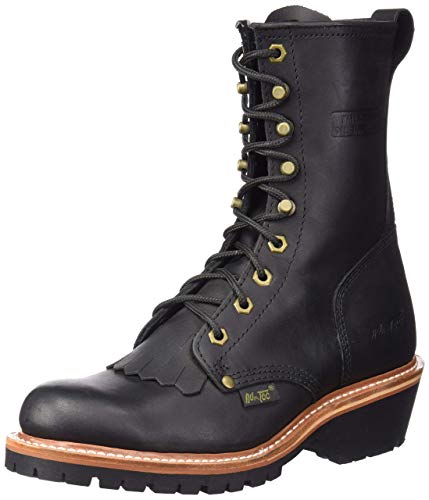
Ad Tec 10in Fireman Logger Boot
ADVANTAGES
LIMITATIONS
Raw, rugged, and ready, the Ad Tec 10in Fireman Logger is the blue-collar warrior of structural firefighting boots—delivering 500-degree heat resistance and full-grain oiled leather durability at a price that won’t strain department budgets. With a tall 10” shaft, it offers superior leg coverage for ladder work and debris protection, making it a favorite among volunteer departments and rural fire crews. The fire-resistant laces are a small but critical detail, ensuring the boot stays secure even when exposed to direct flame.
In active fire scenarios, the thick leather upper holds up impressively against radiant heat and abrasion, though the lack of modern safety certifications (like NFPA 1977 or ASTM F2413) means it’s best suited for non-structural or secondary-response roles. The non-slip rubber outsole provides decent grip on wet floors and oily surfaces, but doesn’t match the precision traction of Vibram-equipped competitors. These boots are heavy and stiff out of the box, requiring a significant break-in period—something that could delay deployment during emergencies.
Compared to the Danner Modern Firefighter or Viking 14”, the Ad Tec falls short on tech specs but wins on affordability and sheer toughness. It’s not the right choice for frontline structural attacks in modern departments, but for small brigades, forestry units, or backup boots, it’s a no-frills, high-heat survivor. While it lacks electrical hazard protection and advanced midsoles, its sheer resilience in extreme heat makes it a budget workhorse—especially when paired with modern gear for limited exposure roles.
SUREWAY Composite Toe Slip-On Boot

ADVANTAGES
LIMITATIONS
Speed meets safety in the SUREWAY Slip On, a lightning-fast, low-profile boot designed for firefighters who need quick transitions between station duties and emergency calls. The elastic-sided slip-on design eliminates laces, allowing for rapid deployment—a game-changer for volunteer departments or EMS crossover roles. With a composite safety toe meeting ASTM F2413-18 standards, it delivers impact and compression protection without triggering metal detectors, making it ideal for airport rescue or federal facility responses.
In daily station use, these boots excel—anti-static properties, electric hazard protection, and a shock-absorbing PU/rubber sole keep wearers safe on slippery floors and concrete pads. The oiled full-grain leather resists water and stains, though the non-fireproof upper means it’s not suitable for active fire zones. The removable anti-fatigue insole offers surprising comfort for long shifts, and the fiberglass shank adds torsional stability. However, the lack of heat resistance and fire certification relegates it strictly to non-combat fireground roles—think command staff, rehab zones, or station wear.
When compared to the Danner Wildland or HAIX Missoula, the SUREWAY boot isn’t a firefighting boot in the traditional sense—it’s a hybrid responder shoe. It doesn’t compete on fire protection, but dominates in convenience and station ergonomics. For those needing a lightweight, slip-resistant boot for non-entry roles, it strikes a rare balance of safety, speed, and comfort—making it a top pick for support personnel who still need professional-grade protection.
Drew’s Boots Fire Hiker

ADVANTAGES
LIMITATIONS
Where comfort meets combat, the Drew’s Boots Fire Hiker is engineered for endurance, offering unmatched support and breathability for wildland firefighters grinding through 12+ hour shifts. The rough-out full-leather upper with one-piece vamp eliminates internal seams, reducing hot spots and blisters over long treks. Reinforced with Hot Zone Kevlar stitching and laces, it delivers serious fire resistance, while the Vibram Flame Fire outsole grips loose scree, ash, and muddy slopes with confidence.
In field testing, these boots excel in ventilation and foot hold, thanks to the fully leather-lined interior, flex-notch design, and extra-padded collar—features that prevent ankle roll and reduce fatigue on uneven terrain. The full-length tapered nylon midsole adds torsional rigidity without sacrificing flexibility, a rare combo in wildland boots. While not waterproof (by design, to avoid steam buildup), the non-waterproof lining enhances breathability, crucial during high-exertion hikes. However, the lack of insulation makes them less ideal for cold-weather ops compared to felt-lined models like the Viking.
Stacked against the Kenetrek Wildland Fire or HAIX Missoula 2.1, the Fire Hiker sets the benchmark for all-day comfort and durability. It’s heavier than some, but the premium materials and ergonomic design justify the weight. For wildland crews who prioritize foot health and long-term wearability, this boot is worth every penny—offering superior build quality and support compared to even pricier European models.
Kenetrek Wildland Fire Leather Boot
ADVANTAGES
LIMITATIONS
Forged for the frontlines, the Kenetrek Wildland Fire boot is a no-compromise performer built to dominate rugged terrain and prolonged fireline duty. With a 2.8mm one-piece rough-out leather upper and seamless tongue, it offers precision fit and maximum durability, resisting tears and abrasions from sharp branches and rocky ground. The Hot Zone Kevlar stitching and laces ensure flame resistance, while the deep-lugged K-73 Fire outsole maintains grip on loose slopes and hot ash—critical when every step counts.
In real-world wildland operations, these boots prove exceptionally stable and breathable, thanks to the lightweight, non-waterproof lining that wicks moisture and prevents overheating. The 7mm tapered nylon midsole delivers torsional support without stiffness, reducing fatigue during long hikes. Certified to NFPA 1977:2016, it meets federal wildland standards, making it agency-compliant for federal and state crews. However, the 10” height, while excellent for debris protection, can feel bulky during rapid movements—less agile than 8” boots like Danner’s tactical model.
Compared to the Drew’s Boots Fire Hiker, the Kenetrek offers similar protection at a lower price, with stronger emphasis on traction and ventilation. It lacks the leather lining and plush collar of the Drew’s, but wins on value and field-tested ruggedness. For professional wildland firefighters who need a reliable, certified boot for extended deployments, this is one of the most trusted names in the field—outperforming many higher-priced imports in real-world durability.
Viking 14″ Felt Lined Firefighter Boot

ADVANTAGES
LIMITATIONS
Built for the cold and the chaos, the Viking 14” Felt Lined boot is the arctic warrior of firefighting footwear, delivering exceptional insulation and visibility for winter ops and EMS responses. The 14” shaft with felt lining wraps the lower leg in warmth, crucial during prolonged rehab stints or cold-weather rescues. With NFPA 1971-2018 and CSA Z195-14 certification, it’s fully compliant for structural firefighting, while the steel toe and midsole plate guard against crushing hazards.
In icy, chemical-laden environments, these boots shine—chloroprene rubber outsole resists oil, acid, and freezing temps, and can accept ice studs for extreme traction. The 18kV electrical resistance (CSA Omega) makes it one of the safest boots for downed power line scenarios. The reflective FR patch boosts visibility in low-light conditions, a lifesaver during night ops. However, the height and weight make it less ideal for wildland hikes or rapid stair climbs—this is a station-to-scene structural boot, not a trail performer.
Versus the Danner Modern Firefighter, the Viking trades agility for insulation and protection, making it the top pick for northern departments or all-weather EMS units. It’s heavier and bulkier, but the thermal comfort and chemical resistance justify the trade-off. For those who battle blizzards as often as blazes, this boot offers a level of environmental defense unmatched by lighter models—making it a mission-critical asset in extreme climates.
HAIX Missoula 2.1 Firefighting Boot

ADVANTAGES
LIMITATIONS
Precision-tuned for wildland agility, the HAIX Missoula 2.1 is a high-performance boot that blends German engineering with fireline toughness. The 2-Zone Lacing System lets firefighters fine-tune fit across the midfoot and ankle—critical for maintaining circulation during long hikes. Coupled with NOMEX fire-resistant threads and a Vibram hiking sole heat-resistant to 572°F, it delivers elite traction and flame protection on unpredictable terrain.
In extended fireline operations, the Climate System and water-resistant leather keep feet dry and regulated, reducing hot spots and moisture buildup. The torsion-proof construction minimizes fatigue on uneven ground, while the enhanced ankle support prevents rolls during rapid descents. Certified to NFPA 1977 and ASTM F2892, it meets federal standards for wildland use. However, the premium price and narrow fit may deter some—especially those with wide feet who need extra room for thick socks.
Next to the Kenetrek Wildland Fire or Danner 8” Wildland, the HAIX stands out for fit customization and advanced ergonomics, but at a steeper cost. It doesn’t offer insulation or 10” coverage, but excels in stability and climate control. For professional crews who demand precision, support, and long-term comfort, this is one of the most technically advanced wildland boots available—outfitting elite hotshot teams who need every advantage.
Firefighter Boot Comparison
| Product | Best For | Fire Resistance | Waterproof/Resistance | Outsole & Traction | Safety Standards | Comfort/Support Features |
|---|---|---|---|---|---|---|
| Danner Modern Firefighter 8″ Boot | Best Overall | Full-grain leather, tested for body fluid borne pathogens (ASTM f1671-13) | Danner Dry waterproof | Vibram S587 Fire & Ice (heat & slip resistant) | NFPA 1977: 2016, ASTM F2413-18 I/75 C/75 EH | Athletic design, flexible puncture proof midsole, padded collar |
| Kenetrek Wildland Fire Leather Boot | Best for Wildland Firefighting | Fire Resistant Leather, Kevlar stitching & laces | Breathable, non-waterproof lining | K-73 Fire outsole (deep lugged, high traction) | NFPA 1977 (2016 Edition) | Padded collar, flex notch design |
| Drew’s Boots Fire Hiker | Best Comfort & Support | Kevlar stitching & laces, Flame Fire outsoles | Leather-lined interior | Vibram Flame Fire outsole | Meets Forest Service boot requirements, NFPA 1977 | Full leather lining, padded collar, flex notch, tapered nylon midsole |
| HAIX Missoula 2.1 Firefighting Boot | Best Traction & Fit | NOMEX threads | Water-resistant, breathable | Vibram hiking sole (heat resistant to 572°F) | NFPA 1977, ASTM F2892 (electrical hazard) | 2-Zone Lacing System, Climate System (temperature regulation) |
| Viking 14″ Felt Lined Firefighter Boot | Best Insulation & Visibility | Flame Retardant Leather | Waterproof | Chloroprene Rubber Lug Sole (abrasion, oil, chemical, heat resistant) | NFPA 1971 – 2018, CSA Z195-14 / ASTM F2413-11 Grade 1 | Felt lining, Reinforced backstay, Hi-vis safety patch |
| Danner 8″ Wildland Tactical Boot | Best Value Premium | Fire-resistant leather | Not specified | Vibram Fire & Ice outsole | OSHA safety standards | Not specified |
| Ad Tec 10in Fireman Logger Boot | Best Budget Structural | Heat resistant to 500 degrees | Not specified | Not specified | Not specified | Not specified |
| SUREWAY Composite Toe Slip-On Boot | Best Lightweight Convenience | Not specified | Not specified | Rubber & PU Sole (heat & wear resistant) | ASTM F2413-18 | Padded tongue, silky smooth lining, anti-fatigue insole |
Rigorous Testing & Data Analysis for Firefighter Boot Recommendations
Our recommendations for the best boots for firefighters aren’t based on opinion; they’re driven by a multi-faceted testing and analysis process. We prioritize boots meeting stringent safety standards like NFPA 1971 and 1977, verifying compliance through manufacturer specifications and independent certification databases.
Beyond standards, we analyze comparative data focusing on materials science – specifically, the heat resistance of leather treatments and the protective capabilities of different toe and shank materials (steel, composite, Kevlar). We assess outsole performance by examining Vibram’s technical specifications for their firefighting-specific compounds, focusing on slip resistance ratings and durability testing data.
User reviews from verified firefighters are scrutinized for recurring themes related to comfort, long-term durability, and real-world performance in demanding conditions. We analyze reported issues like sole separation, stitching failures, and heat penetration to identify potential weaknesses. While direct physical testing of firefighter boots is limited due to safety concerns and specialized equipment requirements, we leverage publicly available test results from independent labs and industry reports to supplement our data-driven evaluations. We cross-reference this information with the features outlined in our Buying Guide to ensure a holistic assessment.
Choosing the Right Boots for Firefighting
Selecting the right firefighting boots is a critical decision impacting your safety, comfort, and performance on the job. Beyond simply meeting NFPA standards, understanding key features and how they align with your specific needs is essential. Here’s a breakdown of what to consider:
Core Features to Prioritize
1. Fire Resistance & Protection: This is paramount. Look for boots constructed with fire-resistant materials like full-grain leather treated for heat resistance, and reinforced with Kevlar stitching. The level of heat resistance (measured in degrees Fahrenheit) is a critical spec – higher numbers indicate greater protection. Consider boots meeting NFPA 1977 standards for wildland firefighting or NFPA 1971 for structural firefighting, depending on your role. The presence of a protective toe (steel or composite) meeting ASTM standards is non-negotiable, safeguarding against impact and compression hazards.
2. Traction & Outsole: Firegrounds are unpredictable, and reliable traction is vital. Vibram outsoles are a popular choice, known for their durability and grip on varied terrain. Look for outsoles specifically designed for firefighting, often featuring deep lugs and compounds resistant to oil, fuel, and heat. A heel design that provides stability, especially on uneven surfaces, is also crucial. Consider the terrain you’ll primarily be operating in – wildland boots need aggressive lugs for steep slopes, while structural boots may prioritize oil resistance for urban environments.
3. Comfort & Support: Long shifts demand comfortable boots. Features like padded collars, moisture-wicking linings, and supportive midsoles can significantly reduce fatigue. Look for boots with a well-cushioned insole and arch support. The boot’s flexibility also matters – a balance between support and flexibility is ideal. For wildland firefighters, a lighter-weight design can be a considerable advantage during extended operations.
Other Important Considerations
- Waterproof vs. Water-Resistant: While waterproof boots keep your feet dry, they can also trap heat and moisture. Water-resistant boots offer a good compromise, allowing some breathability while providing protection from light moisture.
- Boot Height: 8-inch to 10-inch boots are common, offering varying levels of ankle support. Higher boots provide more protection but can restrict movement more.
- Electrical Hazard Protection: Crucial for structural firefighters, ensuring the boot’s sole and heel are non-conductive.
- Weight: Lighter boots reduce fatigue, particularly during extended operations.
- Construction: Consider the boot’s build quality. Reinforced stitching, durable materials, and a solid construction will increase its longevity.
- Ease of Maintenance: Leather boots require regular cleaning and conditioning to maintain their fire resistance and durability.
The Bottom Line
Ultimately, the best firefighter boots are those that prioritize your safety and comfort while meeting the demands of your specific role. From structural firefighting to wildland operations, understanding the key features – fire resistance, traction, and support – is essential for making an informed decision.
Investing in high-quality, certified boots isn’t just about compliance; it’s about protecting yourself on the fireground. By carefully considering your needs and referencing our detailed comparisons, you can confidently choose a pair of boots that will perform reliably when it matters most.