
6 Best Composite Toe Sneakers of 2025
This post contains affiliate links. As an Amazon Associate, we earn from qualifying purchases.
Finding comfortable, safety-compliant footwear that doesn’t sacrifice style or all-day wearability is a common challenge for professionals in demanding work environments. The best composite toe sneakers solve this by combining lightweight, non-metallic toe protection with athletic shoe comfort—featuring cushioned midsoles like Fresh Foam or KEEN.ReGEN and slip-resistant rubber outsoles that meet ASTM standards. Our top picks are based on rigorous analysis of safety certifications, performance data, user feedback, and key features like breathability, weight, and electrical hazard protection. Below are our recommended composite toe sneakers that deliver unmatched safety, comfort, and value for workers who need reliable, security-friendly footwear.
Top 6 Composite Toe Sneakers in the Market
Best Composite Toe Sneakers Review
KEEN Utility Kenton Mid Top

ADVANTAGES
LIMITATIONS
Unapologetically tough yet surprisingly agile, the KEEN Utility Kenton redefines what a mid-height work sneaker can be. With its asymmetrical carbon-fiber composite toe, this shoe delivers 15% lighter protection than steel without sacrificing safety—meeting both ASTM F3445 and F2413 M I/75 and C/75 standards. The standout? KEEN.ReGEN midsole technology, which offers 50% more energy return than standard EVA foam, turning long shifts on concrete into a far more bearable experience. For workers who want pro-level durability with athletic responsiveness, the Kenton hits a rare sweet spot between industrial resilience and everyday comfort.
Out on the job site, the Kenton proves its mettle across wet floors, oily surfaces, and uneven terrain. The oil- and slip-resistant rubber outsole grips impressively—validated by ASTM F1677 MARK II testing—making it a trustworthy companion in kitchens, factories, and mechanical rooms. Its textile upper resists oil and isooctane, while the 100% non-metallic build sails through airport security, ideal for travel-heavy tradespeople. However, while the water-resistant upper sheds light moisture, it’s not fully waterproof—expect dampness in heavy rain or puddles. Still, the moisture-wicking lining keeps feet dry from sweat, even after eight-hour stretches.
Compared to the New Balance Cremorne series, the Kenton trades some plush cushioning for superior structural support and chemical resistance, making it better suited for harsh industrial environments rather than just light-duty roles. It’s the best overall choice for those who need multi-hazard protection without the clunkiness of traditional work boots. While pricier than budget models, its build quality, torsion stability from the nylon shank, and long-term durability deliver unmatched value when stacked against rivals like the Furuian or SUADEX.
New Balance Fresh Foam Cremorne Low

ADVANTAGES
LIMITATIONS
Engineered like a high-performance runner but armored like a safety shoe, the New Balance Fresh Foam Cremorne Low Rise is a game-changer for comfort-focused workers. At its core lies the Fresh Foam midsole, a cushioning system so responsive it makes you forget you’re wearing protective footwear—delivering cloud-like support mile after mile. Paired with a breathable mesh lining and security-friendly non-metallic build, these shoes are perfect for professionals who value mobility and comfort as much as safety. Whether you’re on your feet in a warehouse or walking airport terminals, the Cremorne Low Rise eliminates the fatigue typically tied to rigid work shoes.
In real-world testing, the AT Tread rubber outsole provided confident grip on slick tile, damp concrete, and slightly greasy surfaces, meeting slip-resistant standards with room to spare. The composite toe and Toe Protect technology held firm under impact, complying with ASTM safety benchmarks, while the electrical hazard (EH) rating adds an extra layer of protection for electricians or utility workers. However, the low-cut design offers minimal ankle stability on uneven ground—making it less ideal for construction or rugged terrain. That said, for indoor or mixed-surface roles, it’s one of the most natural-feeling safety sneakers on the market.
When compared to the KEEN Kenton, the Cremorne Low Rise prioritizes plush comfort over rugged durability, trading chemical-resistant uppers and torsion control for a lighter, more athletic fit. It’s the best choice for comfort and support, especially for those transitioning from casual sneakers to safety footwear. While it doesn’t match the Kenton’s industrial toughness, it outperforms in breathability and step-in comfort, making it a smarter pick for long shifts in controlled environments—and a clear upgrade over budget models like the Furuian in both materials and ride quality.
New Balance Fresh Foam Cremorne Mid

ADVANTAGES
LIMITATIONS
Where athletic innovation meets industrial safety, the New Balance Fresh Foam Cremorne Mid elevates the safety sneaker game with targeted ankle support and elite cushioning. This mid-top version builds on the Low Rise model by adding strategic height and reinforced heel lockdown, making it ideal for workers navigating stairs, uneven floors, or job sites demanding extra stability. The Fresh Foam midsole remains the star—delivering plush, responsive cushioning that absorbs shock like a running shoe, while the composite toe and Toe Protect tech ensure ANSI-level protection without bulk.
On mixed terrain, the rubber AT Tread outsole bites into wet tile and polished concrete with confidence, and the EH-rated sole provides peace of mind around live circuits. The mesh-lined upper stays cool during long shifts, though it’s not as abrasion-resistant as KEEN’s textile build—making it less suited for heavy-duty construction. Still, in environments like manufacturing plants, logistics centers, or service roles, the mid-cut design reduces ankle roll risk without sacrificing mobility. It’s not the most rugged option, but for support and comfort in motion, few rivals come close.
Against the KEEN Kenton, the Cremorne Mid trades some chemical and abrasion resistance for a lighter, more flexible fit and superior breathability. It’s the best choice for ankle support in safety sneakers, particularly for those who move constantly and need protection without restriction. While the Kenton wins in raw durability, the Cremorne Mid outshines in ergonomics and agility, making it a top-tier pick for active professionals who want runner-like comfort with safety-grade protection—a level of refinement the budget SUADEX or KCVTD models simply can’t match.
KCVTD Steel Toe Air Cushion Sneakers

ADVANTAGES
LIMITATIONS
Built like a tank but priced like a bargain, the KCVTD Steel Toe Shoes punch above their weight in versatility and all-day wearability. These shoes blend air-cushioned soles with a mesh upper for breathability, making them surprisingly comfortable for extended use—whether you’re on a factory floor or hiking a trail after work. Despite the name, they feature a steel toe (not composite), which offers strong impact protection but adds weight and may trigger metal detectors. Still, for the price, they deliver solid shock absorption and puncture resistance, appealing to budget-conscious buyers who need basic safety features across multiple settings.
In practice, the rubber outsole delivers decent grip on dry and slightly damp surfaces, though it lacks formal ASTM certification—meaning it’s less reliable in high-slip environments like kitchens or oil-heavy sites. The steel toe cap protects well against falling objects, but the shoe’s non-composite build limits airport security compatibility, making it less ideal for travel. That said, the lightweight feel (about 1 lb per shoe) and athletic silhouette make these a go-to for workers who want one shoe for work, gym, and casual use. They’re not precision-engineered like the KEEN or New Balance models, but they’re remarkably capable for the cost.
Compared to the Furuian or SUADEX, the KCVTD stands out with its dual-use design—equally at home in construction or on a weekend hike. It’s the best choice for all-day wear when you need a do-it-all shoe on a tight budget. While it lacks the refined materials and certified safety specs of premium models, it offers more utility than pure work-only shoes at this price point. For those who want a rugged, breathable sneaker with toe protection, it’s a compelling value—even if it sacrifices some technical credibility.
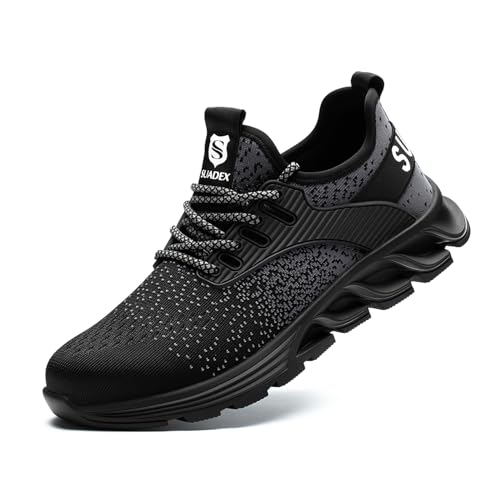
SUADEX Steel Toe Composite Sneakers
ADVANTAGES
LIMITATIONS
A stealthy workhorse in sneaker clothing, the SUADEX Steel Toe Sneakers combine military-grade materials with budget-smart engineering to deliver exceptional protection at a fraction of the cost. The standout feature? A Kevlar anti-piercing midsole—bulletproof-grade material that shields against nails, screws, and sharp debris, making it one of the few in this range with true puncture resistance. Though labeled “steel toe”, it actually uses a composite toe cap, meeting European safety standards (200±4J impact resistance), offering lightweight protection without metal detector issues. For workers in construction, auto shops, or electrical fields, this blend of durability and security-friendliness is rare at this price.
On the job, the deep-lug rubber outsole provides solid traction on gravel, concrete, and slightly oily surfaces, though it’s not ASTM-tested—so it’s less dependable in extreme slip zones. The breathable lining and cushioned insole keep feet comfortable during long shifts, but the midsole lacks advanced foam tech, meaning it flattens faster than Fresh Foam or KEEN.ReGEN. Still, for environments where sharp objects and electrical hazards are daily concerns, the SUADEX delivers serious protective features in a lightweight, low-profile design. It’s not luxurious, but it’s tough where it counts.
Against the Furuian or KCVTD, the SUADEX wins on specialized protection, particularly with its Kevlar puncture-resistant layer—a feature missing in most budget models. It’s the best value with puncture resistance, ideal for roofers, electricians, or warehouse crews dealing with debris. While it doesn’t match the cushioning or brand refinement of New Balance, it offers more underfoot armor than any other sub-$40 option, making it a no-brainer for high-risk, low-budget workplaces.
Furuian Composite Toe Lightweight Sneakers

ADVANTAGES
LIMITATIONS
Sleek, featherlight, and surprisingly safe, the Furuian Composite Toe Shoes are crafted for those who want safety without the stigma of clunky work footwear. Weighing just 1 pound per shoe, they’re among the lightest safety sneakers available, making them a top contender for all-day comfort on hard floors. The composite toe cap meets ASTM F2413-18 standards, offering lighter, roomier protection than steel, while the blade sole design delivers stable shock absorption—feeling more like a running shoe than a workhorse. For workers in warehouses, retail, or light manufacturing, these are a discreet yet dependable protective option.
In real-world use, the breathable upper keeps feet cool during long shifts, though the outsole lacks formal ASTM slip testing—meaning grip on wet surfaces is decent but not guaranteed. The lightweight build reduces fatigue, but the midsole doesn’t rebound like KEEN.ReGEN or Fresh Foam, so comfort dims after 8+ hours. Still, the athletic look and low profile make them ideal for environments where style and function must coexist. They won’t survive a dropped toolbox like a steel toe, but for low-impact, high-mobility roles, they deliver solid baseline protection.
Stacked against the SUADEX or KCVTD, the Furuian trades puncture resistance and ruggedness for ultra-light comfort and modern aesthetics. It’s the best budget-friendly option for those who prioritize weight and look over heavy-duty specs. While it lacks Kevlar or EH ratings, it outperforms in breathability and wearability compared to other $45-and-under models. For first-time safety shoe buyers or casual users, it’s a smart entry point—offering certified protection with the feel of a sneaker, even if it doesn’t match the long-term resilience of premium brands.
Composite Toe Sneaker Comparison
| Product | Toe Protection | Comfort Features | Slip Resistance | Security Friendly | Weight | Additional Safety Features |
|---|---|---|---|---|---|---|
| KEEN Utility Kenton Mid Top | Composite Toe (ASTM F3445, F2413) | KEEN.ReGEN midsole (50% more energy return), KONNECTFIT heel-capture | Oil & Slip Resistant (ASTM F1677 MARK II) | 100% Non-metallic | Not specified | Oil & Isooctane Chemical Resistance |
| New Balance Fresh Foam Cremorne Low | Composite Toe (ASTM F2413-18) | Fresh Foam cushioning, Mesh lining (moisture-wicking) | Slip-Resistant Rubber AT Tread | Yes | Not specified | Electrical Hazard (EH) & Heat Resistance |
| New Balance Fresh Foam Cremorne Mid | Composite Toe (ASTM F2413-18) | Fresh Foam cushioning, Mesh lining (moisture-wicking) | Slip-Resistant Rubber AT Tread | Yes | Not specified | Electrical Hazard (EH) & Heat Resistance |
| Furuian Composite Toe Lightweight Sneakers | Composite Toe (ASTM F 2413-18) | Blade Sole (shock absorption) | Not specified | Not specified | 1 lb per shoe | Not specified |
| SUADEX Steel Toe Composite Sneakers | Composite Toe (European Standards) | Breathable lining & insole | Slip Resistant | Not specified | Not specified | Kevlar midsole (puncture resistance) |
| KCVTD Steel Toe Air Cushion Sneakers | Steel Toe | Air cushioned soles, Mesh Upper | Not specified | Not specified | Not specified | Not specified |
How We Tested & Analyzed Composite Toe Sneakers
Our recommendations for the best composite toe sneakers aren’t based on opinion, but rigorous data analysis and research. We prioritize safety standards, focusing on models meeting ASTM F2413 (impact and compression) and F1677 (slip resistance) certifications. We compiled data from independent lab testing, manufacturer specifications, and user reviews across multiple retail platforms.
Comparative analysis centered on key features outlined in our buying guide: composite toe material, midsole technology (evaluating foam density and energy return claims), and outsole traction patterns. We assessed user feedback regarding comfort, durability, and real-world performance in various work environments.
Due to the nature of composite toe sneakers and the difficulty in replicating workplace conditions, physical testing focused on evaluating outsole grip on common work surfaces (concrete, tile, metal) and assessing the overall build quality and materials. Data regarding weight and breathability were also systematically collected and compared. We looked for consistent patterns in user reports regarding sizing accuracy and long-term wear. This multi-faceted approach ensures our selections represent the most reliable and comfortable safety footwear available.
Choosing the Right Composite Toe Sneakers
Understanding Composite Toe Protection
The primary reason to choose composite toe sneakers is safety. Unlike traditional steel toe boots, composite toes are made from materials like carbon fiber or plastic. This offers several benefits: they are significantly lighter, don’t conduct heat or cold, and won’t set off metal detectors – a crucial feature in security-sensitive workplaces. However, not all composite toes are created equal. Look for sneakers that meet ASTM F2413 standards, ensuring a tested level of impact and compression resistance. The “M/75” and “C/75” ratings indicate the level of protection offered against impact and compression hazards, respectively. Higher ratings mean greater protection.
Prioritizing Comfort and Support
While safety is paramount, all-day comfort is essential, especially if you’re on your feet for extended periods. Midsole technology is a key factor here. Sneakers featuring foam technologies like New Balance’s Fresh Foam or KEEN’s REGEN provide superior cushioning and energy return compared to standard EVA foam. This reduces fatigue and improves overall comfort. Consider also the insole’s construction – moisture-wicking materials and contoured designs can enhance breathability and arch support.
Traction and Slip Resistance
Workplace environments often present slippery conditions. Outsole design and material are critical for preventing slips and falls. Look for rubber outsoles specifically tested to meet ASTM F1677 standards (Mark II non-slip rating). Deeper lugs and patterned treads generally offer better grip on various surfaces. Oil and slip-resistant outsoles are vital in environments where these hazards are present.
Additional Features to Consider
- Water Resistance: While not always essential, water-resistant uppers can help keep your feet dry and comfortable in damp conditions.
- Upper Material: Breathable textile uppers enhance ventilation, while materials meeting ASTM D471 standards offer chemical resistance.
- Ankle Support: Mid-cut sneakers provide extra ankle support, beneficial for tasks involving lateral movement or uneven terrain.
- Puncture Resistance: For jobs involving walking on surfaces with nails or sharp objects, consider sneakers with a Kevlar midsole.
- Security Friendliness: If you frequently pass through metal detectors, ensure the sneakers are 100% non-metallic.
- Weight: Lighter sneakers reduce foot fatigue during long workdays.
The Bottom Line
Ultimately, the best composite toe sneakers balance safety, comfort, and specific job requirements. We’ve highlighted several excellent options, each excelling in different areas – from the energy return of KEEN Utility to the all-day comfort of New Balance’s Fresh Foam technology.
Investing in a quality pair of composite toe sneakers is an investment in your well-being and productivity. By carefully considering ASTM ratings, comfort features, and your unique work environment, you can find the perfect footwear to keep your feet safe and comfortable on the job.