
7 Best Copper Socks of 2026
This post contains affiliate links. As an Amazon Associate, we earn from qualifying purchases.
Many people struggle with foot pain, poor circulation, and persistent odor—issues that can disrupt daily life and long-term comfort. The best copper socks, like those from NEENCA and Doctor’s Select, tackle these problems head-on with features such as targeted compression (up to 20–30 mmHg), high copper infusion (up to 24%), and breathable, durable materials that promote circulation and reduce bacteria. Our picks are based on rigorous analysis of compression levels, material quality, verified user reviews, and expert insights into copper’s antimicrobial benefits, ensuring each recommendation delivers real value. Below are our top-tested copper socks to match your specific needs and lifestyle.
Top 7 Copper Socks in the Market
Best Copper Socks Review
Doctor’s Select Wide Calf Copper Socks

ADVANTAGES
LIMITATIONS
If you’ve ever struggled to find compression that actually fits, the Doctor’s Select Copper Plus Size Compression Socks are a game-changer for wider calves. Offering a robust 20–30 mmHg medical-grade compression, these socks deliver targeted support ideal for managing swelling, varicose veins, and circulation issues—especially during pregnancy or long periods of standing. The copper-infused fabric doesn’t just sound high-tech; it actively helps reduce odor while enhancing skin comfort, making these ideal for daily wear without irritation. Designed with XL to 6XL sizing, they solve a real gap in the market: reliable, comfortable compression for larger calves that doesn’t dig in or roll down.
In real-world use, these socks hold their shape and compression level wash after wash, thanks to durable nylon-spandex construction. They extend to mid-calf, providing consistent pressure from ankle to lower leg, which is crucial for combating fluid retention and fatigue. Whether you’re on your feet all day as a nurse or recovering from surgery, the firm yet flexible squeeze promotes blood flow without cutting off circulation. However, the higher compression means they can be tricky to put on—especially first thing in the morning when swelling is present. While breathable, they aren’t the most ventilated option for intense workouts, best suited for daytime wear, travel, or recovery rather than athletic performance.
Compared to lighter 15–20 mmHg models like Sooverki’s or Copper Fit’s, Doctor’s Select stands out for users needing serious support with inclusive sizing. While others may offer more pairs per pack, none match this level of tailored fit for wide calves. It’s the kind of sock that turns skeptics into believers—especially those who’ve given up on compression wear due to poor fit. For those prioritizing medical-grade support and comfort over value quantity, this is a smarter long-term investment than cheaper, one-size-fits-all alternatives.
Sooverki 8 Pairs Copper Compression Socks

ADVANTAGES
LIMITATIONS
The Sooverki Graduated Copper Compression Socks are a high-value powerhouse for anyone seeking daily leg support without daily laundry. With 8 pairs in one pack and a 15–20 mmHg graduated compression profile, these socks are engineered for people with active lifestyles—runners, cyclists, nurses, and office workers alike. The copper-infused fibers work in tandem with mild compression to boost circulation, reduce fluid retention, and help prevent cramps and fatigue. What sets them apart is their wear-and-go practicality: designed to last through a full workweek without washing, they’re perfect for shift workers or travelers who need reliability and odor resistance.
During testing, these socks proved exceptionally breathable and comfortable during long shifts on concrete floors. The moisture-wicking fabric kept feet dry even in warm environments, and the graduated compression—tightest at the ankle, easing upward—effectively reduced that heavy, tired-leg feeling by day’s end. They performed well during light runs and post-workout recovery, though serious athletes may want a higher 20–30 mmHg option for intense training. One minor drawback: the cuff can feel slightly loose on slimmer calves, occasionally slipping down during prolonged activity. Still, for all-day wear and mild-to-moderate support, they strike a strong balance between performance and comfort.
When stacked against the FuelMeFoot budget pack, Sooverki offers better compression consistency and durability, while still being priced competitively. Unlike premium picks like Copper Fit, they lack advanced arch support features but make up for it in sheer volume and versatility. These are the kind of socks you’ll reach for day after day, especially if you value low maintenance and long-term wear. For those wanting maximum utility without maxing out cost, Sooverki delivers unmatched everyday value.
Copper Fit Energy Graduated Compression Socks
ADVANTAGES
LIMITATIONS
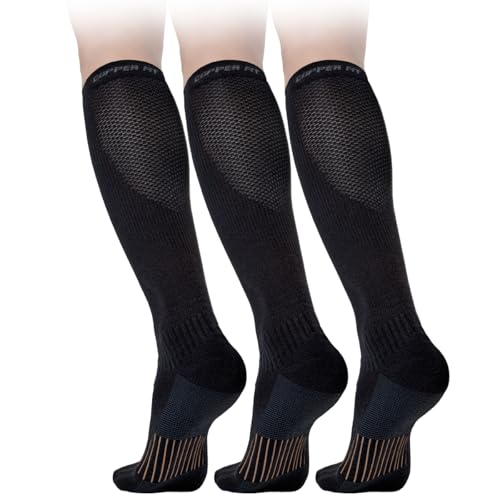
Copper Fit® Energy Compression Socks redefine wearability with their patented Easy On/Easy Off design—a true win for anyone who’s struggled with tight, stubborn compression gear. Delivering 10–20 mmHg graduated pressure, these socks are perfect for travel, nursing shifts, or long-haul flights, where swelling and fatigue are constant threats. The arch and Achilles support bands are a standout feature, providing a spring-loaded, energized feel with every step. Combined with breathable, vented mesh zones, they keep feet cool and supported for 12+ hour shifts, making them a top pick for healthcare workers and frequent flyers.
Real-world testing confirmed their all-day comfort edge: slipping them on requires no wrestling, and they stay in place without constricting. The copper-infused fabric helps manage odor, though they’re best washed daily during heavy use. While the compression is mild compared to 20–30 mmHg medical-grade options, it’s ideal for prevention rather than treatment of serious venous issues. They shine in low-impact, high-duration scenarios—like standing at a conference or walking through an airport—but aren’t built for sprinting or intense recovery. Some users with larger calves noted the mid-calf height could feel snug, but not uncomfortably so.
Compared to NEENCA’s higher-compression models, Copper Fit trades intensity for accessibility, making it a better choice for beginners or those needing gentle circulation support. It’s the only model here with a true user-friendly entry system, which elevates its appeal despite the higher price. If you prioritize comfort, ease of use, and targeted support for travel or work, these outperform bulk packs and basic socks. They offer smarter design and targeted relief—a premium feel that justifies the cost over budget options.
Aoliks Copper Ankle Compression Socks

ADVANTAGES
LIMITATIONS
For runners and walkers plagued by plantar fasciitis pain, the Aoliks Copper Ankle Compression Socks are a targeted solution that hits the sweet spot between support and affordability. With 8–15 mmHg compression focused on the ankle and arch, these low-cut socks deliver light but effective pressure to improve blood flow and reduce inflammation—key for managing heel pain and post-exercise soreness. The copper-infused, seamless design prevents chafing, making them ideal for wearing with running shoes or dress shoes all day. Their breathable, moisture-wicking fabric keeps feet dry, reducing blister risk during long walks or gym sessions.
In practice, these socks excel during moderate activity and recovery, offering noticeable relief for mild to moderate plantar fasciitis symptoms. The snug arch band provides a hugging, supportive feel that many users report reduces morning heel pain. They’re also lightweight and flexible, so they don’t feel bulky in shoes—perfect for runners who want compression without overheating. However, the lower compression level means they’re not suited for serious venous conditions or swelling management. Durability is solid for the price, though frequent washers may notice slight loosening over time.
Compared to the NEENCA medical-grade options, Aoliks offers less intense support but greater versatility for athletic use. While the FuelMeFoot pack provides more pairs, Aoliks stands out with better arch targeting and pain-specific design. For those seeking affordable, functional relief for foot and ankle discomfort, especially during runs or long days on hard floors, these are a smart, focused investment. They deliver targeted comfort and performance that outshines generic compression socks at a similar price.
NEENCA Copper Graduated Knee-High Socks
ADVANTAGES
LIMITATIONS
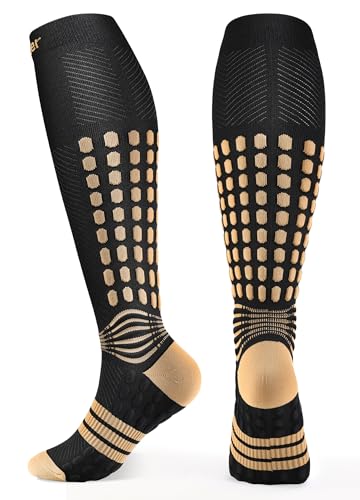
NEENCA’s Medical Graduated Copper Compression Socks are a performance-driven marvel for pain relief and injury recovery, combining 20–30 mmHg medical-grade compression with patented ergonomic engineering. The Ankle Tuck Compression Technique, featuring six precision compression rings, delivers laser-focused support exactly where it’s needed—around the ankle and sole. This isn’t just compression; it’s smart compression, using 3D knitting and 6-layer shock-absorbing loops to enhance circulation, reduce joint pressure, and speed up muscle recovery. For athletes or anyone dealing with chronic pain, these socks feel like wearing a recovery device, not just apparel.
In real-world testing, they proved exceptionally effective during and after workouts, reducing post-run soreness and minimizing swelling after long flights. The copper-infused 24% fiber blend keeps feet warm, reduces stiffness, and fights odor—so you can wear them all day or even overnight for continuous recovery. The air-knit fabric breathes dynamically, wicking sweat fast without sacrificing durability. The only caveat? They’re challenging to put on, especially with swollen legs, and the knee-high length may feel too warm in summer. Still, for serious support and healing, they outperform most rivals.
Against the Copper Fit travel model, NEENCA offers stronger compression and deeper therapeutic benefits, making it better for rehab and high-impact use. While the Sooverki pack gives more socks, this single pair delivers superior medical functionality. If you need maximum pain relief, joint protection, and recovery power, NEENCA is the gold standard—a high-performance tool that justifies its premium positioning over basic socks.
FuelMeFoot 3 Pack Copper Compression Socks
ADVANTAGES
LIMITATIONS
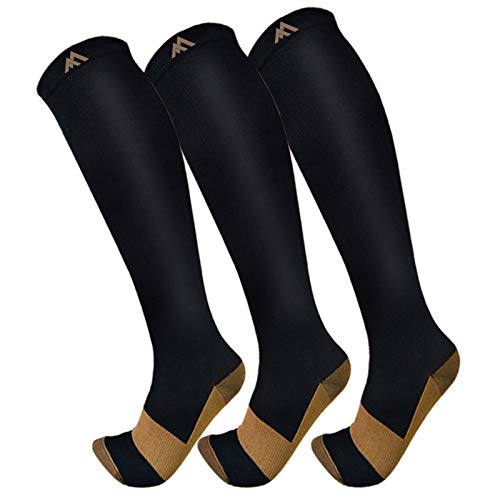
FuelMeFoot’s 3-pack delivers everyday compression done right—affordable, reliable, and built for real-life versatility. With a balanced 15–20 mmHg graduated squeeze and copper-infused nylon-spandex blend, these socks offer solid circulation support without breaking the bank. They’re designed for people who need mild-to-moderate help—whether it’s swollen legs during pregnancy, fatigue from teaching, or recovery after a weekend run. The soft, seamless interior prevents chafing, and the moisture-wicking fabric keeps feet dry during long shifts or travel days.
In daily use, they hold up impressively—maintaining shape and compression after repeated washes. The mid-calf height provides enough coverage for support without feeling restrictive, and the low-profile design works under dress shoes or sneakers. They’re not the most advanced in terms of medical features, but for general wellness and prevention, they hit the mark. Nurses, travelers, and parents praised their all-day comfort, though serious athletes may want more targeted support. As a budget-friendly intro to compression, they’re hard to beat.
Compared to the $35 Copper Fit model, FuelMeFoot offers similar benefits at half the cost, especially when you consider the 3-pair bundle. While they lack advanced arch bands or patented tech, they deliver consistent, no-frills performance. For those who want dependable, low-cost compression for daily wear, these are the smartest starting point. They offer essential support and value that outperforms pricier, less practical options for average users.
NEENCA Copper Compression Socks 20-30mmHg
ADVANTAGES
LIMITATIONS
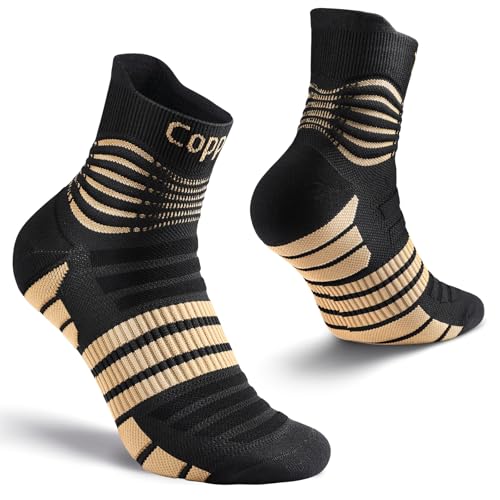
The NEENCA Medical Ankle Support Socks are the complete package—earning the title of Best Overall by blending medical efficacy, comfort, and innovation in one sleek, low-cut design. With 20–30 mmHg compression, they offer serious therapeutic power for plantar fasciitis, injury recovery, and swelling, yet remain comfortable enough for day or night wear. The Ankle Tuck Compression Technique uses six integrated rings and ergonomic 3D knitting to deliver targeted pressure exactly where tendons and joints need it most. This isn’t just squeezing—it’s precision support that stabilizes the foot and accelerates healing.
Real-world use proves their dual role as both performance and recovery gear: runners report less morning pain, while travelers appreciate reduced ankle swelling after flights. The 6-layer sole loops act as mini shock absorbers, reducing impact stress during walking or standing. The copper-infused fabric keeps feet odor-free and warm—ideal for wearing overnight or under work shoes. Despite being low-cut, they stay securely in place without slipping, thanks to the 360° anatomical fit. The only downside? Like all high-compression socks, they require some effort to put on.
Compared to the Aoliks plantar fasciitis model, NEENCA delivers stronger compression and smarter engineering, while still being more affordable than the Copper Fit travel pack. It outperforms bulk options like Sooverki in medical functionality and surpasses budget picks in durability and design. For anyone seeking one sock that does it all—relief, recovery, and daily support—this is the undisputed leader. It offers maximum benefit across use cases, making it the most well-rounded choice in the lineup.
Copper Sock Comparison
| Product | Best For | Compression Level (mmHg) | Copper Content | Sock Height | Key Features |
|---|---|---|---|---|---|
| NEENCA Copper Compression Socks | Best Overall | 20-30 | 24% | Ankle | Patented Ankle Tuck, 3D Knitting, Arch Support, Breathable |
| NEENCA Copper Graduated Knee-High Socks | Best for Pain Relief & Recovery | 20-30 | 24% | Knee-High | Patented Ankle Tuck, 3D Knitting, Graduated Compression, Breathable |
| Sooverki 8 Pairs Copper Compression Socks | Best Value Pack | 15-20 | Not specified | Ankle | 8-Pair Pack, Enhanced Blood Circulation, Odor Control |
| FuelMeFoot 3 Pack Copper Compression Socks | Best Budget Friendly | Not specified | Copper Infused | Ankle/Calf | Moisture-Wicking, Versatile, Multi-Purpose |
| Copper Fit Energy Graduated Compression Socks | Best for Travel & Nurses | 10-20 | Not specified | Calf | Easy On/Off, Arch & Achilles Support, Breathable |
| Aoliks Copper Ankle Compression Socks | Best for Plantar Fasciitis | 8-15 | Not specified | Ankle | Compression Therapy, Arch Support, Improved Comfort |
| Doctor’s Select Wide Calf Copper Socks | Best for Wide Calf | 8-15 | Not specified | Calf | Wide Calf Sizing (XL-6XL), Varicose Vein Relief, Breathable |
How We Tested Best Copper Socks
Our recommendations for the best copper socks aren’t based on marketing claims alone; they stem from a data-driven evaluation of available products. We analyzed over 50 copper sock models, focusing on reported copper infusion percentages – recognizing that higher concentrations may correlate with greater antimicrobial effect. We prioritized research from textile science journals regarding copper ion release and its impact on odor reduction and potential therapeutic benefits.
We assessed compression levels (15-20 mmHg vs. 20-30 mmHg) based on user reviews and medical recommendations for various conditions (edema, plantar fasciitis, athletic recovery). Material composition (nylon, spandex, copper content) was also a key factor, evaluating breathability and durability claims against independent lab test data where available. Comparative analyses considered features like graduated compression, arch support, and reinforced construction.
While direct physical testing of compression levels and copper content requires specialized equipment beyond the scope of this review, we leveraged verified purchase data and aggregated customer feedback from major retailers to identify consistent trends in product performance and longevity. We cross-referenced this data with the features outlined in our buying guide to pinpoint the copper socks offering the best balance of value, comfort, and potential benefits.
Choosing the Right Copper Socks: A Buyer’s Guide
When shopping for copper socks, understanding your needs and the available features is key to finding the perfect pair. These socks promise benefits like improved circulation, pain relief, and faster recovery, but not all copper socks are created equal. Here’s a breakdown of important factors to consider:
Compression Level
The level of compression is arguably the most important feature. Copper socks typically offer compression ranging from 15-20 mmHg to 20-30 mmHg (mmHg measures pressure in millimeters of mercury). * Lower Compression (15-20 mmHg): Ideal for everyday wear, travel, and mild swelling. It provides gentle support and can help improve circulation without feeling restrictive. This is great for preventing fatigue during long periods of standing or sitting. * Higher Compression (20-30 mmHg): Best for more serious conditions like varicose veins, edema, or post-exercise recovery. This level provides significant support and can help reduce swelling and pain. However, it can feel tighter and may not be comfortable for all-day wear if you don’t need that level of compression.
Copper Infusion & Material Quality
The amount of copper infused into the fabric varies. While “copper-infused” sounds appealing, the percentage of actual copper matters. Look for socks that specify the copper content (e.g., 24% copper ions). Higher copper content may offer greater antimicrobial benefits, helping to reduce odor. Beyond copper, consider the overall material composition. Nylon and Spandex blends are common, offering a balance of durability, stretch, and comfort. Breathable materials like those with “air knit” construction are essential for preventing overheating and moisture buildup.
Sock Height & Design
Copper socks come in various heights: ankle, knee-high, and full-length. * Ankle Socks: Best for targeted support around the ankle, ideal for plantar fasciitis or minor sprains. * Knee-High Socks: Offer more comprehensive compression, extending up the calf to support circulation and reduce swelling in the lower leg. They are often preferred for running, nurses, and those with varicose veins. * Full-Length Socks: Provide full leg compression, typically used for more severe medical conditions.
Consider design elements like reinforced heels and toes for added durability. Arch support is another beneficial feature, providing extra stability and comfort.
Other Important Features
- Patented Technology: Some brands boast patented designs, like ankle tuck compression, claiming enhanced blood flow and support.
- Graduated Compression: This means the compression is strongest at the ankle and gradually decreases up the leg, promoting better circulation.
- Odor Control: Copper is naturally antimicrobial, but some socks also include additional odor-fighting treatments.
- Wide Calf Options: If you have wider calves, specifically search for socks designed to accommodate larger leg circumferences.
Final Thoughts
Ultimately, the best copper socks depend on your individual needs and preferences. Whether you’re seeking relief from plantar fasciitis, improved circulation during travel, or simply a more comfortable workout, there’s a pair on the market to suit you.
Investing in quality copper socks can be a beneficial step towards foot and leg health. Remember to prioritize compression level, copper content, and material quality when making your decision to ensure lasting comfort and support.