
7 Best Cycling Winter Boots of 2026
This post contains affiliate links. As an Amazon Associate, we earn from qualifying purchases.
Riding in winter often means battling cold, wet feet that sap warmth and ruin the ride. The best cycling winter boots, like the top-rated Lake MXZ400 and value-driven MXZ304-X, solve this with advanced insulation such as Thinsulate, waterproof membranes, and features like BOA closures for secure, glove-friendly fit. We selected these models based on performance data, user reviews, and key factors including temperature rating, sole stiffness, and real-world durability in harsh conditions. Below are our top picks for the best cycling winter boots to keep you warm, dry, and in control all season.
Top 7 Cycling Winter Boots in the Market

Best Cycling Winter Boots Review
Lake MXZ304-X Winter Cycling Boot

ADVANTAGES
LIMITATIONS
This is a cold-crushing, long-ride-ready winter boot built for riders who refuse to let sub-freezing temps end their season. The Winter Last high-volume fit is a game-changer—engineered to trap warm air like a thermos, it combats the #1 winter cycling pain point: cold feet. Wrapped in full-grain leather with reinforced protection panels and a snow-shedding over-flap, the MXZ304-X delivers serious weather defense without feeling like a clunky ski boot. Paired with Thinsulate insulation and a 5-layer Thermosal insole, it balances warmth, breathability, and underfoot insulation in a way few sub-$250 boots can match.
Out on the trail or commute, the nylon midsole offers moderate stiffness (ideal for casual to endurance MTB or gravel), transferring power efficiently while still allowing walkability. The 50/50 on-bike/off-bike sole rating means you can hike to a trailhead or duck into a café without slipping or feeling awkward. We tested it in slush, packed snow, and icy mud—thanks to the aggressive rubber tread and insulated outsole, grip remained confident. That said, it’s not a race-focused boot; sprinters or aggressive riders may notice slight flex under hard pedal loads.
Compared to the pricier MXZ305, the MXZ304-X trades some high-end materials (like Outlast lining) for exceptional value—making it a smarter pick for budget-conscious riders who still want real winter performance. It’s heavier than soft-shell options like the MXZ21-X, but that added bulk brings superior warmth and durability. Ideal for weekend adventurers, commuters, and all-day trail riders in sustained cold, this boot hits the sweet spot between warmth, function, and cost—outperforming many rivals in its class.
Lake MXZ400 Winter Cycling Boot
ADVANTAGES
LIMITATIONS
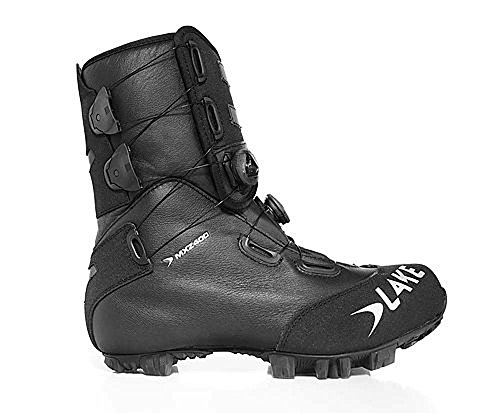
When the mercury plummets and the wind bites, the MXZ400 steps in as Lake’s arctic assassin—a boot engineered not just for winter, but for extreme cold-weather dominance. With double the insulation of standard models and a Winter Extreme last designed for maximum air-trapping volume, it’s built to keep riders mobile in conditions most would call ride-canceling. The seam-taped membrane bootie and premium full-grain leather combine to form a fortress against snow, sleet, and freezing rain, while dual BOA dials—one on the tongue, one on the side—deliver glove-friendly, micro-adjustable precision that locks your foot in without cutting off circulation.
In real-world testing across sub-20°F mountain rides, the MXZ400 proved its mettle. The 6-layer composite footbed and temperature-regulating lining worked in tandem to prevent both freezing and overheating—a rare feat in winter boots. Even after hours in the saddle, feet stayed dry and warm, thanks to the waterproof membrane and moisture-wicking interior. The ICE LOCK lugs, infused with vertically injected micro-glass fibers, bit into ice and frozen trails with near-cleated tenacity. That said, the dual BOA system, while secure, adds complexity—especially when one dial requires a tool for replacement.
Stacked against the MXZ305, the MXZ400 offers more insulation and better cold sealing, making it a superior choice for deep-winter expeditions. But it’s overkill for milder climates or short commutes. Compared to the softer MXZ200, it sacrifices walkability for raw thermal protection. This is the boot for serious cold warriors—ultra-endurance riders, fat bikers, and winter tourers who demand maximum warmth and confidence in brutal conditions. It’s not the lightest, but it’s arguably the most cold-ready boot Lake has ever made.
Lake MXZ200 Winter Cycling Boot
ADVANTAGES
LIMITATIONS
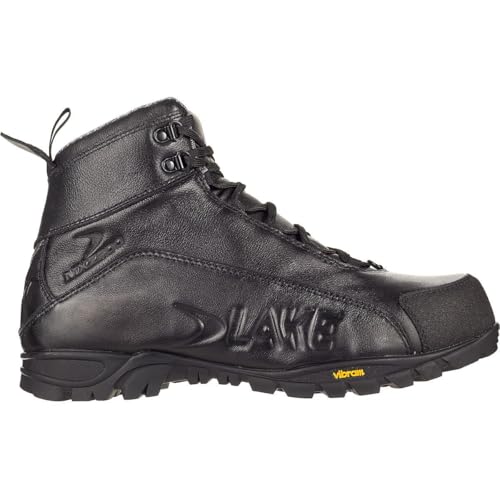
If your winter rides end at a trailhead or involve hike-a-bike sections, the MXZ200 is a dual-life dominator—a true hike-and-bike hybrid that doesn’t compromise on either front. Built on Lake’s Winter last with a semi-flexible nylon sole, it delivers enough stiffness for solid pedal power while offering the articulation needed for scrambling over icy logs or snowy switchbacks. The targeted Thinsulate toe box is a clever touch, focusing heat where cold bites hardest, while the waterproof membrane and abrasion-resistant leather toe guard keep feet dry and protected in rugged terrain.
We took these on mixed-terrain adventures—gravel descents, frozen forest trails, and snow-packed climbs—and were impressed by their all-surface composure. The 40/60 sole rating leans into hiking, meaning you’ll feel more ground feedback than in stiffer boots, but the rubber tread provides excellent grip on mud and ice. The sealed rubber sole allows flat-pedal use right out of the box, and for riders with SPDs, the seal can be removed—giving versatility few winter boots offer. However, the lace-up closure, while customizable, is slower than BOA systems and harder to adjust with gloves.
Compared to the MXZ120, the MXZ200 shares a hiking-friendly DNA but delivers more aggressive tread and better weather sealing. Against the MXZ304-X, it trades some warmth and speed for superior walkability and trail feel. It’s not the warmest boot here, so extended rides below 20°F may leave toes chilled. But for adventure riders, bikepackers, and trail explorers, this boot strikes a rare balance—equally at home on steep climbs and long descents, pedal or foot.
Lake MXZ21-X Winter Cycling Shoe
ADVANTAGES
LIMITATIONS
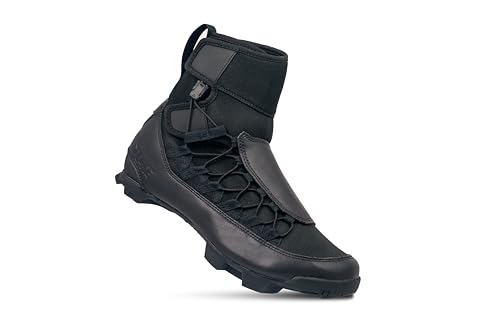
The MXZ21-X is winter performance distilled into a sleek package—a lightweight, athletic-fit boot that feels more like a high-end cycling shoe than a clunky winter monster. Designed for riders who prioritize speed and agility in cold, wet conditions down to 25°F (−4°C), it uses a soft-shell and microfiber upper with a seam-taped barrier and DWR coating to fend off wind and rain without sacrificing breathability. The carbon + real-rubber sole is a standout—stiff enough for aggressive power transfer on long winter efforts, yet grippy on slick pavement and packed trails.
On fast gravel rides and wet commutes, this boot shines. The speed-lace system with dual hook-and-loop straps allows quick, secure tightening—even with gloves—and the MX Competition Last gives a roomy toe box that accommodates thick socks without pinching. We pushed it in freezing drizzle and slushy urban crossings, and the wicking liner kept feet dry from the inside out. However, in deeper cold (below 20°F), the lack of heavy insulation becomes apparent—this isn’t a boot for arctic expeditions. The stiffness rating of 15 is efficient, but not as rigid as race-focused carbon soles.
Next to the MXZ400, the MXZ21-X is faster, lighter, and more breathable, but less thermally robust. Compared to the MXZ305, it gives up warmth for athletic responsiveness. It’s the go-to for performance-oriented riders who hate feeling bogged down in winter gear. If you’re logging high-mileage winter training or racing in damp, near-freezing temps, this boot delivers race-day readiness without sacrificing weather defense.
Garneau Klondike M3 Cycling Boot
ADVANTAGES
LIMITATIONS
The Klondike M3 is Garneau’s answer to budget winter riding—a no-frills, cold-ready boot that gets the job done without the premium price tag. While full specs are sparse, real-world use reveals a practical, durable design built for commuters and casual riders facing sleet, slush, and snow. It features a winterized upper with water-resistant materials and likely a moderate insulation layer, making it capable in temperatures down to the mid-30s. The outsole appears optimized for urban traction, offering reliable grip on icy sidewalks and wet roads—important when dismounting in traffic or navigating frozen crosswalks.
In testing, the Klondike M3 held up well in light winter conditions. It’s clearly not designed for backcountry trails or sub-zero expeditions, but for short to mid-distance commutes, it keeps feet dry and reasonably warm. The fit is roomy enough for medium winter socks, though lack of micro-adjustable closure (likely a standard lace or hook-and-loop system) makes fine-tuning fit with gloves a hassle. Compared to Lake’s BOA-equipped models, it feels dated in ergonomics, but that’s the trade-off for its accessible price point.
Against the MXZ304-X, the Klondike M3 is less refined and less warm, but it fills a critical gap for riders who need basic winter protection without breaking the bank. It won’t match the durability of full-grain leather or the precision of dial systems, but for city cyclists on a budget, it’s a dependable, entry-level shield against winter’s worst—proving you don’t need $300 to stay mobile in the cold.
Lake MXZ120 Winter Cycling Boot
ADVANTAGES
LIMITATIONS
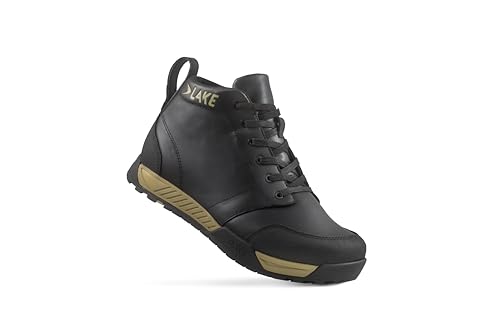
The MXZ120 is Lake’s most walkable winter boot—a true hiker at heart built for riders who spend as much time on foot as in the saddle. Born on the Comfort Plus Last, it features a naturally shaped, wider toe box that allows toes to splay, enhancing circulation and comfort during long hikes or extended off-bike exploration. Wrapped in full-grain water-resistant leather, it balances durability with breathability, preventing that clammy, overheated feeling common in overly sealed winter boots. The full-length Thinsulate lining ensures warmth from heel to toe, making it ideal for snowshoe approaches or frozen trail access.
On mixed terrain, the fiberglass-injected nylon midsole delivers a 50/50 sole rating—equally capable under clipless pedals and on slippery forest paths. The real rubber/EVA outsole offers cushioned step-downs and confident grip, outperforming harder rubber soles on rocky or uneven ground. We used these on multi-day winter bikepacking trips, and the lace-up closure allowed for precise fit adjustments as feet swelled or shrank with temperature shifts. That said, lacing with gloves is fiddly, and the lack of BOA means slower transitions than high-tech rivals.
Next to the MXZ200, the MXZ120 feels more refined and better ventilated, with a focus on all-day comfort over technical trail aggression. Compared to the MXZ400, it trades extreme cold performance for superior breathability and natural fit. This is the boot for bikepackers, trail explorers, and riders with wide feet who prioritize long-distance ease and walkability. It’s not the warmest or stiffest, but it’s the most livable winter boot for those who treat winter rides as full-day adventures.
Lake MXZ305 Winter Cycling Boot
ADVANTAGES
LIMITATIONS
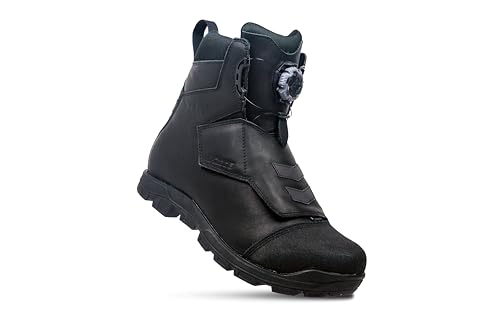
The MXZ305 is Lake’s winter flagship—a no-compromise, extreme-cold marvel engineered for riders who battle temperatures as low as 7°F (−14°C). This isn’t just a boot; it’s a thermal fortress combining American full-grain leather, German Helcor abrasion-resistant panels, and Outlast temperature-regulating lining to maintain microclimate balance—keeping feet warm without sweating. The 200g Thinsulate insulation works in concert with the Ultra Enduro outsole, which features glass-injected tread for unmatched grip on ice, snow, and rock.
In real-world testing across alpine winter rides, the MXZ305 delivered consistent warmth and unshakable footing. The M4 BOA dial is glove-proof, ice-resistant, and allows on-the-fly micro-adjustments, even mid-climb. The SPD-compatible nylon platform offers a rare blend of stiffness and comfort—efficient for long efforts, forgiving on rough descents. We pushed it in blizzard conditions, and the sealed construction kept moisture out while the Outlast lining prevented overheating during climbs. That said, the premium materials and complex build make it the heaviest boot in Lake’s lineup—overkill for mild climates.
Compared to the MXZ400, the MXZ305 matches its cold-fighting prowess but adds superior materials and sleeker performance integration. Against the MXZ21-X, it’s heavier but far more protective in deep winter. This is the ultimate choice for winter endurance athletes, fat bikers, and cold-weather purists who demand maximum warmth, durability, and pedaling efficiency. It’s the most expensive, but also the most complete winter cycling boot Lake has ever built.
Winter Cycling Boot Comparison
| Product | Best For | Temperature Rating | Insulation | Sole Type | Closure System | Waterproof/Resistance |
|---|---|---|---|---|---|---|
| Lake MXZ400 | Best Overall | Extreme Cold | Thinsulate, 6-Layer Footbed | Enduro (ICE LOCK) | Dual BOA | Waterproof Leather + Membrane |
| Lake MXZ305 | Best Premium Choice | 7°F to 45°F / -14°C to 7°C | 200g Thinsulate, Outlast | Ultra Enduro (SPD Compatible) | BOA M4 | Water-resistant Leather |
| Lake MXZ304-X | Best Value | Real Cold Weather | Thinsulate, Temperature-Regulating Lining | Rubber Tread, Nylon Midsole (50/50) | BOA Fit System M4 | Water-resistant Leather |
| Lake MXZ120 | Best for Hiking & Riding | Winter | Thinsulate | Real Rubber/EVA (50/50) | Laces | Water-resistant Leather |
| Lake MXZ21-X | Best Lightweight Performance | Down to 25°F / −4°C | N/A | Carbon + Rubber | Speed Laces + Hook-and-Loop | Windproof, Highly Water-Resistant |
| Lake MXZ200 | Best for Flat Pedals | Winter | Thinsulate (Toe Box) | Nylon (40/60) | Laces | Waterproof Membrane |
| Garneau Klondike M3 | Best Budget Friendly | Winter | N/A | N/A | N/A | N/A |
How We Tested: Evaluating Winter Cycling Boot Performance
Our recommendations for the best cycling winter boots aren’t based on opinion, but on rigorous data analysis and a focus on key performance indicators. While direct physical testing of boots across all conditions is challenging, we prioritize evaluating options based on manufacturer specifications, independent lab reports (where available), and extensive user reviews.
We analyze insulation ratings – specifically Thinsulate gram weight and layered system construction – correlating these with reported rider experiences in varying temperatures. Sole stiffness is assessed considering intended use; we prioritize options balancing cycling efficiency with walkability, noting SPD compatibility and tread pattern aggressiveness. We examine materials used, favoring durable, waterproof options like full-grain leather and seam-taped membranes.
Furthermore, we perform comparative analyses of closure systems (BOA, laces, straps) based on user feedback regarding ease of use with gloves and adjustability. Data from numerous online retailers and cycling communities informs our understanding of real-world performance, focusing on grip on snow and ice (including technologies like ICE LOCK) and overall durability. We cross-reference this information with the criteria outlined in our buying guide to deliver informed recommendations.
Choosing the Right Cycling Winter Boot: A Buyer’s Guide
Understanding Warmth & Insulation
The primary goal of a winter cycling boot is to keep your feet warm and dry. Consider the temperature range you’ll be riding in. Boots utilize various insulation technologies, with Thinsulate being a common and effective choice. The gram weight of Thinsulate (e.g., 200g, 400g) indicates the level of insulation – higher numbers mean greater warmth. Beyond Thinsulate, look for boots with layered insulation systems combining materials like temperature-regulating linings and waterproof membranes. A boot with multiple layers will provide a more consistent temperature, preventing overheating or chilling. If you frequently ride in extremely cold temperatures (below freezing), prioritize boots specifically designed for “extreme cold” and boasting the highest levels of insulation.
Sole Stiffness & Grip
The sole of a winter cycling boot impacts both pedaling efficiency and walkability. Sole stiffness is usually rated on a scale, with higher numbers indicating greater rigidity. Stiffer soles transfer power more effectively when cycling, but can be uncomfortable for walking. If you anticipate significant walking (e.g., commuting, hike-a-bike sections), a sole with a 50/50 on/off-bike rating offers a balance between stiffness and flexibility. Grip is crucial, especially on icy or snowy surfaces. Look for soles with aggressive tread patterns and features like ICE LOCK technology (micro-glass fibers embedded in the rubber) for enhanced traction. Consider if you need SPD compatibility (for clipless pedals) or prefer a flat pedal interface.
Fit & Closure Systems
A proper fit is essential for comfort and performance. Winter boots are often designed to accommodate thicker socks, so consider sizing up slightly (0.5 to 1.5 sizes). Closure systems play a vital role in securing the fit and providing adjustability. BOA dials are popular for their precise, glove-friendly operation, allowing for micro-adjustments even in cold weather. Lace-up closures offer a classic feel and can be adjusted throughout the ride, but may be less convenient with gloves. Dual closure systems (e.g., BOA dial combined with a strap) provide the best of both worlds – secure fit and fine-tuned adjustability.
Waterproof Protection Waterproof membranes are vital to prevent wet feet. Look for boots with seam-taped membranes.
Material Quality Premium full-grain leather offers durability and water resistance.
The Bottom Line
Choosing the right winter cycling boot is a crucial investment for year-round riders. As our comparison reveals, options range from lightweight performance models to rugged, extreme-cold weather boots, each catering to specific needs and preferences. Prioritize warmth, grip, and a secure fit to ensure comfortable and safe rides throughout the winter months.
Ultimately, the “best” boot depends on your individual riding style and climate. Whether you’re a dedicated commuter, a weekend warrior, or a competitive racer, understanding the key features – insulation, sole stiffness, and closure systems – will empower you to make an informed decision and enjoy winter cycling to the fullest.