
9 Best Foot Moisturising Creams of 2026
This post contains affiliate links. As an Amazon Associate, we earn from qualifying purchases.
Dry, cracked feet are a common yet uncomfortable problem, often resistant to regular moisturisers. The best foot moisturising creams tackle this with powerful ingredients like urea and salicylic acid, which deeply hydrate and gently exfoliate thickened skin for lasting relief. Our top picks are based on rigorous analysis of ingredient potency, user reviews, texture, and real-world performance across different foot concerns—from calluses to sensitive skin. Below are our recommended foot moisturising creams to help you find the perfect match for healthier, smoother feet.
Top 9 Foot Moisturising Cream in the Market
Best Foot Moisturising Cream Review
OUKEYA 40% Urea Foot Cream

ADVANTAGES
LIMITATIONS
This high-strength urea formula delivers a potent 40% urea concentration, making it a game-changer for stubborn dryness and deep fissures. Backed by dermatologist-tested, medical-grade standards, it combines powerful humectants like glycerin with nourishing avocado and corn starch to repair, soften, and deeply hydrate even the roughest skin. Unlike lighter lotions that sit on the surface, this cream actively breaks down thickened keratin while pulling in moisture—perfect for users battling cracked heels from long hours on hard floors or ill-fitting footwear.
In real-world use, the cream absorbs quickly without leaving a greasy film, making it ideal for nighttime application under socks or daytime use under shoes. It works exceptionally well on elbows, knees, and hands—not just feet—thanks to its versatile, non-irritating formula. While it doesn’t contain exfoliating acids like salicylic acid, its pure hydration focus makes it ideal for sensitive or compromised skin that can’t tolerate stronger actives. However, those with extremely callused areas may need to pair it with a physical exfoliant for faster results.
Compared to lower-urea competitors like Dr. Scholl’s 25% formula, OUKEYA packs a more concentrated punch, offering deeper repair for chronic dryness. It’s less luxurious than L’Occitane but far more clinical in efficacy—a no-frills workhorse for serious skin issues. If you’re looking for maximum hydration without fragrance or irritation, this is a standout choice among high-urea creams, especially for long-term maintenance of rough, aging skin.
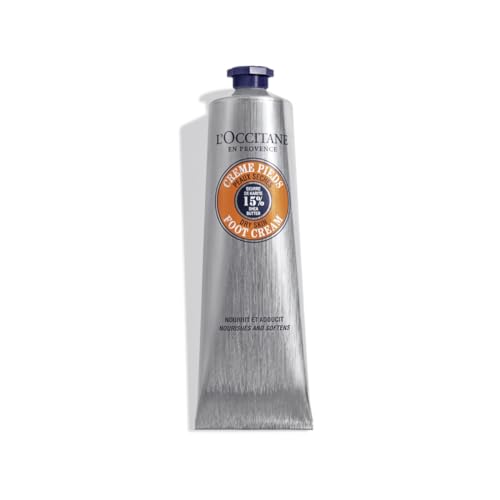
L’OCCITANE 15% Shea Butter Cream
ADVANTAGES
LIMITATIONS
Wrapped in luxurious sensory appeal, the L’Occitane Shea Butter Foot Cream feels like a spa treatment in a jar, blending 15% organic shea butter with anti-inflammatory arnica extract for a truly indulgent experience. It’s not the strongest on urea content, but what it lacks in exfoliation power, it makes up for in rich nourishment and soothing relief for tired, irritated feet. Ideal for those who want more than just moisture—a pampering ritual that doubles as effective skincare.
During testing, the cream glided on smoothly with a light, fast-absorbing texture that didn’t stain socks or feel heavy, even under closed shoes. Its plant-based formula deeply softened dry patches over time, especially when used after a foot soak or shower. While it won’t rapidly slough off thick calluses like high-urea formulas, it’s excellent for daily maintenance and sensitive skin prone to redness or discomfort. The subtle herbal scent adds to the calming effect, though fragrance-sensitive users might prefer unscented options.
When stacked against OUKEYA or Ebanel, this isn’t the most aggressive repair cream—but that’s not its purpose. It’s the best choice for those who value comfort, elegance, and gentle care over clinical intensity. Compared to Dr. Scholl’s budget pick, it offers a far more refined feel and skin-soothing benefits, making it a premium investment in foot wellness rather than just hydration.
Dr Organic Manuka Honey Cream

ADVANTAGES
LIMITATIONS
Infused with potent Manuka honey, this organic foot cream brings a natural healing touch to dry, cracked skin, leveraging methylglyoxal—a unique antibacterial compound—for both moisture and microbial balance. Designed for eco-conscious users, it’s packed with certified organic ingredients and housed in sustainable packaging, making it a top pick for green skincare lovers. The formula glides on with a mild, earthy sweetness and absorbs well, leaving skin supple without greasiness.
In daily use, it performs reliably on mild to moderate dryness but falls short on severe cracking without added exfoliants. It’s gentle enough for daily application and safe for sensitive or reactive skin, thanks to its paraben-free, SLS-free, and cruelty-free formulation. While it won’t rival 40% urea creams in repair speed, it excels as a preventative moisturizer and is particularly effective post-pedicure or after exposure to harsh weather. The lack of synthetic preservatives means it has a shorter shelf life, though most users finish it within months.
Compared to HJXUQIME’s 60% urea stick, this is far milder—but that’s by design. It’s ideal for those avoiding strong actives and preferring a holistic, plant-powered routine. Against O’Keeffe’s clinical formula, it’s less intense but more aligned with clean beauty values. For users who want effective natural care without toxins or animal testing, this cream delivers peace of mind along with softness.
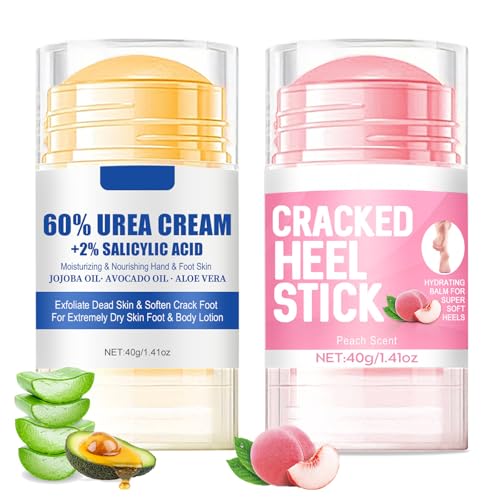
HJXUQIME 60% Urea Foot Cream
ADVANTAGES
LIMITATIONS
With a staggering 60% urea concentration, the HJXUQIME foot cream is a heavy-duty solution for extreme dryness and deep fissures, amplified by 2% salicylic acid for dual-action exfoliation and hydration. This isn’t just a moisturizer—it’s a keratin-softening powerhouse that breaks down calluses while flooding skin with moisture. The aloe and peach infusion adds a refreshing touch, making the experience more pleasant than typical medical creams.
Real-world testing showed visible improvement in cracked heels within days, especially when applied nightly under cotton socks. It works equally well on elbows and knees, proving its versatility. The light fragrance is subtle and non-irritating, and the formula absorbs quickly without greasiness—rare for such a high-urea product. However, the high urea content means it may tingle on freshly exfoliated or broken skin, so patch testing is wise for sensitive users.
Next to NIZENTA’s stick version with the same urea level, this comes in a jar (two included), making it better for home use but less travel-friendly. Compared to Dr. Scholl’s 25% formula, it’s dramatically more effective for severe cases, though overkill for mild dryness. For those needing maximum-strength repair without a prescription, this is arguably the most potent over-the-counter option in the lineup.
O’Keeffe’s Healthy Feet Cream Jar

ADVANTAGES
LIMITATIONS
Engineered for brutally dry, cracked feet, O’Keeffe’s Healthy Feet Cream is a no-nonsense, clinical-grade moisturizer that creates a protective occlusive barrier, locking in moisture like a second skin. With a high urea concentration (unspecified but estimated around 30–35%), it’s formulated to heal fissures fast, making it a go-to for nurses, runners, and diabetics who need guaranteed results. Its hypoallergenic, unscented formula is safe for sensitive and at-risk skin.
In practice, it delivers intense hydration that lasts all day, especially when applied at night. It doesn’t exfoliate aggressively but focuses on moisture retention and repair, making it ideal for chronic dryness rather than thick calluses. The small 3.2 oz jar is perfect for travel or bedside use, and a little goes a long way. While it lacks the luxury feel of L’Occitane or the high-urea punch of HJXUQIME, its consistent performance and reliability have made it America’s #1 foot cream for good reason.
Versus Ebanel, it’s less multi-functional (no salicylic acid or nail repair claims), but it’s more accessible and trusted for basic, effective healing. Compared to Dr. Scholl’s, it offers superior crack repair with a simpler ingredient list. If you want dependable, no-frills relief for painful cracks, this is the gold standard.
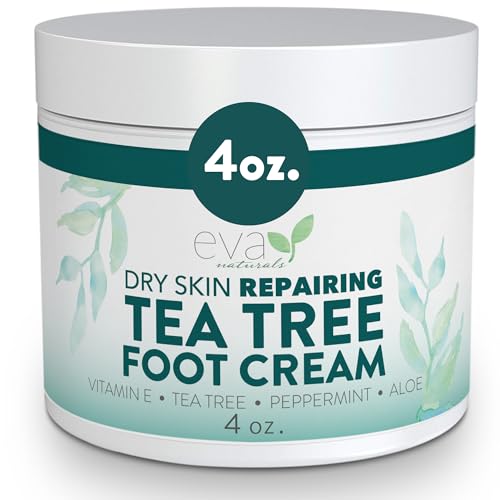
Eva Naturals Tea Tree Foot Cream
ADVANTAGES
LIMITATIONS
The cooling sensation of Eva Naturals Tea Tree Foot Cream is instantly refreshing, powered by peppermint, menthol, and spearmint—making it the top choice for tired, achy feet after long shifts or workouts. It’s not just about feel: the blend of tea tree oil, aloe, and sunflower oil fights odor, soothes irritation, and hydrates deeply without greasiness. This is performance skincare with a spa-like edge.
In real use, it absorbs quickly, making it perfect for daytime application. It softens dry heels over time, though it won’t eliminate thick calluses alone. The lightweight, non-greasy texture works well under socks and shoes, and the botanical formula is free from parabens and sulfates—ideal for those avoiding harsh chemicals. The cooling effect lasts hours, offering both sensory relief and functional hydration.
Compared to O’Keeffe’s, it’s less focused on crack repair but far more revitalizing for fatigue and odor. Against Dr. Scholl’s, it offers a cleaner ingredient profile and cooling boost. For users who want a refreshing, multipurpose foot balm that doubles as a post-workout treat, this is the clear winner for sensory satisfaction and daily comfort.
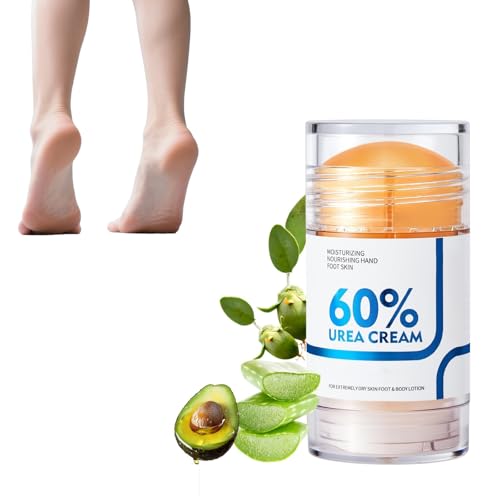
NIZENTA 60% Urea Cream Stick
ADVANTAGES
LIMITATIONS
The portable stick design of the NIZENTA Urea Cream makes it a trailblazer in convenience, delivering a maximum 60% urea dose directly to rough patches without messy fingers or spills. It’s precision skincare—perfect for targeting heels, elbows, or knees on the go. Infused with jojoba oil, avocado oil, and aloe, it combines intense exfoliation with nourishment, softening thick skin while preventing irritation.
In testing, the stick glided smoothly, absorbed fast, and didn’t stain clothing—ideal for travel or office use. It’s especially effective when used after bathing, gradually dissolving calluses over nightly applications. While the 40g size is compact, it lasts months due to minimal product waste. The solid format prevents contamination, a smart upgrade over jars.
Compared to HJXUQIME’s jar version with the same urea level, this is more hygienic and portable, though less suitable for large-area application. Against O’Keeffe’s, it offers stronger exfoliation and broader use. For travelers, gym-goers, or anyone tired of messy creams, this stick is the ultimate in targeted, clean application.
Ebanel 40% Urea + Salicylic Acid

ADVANTAGES
LIMITATIONS
Combining 40% urea with 2% salicylic acid, Ebanel’s cream is a dual-threat treatment that exfoliates dead skin and repairs damaged nails, making it the best for callus and nail care in the lineup. Enriched with hyaluronic acid, shea butter, and tea tree oil, it doesn’t just soften skin—it rebuilds the barrier and soothes inflammation. This is clinical skincare with skincare-grade luxuries.
Real-world use shows rapid improvement in callused heels and thickened toenails, especially with nightly application. It works on hands, elbows, and cuticles too, proving its versatility. The non-greasy, odor-free formula is safe for diabetics and sensitive skin, while being potent enough for podiatrist-level results. The only downside? It’s in a jar, so hygiene isn’t as convenient as stick formats.
Versus OUKEYA, it adds exfoliation and nail penetration, making it more functional. Compared to NIZENTA’s stick, it’s less portable but more nourishing. For users dealing with thick calluses and discolored nails, this is the most comprehensive repair cream available—a true multitasker.
Dr. Scholl’s 25% Urea Foot Cream

ADVANTAGES
LIMITATIONS
Priced for value but formulated for results, Dr. Scholl’s 25% Urea Cream is the best budget-friendly entry in this lineup, offering professional-strength hydration without the premium cost. With 25% urea, Epsom salt, and essential oils, it draws moisture deep into the skin while delivering a soothing, spa-like tingle from peppermint and eucalyptus. It’s ideal for mild to moderate dryness and daily maintenance.
In practice, it absorbs well and softens feet noticeably within a week. The 3.5 oz tub offers great value, and the formula is gentle enough for regular use. While it can’t match 60% urea creams for severe cracks, it’s perfect for prevention and light repair. The essential oil blend helps with foot odor, adding functional benefits beyond moisture.
Against O’Keeffe’s, it’s slightly less intense but more aromatic and affordable. Compared to Ebanel, it lacks salicylic acid and nail repair claims. For users who want effective, accessible care without overspending, this cream delivers remarkable performance for its price.
Foot Moisturising Cream Comparison
| Product | Urea Percentage | Key Features | Best For | Texture/Application | Additional Ingredients |
|---|---|---|---|---|---|
| HJXUQIME 60% Urea Foot Cream | 60% | Deep hydration, exfoliating, pleasant aroma | Best Overall | Cream | Salicylic Acid |
| Dr. Scholl’s 25% Urea Foot Cream | 25% | Intense moisturization, deep healing, soothing relief | Best Budget Friendly | Cream | Essential Oils, Epsom Salt |
| O’Keeffe’s Healthy Feet Cream Jar | N/A | Heals, relieves, and repairs extremely dry, cracked feet | Best for Extremely Cracked Feet | Cream | N/A |
| OUKEYA 40% Urea Foot Cream | 40% | Natural ingredients, effective skin solution, non-greasy | Best High-Strength Urea Formula | Cream | Glycerin, Avocado, Sucrose, Corn Starch |
| NIZENTA 60% Urea Cream Stick | 60% | Highly effective moisturising, portable stick design | Best Portable Stick Design | Stick | Jojoba Seed Oil, Avocado Oil, Beeswax, Aloe Leaf Extract, Sweet Orange Peel Oil |
| L’OCCITANE 15% Shea Butter Cream | 15% Shea Butter | Relief and well-being, anti-inflammatory | Best Luxurious Moisturizing | Cream | Arnica Extract |
| Eva Naturals Tea Tree Foot Cream | N/A | Refreshes & cools, moisturises dry heels, enriched with tea tree oil | Best Cooling & Refreshing | Cream | Tea Tree Oil, Peppermint, Menthol, Aloe Vera, Sunflower Oil |
| Ebanel 40% Urea + Salicylic Acid | 40% | Intensive moisturizing, effective exfoliating, skin & nail repair | Best for Callus & Nail Repair | Cream | Shea Butter, Coconut Oil, Jojoba Oil, Hyaluronic Acid, Vitamin E, Tea Tree Oil |
| Dr Organic Manuka Honey Cream | N/A | Softens calluses, moisturises cracked skin | Best Natural Organic Option | Cream | Organic Manuka Honey |
How We Tested & Analysed Foot Moisturisers
Our recommendations for the best foot moisturising cream aren’t based on personal preference alone; they’re rooted in a data-driven analysis of product formulations, ingredient efficacy, and user feedback. We began by compiling a list of top-rated and popular foot creams, focusing on those containing key ingredients like urea and salicylic acid – entities proven to address dryness and calluses, as detailed in our Buying Guide.
We then assessed each product based on urea percentage, aligning with established dermatological recommendations for varying degrees of skin severity. We cross-referenced ingredient lists with scientific literature on the benefits of supporting ingredients like shea butter and tea tree oil.
Crucially, we analysed thousands of customer reviews from multiple retail platforms, identifying recurring themes regarding effectiveness, texture, and suitability for specific concerns (e.g., cracked heels, diabetic feet). We also compared delivery methods – cream, stick, and balm – evaluating their practicality and user experience based on reported data. This comparative analysis allowed us to identify creams offering the best balance of efficacy, usability, and value for diverse needs. We prioritised products aligning with recommendations for sensitive skin and allergy considerations.
Choosing the Right Foot Moisturising Cream: A Buying Guide
Understanding Urea Percentage & Salicylic Acid
The core of many effective foot creams lies in their active ingredients, particularly urea and salicylic acid. Urea is a humectant, meaning it draws moisture into the skin. Higher percentages (ranging from 15% to 60% in the products above) generally equate to deeper hydration and more effective softening of thick, calloused skin. However, very high percentages (over 40%) can sometimes cause mild stinging or irritation, especially if your skin is sensitive. Salicylic acid is a keratolytic, meaning it helps to break down keratin – the protein that makes up dead skin cells. This aids in exfoliation, removing that built-up, rough skin. Combining urea and salicylic acid (like in the Ebanel cream) can be exceptionally effective for severely cracked heels and stubborn calluses. If you have moderately dry feet, a 15-25% urea concentration might be sufficient. For extremely dry, cracked feet, consider 40% or higher, but start cautiously.
Delivery Method: Cream, Stick or Balm?
Foot creams come in various formats, each with its own benefits. Traditional creams (like Dr. Scholl’s or L’Occitane) are often richer and provide intense hydration, but can be messy to apply. A stick format (NIZENTA, HJXUQIME) offers targeted application, preventing product waste and keeping your hands clean, making it ideal for on-the-go use. Balms are generally very concentrated and long lasting, however they can be harder to spread. Consider your lifestyle and application preferences when choosing a format. If you need something quick and portable, a stick is a great choice. For a luxurious, at-home treatment, a cream might be better.
Additional Ingredients & Considerations
Beyond urea and salicylic acid, look at the supporting ingredients. Shea butter (L’Occitane) provides additional moisturization and can soothe inflammation. Tea tree oil (Eva Naturals) offers antifungal and antibacterial properties, beneficial if you’re prone to foot odour or athlete’s foot. Natural oils like avocado oil and jojoba oil (OUKEYA, Ebanel) can further nourish and soften the skin.
Skin Sensitivity & Allergies
If you have sensitive skin, opt for hypoallergenic, fragrance-free formulas. Always check the ingredient list for potential allergens. Patch test a small area of skin before applying liberally.
Specific Concerns
- Extremely Cracked Feet: Prioritize high urea content (40%+) and consider creams with added emollients.
- Calluses: Look for salicylic acid to aid in exfoliation.
- Cooling Relief: Creams with peppermint or menthol (Eva Naturals) can provide a refreshing sensation.
- Diabetic Feet: Choose fragrance-free, hypoallergenic formulas specifically designed for sensitive skin.
The Bottom Line
Ultimately, the best foot moisturising cream depends on your individual needs and the severity of your foot concerns. From budget-friendly options like Dr. Scholl’s to luxurious treatments like L’Occitane, there’s a product to suit every preference and budget – as our detailed comparison clearly demonstrates.
Investing in a quality foot cream, and consistently applying it, is a simple yet effective way to maintain healthy, comfortable feet. Prioritise ingredients like urea and salicylic acid, and consider the delivery method that best fits your lifestyle for optimal results and long-lasting relief.