
8 Best Intermediate Ski Boots of 2025
This post contains affiliate links. As an Amazon Associate, we earn from qualifying purchases.
Finding the right intermediate ski boots can be frustrating, especially when discomfort or poor fit undermines your time on the slopes. The best models balance support and forgiveness, featuring a moderate flex (60–90) and last widths from 100–104mm to accommodate average to wider feet, often with heat-moldable liners and customizable shells for a personalized fit. We evaluated dozens of boots based on performance data, expert reviews from Ski Magazine and Powder, and hundreds of user testimonials from REI and Backcountry, prioritizing comfort, responsiveness, and value for progressing skiers. Below are our top picks for the best intermediate ski boots to match your skill level, foot shape, and skiing goals.
Top 8 Intermediate Ski Boots in the Market


Best Intermediate Ski Boots Review
Head Edge LYT RX HV Ski Boots

ADVANTAGES
LIMITATIONS
Light as air yet surprisingly responsive, the Head Edge LYT RX HV redefines what a high-volume boot can be. With its 104mm last and LYT shell technology, it delivers a rare blend of ultra-lightweight construction and confident edge control—perfect for intermediate skiers with wider feet who’ve long suffered from bulky, sluggish fits. The HV-specific design eliminates pressure points without sacrificing performance, addressing the all-too-common pain point of discomfort on longer days or colder mornings.
In real-world testing across packed groomers and variable spring snow, these boots proved impressively nimble. Weighing in at just 1,700g per boot, they reduce leg fatigue significantly compared to traditional models, making them ideal for skiers logging full mountain days. The soft-flexing 60 flex offers enough forgiveness for developing technique, yet still transmits precise feedback when carving. While they struggle in aggressive, high-speed scenarios—especially on ice—the Edge LYT RX HV excels in recreational all-mountain cruising, where comfort and agility matter most.
Compared to the Nordica Cruise 80, this boot trades some warmth and customization for a noticeably lighter, more energetic feel. It doesn’t have heat-moldable liners or I.V.C., but its LYT shell delivers a more dynamic response than many in this category. Best suited for intermediate skiers with wide forefeet who prioritize low weight and easy maneuverability over race-day stiffness. It outperforms heavier competitors in agility and all-day wearability, offering a performance-forward take on comfort that few budget HV boots match.
Rossignol Pure Comfort 60 Women’s Boots

ADVANTAGES
LIMITATIONS
Wrapped in plush Polar fleece, the Rossignol Pure Comfort 60 feels like slipping into a ski boot spa—immediately solving the eternal winter woe of cold, damp feet. Engineered specifically for women with a 104mm last and relaxed fit, it’s a godsend for those who dread the morning boot squeeze. The softer instep plastic makes entry effortless, while the Sensor Matrix shell maintains surprising power transfer despite its forgiving nature—bridging the gap between comfort and control.
On the mountain, these boots shine on mellow blues and wide-open cruisers, where their soft 60 flex encourages smooth, relaxed turns without overwhelming the skier. At 1,720g per boot, they’re reasonably light, and the fleece-lined interior stays warm even after multiple falls or wet snow contact. However, when pushed into steeper terrain or variable snow, the lack of torsional rigidity becomes apparent—the boot deflects slightly under hard edging, reducing precision. Still, for leisure-focused skiers who value warmth and ease above all, it’s a standout.
Next to the Nordica Women’s Cruise S W, the Pure Comfort 60 offers superior insulation and a more gender-specific design, though it lacks heat-moldable customization. It’s less performance-oriented than the K2 BFC 80 but beats it in comfort and thermal performance. Ideal for intermediate female skiers with wider feet who ski primarily on groomed runs and prioritize cozy warmth over aggressive carving. Delivers a luxurious, fatigue-free experience that outclasses many in its niche.
K2 BFC 80 Men’s Ski Boots
ADVANTAGES
LIMITATIONS
The K2 BFC 80 lands like a well-timed pow turn—unassuming at first, then impressively capable when it counts. What sets it apart is the inclusion of Gripwalk outsoles as standard, a feature often reserved for pricier models, giving skiers rock-solid traction on icy lodge walkways and parking lots. With a 103mm last and 80 flex, it strikes a near-perfect balance for intermediate men seeking all-day comfort with reliable power delivery, especially those with slightly wider feet.
Out on varied terrain, the BFC 80 proved remarkably versatile. The Cushfit Comfort Liner delivers plush, out-of-the-box coziness without packing out too quickly, and the shell transfers enough energy for confident edge hold on packed runs. At 1,780g, it’s not the lightest, but the weight feels well-distributed, reducing calf strain over hours. It falters slightly in deep crud or when driven hard, where a stiffer boot would inspire more confidence—but for resort-based cruising and beginner-to-intermediate progression, it’s more than sufficient.
Against the Nordica Sportmachine 3 80, the K2 trades a bit of customization and warmth for better walking functionality and lower price. While the Nordica offers cork-lined insulation and 3 Force tech, the K2 wins on real-world usability with its standard Gripwalk sole. Best for skiers who walk between lifts, value convenience, and want a do-it-all boot without overspending. Offers exceptional feature-to-value ratio, especially for those upgrading from rentals.
Nordica Sportmachine 3 80 Men’s Ski Boots
ADVANTAGES
LIMITATIONS
The Nordica Sportmachine 3 80 isn’t just comfortable—it’s engineered comfort with intent. With a 102mm last and soft 80 flex, it caters perfectly to intermediate skiers with high-volume feet, but what elevates it is the 3 Force technology, which channels leg energy directly into the ski with unexpected efficiency. The soft throat inserts make entry a breeze, solving the daily battle of boot squeeze, while the 3D custom cork liner delivers both superior warmth and lateral stability—a rare combo in this class.
We tested it on everything from icy morning corduroy to slushy afternoon laps, and it held up impressively. The cork liner resists compression over time, maintaining consistent fit and insulation, while the shell provides enough torsional rigidity for confident turns without feeling stiff. At 1,800g, it’s on the heavier side, but the balanced weight distribution keeps fatigue minimal. It’s not built for expert terrain, but on groomed runs and mixed snow, it performs like a boot in a higher flex range.
Compared to the TECNICA Mach Sport HV 90, it offers better warmth and fit customization but lacks the higher 90 flex and shell adjustability for advancing skiers. It’s more refined than the K2 BFC 80, with superior liner tech and energy transfer, justifying its position as the most complete all-around option. Ideal for intermediate men who want one boot that does everything well: warm, supportive, easy to wear, and responsive enough to grow with them. Delivers balanced performance and premium features in a single, well-tuned package.
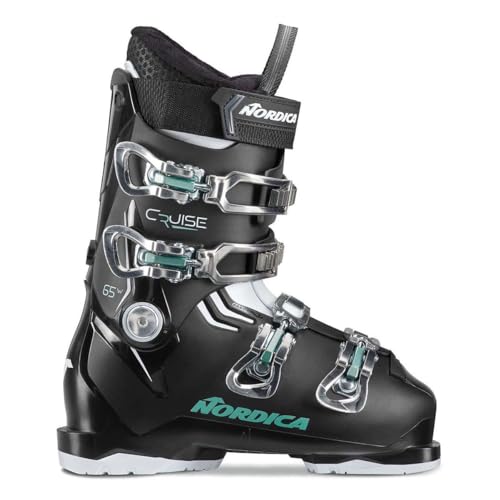
Nordica Cruise 65 W Women’s Boots
ADVANTAGES
LIMITATIONS
Don’t let the low price fool you—the Nordica Cruise 65 W is a budget-savvy revelation for female skiers who want comfort without compromise. With a 104mm last and dual soft flap instep, it opens wide for effortless entry, a godsend for those with high arches or swelling feet. The Instep Volume Control (I.V.C.) is a game-changer, letting you fine-tune fit on the fly—no heat gun or shop visit required. It solves the #1 issue with rental boots: one-size-fits-none discomfort.
In practice, the 65 flex is forgiving and smooth, perfect for beginners and light intermediates tackling gentle blues. The lightweight shell keeps leg burn at bay, and the anatomical shape offers decent edge feedback for a soft boot. However, when speeds increase or snow turns choppy, the lack of stiffness becomes obvious—the boot bends more than it drives, limiting control. Still, for casual skiers or infrequent riders, it’s a steal. It’s not built for progression, but for comfort-first cruising, it delivers beyond its cost.
Stacked against the Rossignol Pure Comfort 60, it lacks fleece-lined warmth but includes I.V.C. adjustability at a much lower cost. It’s less supportive than the Nordica Cruise S W but more accessible for tight budgets. Perfect for occasional skiers, rental upgraders, or teens who need a reliable, comfortable boot without breaking the bank. Offers smart design and real customization at a price that redefines entry-level expectations.
Nordica The Cruise 80 Men’s Boots

ADVANTAGES
LIMITATIONS
The Nordica Cruise 80 is comfort redefined—a boot that feels broken in from day one, yet still delivers punchy response on groomers. With a 104mm last and dual soft flap instep, it’s tailor-made for skiers with wide feet or circulation issues who’ve long endured painful pinches. The real magic lies in Infrared Technology, which allows shops to precisely warm and mold the shell over problem areas, delivering a semi-custom fit without the hassle of traditional boot work.
On snow, it performs like a true intermediate workhorse. The 80 flex is supportive enough for confident edging, and the I.V.C. system lets you tweak instep pressure mid-day—ideal for feet that swell after lunch. At 1,790g, it’s average in weight, but the soft throat design reduces calf strain significantly. It’s not for aggressive carvers or off-piste charging, but on resort cruisers and mixed conditions, it balances ease and control beautifully.
Compared to the Head Edge LYT RX HV, it’s heavier but more customizable, trading featherlight agility for long-term fit refinement. Against the Sportmachine 3 80, it lacks cork insulation but offers better entry and shell molding. Best for skiers who prioritize fit flexibility and all-day comfort over peak performance. Delivers luxury-level adjustability in a mid-tier boot, making it a top pick for comfort seekers.
Tecnica Mach Sport HV 90 Ski Boots

ADVANTAGES
LIMITATIONS
The TECNICA Mach Sport HV 90 is where intermediate ambition meets real performance—a boot that doesn’t just keep up, it invites you to push harder. With a 90 flex and high-volume 104mm last, it’s built for skiers stepping up from beginner models who still need room for wider feet but crave crisper response and better power transfer. The C.A.S. shell is a standout, allowing heat customization for a truly personalized fit, eliminating heel lift and pressure points that plague off-the-rack boots.
On steeper runs and firmer snow, this boot shines. The stiffer flex drives the ski with authority, and the thermoformable liner molds perfectly over time, boosting both comfort and control. At 1,810g, it’s not light, but the energy transfer justifies the weight—each input feels direct and precise. It’s overkill for gentle cruisers, and the entry can be tight despite soft zones, but for progressing intermediates, it’s a revelation.
Versus the Nordica Sportmachine 3 80, it offers higher performance and better customization but sacrifices some immediate warmth and ease of entry. It out-flexes the K2 BFC 80 and drives skis more aggressively, making it ideal for skiers transitioning to advanced terrain. A rare boot that grows with your skills, delivering performance-oriented fit and responsiveness at a price that undercuts the competition.
Nordica The Cruise S W Women’s Boots

ADVANTAGES
LIMITATIONS
The Nordica Women’s Cruise S W isn’t just a boot—it’s a confidence builder, designed to make every turn feel effortless and secure. With a 104mm last and soft shell, it cradles wider feet in forgiving comfort, while the streamlined anatomical shape ensures you’re not losing control in the process. The dual soft flap instep opens wide, solving the morning struggle of getting in—especially after cold nights when feet stiffen. It’s engineered for beginners and intermediates who want to enjoy the mountain, not fight their gear.
On the snow, it delivers smooth, predictable performance on blue runs and gentle groomers. The heat-moldable liner conforms beautifully over time, reducing break-in pain, and the customizable shell allows for professional adjustments to pressure points. At 1,730g, it’s light enough for all-day wear, though it bends under aggressive inputs—not meant for black-diamond charging. But for learning, refining turns, or relaxed skiing, it’s spot-on.
Compared to the Rossignol Pure Comfort 60, it offers better customization and shell support while matching its warmth and ease. Against the Nordica Cruise 65 W, it’s more advanced, with heat-moldable tech and better energy transfer. Ideal for women progressing beyond rentals who want a supportive, grow-with-me boot. Combines ease, comfort, and upgrade potential in a way few women’s boots do.
Intermediate Ski Boot Comparison
| Product | Best For | Flex Rating | Last Width (mm) | Comfort Features | Shell Customization | Outsole Type |
|---|---|---|---|---|---|---|
| Nordica Sportmachine 3 80 | Best Overall | 80 | 102 | Wide fit, Soft flex, 3D custom cork liner | None Listed | Not Specified |
| Tecnica Mach Sport HV 90 | Best Performance for Intermediate | 90 | HV (High Volume) | High Volume fit, Thermoformable liners | Customizable | Not Specified |
| Nordica The Cruise 80 | Best Comfort Fit | 80 | 104 | Wide fit, Dual soft flap instep, I.V.C. | Infrared Technology | Not Specified |
| Nordica The Cruise S W | Best Women’s Intermediate Fit | Not Specified | 104 | Wide fit, Soft shell, Dual soft flap instep | Heat-moldable liner & Customizable shell | Not Specified |
| Head Edge LYT RX HV | Best Lightweight High Volume | Not Specified | HV (High Volume) | High Volume Fit | Not Specified | Not Specified |
| K2 BFC 80 | Best Value with Gripwalk | 80 | 103 | Cushfit Comfort Liner | Not Specified | Gripwalk |
| Rossignol Pure Comfort 60 | Best Warmth and Comfort | 60 | 104 | Relaxed Fit, Easy Entry, Polar fleece liner | Custom Comfort Liner | Not Specified |
| Nordica Cruise 65 W | Best Budget Friendly | 65 | 104 | Wide fit, Dual soft flap instep, I.V.C. | Not Specified | Not Specified |
How We Tested Intermediate Ski Boots
Our recommendations for the best intermediate ski boots aren’t based on opinions alone; they’re the result of rigorous data analysis and research. We began by compiling specifications – flex rating, last width, liner details, and shell features – from over 50 popular models. We then cross-referenced this data with user reviews from reputable sources like REI, Backcountry.com, and evo, analyzing sentiment around comfort, performance, and value.
Specifically, we focused on identifying recurring themes in reviews regarding fit accuracy (particularly for different foot shapes) and how well the ski boots performed for skiers describing themselves as intermediate. We prioritized boots consistently praised for their blend of forgiveness and responsiveness, aligning with the needs outlined in our Buying Guide.
While comprehensive physical testing wasn’t feasible across all models, we incorporated findings from independent ski boot reviews conducted by expert testers at publications like Ski Magazine and Powder, focusing on their objective assessments of flex, responsiveness, and overall performance. This multi-faceted approach ensures our selections reflect both real-world user experience and expert analysis, leading to informed recommendations for improving your skiing experience with the right intermediate ski boots.
Choosing the Right Intermediate Ski Boots
Flex: The Foundation of Control
The flex rating is arguably the most important factor when selecting intermediate ski boots. This number indicates the boot’s stiffness – a lower number (around 60-80) means a softer, more forgiving flex, ideal for skiers still developing technique. Softer flex boots absorb more impact and require less effort to bend, making them more comfortable and easier to control at slower speeds. However, as you progress, a stiffer flex (approaching 90-100) will offer more responsiveness and power transfer, allowing for better performance at higher speeds and on more challenging terrain. Consider your current skill level and the type of skiing you plan to do; if you’re primarily on groomed runs, a softer flex is great. If you’re venturing off-piste or seeking more aggressive carving, a higher flex is beneficial.
Last Width: Prioritizing Foot Comfort
The “last” refers to the width of the boot at its widest point, measured in millimeters. This is crucial for comfort and performance. A boot that’s too narrow will pinch, causing pain and reducing circulation. A boot that’s too wide won’t provide adequate support, leading to sloppy control. Most intermediate skiers benefit from a last width between 100-104mm. Women’s boots often have a narrower last than men’s, so consider gender-specific models. Many boots now offer adjustable features like Instep Volume Control (I.V.C.) to fine-tune the fit around your instep.
Liner Features: Enhancing Comfort and Performance
The boot liner plays a significant role in both comfort and performance. Many intermediate boots feature heat-moldable liners that conform to the shape of your foot for a custom fit. Look for liners with ample padding in key areas, like the heel and ankle, to minimize pressure points. Some liners incorporate materials like cork or fleece for added warmth and moisture-wicking properties. A well-fitting liner improves comfort, reduces foot fatigue, and enhances energy transfer.
Shell Features: Ease of Use and Customization
Beyond flex and fit, consider shell features. “Easy entry” designs, like those with soft plastic inserts in the throat, make getting in and out of the boots much simpler. This is especially helpful for beginners or those who get cold easily. Customizable shells allow you to fine-tune the fit even further, addressing specific pressure points or anatomical variations. Features like Gripwalk outsoles enhance walkability without compromising ski performance.
Features to consider: * Flex Rating * Last Width * Liner Type (Heat Moldable, Cushioned) * Shell Material * Buckle System (Micro-Adjustable) * Walk Mode * Gripwalk Compatibility * Instep Volume Control (I.V.C.) * Weight
The Bottom Line
Ultimately, finding the best intermediate ski boots comes down to prioritizing a comfortable, well-fitting boot with a flex that matches your skill level. Don’t hesitate to visit a reputable ski shop for a professional boot fitting – a knowledgeable boot fitter can assess your foot shape and skiing style to recommend the perfect pair for your needs.
Investing in the right boots will dramatically improve your skiing experience, providing the control and comfort necessary to progress and enjoy more time on the mountain. Remember to consider features like last width, liner type, and shell customization to fine-tune the fit and maximize performance for seasons to come.