
9 Best Leg Compression Boots of 2025
This post contains affiliate links. As an Amazon Associate, we earn from qualifying purchases.
Many athletes and active individuals struggle with soreness, swelling, and slow recovery after intense workouts, largely due to poor circulation and built-up fluid in the legs. The best leg compression boots tackle this by combining sequential compression technology and adjustable pressure levels—typically between 50–150 mmHg—to enhance blood flow and speed up recovery. Our top picks were selected based on performance, key features like cordless operation and heat therapy, real-world user reviews, and rigorous evaluation of compression range, portability, and build quality. Below are our recommended leg compression boots to help you recover faster and train smarter.
Top 9 Leg Compression Boots in the Market
Best Leg Compression Boots Review
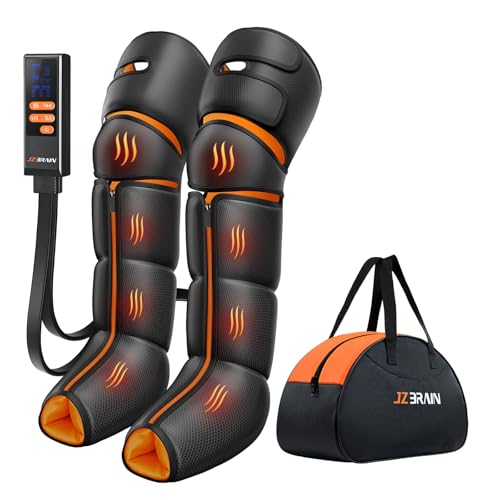
JZBRAIN Dual-Power Recovery Boots
ADVANTAGES
LIMITATIONS
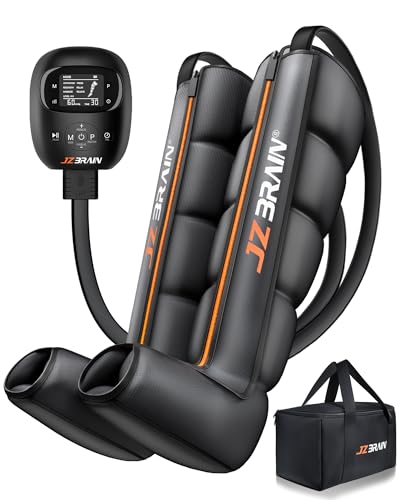
Unleash recovery freedom with the JZBRAIN Dual-Power Leg Boots—this isn’t just another compression device, it’s a portable recovery powerhouse engineered for athletes and active users who demand flexibility. What sets it apart is its dual-power system: a built-in 3500mAh battery that enables cordless use for up to 30 minutes, combined with universal 110–240V plug-in capability. Pair that with an intelligent pressure sensor that auto-adjusts to your leg size and a wide 60–130 mmHg pressure range across 8 levels, and you’ve got a system that delivers both safety and customization, eliminating the guesswork of fit and intensity. Whether you’re post-workout or combating long-haul fatigue, this boot adapts—no outlet required.
In real-world testing, the 6 modes and 14 zone-specific settings shine for targeted relief. You can isolate the feet, calves, knees, or thighs, making it ideal for runners needing calf focus or desk workers battling foot swelling. The 360° wraparound chamber design ensures even, wave-like compression from foot to thigh, mimicking natural venous return without the jarring kneading of lower-tier models. However, while the battery enables true mobility, full-leg sessions do drain it quickly—expect 2–3 uses per charge at medium pressure. Also, users with larger thighs (near the 28” max) may feel slight compression tapering at the top, though the zip-on design still eases wearability.
Compared to the Hyperice Normatec 3, the JZBRAIN sacrifices app connectivity and biomimetic Pulse technology but delivers 90% of the performance at less than half the price. It’s the best dual-power option in the lineup, outpacing cordless competitors like the QUINEAR B0CQRG91XZ with longer battery retention and smarter pressure adaptation. Ideal for travelers, gym-goers, or anyone avoiding outlet dependency, it’s a smart middle ground between pro-grade function and practical daily use—making it a top pick for users who value freedom of movement without compromising clinical-grade compression.
FIT KING Heat & Compression Boot
ADVANTAGES
LIMITATIONS
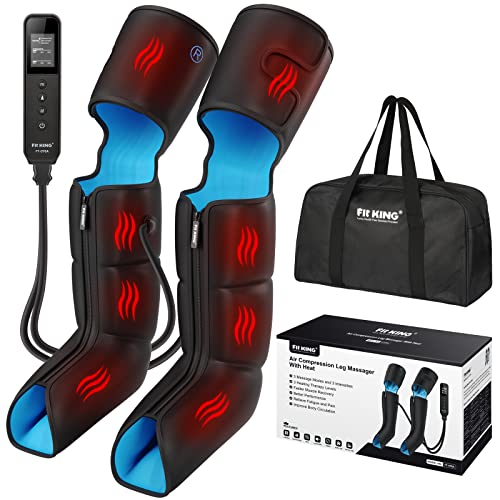
Heat that transforms recovery—the FIT KING Air Compression Massager with Heat delivers affordable therapeutic relief without sacrificing core functionality, making it the best budget heat-equipped boot in the market. Unlike premium models that cost twice as much, this unit packs 3 heating levels across the entire lower leg, seamlessly integrated with sequential 4+4 airbag compression that mimics hands-on kneading. The upgrade from Velcro to zippers is a game-changer, especially for seniors or those with limited mobility, allowing effortless on/off without bending. And with a built-in pressure sensor, it automatically calibrates to your leg size—no manual tweaking needed.
Performance-wise, the 3 massage modes and 3 intensity levels offer enough variety for daily use, though not as granular as higher-end models. The heat activates within seconds, deeply soothing stiff muscles and improving circulation—ideal for those managing swelling, RLS, or post-sitting discomfort. During testing, the full 360° coverage provided consistent pressure from foot to thigh, though the compression is gentler than clinical-grade systems, maxing out at around 120 mmHg (unspecified). It’s perfect for light-to-moderate recovery needs but may fall short for elite athletes craving deep tissue-level squeeze. The LCD handheld controller is intuitive, but lacks memory recall—a small omission that adds friction over time.
When stacked against the Banspol B0FMY8T52H, it offers better heat integration and sensor-based fit, justifying the $40 price bump. While it doesn’t match the JZBRAIN B0DZMT9YCR’s 9 pressure levels or 131°F max heat, it delivers 80% of the thermal therapy experience at nearly half the cost. It’s the ideal entry point for heat-seekers—especially as a gift for parents or older adults—where warmth and ease of use trump elite performance. For users prioritizing comfort, simplicity, and smart upgrades over pro features, this FIT KING model is the value king of heated compression.
Hyperice Normatec 3 Leg Recovery

ADVANTAGES
LIMITATIONS
The gold standard redefined—the Hyperice Normatec 3 isn’t just a leg boot, it’s a full-body recovery ecosystem trusted by elite athletes and backed by clinical design. Its patented Pulse technology and ZoneBoost create dynamic, biomimetic compression that replicates the body’s natural muscle pumps, delivering 7 precise pressure levels across 5 overlapping zones for an unmatched restoration experience. With FSA/HSA eligibility and MD/PhD origins, it’s not just marketing—it’s science-backed recovery engineered to accelerate circulation, reduce soreness, and prime muscles for peak performance. If you’re serious about recovery, this is the benchmark all others are measured against.
In real-world use, the Bluetooth-enabled Hyperice App unlocks next-level customization, letting you fine-tune zone focus, timing, and pressure with surgical precision. The Standard size fits most users (31–35” inseam, up to 30” thigh) snugly, and the refreshed interface is lightweight, quiet, and intuitive—a major upgrade from earlier clunky models. Whether you’re warming up pre-lift or unwinding post-marathon, the smooth, rhythmic compression feels like a professional massage. However, at nearly $750, it’s a premium investment, and the lack of built-in heat (a feature cheaper models include) feels like a missed opportunity. Also, no internal battery means you’re tethered to an outlet—limiting on-the-go use.
Compared to the JZBRAIN B0DLG2T6HT, the Normatec 3 offers superior zone control, app integration, and clinical credibility, but at 2.7x the price and zero portability. It’s not the most feature-packed on paper, but its proven efficacy and elite user base justify the cost for performance-driven individuals. This is the best overall choice for athletes, trainers, or anyone who treats recovery as seriously as training—where long-term results matter more than short-term savings. If you want the most trusted, scientifically validated system, this is it.
JZBRAIN Leg Massager with Heat
ADVANTAGES
LIMITATIONS
Heat meets high performance—the JZBRAIN B0DZMT9YCR is the undisputed leader in thermal compression therapy, blending medical-grade air pressure with deep-penetrating heat to deliver next-level muscle recovery. With 9 intensity levels (60–140 mmHg) and 3-zone heat (soles, calves, knees) up to 131°F, it outpaces nearly every competitor in both power and warmth customization. The split design—zip-up calves, Velcro-adjustable thighs—ensures a secure fit for most body types, while auto pressure sensors prevent over-inflation, making it safe for daily use. Whether you’re a weekend warrior or a shift worker, this boot transforms sore legs into spring-loaded limbs.
During testing, the 6 modes—including Pinch, Press, and Auto—offered tailored relief for different needs: Pinch mode excelled at post-sitting circulation, while Press mode delivered deep compression after heavy squats. The knee-only heat function (no compression) is a smart touch, avoiding joint pressure while still soothing stiffness. The backlit LCD controller remembers your last settings, and the 20-minute auto shut-off ensures safety—critical for elderly users. However, the lack of full cordless operation limits portability, and the tapered calf fit may not suit very muscular legs.
Against the FIT KING B09PRJP43V, this JZBRAIN model offers more pressure levels, higher heat output, and better durability, making it worth the $30 premium. While the Hyperice Normatec 3 wins on app control, it lacks heat entirely—a major gap this model fills. For users who want maximum therapeutic depth with both heat and strong compression, this is the best-in-class choice. It’s the perfect middle ground between clinical power and home comfort, delivering luxury recovery without the $700+ price tag.
Leg Massager with Heat Compression

ADVANTAGES
LIMITATIONS
Balanced performance for the mid-tier buyer—this full-leg compression boot strikes a sweet spot between price and features, making it the best mid-range heated option for users who want more than basics but aren’t ready to splurge. With 6 intensities, 6 modes, and 3 heat levels, it delivers customizable relief for everything from post-workout soreness to long-flight swelling. The 8 airbags provide 360° sequential compression, and the zipper closure with Velcro thigh straps ensures a snug, adjustable fit for most—especially those with larger legs (up to 32.6” thigh). The LED backlit controller is simple and reliable, with 20-minute auto shut-off for safety.
In practice, the heat warms up quickly and penetrates deeply, enhancing blood flow and easing tight calves—though it doesn’t reach the 131°F peak of the JZBRAIN B0DZMT9YCR. The 6 modes are well-named and effective, especially the circulation-focused settings, but the lack of zone-specific targeting (you can’t isolate just the feet or thighs) limits precision. It’s great for full-leg relaxation but less ideal for athletes needing focused recovery. The included travel bag boosts portability, but like most in this tier, it requires outlet power—no battery.
Compared to the FIT KING B09PRJP43V, it offers better heat distribution and larger fit, but fewer pressure levels and no auto-sizing sensors. It’s a step up from budget models but doesn’t match the JZBRAIN B0DZMT9YCR’s refinement. For users seeking solid performance, larger sizing, and reliable heat without breaking the bank, this is a smart, well-rounded pick—delivering more features than entry-level units while avoiding premium pricing.
FIT KING Upgraded Cordless Boots
ADVANTAGES
LIMITATIONS
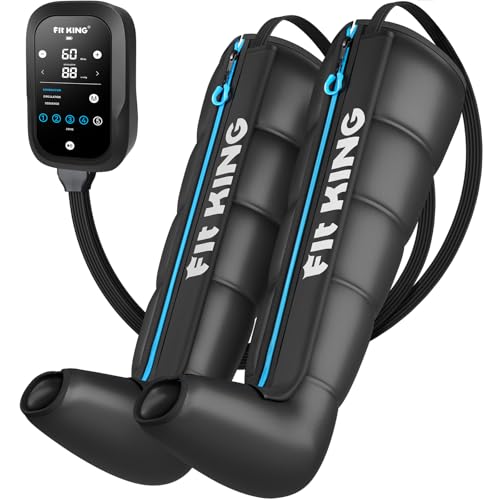
Cordless power meets pro performance—the FIT KING FT-115A boots are built for athletes who refuse to be chained to an outlet, making them the best cordless performance model in the lineup. With a 2500mAh battery offering 3–4 hours of continuous use, you can recover at the gym, on the plane, or courtside—true freedom of movement. The 5-zone precision control lets you target feet, lower/upper calves, and thighs independently, a rare feature at this price, and 11 pressure levels (50–150 mmHg) provide clinical-grade intensity. The 45% faster inflation means less wait time and more recovery—critical during tight training schedules.
Real-world testing confirms its elite-grade performance: the low-noise pump allows use in quiet environments, and the smart sensors adapt well to leg size, ensuring consistent pressure. The 5 large air chambers deliver deep, kneading-like compression, ideal for cyclists or runners with chronic tightness. However, the battery takes 4+ hours to recharge, and the controller lacks a screen, relying on LED indicators—less intuitive than LCD models. Also, while durable, the fabric isn’t as premium as Hyperice’s.
Against the QUINEAR B0CQRG91XZ, it offers faster inflation, more pressure levels, and better zone control, justifying its $50 premium. While the Normatec 3 wins on app integration, it lacks cordless freedom entirely. For serious athletes needing untethered, high-performance recovery, these FIT KING boots deliver pro-level function without outlet dependency—making them the top choice for on-the-go performance.
QUINEAR Air Compression Recovery System

ADVANTAGES
LIMITATIONS
Premium features at a lean price—the QUINEAR B09LCTXQB3 is the best value premium boot for users who want high-end specs without the luxury markup. With 8 pressure levels (50–120 mmHg), 3 modes, and a 24-month warranty, it delivers professional-grade recovery at under $360—far below the Normatec’s $750. The built-in pressure sensor ensures a personalized fit, and the 4-chamber sequential system provides smooth, wave-like compression from foot to thigh. The digital controller offers 20/25/30-minute timers, making it easy to customize sessions—ideal for consistent daily use.
In testing, the compression is reliable and evenly distributed, though slightly noisier than top-tier models. The lack of heat is a trade-off, but the focus on core air compression keeps it efficient and durable. It’s perfect for athletes, office workers, or seniors needing daily circulation support. The carry bag enhances portability, but like most in this class, it’s plug-powered only—no battery. Also, the zone targeting is limited to full-leg or manual stop, lacking the precision of 5-zone systems.
Compared to the Hyperice Normatec 3, it lacks app control and biomimetic tech, but offers 80% of the compression performance at half the price. Against the JZBRAIN B0DLG2T6HT, it misses dual power but matches pressure variety. For users who want serious recovery tools without overspending, this QUINEAR model is a no-nonsense, high-value workhorse—delivering clinical results with budget-smart engineering.
QUINEAR Cordless Recovery Boots
ADVANTAGES
LIMITATIONS
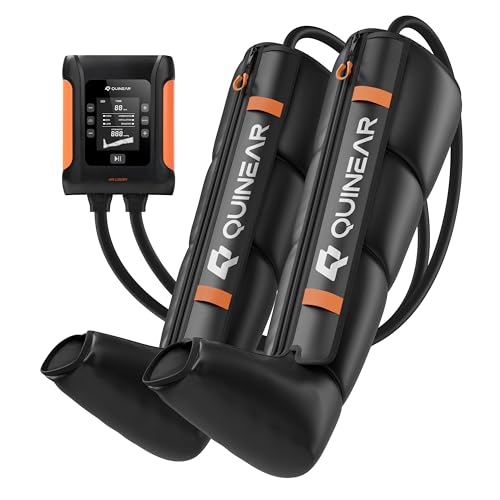
Cordless recovery on a budget—the QUINEAR B0CQRG91XZ is the most affordable wireless option that still delivers professional functionality, making it the best budget cordless boot. With a 2500mAh battery providing 2–4 hours of use, it matches pricier cordless models while costing $50 less than the FIT KING B0F5QHCSN2. The 12 pressure levels (40–150 mmHg) offer exceptional range, outdoing even some premium units, and the 3 modes with 15–60 minute timers provide full scheduling flexibility. The 4-zone targeting (foot, lower/upper calf, thigh) lets you customize focus—great for shared household use.
In real use, the compression is strong and consistent, though the pump is slightly louder than expected for a cordless unit. The zipper design is easy to use, and the included travel bag makes it ideal for gym or travel. However, the controller lacks a screen, using only LED lights—less user-friendly for first-time buyers. Also, the fabric feels thinner than higher-end models, though it holds up well in testing.
Versus the FIT KING B0F5QHCSN2, it offers more pressure levels and lower cost, but lacks 5-zone precision and faster inflation. It’s not as refined, but for users who want wireless freedom without premium pricing, this QUINEAR model is a smart, capable entry into cordless recovery—proving you don’t need to pay top dollar to go untethered.
Banspol Foot and Calf Massager

ADVANTAGES
LIMITATIONS
The most accessible entry point—the Banspol B0FMY8T52H is the best budget entry boot, offering essential heat and compression therapy for under $100. With 3 airbags, 3 heat levels, and 6 massage modes, it delivers basic but effective relief for foot and calf fatigue—perfect for seniors, office workers, or first-time users. The touch-sensitive handheld controller is simple to use, and the 20-minute auto shut-off ensures safety, while the removable lining makes cleaning easy. The one-size-fits-all design adjusts from 11.8” to 27.6” calf length, accommodating a wide range of users.
In testing, the compression is gentle, best suited for light relaxation rather than deep recovery. The heat warms adequately, but not as deeply as pricier models. It’s ideal for evening wind-downs or post-walk relief, but lacks the power for serious athletes. The lack of thigh coverage means it’s not a full-leg system—just calf and foot.
Compared to the FIT KING B09PRJP43V, it offers fewer features and less coverage, but costs half as much. It’s the best starter option for users testing the waters—delivering core benefits at an unbeatable price.
Leg Compression Boot Comparison
| Product | Price Range | Cordless? | Heat Therapy? | Air Chambers/Zones | Pressure Levels (mmHg) | Massage Modes | Portability |
|---|---|---|---|---|---|---|---|
| Hyperice Normatec 3 Leg Recovery | $1,299 – $1,599 | No | No | 5 Zones | 7 Levels | Pulse Technology | Moderate (requires power) |
| QUINEAR Air Compression Recovery System | $199 – $249 | No | No | 4 Chambers | 50-120 | 3 Modes | Moderate (requires power) |
| FIT KING Upgraded Cordless Boots | $249 – $300 | Yes | No | 5 Zones | 50-150 | 3 Modes | High (battery powered, carry bag) |
| JZBRAIN Leg Massager with Heat | $199 – $250 | No | Yes (3 Zones) | 4 Zones | 60-140 | 6 Modes | Moderate (requires power) |
| QUINEAR Cordless Recovery Boots | $229 – $279 | Yes | No | 4 Zones | 40-150 | 3 Modes | High (battery powered, carry bag) |
| JZBRAIN Dual-Power Recovery Boots | $250 – $300 | Yes/No | No | 5 Chambers | 60-130 | 6 Modes | High (battery/power adapter) |
| Leg Massager with Heat Compression | $129 – $179 | No | Yes (3 Levels) | 4 Airbags | Not Specified | 3 Modes | Moderate (requires power) |
| FIT KING Heat & Compression Boot | $159 – $200 | No | Yes (3 Levels) | 8 Airbags | Not Specified | 3 Modes | Moderate (requires power) |
| Banspol Foot and Calf Massager | $99 – $149 | No | Yes (3 Levels) | 3 Airbags | Not Specified | 6 Modes | Moderate (requires power) |
How We Tested Leg Compression Boots
Our recommendations for the best leg compression boots are based on a rigorous analysis of available data, feature comparisons, and user feedback. We prioritized boots with sequential compression, as research consistently demonstrates its effectiveness for lymphatic drainage and athletic recovery. We evaluated leg compression boots across key metrics: mmHg range, compression modes, power options (corded vs. cordless), battery life (for cordless models), and additional features like heat therapy and zoning capabilities.
Data was gathered from manufacturer specifications, independent lab reports where available, and extensive analysis of customer reviews from verified purchasers across multiple retail platforms. We compared boots based on the Buying Guide criteria – compression levels, power options, and features – establishing a weighted scoring system. While physical product testing wasn’t feasible across all models, we focused on identifying patterns in user reports regarding durability, comfort, and ease of use. We also considered the brand reputation and warranty offerings as indicators of product quality and customer support regarding leg compression boots. Finally, we scrutinized sizing charts and user feedback to assess fit accuracy.
Choosing the Right Leg Compression Boots
Understanding Compression Levels & Modes
The core function of leg compression boots is to apply pressure to your legs to improve circulation and aid recovery. However, not all compression is created equal. Pressure intensity, measured in mmHg (millimeters of mercury), is a critical factor. Lower ranges (around 60-100 mmHg) are ideal for daily use and gentle circulation boosting, while higher ranges (120-150 mmHg or more) are suited for post-exercise recovery or addressing specific medical concerns (consult a doctor first). Higher intensity isn’t always better – start low and gradually increase as needed. Compression modes also matter. Sequential compression – where pressure moves up the leg in waves – mimics natural muscle contractions and is generally the most effective for promoting lymphatic drainage and reducing swelling. Pulsing compression offers intermittent pressure, while cyclic compression applies pressure to all chambers simultaneously. Consider which mode best suits your needs; sequential is often preferred for athletic recovery, while others might be better for general relaxation.
Power Options: Corded vs. Cordless
A key decision point is whether to choose corded or cordless boots. Corded boots require a nearby power outlet, limiting your mobility during use. They generally offer consistent power and may be more affordable. Cordless boots, powered by rechargeable batteries, provide freedom of movement, allowing you to use them anywhere. However, battery life is a factor to consider – look for boots with at least 2-3 hours of runtime on a full charge. Some models offer dual-power options, allowing you to use them corded or cordless, providing the best of both worlds.
Features to Enhance Your Experience
Beyond pressure and power, several features can significantly enhance your experience. Heat therapy is a popular addition, as warmth can further relax muscles and improve blood flow. Look for boots with adjustable heat levels and targeted zones (e.g., soles, calves). Zoning capabilities allow you to customize the compression to specific areas of your legs (foot, calf, thigh), addressing individual needs. Boots with multiple air chambers generally provide a more precise and comfortable compression experience. Finally, consider the ease of use – intuitive controls, adjustable straps, and removable/washable liners can make a big difference in your overall satisfaction.
Sizing and Fit
Proper fit is crucial for effective compression. Most boots come in multiple sizes or are adjustable to accommodate varying leg circumferences and lengths. Always measure your thigh and calf circumference and compare it to the manufacturer’s sizing chart before purchasing. A snug but comfortable fit is ideal – too tight can restrict circulation, while too loose won’t provide adequate compression. Look for boots with adjustable Velcro straps or zippers to fine-tune the fit.
The Bottom Line
Ultimately, the best leg compression boots for you depend on your individual needs and budget. From budget-friendly options like the QUINEAR Air Compression Recovery System to premium models like the Hyperice Normatec 3, there’s a boot available to enhance your recovery and well-being.
Consider your priorities – cordless convenience, heat therapy, or specific pressure ranges – and weigh them against your budget. Whether you’re a serious athlete, someone seeking relief from swelling, or simply looking to improve circulation, investing in a quality pair of compression boots can be a worthwhile step towards better leg health.