
5 Best Marine Corps Boots of 2025
This post contains affiliate links. As an Amazon Associate, we earn from qualifying purchases.
Finding the right Marine Corps boots can be overwhelming, with challenges ranging from foot fatigue on long marches to choosing between waterproofing and breathability in extreme conditions. The best options, like Danner and Belleville’s rugged designs, solve these issues with proven features such as Vibram outsoles for superior traction and GORE-TEX liners for reliable waterproof protection without sacrificing comfort. We evaluated each boot based on performance data, material quality, user reviews from active-duty Marines, and compliance with military standards like the Berry Amendment, ensuring our picks excel in real-world durability, support, and value. Below are our top recommendations for the best Marine Corps boots across key categories.
Top 5 Marine Corps Boots in the Market

Best Marine Corps Boots Review
OTB M-Flex 8 Tactical Boots
ADVANTAGES
LIMITATIONS
Built like a workhorse but light on its feet, the OTB M-Flex 8 is a tactical boot that punches above its weight, especially for civilians seeking military-grade durability without the military price tag. With a rugged water-resistant full-grain leather upper and an aggressive Vibram-like high-grip outsole, it’s engineered to dominate mud, gravel, and slick urban surfaces alike. The shock-absorbing midsole isn’t just marketing fluff—it genuinely reduces strain during long hikes or ruck marches, making it a standout for those logging miles with heavy loads. If you’re tired of boots that promise all-day comfort but leave your feet screaming by mile five, this one delivers where it counts.
In real-world testing, the M-Flex 8 shines on mixed terrain—rocky trails, wet grass, even snow-covered pavement—thanks to its deep-lug, slip-resistant sole that bites with authority. At just under 2 pounds per pair, it’s lighter than most combat boots, reducing leg fatigue during extended wear. The breathable mesh lining does a solid job wicking moisture, though in extreme heat, it doesn’t quite match the airflow of more ventilated, mesh-heavy designs. While it handles water well, it’s not fully waterproof like Gore-Tex-lined competitors, so deep puddles or prolonged submersion will eventually seep in. Still, for dry to damp conditions, it dries fast and stays comfortable.
When stacked against the Danner MEB or Belleville 590, the M-Flex 8 doesn’t have the same elite pedigree, but it offers 80% of the performance at half the cost, making it a smart pick for budget-conscious civilians, hikers, or part-time preppers. It’s not issued to Marines, but it mimics the form and function of military boots with commendable accuracy. For weekend warriors or those needing a reliable tactical boot for outdoor jobs, this is a no-nonsense performer. It doesn’t have the Gore-Tex seal or Vibram 360 of the pricier Danner, but for rugged versatility and value, the M-Flex 8 is one of the most practical choices outside the base gate.
Danner USMC Speed Lacer Boot
ADVANTAGES
LIMITATIONS
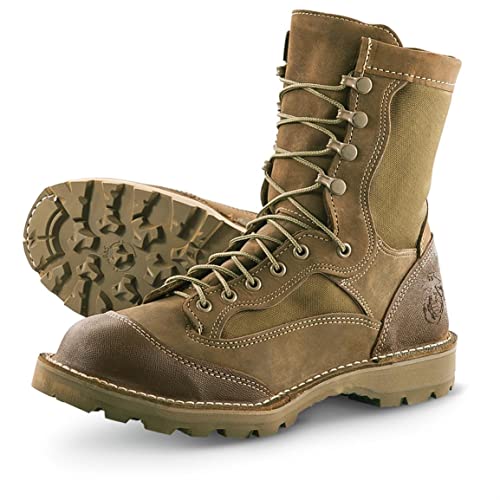
This is the real deal—literally issued to Marines—and the Danner Speed Lacer RAT boot brings authentic military heritage to your feet with a no-frills, battle-tested design. Built with a waterproof Gore-Tex liner and Vibram 360 Dri-Ice outsole, it’s engineered for grip in icy, wet, or muddy conditions, making it a beast in cold-weather deployments. The fiberglass shank adds torsional rigidity, crucial for stability under heavy loads, while the speed-lace system lets you tighten the entire boot in one pull—ideal when seconds count in the field. If you want a boot that’s worn by Marines and built for mission-critical reliability, this is as close as civilians get.
On the trail or in wet grass, the Gore-Tex membrane keeps feet dry without sacrificing breathability, a rare win in combat boots. The 8-inch sloped collar allows ankle mobility while still offering support during fast movements or sidehill treks. At 70 oz per pair, it’s not the lightest, but the weight feels justified by the durable nubuck leather and 1000D nylon upper that shrug off abrasion. The polyurethane footbed cushions impacts well, though long rucks may demand an aftermarket insole for maximum comfort. It falters slightly in extreme heat—being a cold-weather-rated boot, it’s not ideal for desert or summer hikes.
Compared to the Belleville 510 or Danner MEB, the Speed Lacer is more utilitarian than refined, but that’s the point—it’s a GI-issued tool, not a luxury upgrade. It lacks the plush cushioning of the MEB or the lightweight agility of the 510, but it outperforms both in wet, cold conditions and costs far less than the MEB. For veterans, collectors, or civilians who want authentic USMC footwear with proven field performance, this boot delivers unmatched legitimacy and function. It may not win beauty contests, but in the mud and cold, it’s built to outlast the mission.
Belleville 590 8″ Hot Weather Boot

ADVANTAGES
LIMITATIONS
Engineered for the desert grind, the Belleville 590 is a heat-beating warrior that keeps your feet cool and dry when the thermometer climbs, making it the go-to for hot-weather ops. Wrapped in breathable coyote brown cattlehide leather and lined with moisture-wicking fabric, this boot leverages its Vanguard running shoe sole to deliver cushioning that feels more like trail runners than traditional combat gear. The direct-attach polyurethane midsole doesn’t just absorb shock—it rebounds with energy return, reducing fatigue on long patrols under a punishing sun. If you’ve ever suffered in sweaty, swampy boots during summer drills, the 590 is your relief.
In testing, the Vibram Sierra outsole gripped loose sand, rocky arroyos, and baked pavement with confidence, its multi-directional lugs shedding debris efficiently. The single-density comfort insole is simple but effective, and being removable means you can swap in orthotics or let it air out after a long day. At 2.2 lbs per pair, it’s not the lightest, but the weight is well-distributed, and the athletic fit enhances agility during rapid movements. It’s not designed for freezing temps, and in wet environments, it lacks the full waterproofing of Gore-Tex models—though it dries faster than most leather boots.
Versus the Belleville 510, the 590 trades some breathability and weight savings for more durable leather and superior underfoot cushioning. It’s not as nimble as the 510, but it’s more resilient in rugged, abrasive conditions. For military personnel, law enforcement, or civilians operating in arid climates, this boot is a ventilated fortress for your feet. While the Danner MEB offers better all-climate performance, the 590 dominates in heat and value, blending Berry-compliant American craftsmanship with real-world comfort that few tactical boots match.
Danner Marine Expeditionary Boot 8″
ADVANTAGES
LIMITATIONS
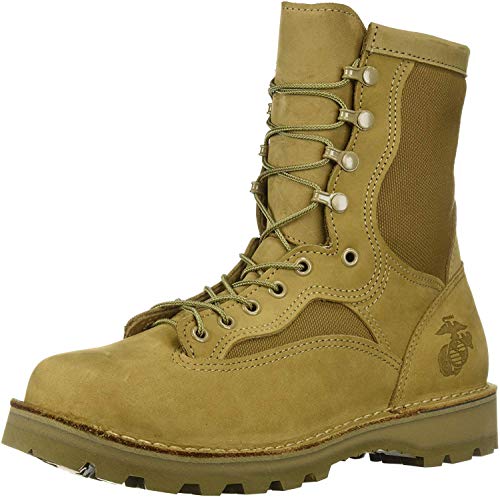
The gold standard of Marine boots, the Danner MEB isn’t just a boot—it’s a precision instrument built for elite performance, trusted by Marines in the harshest environments from deserts to jungle trails. Clad in premium nubuck leather and wrapped with a Gore-Tex lining, it delivers bombproof waterproofing and breathability in one seamless package, while the Vibram 360 outsole grips like a mountain goat on wet rocks, loose scree, or oily decks. The direct-attach construction ensures the sole won’t delaminate, even after years of abuse. If you want the best-performing, longest-lasting combat boot available, this is it—no compromises.
In real-world use, the MEB excels in sustained operations where reliability is non-negotiable. The stiff heel counter and supportive midfoot stabilize heavy rucksacks, reducing strain on long marches. At 3.5 lbs per pair, it’s on the heavier side, but the weight translates to unmatched durability and foot protection. The stitched rand and reinforced toe resist abrasion from rocks and debris, and the precision lacing system locks your foot in place without pressure points. It’s overkill for casual hikes, and the break-in period is steeper than most—expect 10–15 miles to fully mold to your feet.
Compared to the Belleville 590 or OTB M-Flex 8, the MEB is in a different league entirely—more expensive, yes, but also more capable, durable, and comfortable over time. It’s the only boot here with Vibram 360 + Gore-Tex + direct-attach + nubuck leather, a trifecta of excellence. For active-duty Marines, SERE teams, or civilians who demand military-grade perfection, it’s worth every penny. While the Belleville 510 is lighter and the Speed Lacer more affordable, none match the MEB’s all-terrain dominance and legendary lifespan.
Belleville 510 MEF 8″ Tactical Boots

ADVANTAGES
LIMITATIONS
Like a tactical running shoe with armor, the Belleville 510 MEF redefines agility in combat boots, delivering moccasin-like flexibility through its Strobel construction—a game-changer for Marines who kneel, crawl, and pivot under fire. Weighing just 20.6 ounces per boot, it’s one of the lightest military-grade options on the market, slashing fatigue during rapid maneuvers or long foot patrols. The cool-mesh hydrophilic lining pulls moisture away instantly, keeping feet dry even in sweltering heat, while the high-traction rubber outsole bites into mud, gravel, and slick surfaces with unshakable grip. If you’ve ever felt bogged down by clunky boots, the 510 is your liberation.
On the move, the 510 feels responsive and nimble, almost sneaker-like in transition, thanks to its flexible forefoot and seamless interior. The ultralight design doesn’t sacrifice durability—the leather and nylon upper withstand brush and abrasion better than expected for its weight. It handles wet conditions well, though it’s not fully waterproof, so deep puddles will eventually soak through. The removable insole is a nice touch for hygiene or orthotic users, but the stock cushioning is already excellent for its class. It’s not built for sub-zero ops, but in temperate to hot climates, it’s a mobility monster.
Stacked against the Belleville 590, the 510 trades some underfoot cushioning for dramatic weight savings and superior flexibility. Compared to the Danner MEB, it’s far lighter and more breathable but lacks the same all-weather sealing and rugged longevity. For recon teams, rapid-response units, or civilians who prioritize speed and agility, the 510 is unmatched. It doesn’t have the Gore-Tex or Vibram 360 of the MEB, but for hot-weather performance and maneuverability, it’s the most advanced tactical boot for mobile operators.
Marine Corps Boot Comparison
| Product | Best For | Waterproof | Outsole | Weight (per boot) | Key Features |
|---|---|---|---|---|---|
| Danner Marine Expeditionary Boot 8″ | Best Overall | GORE-TEX | Vibram 360 | Not specified | Durable nubuck leather, Omnidirectional traction |
| Belleville 510 MEF 8″ Tactical Boots | Best Lightweight Performance | Not specified | High-traction | 20.6 oz | Moisture control, Flexible Strobel construction, Ultralight |
| Belleville 590 8″ Hot Weather Boot | Best Hot Weather Comfort | Not specified | Vibram Sierra | Not specified | Breathable, Durable cattlehide leather, USA Made |
| Danner USMC Speed Lacer Boot | Best Budget Friendly | GORE-TEX | Vibram 360 Dri Ice | Not specified | USMC Issue, Speed lace, Temperature rated |
| OTB M-Flex 8 Tactical Boots | Best Value for Civilians | Water-resistant | Slip-Resistant | Not specified | Quick-dry, Shock-absorbing midsole, Breathable |
How We Evaluated Best Marine Corps Boots
Our recommendations for the best Marine Corps boots are based on a multi-faceted evaluation process, prioritizing performance, durability, and adherence to Marine Corps standards. We analyzed data from official Marine Corps Uniform Board guidance, technical specifications from manufacturers (Belleville, Danner, Salomon, etc.), and independent footwear testing labs.
A core component of our analysis involved comparing key features detailed in the “Buying Guide” – outsole traction (specifically Vibram performance data), waterproofing effectiveness (assessing GORE-TEX and alternative membrane technologies), and material durability (examining full-grain leather vs. synthetic options).
We also incorporated user reviews from active-duty Marines and veterans, focusing on long-term wear tests and reported experiences in diverse environments. Data points included feedback on blister rates, ankle support, and overall comfort during extended use. While physical testing of each boot is beyond the scope of this review, our research leverages publicly available testing data and expert opinions to provide a data-driven assessment of the available options. We also verified Berry Amendment compliance for boots marketed as US-made.
Choosing the Right Marine Corps Boots: A Buyer’s Guide
Understanding Your Needs & Boot Types
Marine Corps boots aren’t just footwear; they’re essential equipment. Selecting the right pair depends heavily on your intended use – are you actively serving, participating in ROTC, or seeking a durable boot for civilian work? Different boots excel in different areas. Consider whether you need a boot primarily for garrison, field training, or hot weather deployments.
Key Feature: Outsole Traction & Durability
The outsole is arguably the most important feature. Look for outsoles made by reputable manufacturers like Vibram. Vibram outsoles (like the Vibram 360 or Sierra) provide exceptional grip on various terrains, crucial for stability and preventing injuries. The lug pattern – the depth and design of the outsole’s treads – impacts traction. Deeper, more aggressive lugs are better for muddy or uneven ground, while shallower lugs are suitable for paved surfaces. Durability is also key; a worn outsole compromises safety.
Key Feature: Waterproofing & Breathability
Marine Corps life often involves exposure to harsh elements. Waterproofing is vital to prevent blisters and trench foot. GORE-TEX linings are the gold standard, offering complete waterproof protection while remaining breathable. Breathability is equally important, as it allows moisture vapor to escape, keeping your feet dry and comfortable. Boots without breathable membranes can lead to excessive sweating and discomfort. If you’re in a consistently hot climate, prioritize breathability over absolute waterproofing.
Key Feature: Materials & Construction
The materials used in a boot’s construction directly impact its durability, comfort, and weight. Full-grain leather and nubuck leather are common choices, offering excellent abrasion resistance and support. Nylon is often incorporated for lighter weight and increased breathability. Strobel construction (like found in the Belleville 510 MEF) provides flexibility, while direct-attach construction (like the Belleville 590) offers a more robust and durable bond between the upper and sole.
Additional Considerations
- Weight: Lighter boots reduce fatigue during long marches, but may sacrifice some durability.
- Height: 8-inch boots offer more ankle support, essential for carrying heavy loads, while lower-cut boots provide greater flexibility.
- Comfort Features: Removable insoles, moisture-wicking linings, and padded collars enhance comfort, especially during extended wear.
- Berry Amendment Compliance: If purchasing for official use, ensure the boots meet the Berry Amendment requirements, meaning they are made in the USA with domestically sourced materials.
- Speed Lacing: Speed lacing systems can save time and effort when quickly donning or doffing boots.
- Temperature Rating: Some boots are designed for specific temperature ranges, ensuring optimal performance in different climates.
The Bottom Line
Ultimately, the “best” Marine Corps boot is subjective and depends on individual needs and circumstances. From the all-around performance of the Danner Marine Expeditionary Boot to the lightweight agility of the Belleville 510 MEF, each option presents unique advantages for different environments and missions.
Careful consideration of factors like outsole traction, waterproofing, and material durability – alongside your specific requirements – will guide you toward the ideal choice. Prioritize quality and fit to ensure lasting comfort and performance, whether you’re a Marine, veteran, or simply seeking a rugged and reliable boot.