
Best Materials for Warm Slippers
This post contains affiliate links. As an Amazon Associate, we earn from qualifying purchases.
For warm slippers, the best materials to consider are sheepskin, wool, and fleece. Sheepskin and shearling offer cozy insulation and effectively wick away moisture, while wool provides excellent thermal properties and absorbs moisture without feeling damp. Fleece is a soft, machine-washable option that is also budget-friendly. Additionally, eco-friendly materials such as biodegradable fibers or recycled plastics are great for sustainable choices. Each material comes with its own unique benefits, ensuring you can find the perfect fit for your needs. Further insights on choosing the best slippers will follow in the article for those seeking more detailed information.
Essential Facts in 30 Seconds
- Wool insulates well and absorbs moisture without feeling wet.
- Sheepskin and shearling offer softness, warmth, and are hypoallergenic.
- Fleece slippers are affordable, soft, and machine washable.
- Eco-friendly materials like bamboo and recycled felt are durable and reduce environmental impact.
- Hybrid materials combine natural and synthetic fibers for comfort and longevity.
The Benefits of Sheepskin and Shearling
Sheepskin and shearling are top choices for warm slippers. They keep your feet cozy in cold weather.
Shearling has natural lanolin that wicks away moisture. This helps keep your feet dry and reduces odors. The soft texture of shearling feels great against your skin. It adds a touch of luxury to your comfort.
Both sheepskin and shearling are strong materials. They last a long time, even with daily use. You won’t need to replace them often.
Sheepskin is also hypoallergenic. This makes it safe for people with sensitive skin or allergies.
Investing in slippers made from sheepskin or shearling means you choose comfort and practicality. They’re perfect for chilly days and nights. Additionally, these materials provide excellent insulation, keeping your feet warm and cozy even in the coldest conditions.
Enjoy the warmth and softness these materials provide.
Advantages of Wool for Warm Slippers
Wool is a fantastic choice for warm slippers. It keeps your feet cozy even in cold weather. Wool has great insulation that traps heat. It also breathes well, so your feet don’t get too hot.
Wool can absorb moisture too. It can take in up to 15% of its weight in water. This means it helps keep your feet dry by moving sweat away from your skin.
The natural lanolin in wool fights bacteria. This helps reduce odor, keeping your slippers fresher. Wool is also strong and lasts a long time. You can wear them every day without losing comfort.
Hand-felted wool slippers have a thick texture with air pockets. These pockets trap warm air, making them even cozier.
The Cozy Appeal of Fleece
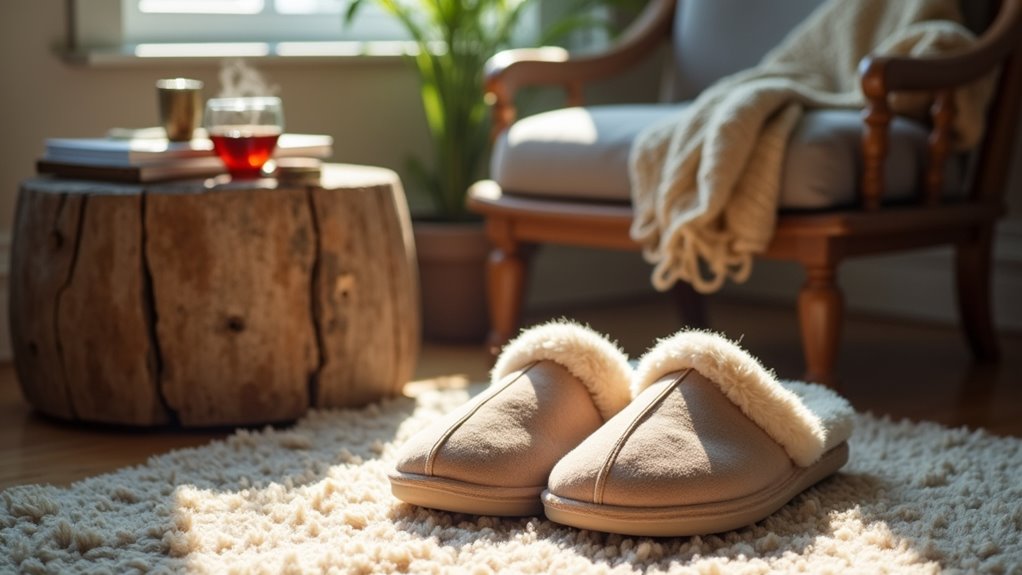
Fleece slippers are a favorite for many. They offer warmth and softness, perfect for chilly days. Fleece keeps your feet cozy without making them too hot.
Here are some great features of fleece slippers:
- Cushioned footbeds give extra support for long wear.
- They’re machine washable, so cleaning is easy.
- Fleece slippers come in many colors and styles. You can find fun options for home wear.
- Fleece is affordable, making it easy for everyone to enjoy.
Fleece slippers provide a wonderful mix of warmth, softness, and comfort.
They’re light, so you can wear them around the house without feeling heavy. You’ll find fleece slippers become your favorite for relaxing at home.
Comparing Materials for Optimal Warmth
Selecting materials for warm slippers is important. Wool is an excellent choice. It keeps feet warm and insulates well.
Cotton, on the other hand, doesn’t trap heat as effectively. Leather is strong and lasts a long time. It’s good for durability but may not keep your feet warm.
Synthetic materials shine in this area. They provide warmth without adding extra weight. Proper slippers can improve focus and productivity during those chilly winter days.
Think about what feels best for you. Comfort matters just as much as warmth. Consider your lifestyle and needs. Choose wisely for those cozy, warm slippers!
Wool vs. Cotton
Choosing the right material for warm slippers is important for your comfort. Wool and cotton have some big differences in warmth and softness.
Wool slippers offer excellent insulation. They keep your feet warm, even in cold weather. Wool can absorb moisture too. It can hold up to 15% of its weight without feeling wet. This makes wool a great choice for cold and damp conditions.
Cotton slippers are lighter and more breathable. They feel comfortable, but they don’t keep you as warm as wool. Cotton lacks the thermal properties that wool has.
Wool also has natural lanolin. This helps prevent odors. In contrast, cotton can trap moisture. This can lead to bacteria growth and unpleasant smells.
For winter, wool slippers are the best for warmth. They help keep your feet cozy. For warmer weather, cotton slippers work well. They keep your feet cool and comfortable.
Leather’s Durability Considerations
Leather slippers are a strong choice for those who want durability. They last a long time but require regular care to stay nice.
Leather keeps your feet warm, but it doesn’t trap heat like wool or fleece. For very cold days, adding extra insulation helps.
Leather can resist moisture, but it doesn’t remove it like other materials. This can make your feet feel wet if worn too long.
Breathability varies in leather, so pick types that let air flow. This choice helps keep you comfortable and dry.
Synthetic Material Options
Natural materials have their perks, but synthetic options shine for slippers. Materials like fleece and polyester blends are popular for good reasons. They keep your feet warm and cozy, making them a great choice.
These synthetic materials offer excellent thermal insulation. Your feet will stay warm even on cold days. They also have moisture-wicking properties. This means they help manage sweat and keep your feet dry.
Quick-drying features are another plus. After washing, your slippers will be ready to wear in no time. Thinsulate technology adds warmth without making slippers bulky.
Lightweight and breathable, these materials are comfortable for long wear. While they may not breathe as well as wool, slippers with ventilation can help prevent moisture build-up.
Eco-Friendly Options for Warm Slippers
Warm slippers can be eco-friendly too. Many materials are good for the planet. Look for slippers made from biodegradable materials like hemp and bamboo. These choices have less impact on the environment than synthetic ones.
You can also find slippers made from recycled felt. This felt comes from plastic bottles. It combines quality and sustainability.
Natural wool slippers, like those from Nootkas, feature soft wool lining. They ensure ethical production, as sheep are raised humanely in New Zealand.
Hybrid materials mix natural and synthetic fibers. They provide comfort and last longer while reducing ecological footprints.
Check for Oeko-Tex certification on slippers. This means the textiles are safe and free from harmful substances.
Picking these eco-friendly options helps you feel good and supports a healthier planet.
Care Tips for Maintaining Warm Slippers

Taking care of your warm slippers helps them last longer. Follow these easy tips to keep your slippers in great shape:
- Wash Turkish cotton slippers in a washing machine. Use mild detergent. Avoid bleach and fabric softeners.
- Spot-clean suede and shearling wool slippers. This keeps them looking good without damage.
- Air out your slippers often. This keeps them fresh and stops foot odors.
- Store slippers in a cool, dry place. Keep them away from sunlight to protect materials and shape.
- Regular maintenance of your slippers contributes to overall foot cleanliness, ensuring they remain a hygienic barrier against dust and allergens.
These simple steps keep your slippers cozy and comfortable. Enjoy your warm slippers for a long time!
Frequently Asked Questions
How Do I Choose the Right Size for Warm Slippers?
To find the right size for warm slippers, start by measuring your feet carefully. Use a sizing chart to compare your measurements. After picking a size, try the slippers on. Make sure your toes can wiggle freely. Check the lining thickness too. A thicker lining means a snugger fit. Remember, comfort is key. You want to feel cozy, not cramped. Enjoy your warm slippers!
Can Warm Slippers Be Worn Outside?
Warm slippers can be worn outside. Just make sure they have non-slip soles. Weather-resistant materials are a must too. This will help keep your feet warm and dry. Slippers without these features can lead to slips or cold feet. Choose the right pair for your outdoor fun. Enjoy your time outside without worries!
Are There Any Allergy Concerns With These Materials?
There are allergy concerns with some materials. Sensitive people should choose hypoallergenic options. Organic cotton and untreated wool are good choices. These materials can help reduce allergic reactions. It’s best to avoid synthetic fabrics. They may irritate your skin. Always pay attention to how materials make you feel. Comfort is important for everyone.
How Long Do Warm Slippers Typically Last?
Warm slippers can last a long time, or they might not last long at all. Generally, they last between 1 to 3 years. Taking good care of them helps. Some slippers can even last longer than three years with proper pampering. Regular cleaning and storing them properly can make a big difference. Enjoying cozy slippers for years is possible with a little effort!
What Styles Are Available for Warm Slippers?
Warm slippers come in many styles. Closed-back designs offer great insulation. Slip-on clogs are easy to wear. Classic moccasins provide a timeless look. Cozy booties keep your ankles warm and snug. Each style brings comfort and functionality. Choose what fits your needs best. Enjoy the warmth these slippers provide.
Conclusion
Warm slippers can make cold days feel cozy. Sheepskin, wool, and fleece are popular materials. Sheepskin feels luxurious and soft. It keeps your feet warm and comfortable. Wool also provides great warmth and breathability. It helps to keep your feet dry. Fleece is soft and fluffy. It adds extra comfort to every step.
Eco-friendly options exist too. Look for slippers made from sustainable materials. Caring for your slippers is important. Clean them according to the manufacturer’s instructions. Proper care can extend their life.
Choose the right material for your needs. Stay warm and comfortable all winter long. Your feet deserve the best!