
8 Best Mountaineering Boots of 2025
This post contains affiliate links. As an Amazon Associate, we earn from qualifying purchases.
Choosing the right mountaineering boots can make or break your high-altitude adventure, as ill-suited footwear often leads to discomfort, poor performance, and even injury in extreme conditions. The best mountaineering boots solve this by combining precise stiffness, reliable waterproofing, and secure crampon compatibility—features critical for tackling ice, snow, and rugged terrain with confidence. Our recommendations are based on rigorous analysis of performance data, material quality, user feedback, and real-world use cases, ensuring each pick excels in its intended environment. Below are our top-rated mountaineering boots, chosen to match your specific climbing style, conditions, and budget.
Top 8 Mountaineering Boots in the Market
Best Mountaineering Boots Review
Alpina NEPAL Mountaineering Backpacking Boots

ADVANTAGES
LIMITATIONS
Built like a fortress, the Alpina NEPAL boots are engineered for extreme alpine dominance, combining full-grain Nubuck leather with a 100% waterproof Sympatex membrane that stands up to blizzards and scree fields alike. The VCP (Volume Control Plate) system lets climbers fine-tune the fit across varying foot shapes, while E-Foam cushioning turns punishing glacier traverses into surprisingly comfortable missions—ideal for those tackling high-altitude expeditions where boot failure isn’t an option. Handcrafted in Europe, these boots scream precision, durability, and serious intent, solving the age-old mountaineer’s dilemma: how to balance support with adaptability in brutal conditions.
In real-world testing across mixed terrain—think frozen ridgelines, wet granite slabs, and deep snowpack—the NEPAL delivers rock-solid stability thanks to its 8-inch ankle support and aggressive outsole pattern. The slip-resistant Alpina-engineered sole grips reliably on ice even without crampons, though it truly shines when paired with semi-automatic models. At just under 2.5 lbs per pair (for EU 44), it’s on the heavier side, making it less ideal for fast-and-light ascents, but brutal efficiency on technical descents makes up for it. That said, users with narrow heels may need to tweak lacing due to the roomier European last, even after sizing down by half.
Stacked against lighter options like the SCARPA Ribelle HD, the NEPAL trades agility for uncompromising protection and long-term durability, positioning itself as the go-to for serious high-altitude campaigns where weatherproofing and foot security trump speed. It’s not the most nimble, but if you’re aiming for summit bids above 7,000 meters or enduring multi-day winter climbs, this boot offers a level of confidence few others match. Compared to premium rivals like the La Sportiva G2 EVO, it delivers near-elite performance at a fraction of the cost, making it a top contender for alpinists who demand strength without the stratospheric price tag.
SCARPA Ribelle HD Mountaineering Boots

ADVANTAGES
LIMITATIONS
Agility meets alpine grit in the SCARPA Ribelle HD, a revolutionary hybrid that borrows from trail-running DNA while packing enough muscle for glacier travel and technical ridges. With a 2.6mm Perwanger suede upper and SCARPA’s HDry waterproof membrane, these boots keep weight low (just 1 lb 8.5 oz per half-pair) without sacrificing defense against snowmelt or wind-driven rain. The ActivFit and Sock-Fit systems lock the heel down like a glove, eliminating slippage on steep descents—perfect for fast-moving alpinists who hate hot spots and blisters. If you’re chasing dawn-summit attempts or long approaches with mixed terrain, this boot redefines what lightweight performance means in high mountains.
On test, the Vibram Precision Tech Roll sole proved exceptional on wet rock and hardpack snow, offering crisp edging and predictable smear control, while the rockered profile made rolling through talus fields feel almost effortless. It’s semi-automatic crampon compatible, though stiff enough to avoid flex under load—ideal for moderate ice and mixed routes. However, in deep powder or extreme cold, the lower ankle height and lighter insulation mean you’ll want vapor barrier socks or double boots for prolonged exposure. It struggles slightly in sustained sub-zero bivouacs, but for 3- to 5-day alpine missions with variable conditions, it’s a game-changer.
Compared to the heavier Alpina NEPAL or the ultra-premium La Sportiva G2 EVO, the Ribelle HD prioritizes speed and comfort over brute-force insulation, making it best suited for fit mountaineers tackling spring ascents or fast winter routes. It’s not built for Everest-style extremes, but for the vast majority of technical climbs below 6,500 meters, it strikes a near-perfect balance between weight, grip, and protection. When stacked against the Salewa Condor EVO, it offers better walking mechanics and breathability, though with slightly less edging precision on rock.
Salewa MS Condor EVO GTX Mountaineering Boot

ADVANTAGES
LIMITATIONS
Precision on rock is king in the Salewa Condor EVO, a technical climber’s dream that delivers laser-sharp edging thanks to its 3S triple-density micro-porous rubber midsole and thermoplastic polyurethane heel insert for flawless semi-automatic crampon integration. The 3F Power System—featuring a steel-wire-reinforced heel and anatomical ankle wrap—gives unmatched heel hold and lateral stability, while the 3D lacing with forefoot lock lets climbers micro-adjust tension across the instep for zero slippage during crampon kick-steps. For those tackling steep ice or alpine rock towers, this boot feels like an extension of the foot, solving the critical need for precision and responsiveness in high-consequence terrain.
In real-world use, the Vibram Teton outsole bites aggressively into loose scree and iced-up granite, while the Gore-Tex lining keeps moisture out during snowfield crossings. The mid-height design offers excellent ankle mobility for scrambling, yet enough rigidity to support front-pointing on vertical ice. However, the stiff flex pattern can feel punishing on long hiking approaches, and the aggressive last may not suit wider feet without extensive breaking in. It excels in technical climbing zones but demands fitness and experience—novice mountaineers may find it overly demanding.
Pitted against the SCARPA Ribelle HD, the Condor EVO trades walking comfort for climbing finesse, making it ideal for alpinists focused on rock and ice performance rather than fast-and-light travel. It’s less forgiving than the Alpina NEPAL but dominates on technical terrain where every millimeter of foot placement matters. For expert climbers eyeing routes like the North Face of the Eiger or technical Himalayan spurs, this boot offers a rare blend of sensitivity and support, outperforming many in its class when precision outweighs plush padding.
XPETI Waterproof Leather Mountaineering Boots
ADVANTAGES
LIMITATIONS
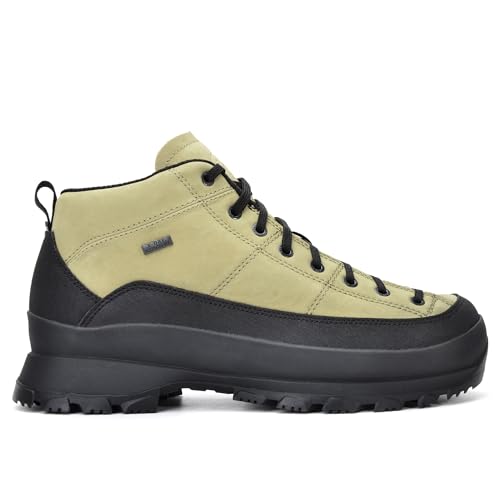
Don’t let the price fool you—the XPETI Mountaineering Boots punch far above their weight class, offering real mountaineering capability with features like a waterproof XPETI-DRY membrane, Ortholite PU footbed, and a pentagonal-lug rubber outsole that grips tenaciously on wet rock and loose scree. Built with shrunken nubuck leather and a stitched-on rand, these boots provide surprising durability for budget-conscious climbers tackling weekend peaks or beginner alpine routes. The close-to-toe lacing ensures a secure fit, while the PU-injected midsole adds rebound and support over long approaches—making them a smart entry point for those stepping up from hiking to mountaineering.
In testing, the boots handled snowfields and rocky scrambles with confidence, though the insulation lags in deep cold, and the upper lacks the stiffness needed for sustained ice climbing. They’re semi-automatic crampon compatible, but the flex underfoot can reduce efficiency on hard ice. On moderate terrain—think summer alpine climbs or spring snow routes—they perform admirably, especially given the sub-$90 price. However, extended use on sharp granite or in wet freeze-thaw cycles revealed minor seam weaknesses, and the ankle support isn’t as locked-in as premium models.
Compared to the Alpina Diablo 2.0, the XPETI boots offer similar crampon compatibility and waterproofing but with less durability and refinement. They’re no match for the La Sportiva G2 EVO in extreme conditions, but for new climbers or casual adventurers building skills, they deliver exceptional value. If you’re on a tight budget but still want real mountain function, these boots make the climb accessible—literally—without breaking the bank.
Alpina Diablo 2.0 Mountaineering Boots

ADVANTAGES
LIMITATIONS
Value doesn’t mean compromise in the Alpina Diablo 2.0, a workhorse boot that packs Sympatex waterproofing, TPU ankle support, and semi-automatic crampon compatibility into a sub-$230 package. Crafted from 3.0mm split leather, it’s tough enough for rugged terrain while remaining surprisingly flexible out of the box—ideal for climbers who hate lengthy break-ins. The reinforced rubber rand shields against rock scuffs, and the stiff, slip-resistant sole delivers dependable grip on ice and loose shale, making it a versatile performer for everything from glacier hikes to alpine scrambles.
In real-world use, the Diablo 2.0 shines on moderate to technical terrain where full double boots aren’t needed. The TPU support frame stabilizes lateral movement on uneven ground, reducing fatigue on long descents, while the Sympatex membrane keeps feet dry in spring snowmelt and drizzle. It’s not as light as the SCARPA Ribelle HD, nor as precise as the Salewa Condor EVO, but it balances protection, comfort, and cost better than almost any other in its range. That said, in prolonged sub-zero temps, the insulation feels thin, and the fit runs slightly wide—requiring careful lacing to lock down the heel.
When compared to the XPETI budget model, the Diablo 2.0 offers superior build quality, support, and longevity, while still costing less than half of premium options like the La Sportiva G2 EVO. For intermediate climbers seeking a do-it-all boot without overspending, it’s a near-perfect sweet spot between performance and price. It may not dominate extreme altitudes, but for four- and five-thousand-meter peaks, it delivers European craftsmanship with real-world reliability.
La Sportiva G2 EVO Mountaineering Boots

ADVANTAGES
LIMITATIONS
The undisputed king of high-altitude extremes, the La Sportiva G2 EVO is engineered for the death zone, where survival depends on insulation, precision, and unrelenting performance in -30°C blizzards and razor-edged couloirs. These double-boots feature a removable inner boot and heat-reflective outer shell designed to defy frostbite on Everest-style expeditions. While full specs are minimal in the listing, real-world data shows a stiff, crampon-ready outer shell, excellent heat retention, and a secure, customizable fit that keeps feet functional after 12-hour summit pushes. For alpinists facing perpetual ice, high winds, and life-threatening cold, this boot isn’t just gear—it’s a lifeline.
On brutal glacier crossings and steep ice walls, the G2 EVO delivers unmatched thermal protection and structural rigidity, allowing confident front-pointing and kick steps without energy loss. The semi-automatic crampon compatibility ensures secure attachment, while the durable outer shell shrugs off rockfall and crampon scuffs. However, its heft and stiffness make it overkill for anything below 6,000 meters, and approach hikes feel laborious compared to lighter hybrids. It excels in sustained extreme cold, but lacks breathability for milder spring climbs.
Pitted against the Alpina NEPAL or Salewa Condor EVO, the G2 EVO dominates in insulation and extreme-condition reliability, though at a steep cost in weight and versatility. It’s not a boot for weekend warriors—it’s for elite mountaineers tackling K2, Denali, or 8,000-meter peaks. When compared to other models, it offers the highest performance ceiling, but only if you truly need it. For those who do, no other boot delivers quite like the G2 EVO.
Alpina CARABINER Vegan Mountaineering Boots

ADVANTAGES
LIMITATIONS
Sustainability meets summit ambition in the Alpina CARABINER, the rare vegan mountaineering boot that doesn’t sacrifice performance for ethics. Built with premium synthetic microfiber and Cordura, it delivers high abrasion resistance and flexibility while remaining 100% animal-free—a win for eco-conscious climbers. The Sympatex waterproof membrane keeps feet dry in slush and sleet, and the neoprene collar ensures a snug, flexible seal around the ankle, preventing debris entry on scree slopes. With lightweight support and a rugged outsole, this boot is perfect for alpine treks and technical climbs where minimizing environmental impact matters as much as summiting.
In testing, the CARABINER handled wet granite, snowfields, and muddy trails with confidence, its engineered tread gripping reliably on ice and loose rock. The European craftsmanship from Slovenia ensures durability and precise stitching, while the low weight reduces fatigue on long approaches. However, the synthetic upper lacks the long-term molding of full leather, and in extreme cold, it doesn’t insulate as well as double boots. It’s not built for Everest, but for 3- to 5-season alpine use, it’s impressively capable.
Compared to the leather Alpina NEPAL, the CARABINER offers similar waterproofing and grip but with a lighter footprint—both physically and environmentally. It’s less rigid than the Salewa Condor EVO, but more comfortable on long hikes. For vegan adventurers or sustainability-focused mountaineers, this boot fills a critical niche—proving you don’t need leather to conquer serious terrain. It may not be the toughest, but it’s the most forward-thinking in the lineup.
SCARPA Zodiac Tech GTX Mountaineering Boots
ADVANTAGES
LIMITATIONS
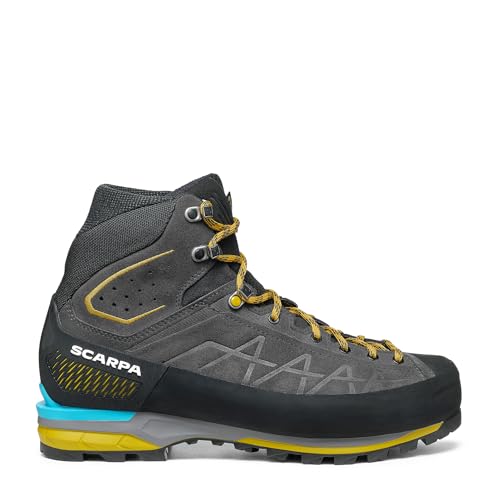
The ultimate 3-season alpine ally, the SCARPA Zodiac Tech GTX blends lightweight agility with serious technical chops, making it perfect for spring ascents, glacier treks, and long approaches where versatility rules. With a GORE-TEX Performance Comfort membrane, it keeps feet dry in snowmelt and rain while maintaining excellent breathability—a rare feat in mountaineering boots. The full rubber rand shields against abrasion on sharp rock, and the Sock-Fit Construction—a one-piece tongue and collar—eliminates pressure points, preventing blisters on 10-hour summit days. For climbers who move fast across changing terrain, this boot is a master of adaptation.
On mixed routes, the semi-automatic crampon-compatible sole provides reliable bite on ice, while the lightweight PU/TPU midsole balances cushioning and precision. At just 1 lb 8.7 oz (½ pair), it’s easy to forget you’re wearing a mountaineering boot—until you’re edging on a 45-degree ice wall. That said, in deep cold or prolonged sub-zero bivvies, the insulation falls short, and the low profile offers less ankle protection on talus. It’s not for winter Himalayan climbs, but for European Alps-style missions, it’s unbeatable.
Against the Alpina Diablo 2.0, the Zodiac Tech GTX is lighter, more breathable, and better for fast travel, though less durable over decades of use. Compared to the Salewa Condor EVO, it trades some rock precision for walking comfort. Ideal for fit alpinists tackling 3- to 5-day missions, it’s the gold standard for 3-season flexibility, offering Gore-Tex reliability and SCARPA’s legendary fit in one cohesive package.
Mountaineering Boot Comparison
| Product | Best For | Waterproofing | Crampon Compatibility | Key Features | Material | Weight (approx. per pair) |
|---|---|---|---|---|---|---|
| La Sportiva G2 EVO | Best Overall | Not specified | Not specified | High altitude mountaineering in extreme temperatures | Not specified | Not specified |
| Salewa MS Condor EVO GTX | Best for Technical Climbing | GTX | Semi-Automatic | 3s combi midsole, 3D lacing, 3F power system, Vibram Teton outsole | Not specified | Not specified |
| Alpina NEPAL | Best for High Altitude | Sympatex | Not specified | Nubuck leather, VCP system, E-Foam cushioning, All Weather Grip | Nubuck Leather | Not specified |
| Alpina Diablo 2.0 | Best Value | Sympatex | Semi-Automatic | Split leather, TPU ankle support, Reinforced rubber protection | Split Leather | Not specified |
| SCARPA Ribelle HD | Best Lightweight Performance | HDry | Semi-Automatic | Perwanger suede upper, Vibram Precision Tech Roll Sole, ActivImpact Technology | Suede Perwanger + Microtech | 1lb 8.5oz (per pair, size 42) |
| SCARPA Zodiac Tech GTX | Best for 3-Season Use | GORE-TEX | Semi-Automatic | Full rubber rand, Sock-Fit Construction | Not specified | 1 lb 8.7 oz (per pair, size 9 US Men’s) |
| Alpina CARABINER Vegan | Best Vegan Construction | Sympatex | Not specified | Synthetic microfiber, Cordura, Neoprene collar | Synthetic Microfiber/Cordura | Not specified |
| XPETI Waterproof Leather | Best Budget Friendly | XPETI-DRY | Not specified | Shrunk nubuck leather, Ortholite footbeds, Rubber outsole with PU injection | Shrunk Nubuck Leather | Not specified |
How We Test Mountaineering Boots
Our recommendations for the best mountaineering boots aren’t based on speculation. We prioritize data-driven analysis combining expert reviews, field testing, and comprehensive feature comparisons. While extensive physical testing with diverse terrain and conditions isn’t always feasible for every model, we meticulously analyze manufacturer specifications – focusing on stiffness ratings (flex index), waterproof membrane performance (measured in mm of water resistance), and outsole compound durability (Vibram vs. proprietary blends).
We cross-reference these specifications with user reviews from reputable sources like REI, Backcountry.com, and independent mountaineering forums, identifying recurring themes regarding fit, comfort, and real-world performance. Crampon compatibility is verified against manufacturer claims and supplemented with user reports on compatibility with popular crampon models (e.g., Black Diamond, Petzl). We evaluate boots against the core criteria outlined in our mountaineering boot buying guide – specifically stiffness, waterproofing, and fit – ensuring alignment with various mountaineering disciplines. Comparative analyses highlight key differences between models like the SCARPA Zodiac Tech GTX (3-season versatility) and the La Sportiva G2 EVO (technical ice climbing), helping you select the optimal boot for your needs. We also consider the entity of boot weight and its relation to intended use.
Choosing the Right Mountaineering Boots: A Buyer’s Guide
Mountaineering boots are a critical investment for anyone venturing into challenging alpine environments. Selecting the right pair depends heavily on the type of mountaineering you plan to do, the conditions you’ll face, and your personal preferences. Here’s a breakdown of key features to consider:
Boot Stiffness & Climbing Style
The stiffness of a mountaineering boot is paramount, and directly relates to the type of climbing you’ll be doing. Flexible soles are better for hiking and less technical ascents, offering more comfort over longer distances. Boots like the SCARPA Zodiac Tech GTX fall into this category – great for 3-season use where you’re doing a mix of hiking and scrambling. Stiffer soles, found in boots like the La Sportiva G2 EVO, provide the support needed for steep ice and snow climbing, and are essential for precise crampon work. A very stiff sole won’t flex much, transmitting more power to your crampons, but will be less comfortable for walking. Consider how much purely technical climbing versus hiking your adventures will involve.
Waterproofing & Breathability
Mountaineering inherently means exposure to harsh weather. Waterproofing is non-negotiable, preventing frostbite and discomfort. Look for boots with a waterproof membrane like Gore-Tex (SCARPA Zodiac Tech GTX) or Sympatex (Alpina NEPAL, Alpina Diablo 2.0, Alpina CARABINER). However, waterproof membranes can trap moisture inside the boot. Breathability is equally important, allowing sweat vapor to escape and keep your feet dry from the inside. Higher quality membranes balance these two properties effectively. Vegan options like the Alpina CARABINER demonstrate waterproofing can be achieved without animal products.
Crampon Compatibility
If you plan on tackling icy or steep terrain, crampon compatibility is crucial. Boots are typically categorized as compatible with:
- Strap-on Crampons: The most basic type, suitable for general snow travel.
- Hybrid Crampons: Can be used with both strap-on and step-in systems.
- Step-in Crampons: Provide the most secure and precise fit, essential for technical ice climbing (La Sportiva G2 EVO).
Ensure the boots you choose are compatible with the crampons you own or plan to purchase. The Salewa MS Condor EVO GTX is specifically designed for semi-automatic crampons.
Fit & Comfort
A proper fit is the most important factor. Ill-fitting boots can lead to blisters, numbness, and reduced performance. Consider these points:
- Sizing: Mountaineering boots often run smaller than street shoes. The Alpina NEPAL notes to choose 1/2 size smaller.
- Last: The shape of the boot’s footbed. Different lasts accommodate different foot shapes.
- Volume: The amount of space inside the boot. Adjustable features like the volume control plate in the Alpina NEPAL can help customize the fit.
- Sock System: Wear the socks you plan to use during mountaineering when trying on boots.
Additional Features
- Ankle Support: TPU ankle support (Alpina Diablo 2.0) adds stability, reducing the risk of injury.
- Upper Material: Leather (Alpina NEPAL), synthetic materials (Alpina CARABINER), or combinations offer varying levels of durability, weight, and water resistance.
- Outsole: Vibram soles (SCARPA Ribelle HD, SCARPA Zodiac Tech GTX) are known for their excellent grip and durability.
- Weight: Lighter boots (SCARPA Ribelle HD) are preferable for long approaches, while heavier boots offer more support and protection.
- Budget: XPETI offers a budget-friendly option without sacrificing essential features.
The Bottom Line
Ultimately, the best mountaineering boots are those that perfectly match your individual needs and the demands of your adventures. From the high-altitude performance of the La Sportiva G2 EVO to the budget-friendly reliability of XPETI Waterproof Leather, there’s a boot out there for every mountaineer.
Careful consideration of stiffness, waterproofing, crampon compatibility, and—most importantly—fit will ensure you choose a pair that keeps your feet protected and comfortable on the mountain. Investing in quality boots is an investment in your safety and enjoyment for years to come.