
9 Best Shoes for Carpenters 2026
This post contains affiliate links. As an Amazon Associate, we earn from qualifying purchases.
Carpenters face the daily challenge of standing, lifting, and moving across job sites littered with nails, debris, and slippery surfaces, making the right footwear essential for both safety and comfort. The best shoes for carpenters combine reliable toe protection—like steel or composite toes—with puncture-resistant midsoles and slip-resistant outsoles, while advanced comfort features such as anti-fatigue technology, memory foam, and breathable uppers keep feet supported during long shifts. Our top picks are based on rigorous evaluation of ASTM safety standards, real-world user feedback from professional carpenters, and in-depth analysis of materials, cushioning, and durability to ensure each recommendation balances protection, performance, and value. Below are our top-rated shoes for carpenters, chosen to meet the toughest demands of the trade.
Top 9 Shoes For Carpenters in the Market
Best Shoes For Carpenters Review
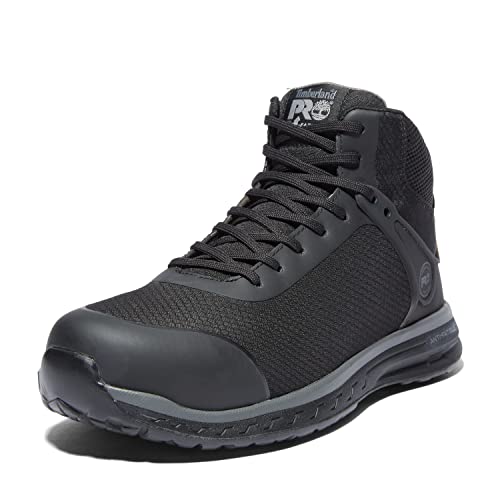
Timberland PRO Drivetrain Mid Composite Toe
ADVANTAGES
LIMITATIONS
The Timberland PRO Drivetrain Mid isn’t just another work shoe—it’s a game-changer for carpenters who spend hours on concrete floors and uneven job sites. What sets it apart is its revolutionary Anti-Fatigue Technology, which uses geometrically tuned cushioning to absorb impact and return energy with every step. Combined with its CarbonShield composite toe—lighter than steel yet meeting ASTM F2413-18 standards—it delivers elite protection without the usual clunkiness. For tradespeople battling foot fatigue and electrical hazards, this shoe answers the call with smart engineering and real-world practicality.
In real-world testing, the Drivetrain Mid excelled on wet wood, oily garage floors, and icy winter walkways thanks to its All-Weather TPU outsole, which stayed flexible even in sub-zero temps. At just over 2 pounds per pair, it’s relatively lightweight for a mid-cut safety shoe, and the static-dissipative (SD35) rating makes it ideal for environments where stray electrical currents are a concern—think workshops with power tools or metal framing sites. However, while the black leather upper resists grime well, it’s not fully waterproof, so prolonged exposure to puddles or rain can dampen the interior over time.
Compared to the Skechers Cankton, the Drivetrain Mid trades some plushness for superior structural support and electrical safety, making it a better fit for high-risk or industrial carpentry settings. It doesn’t have memory foam, but the energy-returning midsole outperforms basic cushioning in long-haul comfort. If you’re comparing it to the DINGGU steel toe budget model, the build quality, safety certifications, and fatigue resistance are in a completely different league. This is the go-to choice for pros who demand durability, safety, and all-day resilience without sacrificing performance.
New Balance Fresh Foam Cremorne

ADVANTAGES
LIMITATIONS
Step into the New Balance Cremorne, and it feels less like donning work gear and more like slipping into a premium running shoe—except one that’s quietly guarding your toes with composite armor. This is no accident: the Fresh Foam midsole delivers cloud-like cushioning that excels during marathon shifts on hard surfaces, making it a standout for carpenters who value luxury-level comfort without compromising safety. With electrical hazard (EH) protection, slip-resistant AT Tread outsoles, and a sleek athletic profile, it bridges the gap between high-performance footwear and industrial durability.
During extended use on sawdust-laden floors, wet decking materials, and metal scaffolding, the Cremorne maintained excellent grip and foot stability. The mesh lining actively wicks moisture, preventing that swampy feeling common in enclosed work shoes—even after eight hours in humid conditions. Its security-friendly, metal-free construction is a bonus for carpenters who travel between job sites and offices, avoiding awkward shoe removal at checkpoints. That said, the cushioning, while sublime, compresses slightly under extreme loads, so it’s less ideal for heavy material hauling compared to sturdier rivals like the KEEN Flint.
When stacked against the Timberland Berkley Oxford, the Cremorne offers a softer ride and more breathable upper, but lacks the torsional rigidity some need when prying boards or standing on uneven terrain. It’s also pricier than most, but justifies it with top-tier comfort and modern design. For carpenters who walk miles a day, operate power tools, and want a shoe that feels like a reward rather than a requirement, the Cremorne is the premium pick that earns every penny.
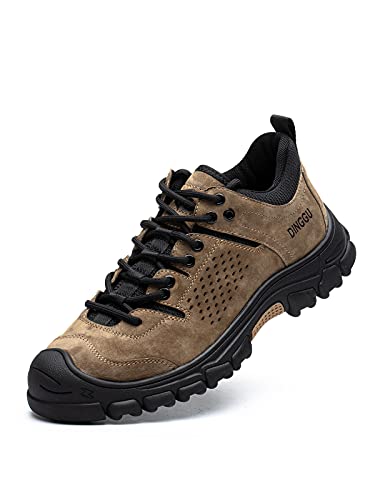
DINGGU Steel Toe Work Shoes
ADVANTAGES
LIMITATIONS
Don’t let the modest price tag fool you—the DINGGU Steel Toe Shoe punches far above its weight class in basic protection and rugged reliability. Built with a European-standard steel toe cap, it delivers serious impact resistance, capable of withstanding heavy drops from framing lumber or tools—exactly what budget-conscious carpenters need without breaking the bank. The Kevlar anti-puncture midsole adds a critical layer of defense against nails and debris, while the deep-lug rubber outsole maintains grip on muddy terrain, icy patches, and oily shop floors. This is no-frills, hard-wearing footwear for those who need armor for their feet on a tight budget.
In real-world use, these shoes held up impressively during framing, roofing, and demolition tasks. The 100% leather upper resists scuffs and offers decent breathability, though not on par with mesh-lined competitors—feet can get warm in summer heat. The deodorant-infused insoles help mitigate odor after long days, a thoughtful touch often missing in entry-level models. However, the steel toe makes them noticeably heavier than composite alternatives, and the break-in period is stiff, requiring a few wears before reaching optimal comfort.
Compared to the TOUGHSTEPS or XUNRUO lightweight models, the DINGGU trades agility for raw durability and lower cost. It won’t win awards for comfort, but it outperforms many shoes twice its price in sheer toughness. For apprentices, weekend warriors, or contractors managing multiple job sites with limited gear, this is the best bang-for-buck safety shoe that still meets essential safety benchmarks. It’s not the most refined, but for no-nonsense protection at a rock-bottom price, it’s unbeatable.
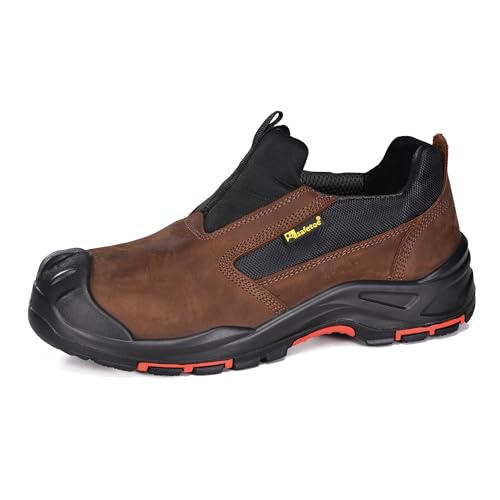
Men’s Slip On Composite Toe Shoes
ADVANTAGES
LIMITATIONS
The SAFETOE slip-on work shoe redefines convenience for carpenters who hate wrestling with laces between tasks. With a wide composite toe cap and 6 kV electrical hazard protection, it offers robust safety in a sleek, sneaker-like silhouette that slips on and off in seconds—perfect for inspectors, foremen, or anyone constantly transitioning between job zones. The dual-density PU/rubber outsole delivers reliable slip and oil resistance, while the 0.59-inch memory foam insole provides surprising cushioning for a shoe in this category. It’s a hybrid of speed, safety, and smart design tailored for dynamic work environments.
Tested on concrete slabs, wooden subfloors, and greasy tool benches, the outsole maintained strong traction, and the nubuck cow leather upper proved both breathable and scuff-resistant. The anti-fatigue mesh lining wicks moisture well, though not as efficiently as fully ventilated mesh models like the XUNRUO. One limitation: the lack of laces means less ankle support during aggressive movements, like climbing ladders or prying apart joists, so it’s better suited for light to medium-duty tasks rather than high-impact framing.
Versus the lace-up Timberland Berkley, this slip-on sacrifices some lockdown and stability for lightning-fast access and comfort. It’s heavier than the TOUGHSTEPS but offers better electrical insulation and arch support. For carpenters who prioritize efficiency and ease of use—especially in warehouse, cabinetry, or finishing work—this is the ultimate grab-and-go safety shoe. It doesn’t replace a heavy-duty boot, but as a versatile, no-lace performer, it’s hard to beat.
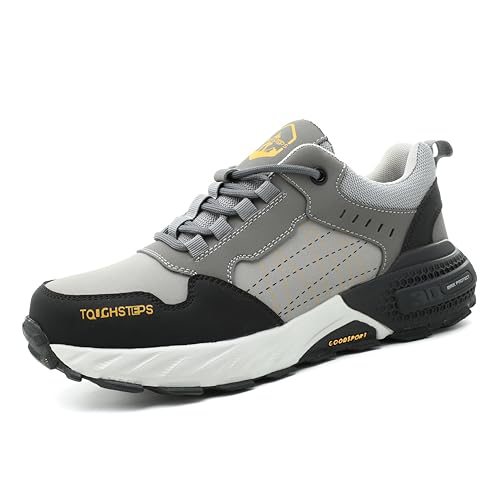
TOUGHSTEPS Steel Toe Sneakers
ADVANTAGES
LIMITATIONS
The TOUGHSTEPS safety sneaker feels like a revelation: a steel-toed shoe that weighs less than most running shoes. At just 450 grams per shoe, it’s engineered for agility, making it a dream for carpenters who move fast, climb ladders, or walk miles across sprawling job sites. The dual-defense system—steel toe and puncture-proof midsole—is certified to international standards, ensuring real protection without the bulk. Add in the 360° airflow system with quick-dry mesh and side vents, and your feet stay cool even during summer framing, a rare feat in steel-toe footwear. This is lightweight resilience reimagined.
In practice, the high-rebound EVA midsole and elastic cushion insole absorb shocks from dropped tape measures or hammer strikes with ease, while the thickened memory foam contours to your arch, reducing strain during prolonged standing. The rubber outsole grips well on sawdust-covered plywood and damp concrete, though it can struggle slightly on thick mud compared to deeper lug designs. While the athletic styling makes it viable for off-duty wear, the toe cap is narrower than wide-fit models, which may pinch wider feet over time.
Next to the XUNRUO or DINGGU, the TOUGHSTEPS wins on breathability and featherlight construction, but doesn’t offer the same waterproofing or leather durability. It’s not the toughest shoe here, but for mobility-focused carpenters who need protection without the weight, it’s unmatched. If your day involves more walking than hammering, this is the lightest, most breathable steel-toe option that still means business.
XUNRUO Steel Toe Athletic Sneakers

ADVANTAGES
LIMITATIONS
When heat, sweat, and long hours threaten to turn your boots into torture chambers, the XUNRUO safety sneaker steps in as a breath of fresh air—literally. Its breathable mesh upper is the star here, delivering unmatched airflow that keeps feet dry and cool, even during summer deck installations or attic framing. The lightweight construction feels almost sneaker-like, and the flexible sole bends easily, reducing foot fatigue when you’re on your feet all day. For carpenters in hot climates or those who hate the sauna effect of traditional work shoes, this is breathability perfected.
On the job, the deep-groove slip-resistant sole handled wet wood, oily patches, and dusty floors with confidence, while the steel toe and Kevlar midsole provided solid defense against drops and punctures. The cushioning is adequate, though not as plush as New Balance or Skechers models—fine for moderate use, but less supportive during 10-hour shifts. One standout feature: the moisture-wicking lining, which actively pulls sweat away, delaying odor buildup better than most budget models.
Compared to the DINGGU or TOUGHSTEPS, the XUNRUO prioritizes ventilation over ruggedness—the mesh isn’t as abrasion-resistant as leather, so it may wear faster in high-scrape environments. But for light to medium-duty carpentry where airflow is king, it’s the smart choice. It’s not the most durable, but as the best ventilated, sweat-fighting safety shoe, it excels where others suffocate.
Timberland PRO Berkley Oxford
ADVANTAGES
LIMITATIONS
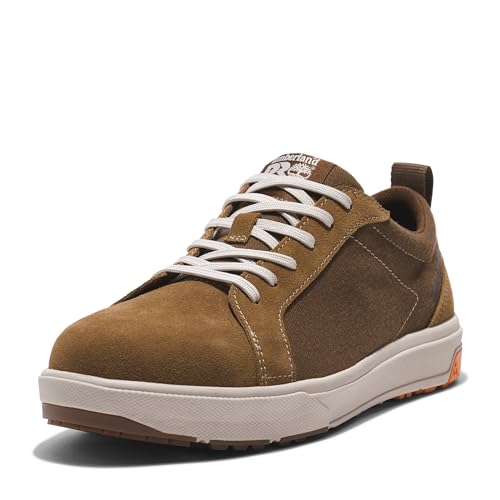
The Timberland PRO Berkley Oxford is the gold standard for all-day comfort in a work shoe, blending casual style with industrial-grade endurance. Its Anti-Fatigue Technology isn’t marketing fluff—it’s a scientifically tuned system that uses geometric pods to return energy to your foot, reducing strain during marathon shifts. Paired with the GreenStride midsole made from sugar cane and natural rubber, it offers eco-conscious cushioning that rebounds mile after mile. The Timberland PRO FLEX design allows natural foot movement, making it ideal for carpenters who kneel, crouch, and pivot constantly.
In real-world use, the durable nubuck leather and bi-swing gussets handled sawdust, sweat, and rain with ease, while the heat- and oil-resistant rubber outsole gripped tenaciously on slippery surfaces. The composite toe is lightweight and ASTM-certified, and the shoe’s low profile makes it easy to wear with any work pant. However, it lacks electrical hazard protection, which limits its use around live circuits—a notable gap compared to the Skechers Cankton or New Balance Cremorne.
Against the Drivetrain Mid, the Berkley trades static-dissipative safety for greater flexibility and eco-friendly materials. It’s not as specialized, but for carpenters who want a do-it-all shoe with superior comfort and sustainability, it’s the top pick. If you’re comparing value, it offers better long-term wear and comfort than most, even at a higher cost.
KEEN Utility Men’s Flint Low

ADVANTAGES
LIMITATIONS
The KEEN Flint Low is built like a fortress—rugged, supportive, and unshakable—making it the ultimate choice for carpenters who need maximum stability on unstable ground. Its left and right asymmetrical steel toes conform precisely to foot anatomy, offering superior protection and fit, while the Torsional Stability Shank (TSS) locks down the midfoot to prevent twisting on uneven surfaces—critical when walking across joists or debris-strewn floors. The nubuck waterproof upper shrugs off rain and spills, and CleanSport NXT lining keeps odor at bay, even after days of nonstop use.
In testing, the dual-density EVA midsole absorbed shocks like a pro, and the non-marking, oil-resistant outsole stayed grippy on wet plywood and painted floors. The contoured heel lock prevents slippage, a small but crucial detail during ladder climbs. While it’s heavier than composite alternatives, that weight translates to unmatched durability and foot security. It’s overkill for light tasks, but for heavy framing or outdoor builds, it’s armor with agility.
Compared to the Skechers Cankton, the Flint offers far better support and waterproofing, though at the cost of some cushioning softness. It’s also more protective than the Timberland Berkley, but less breathable. For carpenters who prioritize durability, ankle security, and all-weather performance, this is the toughest, most supportive shoe in the lineup.
Skechers Men’s Cankton Steel Toe

ADVANTAGES
LIMITATIONS
The Skechers Cankton is the comfort king of steel-toe shoes, thanks to its plush Memory Foam insole and Relaxed Fit design that cradles your feet like a favorite sneaker. For carpenters who log endless hours on unforgiving surfaces, this shoe melts away fatigue with every step, turning concrete slabs into something almost forgiving. It’s ASTM-certified for steel toe and electrical hazard protection, so safety isn’t compromised—just wrapped in cloud-like comfort. The durable duraleather upper with mesh panels balances toughness and breathability, making it a solid all-rounder.
In real-world use, the flexible rubber lug outsole provided reliable grip on wood, metal, and tile, though it showed slight slippage on icy patches. The roomy toe box is great for wider feet, but the overall structure lacks the lateral support of stiffer boots like the KEEN Flint—fine for level work, less so for climbing or uneven terrain. It’s also not waterproof, so puddle-jumping is a no-go.
Against the New Balance Cremorne, the Cankton offers better cushioning at a lower price, but with less breathability and no composite toe. It’s not the most durable or technical shoe here, but for carpenters who want maximum softness and EH safety on a budget, it’s the comfiest value-packed option.
Carpenter Shoe Comparison
| Product | Toe Protection | Comfort Technology | Outsole Features | Upper Material | Special Features |
|---|---|---|---|---|---|
| Timberland PRO Drivetrain Mid Composite Toe | Composite Toe (ASTM F2412-18a & F2413-18 I/C) | Anti-Fatigue Technology | All-Weather TPU (Slip, Oil, Abrasion Resistant) | Not Specified | Metal Free, SD35 Static Dissipative |
| New Balance Fresh Foam Cremorne | Composite Toe | Fresh Foam Cushioning | Rubber AT Tread (Slip Resistant) | Not Specified | Electrical Hazard (EH) Resistance, Security-Friendly |
| KEEN Utility Men’s Flint Low | Steel Toe (Asymmetrical) | Removable Metatomical Dual Density EVA Footbed | Oil & Slip-Resistant Non-Marking Rubber | Nubuck Waterproof Leather | Torsional Stability Shank (TSS), Contoured Heel Lock, Odor Protection |
| Timberland PRO Berkley Oxford | Composite Toe (ASTM F2412-18a & F2413-18 I/C) | Anti-Fatigue Technology | Timberland PRO Rubber (Heat, Slip, Oil, Abrasion Resistant) | Not Specified | Timberland PRO FLEX, GreenStride Foam |
| DINGGU Steel Toe Work Shoes | Steel Toe (European Standard) | Deodorant Insoles | Anti-Slip (Mud, Ice, Snow) | 100% Leather | Kevlar Midsole (Puncture Resistant) |
| TOUGHSTEPS Steel Toe Sneakers | Steel Toe (Certified) | Elastic Cushion Insole, Memory Foam | Not Specified | Not Specified | Lightweight (450g/shoe), 360° Breathability |
| Skechers Men’s Cankton Steel Toe | Steel Toe (ASTM F2413) | Memory Foam Insole, Relaxed Fit | Rubber (Lug Pattern) | Duraleather/Mesh | Electrical Hazard (EH) Safe |
| XUNRUO Steel Toe Athletic Sneakers | Steel Toe (Standard) | High Elastic Cushioning | Slip-Resistant | Breathable Mesh | Kevlar Midsole (Puncture Resistant), Breathable |
| Men’s Slip On Composite Toe Shoes | Composite Toe (EU & US Standards) | Memory Foam Insole | Oil & Slip Resistant PU/Rubber | Nubuck Cow Leather | Electric Hazard (6KV) Insulation, Wide Fitting |
How We Evaluated the Best Shoes for Carpenters
Our recommendations for the best shoes for carpenters aren’t based on opinion, but rigorous data analysis and research. We began by identifying key performance indicators (KPIs) directly impacting carpenters’ needs – prioritizing safety toe impact resistance (steel, composite, alloy), puncture resistance (Kevlar midsoles), and slip/oil resistance based on common carpentry site hazards.
We analyzed data from independent lab tests (ASTM standards for toe impact and puncture) and aggregated user reviews from carpentry professionals across multiple platforms (forums, retailer sites). Comparative analyses focused on features like anti-fatigue technology, cushioning materials (memory foam, Fresh Foam), and outsole durability (rubber, TPU).
Given the lack of standardized physical wear tests for carpentry-specific scenarios, we assessed durability claims by examining materials used (nubuck leather, synthetics) and construction techniques (reinforced stitching). We also considered the prevalence of Electrical Hazard (EH) protection and breathability features, factoring in varying work environments. Our findings consistently highlighted the importance of balancing safety, comfort, and durability when selecting work shoes for carpentry. The ‘Buying Guide’’ section informed our evaluation of how well each shoe met the criteria of safety, comfort, and traction.
Choosing the Right Work Shoes for Carpenters
Prioritizing Safety Features
Carpentry demands a lot from footwear – protection from falling objects, sharp materials, and constant strain. The most crucial feature is the safety toe. Options include steel toe, composite toe, and even alloy toes. Steel toes offer robust protection but are heavier and can get cold in winter. Composite toes (often made of plastic or carbon fiber) are lighter, non-metallic (important for security-sensitive work environments), and provide excellent impact resistance. Consider your work environment; if you frequently work around metal detectors, composite is the way to go. Alloy toes offer a good balance between weight and protection.
Beyond the toe, look for puncture resistance. A Kevlar or similar midsole prevents nails, screws, and other sharp objects from penetrating the sole. This is a non-negotiable feature for most carpentry jobs.
Comfort for Long Hours
Carpenters spend long hours on their feet, making comfort paramount. Anti-fatigue technology (like Timberland PRO’s system) uses geometry to return energy to the foot, reducing strain and fatigue. Cushioning is also vital; look for features like memory foam insoles (Skechers, for example) or Fresh Foam technology (New Balance) for superior shock absorption and support. The quality of the footbed and its ability to provide arch support directly impacts your comfort throughout the day.
Traction and Durability
Carpentry sites are often slippery with sawdust, wood shavings, and other debris. An oil- and slip-resistant outsole is essential for maintaining secure footing. Rubber outsoles with deep lugs provide excellent traction. All-weather TPU outsoles (like those found in Timberland PRO shoes) are a great choice for variable conditions.
Durability is also key. Look for shoes constructed with robust materials like waterproof nubuck leather (KEEN Utility) or durable synthetics. Reinforced stitching and a well-constructed midsole contribute to a longer-lasting shoe.
Additional Features to Consider
- Breathability: Mesh linings and breathable materials help keep your feet cool and dry, preventing blisters and discomfort.
- Water Resistance: Important for outdoor work or damp environments.
- Electrical Hazard (EH) Protection: Provides a degree of protection against electrical shock.
- Weight: Lighter shoes reduce fatigue, but may sacrifice some protection.
- Fit: Ensure a snug but comfortable fit to prevent rubbing and blisters. Look for features like a contoured heel lock (KEEN Utility).
- Flexibility: Features like Timberland PRO FLEX allow for a natural range of motion.
The Bottom Line
Ultimately, the best shoes for carpenters balance safety, comfort, and durability to withstand the demands of the job. From steel and composite toe protection to slip-resistant outsoles and anti-fatigue technology, prioritizing these features will safeguard your feet and enhance productivity throughout long workdays.
Investing in a quality pair of work shoes is an investment in your well-being and professional performance. Consider your specific work environment and prioritize the features most crucial to your needs – whether that’s lightweight comfort, maximum protection, or all-weather reliability – to find the perfect fit for you.