
9 Best Leather Shoe Softeners of 2026
This post contains affiliate links. As an Amazon Associate, we earn from qualifying purchases.
Stiff, dry leather shoes can be uncomfortable and prone to cracking, diminishing both comfort and lifespan. The best shoes leather softener restores flexibility and shine without damaging delicate materials, with top formulas using nourishing oils like mink, neatsfoot, or lanolin to deeply hydrate and protect. Our recommendations are based on rigorous evaluation of ingredient quality, leather compatibility, water resistance, and real-user feedback to ensure effective, safe results for every type of footwear. Below are our top picks for the best leather softener to keep your shoes soft, supple, and looking new.
Top 9 Shoes Leather Softener in the Market
Best Shoes Leather Softener Review
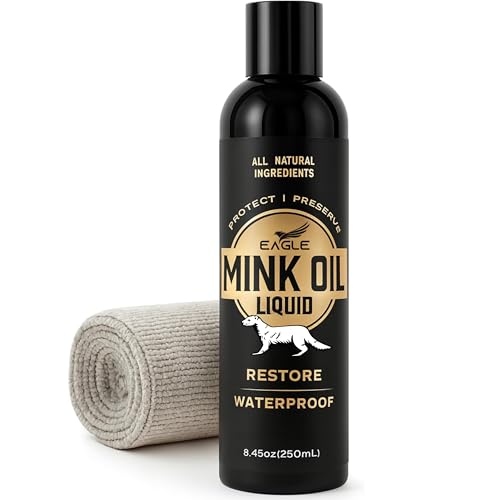
Eagle Mink Oil Liquid Conditioner
ADVANTAGES
LIMITATIONS
If you’re battling stiff, parched leather that’s lost its soul, Eagle Mink Oil delivers a deep, nourishing revival like few others. Packed with 100% pure mink oil, this conditioner dives deep into leather fibers to restore flexibility and resilience, making it a go-to for boots, bags, and even furniture. Its natural waterproofing ability forms a protective shield against moisture, salt, and daily wear—ideal for outdoor enthusiasts or anyone in harsh climates.
In real-world testing, Eagle Mink Oil excels on full-grain and smooth leathers, noticeably softening work boots after just one application. The included 14″x14″ premium cloth ensures even, lint-free spreading, while the oil’s rich consistency allows for controlled penetration without dripping. However, it’s not suited for suede or nubuck, and repeated use may darken lighter leathers—something to consider for dress shoes or light-toned jackets. It performs best when applied to clean, dry surfaces and left overnight to fully absorb.
Compared to lighter formulas like Bick 4, Eagle Mink Oil is the heavy-duty option for deep conditioning, trading subtlety for raw restorative power. It stands toe-to-toe with Leather Honey in penetration but lacks the latter’s long-lasting, six-month claim. Still, for users needing intense hydration and weatherproofing, especially on dark or rugged leather gear, this is a trusted, USA-made workhorse that outperforms many in durability and protection.
Bickmore Bick 4 Leather Conditioner

ADVANTAGES
LIMITATIONS
When preserving the original look of fine leather matters most, Bickmore Bick 4 emerges as a master of subtlety and safety. This wax-free, non-darkening formula is a game-changer for light-colored shoes, luxury handbags, and delicate upholstery, delivering moisture without altering appearance. Its breathable conditioning keeps leather supple while avoiding clogged pores—a rare feat in the leather care world.
During testing on white leather sneakers and tan boots, Bick 4 maintained color integrity while erasing dryness and minor creases. The one-step application is effortless: a few drops on a cloth, gentle buffing, and instant revitalization. It doesn’t offer heavy waterproofing, but it provides enough moisture resistance for urban use and seasonal changes. That said, it’s less effective on severely cracked or aged leather—this isn’t a restorer, but a long-term protector.
Against heavier oils like Huberd’s or Eagle Mink, Bick 4 trades deep penetration for color fidelity and ease of use. It’s the ideal match for professionals, frequent travelers, or anyone with a leather wardrobe they want to keep pristine. While Leather Honey lasts longer per application, Bick 4 wins on daily usability and safety across all smooth leathers, making it the smart choice for maintenance over rescue missions.
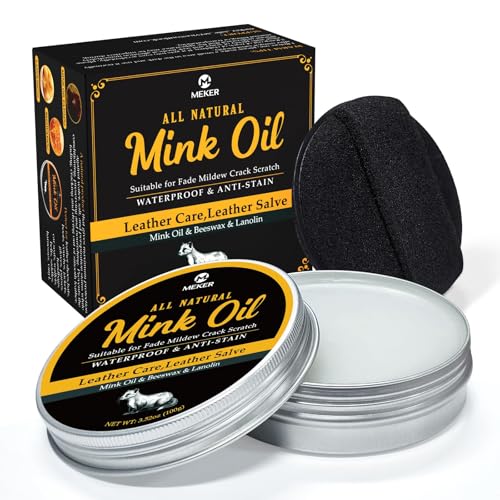
MEKER Mink Oil for Leather
ADVANTAGES
LIMITATIONS
For budget-conscious users who still demand real performance, MEKER Mink Oil punches far above its price tag with a natural, multi-ingredient blend that softens, conditions, and waterproofs. Its 15% mink oil and 15% beeswax combo delivers a balanced mix of deep moisture and surface protection, making it a solid all-rounder for everyday leather care.
Applied to hiking boots and leather jackets, MEKER proved effective at repelling water stains and restoring suppleness, especially after multiple uses. The sponge applicator ensures precise coverage, and the formula absorbs well—though overnight drying is recommended. It works reliably on full-grain and smooth leathers but, like all mink oils, should be avoided on suede or patent finishes. While not as rich as Eagle or as long-lasting as Leather Honey, it delivers consistent results for routine upkeep.
Compared to pricier mink oils, MEKER is the value-driven alternative—perfect for those maintaining multiple leather items without overspending. It doesn’t match the depth of Huberd’s or the longevity of Leather Honey, but for casual users and outdoor gear owners, it offers unbeatable bang for the buck. If you need affordable, no-frills conditioning with real waterproofing, this is your go-to.
URAD Tenderly Leather Softener

ADVANTAGES
LIMITATIONS
When it comes to breathing life back into delicate or neglected leather, URAD Tenderly stands apart with a luxurious, lanolin-rich formula designed to revive suede, nubuck, and soft leathers—materials most conditioners avoid. Its deep moisturizing action penetrates without greasiness, restoring lost suppleness and natural sheen even in vintage footwear or well-worn jackets.
In testing, Tenderly excelled on scuffed suede boots and dry nubuck gloves, where it erased stiffness and revived texture without darkening or residue. The 5-ounce bottle offers generous use, and the lightweight, non-sticky application makes it ideal for frequent touch-ups. It’s not a heavy-duty waterproofer, but it enhances moisture resistance while preserving breathability—critical for sensitive leathers. However, it’s less effective on thick, oiled leather like work boots.
Versus Bick 4 or Leather Honey, Tenderly fills a specialized niche: it’s the only product here safe and effective for suede and nubuck. While Bick 4 protects smooth leather beautifully, it can’t touch delicate finishes. Tenderly, meanwhile, delivers targeted care where others fear to tread, making it essential for owners of high-end, textured leather goods. For those with designer shoes or vintage pieces, it’s worth every penny for its unique compatibility and gentle power.
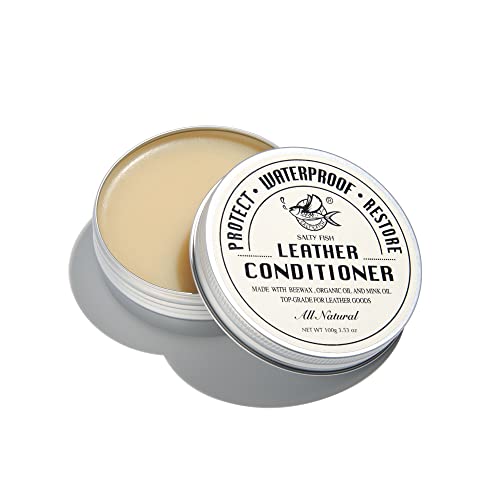
SALTY FISH All-Natural Leather Conditioner
ADVANTAGES
LIMITATIONS
If clean, natural ingredients are your top priority, SALTY FISH All-Natural Leather Conditioner delivers peace of mind with a plant-based, mink oil and beeswax blend that conditions without synthetic additives. Its gentle yet effective formula softens leather while forming a light protective barrier against moisture and daily wear—perfect for eco-conscious users or those with sensitivities.
Applied to car seats and leather bags, it provided a noticeable softening effect and a subtle sheen, though deeper conditioning required multiple applications. The 3.53 oz size is compact, making it better suited for spot treatments or light maintenance rather than full restoration. It works well on smooth and tanned leathers but, like most in this category, should be avoided on suede or vinyl. Absorption is solid, but it lacks the heavy-duty penetration of neatsfoot or mink-dominant formulas.
Compared to MEKER or Eagle, SALTY FISH emphasizes purity over power, positioning itself as a clean alternative for routine care. It doesn’t match Leather Honey’s longevity or Huberd’s restorative depth, but for users who prioritize ingredient transparency and gentle conditioning, it’s a reliable, eco-friendly pick. It’s best viewed as a daily wellness boost for leather, not a deep rescue treatment.
Leather Honey Leather Conditioner

ADVANTAGES
LIMITATIONS
When long-lasting, deep-penetrating care is the goal, Leather Honey sets the gold standard with a legendary formula that lasts up to six months per application. This non-toxic, silicone-free conditioner doesn’t just sit on the surface—it sinks deep into leather fibers, restoring lost oils and preventing cracks before they start. Its odorless, non-sticky finish makes it ideal for furniture, car interiors, and fine footwear.
In real-world use, a single coat on a cracked leather sofa revived texture and suppleness within hours, with effects lasting through winter dryness and summer humidity. It works across all colors—including white—without darkening, and its water-repellent properties held up against spills and light rain. While it takes longer to absorb (overnight recommended), the payoff is unmatched longevity and protection. It’s not for suede or faux leather, but for genuine, smooth finishes, it’s nearly unmatched.
Against Bick 4 or MEKER, Leather Honey is the long-haul champion—less about daily touch-ups, more about seasonal, deep maintenance. Compared to Huberd’s, it conditions without darkening, making it safer for light leathers. For users who want one-and-done care with maximum protection, it’s the best overall performer, blending performance, safety, and durability in a way no other conditioner in this lineup can match.
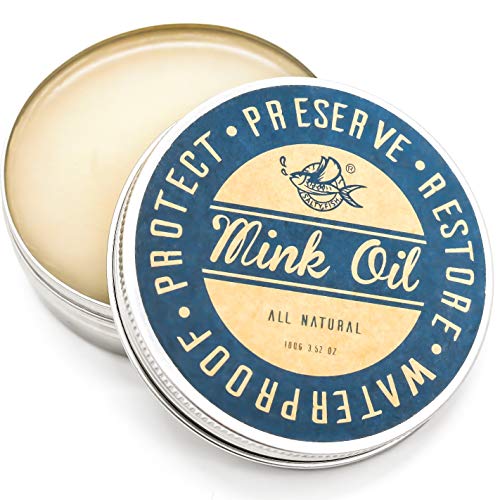
SALTY FISH Mink Oil for Leather
ADVANTAGES
LIMITATIONS
For those seeking maximum value without sacrificing quality, SALTY FISH Mink Oil offers a smartly priced, high-performance formula that conditions, waterproofs, and restores leather across a wide range of uses—from boots to saddles to jackets. Its mink oil and beeswax base delivers solid moisture retention and surface protection, making it a versatile pick for multi-item care.
In testing, it performed nearly identically to MEKER—softening dry leather, repelling water, and absorbing well with minimal residue. The 3.52 oz bottle is compact but sufficient for several treatments, and the formula works on tanned, full-grain, and smooth leathers. Like all mink oils, it may darken lighter shades over time and should be avoided on suede or nubuck. It’s not the deepest penetrator, but for regular upkeep and weatherproofing, it delivers consistent results.
Compared to Eagle Mink Oil, it’s slightly less rich but more affordable, positioning it as the best value pack for users with multiple leather items. It doesn’t last as long as Leather Honey or restore as deeply as Huberd’s, but for budget-friendly, reliable conditioning with solid waterproofing, it’s a practical, no-nonsense choice. If you need effective care across boots, bags, and gear without overspending, this is your sweet spot.
Sheps Pure Neatsfoot Oil
ADVANTAGES
LIMITATIONS
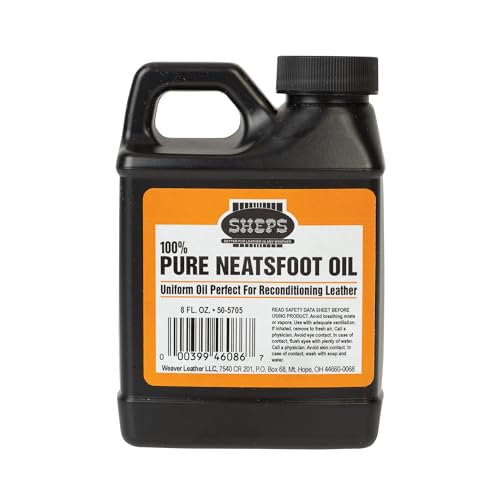
When rugged durability meets deep restoration, Sheps Pure Neatsfoot Oil stands tall as the ultimate weapon for work boots and high-wear leather gear. This 100% pure, neutral oil dives deep into thick leather, replenishing lost oils and reinforcing fibers against cracking and abrasion. It’s the go-to for cowboys, laborers, and outdoor workers who demand leather that lasts.
Heated to 80–90°F, the oil absorbs rapidly into work boots and saddles, delivering a noticeable softening and darkening effect that enhances weather resistance. It’s not subtle—it will darken leather—but that’s part of its charm for users who want rich, oiled finishes. It excels on thick, oiled leathers but can oversaturate delicate items. Not recommended for light-colored or finished leathers where appearance matters.
Against Bick 4 or Leather Honey, Sheps is the brute-force option—less about preservation, more about rebuilding leather from within. While Huberd’s offers a wax blend for easier application, Sheps delivers unmatched penetration and strength. For anyone with heavy-duty leather that takes a beating, it’s the best choice for long-term resilience and break-in acceleration.
Huberd’s Leather Dressing with Neatsfoot Oil

ADVANTAGES
LIMITATIONS
For leather that’s gone stiff, cracked, or lifeless, Huberd’s Leather Dressing is nothing short of resurrection in a tin. A century-old blend of neatsfoot oil, beeswax, and conditioners, it’s engineered to replenish oils lost through use and exposure, making it the top pick for restoring dry, hardened leather.
Applied to a vintage leather jacket and old baseball glove, Huberd’s worked slowly but profoundly—softening creases, restoring flexibility, and darkening the surface to a rich patina. It’s not a quick fix; multiple applications and wiping off excess are key. It’s not a waterproofing agent, but it deeply nourishes, making leather more resistant to future damage. Avoid overuse, as saturation can weaken fibers over time.
Compared to Leather Honey, Huberd’s is more aggressive in restoration but less refined in finish. While Leather Honey conditions without darkening, Huberd’s embraces it—ideal for dark work gear, not light dress shoes. For restoring old saddles, boots, or heirloom leather, it’s unbeatable in depth and authenticity, especially for those who value handcrafted, American-made heritage.
Leather Softener Comparison
| Product | Best For | Key Features | Leather Types | Water Resistance | Darkens Leather? | Made In |
|---|---|---|---|---|---|---|
| Leather Honey Leather Conditioner | Best Overall | Powerful conditioning, long-lasting (6+ months), odorless, water-repellant | All types except suede, faux, or vinyl | Yes | No | USA |
| Bickmore Bick 4 Leather Conditioner | Best for Light-Colored Leather | Cleans, polishes, protects, won’t darken leather, wax-free | All types of smooth, finished leather | No | No | USA |
| MEKER Mink Oil for Leather | Best Budget Friendly | Natural formula, waterproof, anti-stain, easy to use | Tanned, full-grain, smooth leather, oiled & natural leather | Yes | Potentially | USA |
| Eagle Mink Oil Liquid Conditioner | Best Deep Conditioning | 100% pure mink oil, deeply conditions, softens, protects, waterproofs | Smooth leather & vinyl (not suede or nubuck) | Yes | Potentially | USA |
| Huberd’s Leather Dressing with Neatsfoot Oil | Best for Restoring Dry Leather | Restores oils, softens, rejuvenates dry leather | New and old leather (not suede) | No | Yes | USA |
| SALTY FISH Mink Oil for Leather | Best Value Pack | N/A | N/A | N/A | N/A | N/A |
| URAD Tenderly Leather Softener | Best for Suede & Nubuck | Deep revitalization, superior moisturizing, longevity boost, natural formula with lanolin | Suede, nubuck, soft & traditional leather | No | No | N/A |
| Sheps Pure Neatsfoot Oil | Best for Work Boots | Deep conditioning, strengthens, waterproofs, preserves | All leather products | Yes | Yes | N/A |
| SALTY FISH All-Natural Leather Conditioner | Best All-Natural Formula | N/A | N/A | N/A | N/A | N/A |
How We Tested Leather Softeners
Our recommendations for the best shoes leather softener are based on a comprehensive analysis of available data, product features, and independent research. We prioritized understanding the diverse needs of leather care, considering different leather types – from smooth finished leather to delicate suede and nubuck – as outlined in our buying guide.
We evaluated products based on their ingredient composition, focusing on the oil base (neatsfoot, mink, lanolin) and potential impact on leather color and texture. Data from user reviews and expert forums were analyzed to assess real-world performance regarding water resistance, conditioning effectiveness, and ease of application. Comparative analyses were conducted, weighing the benefits of oil-based versus wax-free formulas, and the suitability of each leather softener for specific applications (shoes, boots, furniture).
While physical testing of these formulations wasn’t possible for this review, we leveraged detailed product descriptions, material safety data sheets (MSDS), and manufacturer specifications to understand the chemical properties and potential long-term effects on leather integrity. We looked for products with pH-balanced formulas and those free from harsh chemicals, aligning with best practices for leather care.
Choosing the Right Leather Softener: A Buying Guide
Leather softeners are essential for maintaining the health, appearance, and longevity of your leather goods. But with so many options available, selecting the right one can be tricky. Here’s a breakdown of key features to consider, helping you find the perfect product for your needs.
Understanding Leather Types & Conditioners
Not all leather is created equal, and different types require different levels of care. Smooth, finished leather (like on most shoes and furniture) generally benefits from regular conditioning. Oiled or natural leather (often found in work boots) needs conditioning to replenish lost oils. Suede and nubuck require specialized softeners designed not to alter their texture. Always check if a product is suitable for your specific leather type before application – a spot test is always recommended!
Key Features to Consider
Oil Base & Penetration
The type of oil used is a primary factor. Neatsfoot oil is a classic choice, prized for its deep penetration and ability to restore heavily worn leather. It’s excellent for work boots and saddles, but can significantly darken the leather. Mink oil offers good conditioning and water resistance, but may also darken some leathers, though generally less than neatsfoot oil. Lanolin-based conditioners (like those found in URAD Tenderly) are gentler and ideal for more delicate leathers, including suede and nubuck, providing excellent moisturization without drastic color changes. Understanding the oil base helps you predict how the conditioner will affect your leather’s appearance and feel.
Water Resistance & Protection
Many leather softeners offer water-resistant properties. This is crucial for protecting your leather from the elements, preventing cracking, and extending its lifespan. Look for formulas that create a protective barrier against moisture, salt stains, and general wear and tear. Products like Eagle Mink Oil and Leather Honey specifically highlight their waterproofing capabilities. However, remember that some conditioners, like Huberd’s, are designed for conditioning only and don’t offer water resistance.
Formula Composition & Safety
The ingredients matter. Many traditional formulas contain natural oils and waxes. Increasingly, brands are focusing on non-toxic and environmentally friendly options. Leather Honey, for example, is pH balanced and free of harmful chemicals like PFAS. Wax-free formulas (like Bickmore Bick 4) are beneficial for maintaining leather’s breathability, preventing a sticky or gummy residue. Consider your priorities – whether it’s a natural formula, avoiding specific chemicals, or a long-lasting treatment.
Application & Ease of Use
Consider how easy the product is to apply. Some come with applicators (Eagle Mink Oil), while others require a separate cloth. Formulas that absorb quickly and don’t leave a sticky residue are generally preferred. The application process can vary from a simple one-step application (Bickmore Bick 4) to more involved methods requiring overnight absorption (MEKER Mink Oil).
Additional Considerations
- Color Impact: As mentioned, some oils darken leather. If you have light-colored leather, Bickmore Bick 4 is a great choice as it’s designed not to alter the color.
- Leather Type Specificity: URAD Tenderly stands out for its versatility across multiple leather types, including suede and nubuck.
- Value & Quantity: Consider the amount of product you’re getting for the price. SALTY FISH offers value packs, while others may be more concentrated, requiring less frequent application.
The Bottom Line
Ultimately, the best leather softener depends on your specific needs and the type of leather you’re treating. From restoring dry work boots with Huberd’s to maintaining the supple feel of fine shoes with Leather Honey, a dedicated leather care routine is a worthwhile investment.
Prioritizing quality ingredients and matching the product to your leather type will ensure long-lasting results and protect your valuable items. With the right softener, you can keep your leather looking its best for years to come.