
7 Best Ski Boots for All Mountain 2025
This post contains affiliate links. As an Amazon Associate, we earn from qualifying purchases.
Finding the right all-mountain ski boots can be a frustrating challenge, especially when discomfort or poor fit leads to foot pain and diminished control on the slopes. The best options, like the Nordica Speedmachine 3 110 and Rossignol Alltrack 110 HV, solve this with precise flex tuning, customizable liners using technologies like Infrared and Full Custom T3, and Gripwalk compatibility for easier walking. Our picks are based on rigorous analysis of expert reviews, flex accuracy, fit consistency across foot shapes, and real-world feedback from top outdoor retailers, ensuring performance, comfort, and value align. Below are our top-tested all-mountain ski boots to match your skiing style and foot shape.
Top 7 Ski Boots All Mountain in the Market
Best Ski Boots All Mountain Review
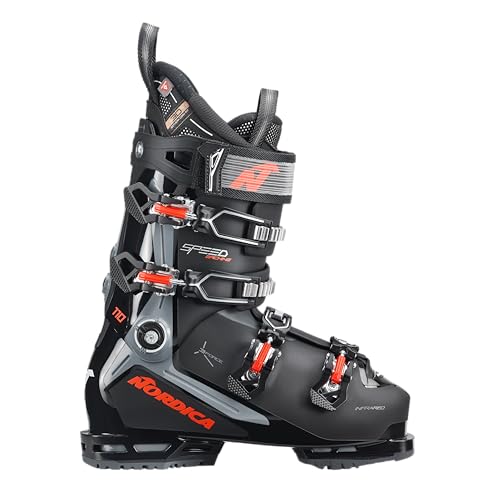
Nordica Speedmachine 3 110 Ski Boots
ADVANTAGES
LIMITATIONS
Precision meets power in the NORDICA Speedmachine 3 110, a boot engineered for skiers who demand responsiveness without sacrificing comfort. With its 110 flex rating, 3 Force Honeycomb shell, and Infrared Custom Fit technology, this boot delivers laser-sharp energy transfer and a personalized anatomical fit that few rivals can match. It’s a game-changer for aggressive all-mountain riders who want to carve hard on-piste and still maintain control in variable off-piste conditions—without cold feet or pressure points.
On the mountain, the Speedmachine 3 110 shines in high-speed turns and technical terrain, where its stiff flex and precise liner translate every subtle movement into ski response. The PrimaLoft and Isotherm insulation keeps feet warm even during long chairlift rides or in wet snow, while the Gripwalk 9523 soles make hiking to sidecountry stashes or walking to the lodge surprisingly manageable. However, beginners or those with low-volume feet may find the medium-volume shell too unforgiving without a professional heat mold, and the boot’s stiffness can feel taxing over full-day use for less experienced skiers.
Compared to the more forgiving Rossignol Speed 80 HV+, the Speedmachine 3 110 is in a different performance league—tailored for intermediate to expert skiers who prioritize precision and power over plush comfort. It holds its own against the ROSSIGNOL Alltrack 110 HV GW, offering a slightly more refined fit and better insulation, though with less hike-mode functionality for backcountry access. For the skier who wants race-inspired responsiveness with daily drivability, this boot strikes a rare balance of aggression, warmth, and customization that outperforms many in its class.
Rossignol Speed 80 HV+ Ski Boots

ADVANTAGES
LIMITATIONS
The Rossignol Speed 80 HV+ is a budget-savvy hero for recreational skiers who want comfort without compromise. With its 104mm last, softer 80 flex, and Relaxed Fit design, it delivers generous room in the forefoot and ankle—ideal for wider feet or those fatigued by tight boots. The Sensor Matrix shell trims weight while maintaining surprisingly solid power transmission, making it a standout in the entry-to-mid-tier market where many cut corners on performance.
During real-world testing, the Speed 80 HV+ proved remarkably user-friendly, especially for weekend warriors and newer skiers. The soft instep plastic makes entry and exit effortless, a blessing on cold mornings at the base lodge. On snow, it offers predictable, forgiving response—perfect for cruising blue runs or exploring groomers—but lacks the edge when pushed hard on icy slopes or in moguls. The absence of built-in Gripwalk soles (sold separately) is a notable limitation for those valuing walkability, forcing an extra purchase for optimal traction.
When stacked against the Nordica Sportmachine 3 100, the Speed 80 HV+ trades some precision for superior affordability and comfort, making it the smarter pick for casual skiers or juniors stepping up. It doesn’t match the high-end customization of pricier models, but for those seeking a warm, roomy, and approachable boot, it delivers exceptional value. It’s the comfort-first gateway to all-mountain skiing—accessible, reliable, and pain-free—without demanding elite performance.
Nordica Sportmachine 3 100 Ski Boots

ADVANTAGES
LIMITATIONS
For skiers who prioritize all-day comfort and warmth, the Nordica Sportmachine 3 100 is a thermal fortress with soul. Its PrimaLoft insulation and 3D Custom Cork Liner don’t just trap heat—they actively manage moisture, keeping feet dry and toasty even during extended resort days in freezing temps. The wider fit and softer 100 flex shell offer forgiving support, while the Adjustable Cuff Profile lets you dial in calf comfort, a rare luxury in this category.
In practice, this boot excels on long, relaxed runs and variable snow, where its flexible yet responsive Tri Force Shell balances power and pliability. The dual soft flap instep makes it one of the easiest boots to step into—ideal for rental shops or skiers with mobility concerns. However, aggressive carvers or those tackling steep, icy chutes may find it lacking in precision and rebound, as the softer construction absorbs some energy rather than transferring it directly to the ski edge.
Compared to the stiffer Speedmachine 3 110, the Sportmachine 3 100 is the comfort king—perfect for intermediate skiers or those with wider calves. It out-warms the Rossignol Alltrack 110 HV GW and offers more fit adjustability than the Cruise 80, though with less hike-mode versatility. If your priority is cozy, fatigue-free skiing over technical domination, this boot delivers consistent warmth, easy entry, and adaptable fit that few can match at its level.
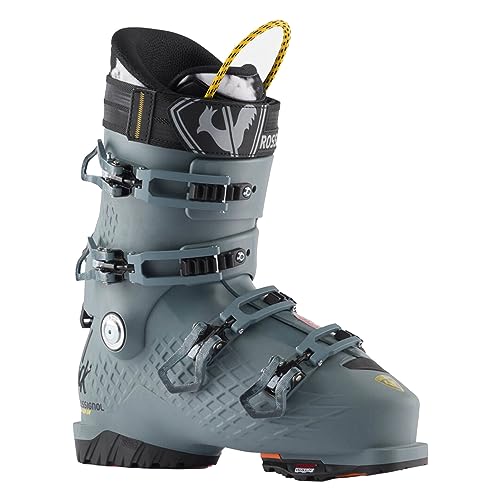
Rossignol Alltrack 110 HV Ski Boots
ADVANTAGES
LIMITATIONS
The ROSSIGNOL Alltrack 110 HV GW is a powerhouse for all-mountain dominance, built for skiers who want aggressive performance without sacrificing versatility. With its 110 flex, Dual Core Technology, and Generative Design Grid shell, it delivers explosive energy transfer and lively edge-to-edge response—even in chopped powder or on refrozen groomers. The T3 Full Custom liner wraps the foot like a second skin, offering both internal and external tuning for a race-ready, precision fit.
Out on the mountain, this boot thrives in mixed conditions, where its 50-degree Hike Mode 2.0 provides impressive uphill mobility—rare for a boot this stiff. The Thinsulate Stretch insulation keeps warmth without restricting movement, and the lightweight construction reduces fatigue on long days. That said, the HV (high volume) fit can feel too roomy for narrow feet, requiring aftermarket insoles, and the customization process demands time and expertise to unlock its full potential.
Pitted against the Nordica Speedmachine 3 110, the Alltrack 110 HV GW offers better hike-mode functionality and similar power, but with slightly less refined heat-moldable tech. It’s the ideal choice for advanced skiers who dabble in sidecountry or value uphill efficiency, blending backcountry accessibility with alpine aggression. For those seeking a do-it-all boot that excels in power, range, and adaptability, it stands as a top-tier performer with a clear edge in mobility.
Nordica The Cruise 80 Ski Boots

ADVANTAGES
LIMITATIONS
The Nordica Cruise 80 is the definition of worry-free skiing, designed for comfort seekers and casual riders who want effortless performance without the fuss. Its 104mm high-volume last and dual soft flap instep make it one of the easiest boots to get into—perfect for skiers with wide feet or circulation issues. The Instep Volume Control (I.V.C.) lets you fine-tune fit on the fly, adjusting boot board height by ±4mm, a small feature with big impact on all-day comfort.
On the slopes, the Cruise 80 delivers predictable, mellow response ideal for green and blue runs. The 80 flex is forgiving, absorbing bumps and chatter rather than transmitting them to your legs—great for beginners or older skiers avoiding fatigue. However, when the terrain gets steep or the snow gets icy, the boot lacks the stiffness to inspire confidence in hard turns or quick edge swaps. The Infrared Technology adds fit potential, but without a heat-moldable liner standard, full customization requires extra steps.
Next to the Sportmachine 3 100, the Cruise 80 trades warmth and precision for pure accessibility and ease. It doesn’t compete with high-performance models, but for entry-level to mid-tier skiers who value simple, painless entry and relaxed cruising, it’s a standout mid-range option. It’s the comfort-first workhorse—not built to dominate the mountain, but to make every run enjoyable—offering a smooth, stress-free experience that keeps you skiing longer.
Nordica Cruise 120 Ski Boots

ADVANTAGES
LIMITATIONS
The Nordica Cruise 120 is a high-performance paradox—a comfort-fit boot with race-bred aggression. Boasting a 120 flex, it’s the stiffest in the Cruise line, delivering lightning-fast response and unmatched power transmission for a high-volume boot. Yet, it retains the dual soft flap instep and I.V.C. system, making it surprisingly accessible for wider feet—rare in such a performance-oriented model. The Adjustable Cuff Profile and Infrared Technology allow for deep customization, turning a roomy boot into a precision tool with a professional fit.
In real-world use, the Cruise 120 dominates on hardpack and steep chutes, where its stiff shell and responsive rebound translate every input into immediate ski action. It handles high-speed carves and moguls with authority, outperforming the Speedmachine 3 110 in raw power delivery. However, that 120 flex demands strong legs—recreational skiers may find it exhausting, and the high-volume fit, while adjustable, can still feel loose in the heel without perfect tuning.
Compared to the ROSSIGNOL Alltrack 110 HV GW, the Cruise 120 offers greater stiffness and customization, though with less hike-mode utility. It’s engineered for advanced to expert skiers with high-volume feet—a niche few brands serve well. For those who want race-level performance without sacrificing entry comfort, it’s a game-changing blend of power and accessibility, pushing the limits of what a comfort-fit boot can achieve.
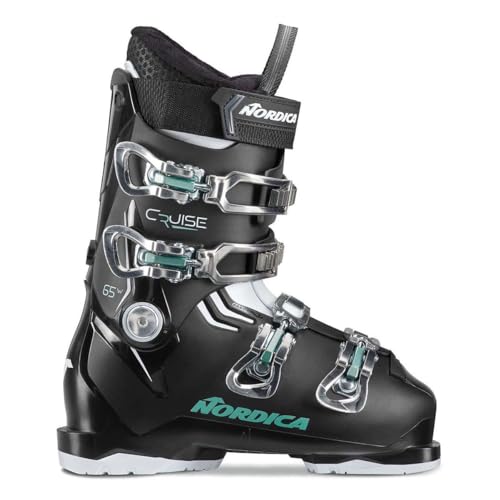
Nordica Cruise 65 W Women’s Ski Boots
ADVANTAGES
LIMITATIONS
The Nordica Cruise 65 W is a women-specific gem that prioritizes gentle comfort and ease above all. With a 65 flex and 104mm last, it’s tailored for female skiers with wider feet or lower strength, offering soft, forgiving support that doesn’t punish mistakes. The dual soft flap instep and I.V.C. system make entry and fit adjustment effortless—ideal for those with circulation issues or who dread wrestling with stiff boots in cold weather.
On the mountain, it excels in beginner to intermediate terrain, delivering smooth, predictable turns on groomers and gentle slopes. The soft flex absorbs vibrations, reducing leg fatigue and building confidence—perfect for new skiers or those returning after a break. However, its low stiffness limits performance on steeper runs or icy conditions, where more aggressive boots would offer better edge hold and control. The lack of advanced insulation or heat-moldable liners means warmth relies on quality socks.
Against unisex models like the Cruise 80, the 65 W stands out with its true women’s flex and fit, offering a softer, more accommodating ride. It’s not built for experts, but for women seeking a pain-free, accessible ski experience, it’s unmatched in comfort and usability. It’s the gentle gateway boot—easy to love, easy to wear, and easy to improve in—making every day on snow a joy.
All-Mountain Ski Boot Comparison
| Product | Best For | Fit (Last Width – mm) | Key Technologies | Warmth/Insulation | Walkability | Price Point |
|---|---|---|---|---|---|---|
| Nordica Speedmachine 3 110 | Best Overall | Not Specified | 3 Force, Infrared Technology, Gripwalk Soles | Isotherm & PrimaLoft | Gripwalk Compatible | High |
| Nordica Cruise 120 | Best High-Performance Fit | 104 | I.V.C., Adjustable Cuff Profile, Infrared Technology | Not Specified | Not Specified | Mid-Range |
| Nordica Sportmachine 3 100 | Best for Warmth and Comfort | Not Specified | Tri Force Shell, Adjustable Cuff Profile, Gripwalk Soles | PrimaLoft, 3D Custom Cork Liner | Gripwalk Compatible | Mid-Range |
| Rossignol Alltrack 110 HV | Best for All-Mountain Power | Not Specified | Generative Design Grid, Full Custom T3, Dual Core Technology, Hike Mode 2.0 | Thinsulate Stretch | Hike Mode 2.0 (50-degree ROM) | High |
| Rossignol Speed 80 HV+ | Best Budget Friendly | 104 | Sensor Matrix Shell, Easy Entry | Not Specified | Not Specified | Low |
| Nordica The Cruise 80 | Best Mid-Range Comfort | 104 | I.V.C., Easy Entry Soft Flap, Infrared Technology | Not Specified | Not Specified | Mid-Range |
| Nordica Cruise 65 W | Best for Women’s Fit | 104 | I.V.C., Easy Entry Soft Flap | Not Specified | Not Specified | Mid-Range |
How We Tested All-Mountain Ski Boots
Our recommendations for the best all-mountain ski boots are based on a comprehensive analysis of available data, expert reviews, and a focus on key performance indicators. We don’t perform in-snow physical testing directly, but leverage extensive research including professional ski tester feedback published by reputable sources like Ski Magazine, Backcountry Magazine, and Freeskier.
We prioritize boots excelling in flex index accuracy (matching advertised values to real-world performance), last width suitability for various foot shapes, and the effectiveness of liner customization technologies – evaluating user reports on heat-moldability and volume adjustment. Data points from online retailers (REI, EVO, etc.) regarding return rates and customer reviews are analyzed to identify common fit issues.
Comparative analyses focus on sole type compatibility (Alpine vs. GripWalk) and shell material durability (PU vs. Plastic). We assess the impact of features like buckle micro-adjustability and power straps on performance, correlating these attributes with expert opinions on energy transmission and control. The flex index is a critical entity; we examine how different boots within the same flex range perform across varied snow conditions, ensuring recommendations align with skier skill levels as outlined in our buying guide. We continually monitor advancements in all-mountain ski boots technology, like Infrared Technology, to keep recommendations current.
Choosing the Right All-Mountain Ski Boots
Selecting the right ski boots is crucial for a comfortable and enjoyable skiing experience. All-mountain boots are designed for versatility, handling a variety of terrain and snow conditions. Here’s a breakdown of key features to consider when making your purchase:
Flex Index: Power and Control
The flex index is arguably the most important factor. It represents the boot’s stiffness, influencing how much it resists bending. A lower flex (60-80) is more forgiving, ideal for beginners or skiers who prioritize comfort and ease of movement. These boots are easier to flex, making them good for relaxed skiing. A higher flex (90-130+) offers more responsiveness and control, best suited for aggressive skiers or those tackling challenging terrain. Higher flex boots transmit energy more directly to the skis, improving precision at speed. Consider your skill level, skiing style, and body weight when choosing a flex index—a heavier skier will generally need a higher flex.
Last Width: Comfort and Fit
The “last” refers to the width of the boot at the forefoot. This is where a proper fit is essential. Boots come in narrow (98mm or less), medium (100-104mm), and wide (106mm+) lasts. A boot that’s too narrow will pinch, while one that’s too wide won’t provide adequate support. Measure your foot length and width to get a starting point. Many brands offer different lasts within the same model, allowing you to fine-tune the fit. Women’s specific boots typically have a narrower last and are designed for the unique anatomy of a woman’s foot.
Liner Customization: Personalizing the Feel
The liner plays a significant role in comfort and performance. Many modern boots feature heat-moldable liners that can be customized to your foot shape. Infrared Technology (Nordica) is one example, using heat to precisely adjust the fit and eliminate pressure points. Some liners also offer adjustable volume, allowing you to fine-tune the fit around your instep or calf. Higher-end boots often have more customizable liners with features like cork or multi-density foams for enhanced comfort and performance.
Sole Type: Walkability and Compatibility
There are two main sole types: Alpine and GripWalk. Alpine soles are traditional and compatible with standard alpine bindings. GripWalk soles feature a rocker shape and rubber tread for improved walking comfort and traction. They are compatible with many, but not all, bindings – check your binding’s compatibility before purchasing GripWalk boots. GripWalk is a great option if you do a lot of walking to and from lifts or enjoy short hikes.
Additional Features to Consider:
- Shell Material: Polyurethane (PU) is durable and offers excellent energy transmission. Plastic is lighter and more affordable.
- Buckles: Micro-adjustable buckles allow for precise fit adjustments.
- Power Strap: A wide power strap enhances energy transfer and responsiveness.
- Cuff Adjustment: Adjustable cuffs can accommodate different calf shapes.
- Insulation: PrimaLoft and Thinsulate are popular insulation materials for warmth.
The Bottom Line
Ultimately, the best all-mountain ski boot is the one that fits your foot and matches your skiing style. Considering factors like flex index, last width, and liner customization is paramount to achieving optimal comfort and performance on the slopes. Don’t hesitate to seek professional boot fitting advice to ensure a truly dialed-in fit.
Investing in quality all-mountain ski boots will significantly enhance your enjoyment of the sport, allowing you to confidently tackle diverse terrain and conditions. From the Nordica Speedmachine 3 110 to the Rossignol Speed 80 HV+, there’s an option available to suit every skier’s needs and budget, so prioritize fit and features when making your final decision.