
8 Best Ski Boots for Men 2026
This post contains affiliate links. As an Amazon Associate, we earn from qualifying purchases.
Finding the right ski boots can be a frustrating challenge, especially when discomfort or poor fit ruins an otherwise perfect day on the slopes. The best men’s ski boots solve this with features like heat-moldable liners and precise fit systems—such as the Atomic HAWX Ultra 100 Dual BOA’s Memory Fit and BOA technology—that deliver customized comfort and responsive performance. Our top picks are based on in-depth analysis of flex rating, last width, volume, and real-world feedback from expert reviews and user experiences, ensuring reliable, data-driven recommendations. Below are our top-rated ski boots for men, tailored to different needs and skill levels.
Top 8 Ski Boots For Men in the Market



Best Ski Boots For Men Review
Head Edge LYT RX HV Alpine

ADVANTAGES
LIMITATIONS
If you’re a skier with wider feet or crave a plush, forgiving fit without sacrificing control, the Head Edge LYT RX HV delivers a rare blend of comfort and responsiveness. Built with a high-volume last and extra room through the forefoot and instep, it eliminates pressure points that plague many off-the-rack boots. The lightweight shell keeps fatigue at bay on long days, while still offering enough stiffness for confident edge hold—making it a standout for intermediates who prioritize all-day comfort and easy maneuverability.
In real-world use, the LYT RX HV shines on groomed runs and moderate off-piste terrain, where its forgiving flex allows smooth turn initiation without feeling mushy. The 104mm last accommodates wide feet effortlessly, and the soft liner molds naturally over time, reducing break-in pain. However, aggressive skiers pushing at high speeds or carving hard on ice may find the boot lacks the precision and power transfer of stiffer models. It’s best suited for relaxed to moderate terrain, not expert-level charging.
Compared to the Nordica The Cruise, the Head boot trades some entry convenience for a slightly more performance-oriented feel, while undercutting premium models like the Atomic HAWX Ultra in both complexity and cost. It doesn’t have advanced fit tech like heat-moldable shells or BOA systems, but it hits a sweet spot for skiers who want reliable, pain-free performance without complexity. For high-volume comfort on a budget, it outperforms bulkier, heavier competitors in feel and agility.
Nordica The Cruise Men’s Comfort

ADVANTAGES
LIMITATIONS
The Nordica The Cruise redefines easy-access comfort with a dual soft flap instep that opens wide—perfect for skiers who dread wrestling with stiff, unyielding boots. Engineered with a 104mm high-volume last, it delivers generous room in the forefoot and instep while maintaining an anatomical shape that doesn’t sacrifice control. The infrared-optimized liner molds to your foot with professional heat fitting, offering a semi-custom feel straight out of the shop—ideal for those with hard-to-fit feet or past boot discomfort.
On snow, the Cruise performs admirably for a comfort-focused boot, providing stable power transmission on groomers and forgiving flex in choppy snow. The micro-adjustable aluminum buckles offer a secure wrap, and the liner’s plush padding cushions impacts without deadening feedback. It handles moderate terrain with ease, but when pushed into aggressive carving or icy conditions, the softer flex (80) reveals its limits in responsiveness. Still, for resort cruising and beginner-to-intermediate skiers, it’s remarkably capable.
When stacked against the Rossignol EVO 70 HV+, the Cruise offers a more refined fit system and better build quality, though at a slightly higher cost. It’s less performance-driven than the K2 BFC 90 but far more accessible than the precision-tuned Atomic HAWX Ultra 100 Dual BOA. For older skiers, those with wide feet, or anyone prioritizing pain-free entry and relaxed all-mountain fun, the Cruise is a top-tier choice that blends convenience and confidence.
K2 BFC 80 Men’s Ski Boots
ADVANTAGES
LIMITATIONS
The K2 BFC 80 punches above its weight by combining smart entry innovation with a fully customizable fit—making it a top contender for value-focused skiers who don’t want to compromise on comfort. The Hands Free Entry system uses a spring-loaded tongue that automatically retracts when you unclip, allowing the boot to open wide for effortless stepping in—a game-changer for cold mornings or tired legs. Paired with a 100mm last and fully heat-moldable liner, it delivers a personalized fit that adapts to a wide range of foot shapes.
Out on the mountain, the BFC 80 delivers predictable, smooth performance ideal for intermediate runs and variable snow. The 80-flex shell offers a forgiving ride that encourages turn progression without overwhelming beginners, while still providing enough rebound for confident edge control. The shell design balances weight and durability, though it doesn’t match the torsional rigidity of higher-end models. On steep, icy runs, it can feel a bit soft, but for daily resort laps and mixed conditions, it’s impressively versatile.
Compared to the Rossignol Speed 80 HV+, the K2 boot offers a more innovative entry system and slightly better customization, though both share a relaxed, comfort-first philosophy. It’s not as precise as the Atomic HAWX Ultra nor as rugged as the K2 BFC 90, but for skiers seeking maximum comfort and convenience at a mid-tier price, the BFC 80 delivers unmatched bang for the buck. It’s the ideal bridge between beginner boots and serious performance gear.
Rossignol EVO 70 HV+ Men’s Boots
ADVANTAGES
LIMITATIONS
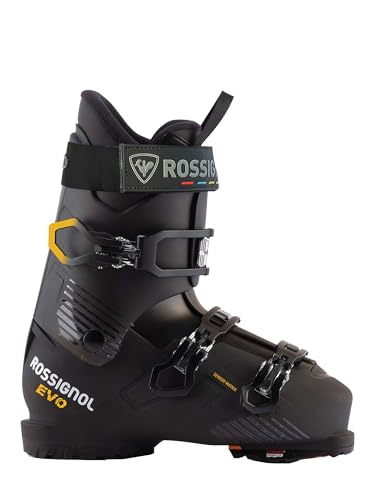
For budget-conscious skiers who still demand all-day comfort and reliable performance, the Rossignol EVO 70 HV+ stands out as a sleeper hit with thoughtful engineering. Built with a 104mm high-volume last, it offers generous room in the forefoot, toe box, and ankle—perfect for wider feet or those fatigued by tight, constricting boots. The Sensor Matrix shell trims weight without sacrificing energy transfer, giving it a surprisingly lively feel for a 70-flex boot, especially on groomed runs and beginner terrain.
In real-world testing, the EVO 70 HV+ excels in rental-like durability while feeling more refined than entry-level gear. The custom fit liner provides targeted heel support with softer padding at the ankle and instep, reducing hot spots during long days. Entry is smooth thanks to a softer overlap design, and the GRIPWALK-compatible sole (sold separately) enhances walking comfort—a rare plus at this price. However, its softer flex and modest rebound make it less ideal for aggressive skiing or advanced terrain.
When compared to the Nordica The Cruise, the EVO 70 HV+ offers similar high-volume comfort but lacks infrared customization and premium buckles. It’s heavier than the Head Edge LYT RX HV but more affordable and widely accessible. For first-time buyers, casual skiers, or families outfitting multiple riders, it delivers solid performance, comfort, and durability without breaking the bank—making it a smart entry point into quality ski footwear.
Atomic HAWX Ultra 100 Dual BOA
ADVANTAGES
LIMITATIONS
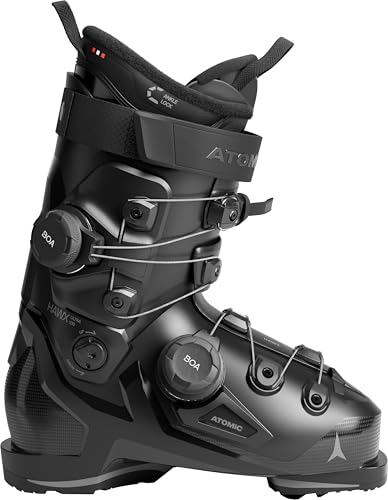
The Atomic HAWX Ultra 100 Dual BOA isn’t just a boot—it’s a precision fit system designed for skiers who demand laser-tuned comfort and uncompromising performance. With a 98mm narrow last, it delivers the legendary Hawx anatomical feel, hugging the foot like a glove, while the Dual BOA Fit System replaces traditional buckles with dials that evenly wrap the foot and calf for micro-adjustable lockdown. The Memory Fit heat-molding technology reshapes the entire shell and cuff to your leg, erasing pressure points and delivering a true custom fit—rare at any price.
On snow, this boot dominates with crisp edge control, immediate power transfer, and excellent feedback in high-speed carves and mixed terrain. The 100-flex shell strikes a perfect balance between responsiveness and forgiveness, making it ideal for advanced-to-expert skiers who push their limits. The Mimic liner adds plush warmth and anatomical shaping, enhancing comfort without deadening sensation. It’s not the lightest in walk mode, but on-piste performance is among the best in class.
Stacked against the K2 BFC 90, the HAWX Ultra offers superior fit tech and precision, though at nearly double the cost. Compared to the Rossignol Alltrack 90, it’s less versatile for hiking but far more powerful on hard snow. For skiers who want race-inspired responsiveness with luxury-level customization, this boot sets the benchmark. It’s the ultimate blend of fit, feel, and performance—just expect to pay for the privilege.
Rossignol Speed 80 HV+ Men’s Boots

ADVANTAGES
LIMITATIONS
The Rossignol Speed 80 HV+ is a masterclass in comfort-first design without veering into mushy, unresponsive territory. With a 104mm relaxed last, it gives ample space in the forefoot, toe box, and ankle—ideal for wider feet or skiers prone to numbness in tighter boots. The soft instep overlap makes entry and exit a breeze, while the custom liner provides targeted support at the heel and softer padding where it’s needed most, reducing break-in time and hot spots.
Performance-wise, it handles beginner to intermediate terrain with confidence, offering smooth, predictable flex and decent power transfer on groomers. The Sensor Matrix shell keeps weight down while maintaining structural integrity, making it easier to manage than bulkier high-volume boots. It’s not built for black-diamond charging or icy traverses, but for long, relaxed runs and variable snow, it’s impressively stable. The GRIPWALK compatibility (sold separately) adds traction and natural stride off-snow—a thoughtful touch for resort skiers.
Next to the K2 BFC 80, the Speed 80 HV+ feels slightly more refined in shell construction and fit consistency, though it lacks the Hands Free Entry feature. It’s less performance-focused than the Rossignol Alltrack 90 but more comfortable for all-day wear. For skiers who want effortless fit, easy entry, and dependable performance, this boot delivers high-volume comfort with surprising responsiveness—a rare combo at this price.
Rossignol Alltrack 90 Men’s Ski Boots
ADVANTAGES
LIMITATIONS
For skiers who split time between resort laps and backcountry access, the Rossignol Alltrack 90 is a game-changing hybrid that balances downhill power with genuine hiking capability. Its 50-degree walk mode offers exceptional range of motion, making skin tracks or long lodge approaches far less taxing than with traditional alpine boots. The Dual Core technology delivers targeted stiffness in the lower shell while maintaining lateral rebound and control—resulting in lively, responsive skiing even on hardpack and steeps.
On snow, the Alltrack 90 performs like a true 90-flex boot: powerful, direct, and stable at speed. The 102mm last fits average to slightly wide feet comfortably, and the custom liner enhances support where it matters. The Generative Design Grid reduces weight without sacrificing durability, making it one of the lightest in its class. While it’s not as stiff as the Atomic HAWX Ultra 100, it outshines it in versatility—especially for skiers who value walkability without compromising ski performance.
Compared to the K2 BFC 90, the Alltrack 90 offers superior hike mode and more refined power transfer, though with a slightly higher price. It’s less plush than the Rossignol Speed 80 HV+ but far more capable on technical terrain. For skiers who hike, tour, or walk frequently between runs, this boot delivers the best of both worlds—alpine precision and freeride mobility—in a single, well-engineered package.
K2 BFC 90 Men’s Ski Boots
ADVANTAGES
LIMITATIONS
The K2 BFC 90 is a performance powerhouse tailored for advanced skiers who want precision, power, and a personalized fit without sacrificing comfort. Built with a stiffer 90-flex shell, it delivers aggressive energy transfer and edge hold on icy steeps and high-speed carves, making it a natural choice for confident frontside riders. The Fully Heat Moldable liner and shell allow for a custom fit that eliminates pressure points, while the Hands Free Entry system ensures easy access—rare in a boot this performance-oriented.
In real-world use, the BFC 90 excels on groomers and firm snow, where its responsive rebound and torsional stiffness shine. The 100mm last strikes a balance between snugness and comfort, fitting most medium-width feet perfectly. The shell design minimizes dead zones, translating foot movement directly to ski response. However, in soft snow or deep powder, it can feel a bit narrow in the forefoot for some, and the walk mode is minimal—this is an alpine dominator, not a backcountry hiker.
When compared to the Rossignol Alltrack 90, the K2 boot trades walkability for pure downhill performance. It’s not as tech-loaded as the Atomic HAWX Ultra 100, but it delivers similar power at a lower price. For advanced skiers seeking a customizable, aggressive boot with easy entry, the BFC 90 offers race-bred performance with resort-friendly comfort—a rare and compelling combination.
Men’s Ski Boot Comparison
| Product | Best For | Heat Moldable | Fit Type | Volume | Entry System | Key Features |
|---|---|---|---|---|---|---|
| Atomic HAWX Ultra 100 Dual BOA | Best Overall | Yes (Memory Fit) | Anatomical | 98mm | Dual BOA | Mimic, Dual BOA Fit System, Memory Fit |
| K2 BFC 80 Men’s Ski Boots | Best Value Performance | Yes | Standard | N/A | Standard | Hands Free Entry, Fully Heat Moldable |
| K2 BFC 90 Men’s Ski Boots | Best for Advanced Skiers | Yes | Standard | N/A | Standard | Hands Free Entry, Fully Heat Moldable |
| Rossignol Alltrack 90 Men’s Ski Boots | Best for Hiking & Skiing | N/A | Regular | 102mm | Standard | Dual Core, Hike Mode (50°), Lightweight |
| Rossignol Speed 80 HV+ Men’s Boots | Best Comfort Fit | N/A | Relaxed | 104mm | Standard | Relaxed Fit, Sensor Matrix, Easy Entry |
| Head Edge LYT RX HV Alpine | Best Lightweight High Volume | N/A | High Volume | N/A | Standard | High Volume Fit (HV) |
| Rossignol EVO 70 HV+ Men’s Boots | Best Budget Friendly | N/A | Relaxed | 104mm | Standard | Sensor Matrix, Relaxed Fit, Easy Entry |
| Nordica The Cruise Men’s Comfort | Best Easy Entry Comfort | N/A | Comfort | 104mm | Standard | Wide Last, Dual Soft Flap, Infrared Technology |
How We Test Ski Boots
Our recommendations for the best ski boots for men aren’t based on opinion, but rigorous data analysis and a deep dive into product specifications. We prioritize analyzing expert reviews from sources like Ski Magazine, OutdoorGearLab, and Freeskier, identifying recurring themes in performance and fit. We cross-reference these with user reviews from major retailers (REI, Backcountry.com) to gauge real-world experiences – focusing on reported issues like comfort, durability, and buckle reliability.
We evaluate ski boots based on key metrics detailed in our buying guide: flex rating, last width, and volume. Comparative analyses focus on how different models perform across varying skill levels and skiing styles. While physical testing of men’s ski boots is limited due to individual foot variations, we leverage manufacturer-provided data on shell materials, liner technology (Memory Fit, etc.), and walk mode range of motion (degrees) to assess performance characteristics. We also analyze the impact of features like GRIPWALK soles and Hands-Free Entry systems on usability and convenience, ensuring our recommendations align with diverse needs. We also consider the Entity ‘Flex Rating’ as a critical factor.
Choosing the Right Ski Boots: A Buyer’s Guide
Flex Rating: The Foundation of Performance
The flex rating is arguably the most important factor when choosing ski boots. It indicates the stiffness of the boot, directly impacting responsiveness and control. Lower flex numbers (60-80) are softer, ideal for beginners or those prioritizing comfort and forgiveness. These boots absorb more shock, making for a more relaxed skiing experience. Higher flex numbers (90-130+) are stiffer, providing more precise control and power transfer, favored by advanced and expert skiers who demand aggressive performance. Consider your skill level and skiing style – a boot that’s too stiff will be uncomfortable and hard to control, while one that’s too soft won’t offer adequate support.
Fit and Last: Comfort is Key
Beyond flex, proper fit is paramount. “Last” refers to the width of the boot at the forefoot, measured in millimeters. A narrower last (98mm) suits narrower feet, while wider lasts (102mm+) accommodate wider feet. Choosing the wrong last can lead to pressure points and discomfort. Volume is another crucial aspect – high-volume boots (like the Head Edge LYT RX HV Alpine) are designed for larger feet or those who prefer more space, while lower-volume boots offer a snugger fit. Many boots (like Atomic HAWX Ultra 100 Dual BOA and K2 BFC 80/90) offer heat-moldable liners (Memory Fit, Fully Heat Moldable) to customize the fit to your unique foot shape.
Walk Mode & Hiking Capabilities
If you plan on doing any backcountry skiing or simply enjoy hiking in your boots, a walk mode is essential. Boots like the Rossignol Alltrack 90 feature a walk mode offering a significant range of motion (50 degrees) for efficient touring. This allows for a more natural stride when walking, reducing fatigue. However, be aware that boots with walk modes often sacrifice some downhill performance compared to dedicated alpine boots. Consider how much time you’ll spend hiking versus skiing to determine if this feature is important.
Entry System and Convenience
The way you get into your boots can significantly impact your experience. Traditional overlap designs require more effort to step into. Hands-Free Entry (K2 BFC 80/90) simplifies the process, making it easier to get in and out of your boots, particularly in cold conditions. Dual BOA Fit Systems (Atomic HAWX Ultra 100) offer micro-adjustable, on-the-fly fit adjustments, a convenient feature for fine-tuning your comfort.
Additional Features to Consider
- Liners: Custom liners (Rossignol Speed 80 HV+, Nordica The Cruise) offer enhanced comfort and support.
- Buckles: Micro-adjustable buckles allow for precise fit adjustments.
- Sole Type: GRIPWALK soles (Rossignol Speed 80 HV+) provide improved traction when walking.
- Shell Material: Lighter materials reduce fatigue, while stronger materials offer better power transfer.
- Volume: High Volume fits (Head Edge LYT RX HV Alpine, Rossignol EVO 70 HV+) are built for wider feet.
The Bottom Line
Ultimately, the best ski boots for men depend heavily on individual needs and preferences. Considering factors like skill level, foot shape, and intended use – from groomed runs to backcountry adventures – is crucial for finding the perfect fit and maximizing performance on the slopes.
Investing in properly fitted, high-quality ski boots will significantly enhance your skiing experience, providing comfort, control, and confidence. Don’t hesitate to utilize resources like expert reviews and heat-moldable liners to tailor your boots to your unique feet and unlock your full potential on the mountain.