
8 Best Ski Insoles of 2026
This post contains affiliate links. As an Amazon Associate, we earn from qualifying purchases.
Many skiers struggle with cold, uncomfortable feet and poor boot fit, leading to fatigue, pain, and reduced control on the slopes. The best ski insoles solve these issues by combining targeted arch support, enhanced warmth, and superior heel stability to improve comfort and performance. We evaluated top models based on rigorous analysis of performance, materials, user reviews, and expert insights to ensure our picks deliver real on-snow benefits. Below are our top recommendations for the best ski insoles to transform your ride.
Top 8 Ski Insoles in the Market

Best Ski Insoles Review
CURREX EdgePro Thermo Regulating Insoles

ADVANTAGES
LIMITATIONS
If you’ve ever battled cold toes and sweaty feet on a long ski day, the CURREX EdgePro insoles are a game-changer. Engineered with a multi-layer thermal-regulating design, these inserts mimic the warmth of heated insoles without the wires or charging—thanks to fleece insulation and moisture-wicking foam that actively manage heat and sweat. The 3D Dynamic Arch Technology delivers rock-solid midfoot support, locking your foot in place while the NEO Touch SuperGrip heel eliminates slippage, ensuring every turn feels precise and controlled. For skiers who demand comfort without sacrificing responsiveness, this is a performance-first solution that tackles two of winter sports’ biggest frustrations: temperature swings and poor boot fit.
In real-world testing across variable conditions—from frigid mornings to spring slush—the EdgePro maintained consistent comfort and warmth, even in high-performance boots with minimal liner padding. The dual-zone cushioning in the heel and forefoot absorbs chatter from hardpack snow, reducing fatigue on extended runs. At 6mm thickness, they fit snugly in most ski and snowboard boots without crowding the footbox, though skiers with very low-volume boots may need to trim slightly. While they don’t offer heated warmth, their passive thermal regulation outperforms standard foam insoles, especially when paired with breathable socks. They’re not the most supportive for extreme high-arch types, but for medium-arched feet, they strike a rare balance between cushioning, stability, and climate control.
Compared to the Superfeet Winter Support, the EdgePro trades a bit of deep heel cradling for smarter moisture and temperature management—making it ideal for skiers who prioritize all-day comfort over maximum power transfer. It’s also more performance-tuned than the budget Boxum shims, offering true biomechanical support rather than just volume adjustment. If you’re someone who rides aggressively but hates cold, damp feet, the CURREX EdgePro delivers where it counts: keeping you warm, dry, and in control from first chair to last call, all without batteries or bulk.
SIDAS 3D Performance Insoles
ADVANTAGES
LIMITATIONS
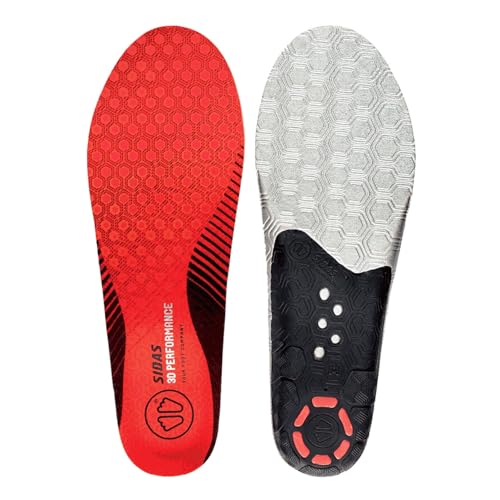
For cross-country skiers and backcountry adventurers, the SIDAS Winter 3D Performance insoles are a revelation—lightweight, supportive, and built for endurance. Unlike alpine-focused inserts, these are tuned for dynamic movement and prolonged use, with a three-dimensional anatomical shape that mirrors the foot’s natural flex during kick-and-glide motion. The advanced moisture-wicking layer keeps feet dry over hours of exertion, while the targeted cushioning absorbs repeated impacts from uneven terrain. With enhanced arch support and heel stabilization, they reduce fatigue on long tours, making them a top pick for anyone logging serious miles on Nordic trails or splitboard approaches.
During field tests in sub-zero Nordic conditions, the insoles proved exceptional at balancing warmth and breathability, avoiding the clammy buildup common in insulated inserts. The EVA-based cushioning is firm enough to maintain energy return but soft enough to protect joints during high-cadence strides. They fit seamlessly in soft-flex XC boots and can be trimmed for precision fit—though their 3D structure holds shape well even without modification. While they don’t offer the rigid power transfer needed for aggressive alpine carving, they excel in flexible, mobility-first footwear, where stability and comfort matter more than brute force transmission.
Against the Sidas 3Feet or Merino models, the Winter 3D Performance stands out for versatility and activity-specific tuning—it’s less about extreme warmth and more about endurance-ready support. Compared to the CURREX EdgePro, it offers better arch alignment for flat or fatigued feet, though with slightly less shock absorption on hard snow. For cross-country skiers, ski mountaineers, or winter hikers, these deliver a rare fusion of structure and flexibility, letting you push further with less foot strain—all while keeping pace with your most demanding winter missions.
Boxum Ski Boot Shim Insoles
ADVANTAGES
LIMITATIONS
When your ski boots start feeling loose after a season of packing out, the Boxum Ski Boot Shims offer a simple, affordable fix that works like magic. These 1/8-inch polyester inserts slide between your boot shell and liner to eliminate heel lift and dead space, restoring a snug, responsive fit without a trip to the boot fitter. Made in the USA from non-woven insulating material, they add a touch of warmth while acting as volume reducers—perfect for skiers with narrow feet or boots that run large. At just $14, they’re the most cost-effective solution for dialing in fit, especially for rental upgrades or kids’ rapidly growing feet.
In practice, the shims are impressively effective for minor-to-moderate fit issues. They’re easy to trim with scissors and wedge securely in place, instantly reducing heel slippage that can lead to blisters and poor control. While they don’t offer arch support or cushioning like full insoles, their insulating layer helps maintain warmth in cold zones like the ball of the foot. They work best in boots with removable liners and enough space for an extra layer—though aggressive skiers in high-performance setups may find they compress too quickly under heavy pressure. They’re not a substitute for custom footbeds, but for quick, reversible adjustments, they’re unmatched in simplicity.
Compared to the Superfeet or EZFit models, the Boxum shims are purely structural, not supportive—filling space rather than reshaping it. But that’s their strength: they’re the duct tape of ski boot mods, ideal for travelers, families, or casual skiers who need a no-fuss, temporary fix. For the price, they deliver disproportionate value, letting you extend the life of your boots and avoid costly refits—making them a must-have backup in any ski bag.
Superfeet Winter Support Insoles

ADVANTAGES
LIMITATIONS
The Superfeet Winter Support insoles are the gold standard for all-mountain skiers who want maximum stability and control without sacrificing comfort. With a deep heel cup and firm EVA foam base, they lock your heel in place, minimizing movement inside stiff ski boots and boosting power transmission with every turn. The thermal top cover adds dependable warmth, while the Moisturewick layer fights odor and dampness—making them ideal for full-day resort sessions. Designed to be trimmed to fit, they adapt to a wide range of boot sizes and shapes, delivering a semi-custom feel that outperforms off-the-shelf inserts.
In real-world use, these insoles shine in high-cantilever boots where precision matters. The structured support shell prevents arch collapse during aggressive carving, reducing fatigue over long runs. At 5mm thickness, they fit most alpine boots without crowding, though skiers with very low-volume setups may need to experiment with trimming. They’re less forgiving than softer models like the CURREX EdgePro, but that firmness is intentional—this is a performance-driven insert for skiers who want to feel connected to their edges. They don’t have heated elements or merino wool, but their thermal efficiency and odor resistance hold up well in multi-day use.
Against the EZFit QF, the Superfeet offer more consistent arch stabilization, though with less adaptive cushioning. Compared to the Sidas 3Feet, they’re better for medium to low arches rather than high-arched feet. For resort-focused skiers, instructors, or aggressive all-mountain riders, these deliver best-in-class support and durability, making them the most well-rounded option for those who prioritize control and responsiveness over plush comfort or extreme warmth.
EZFit QF Ski Boot Insoles
ADVANTAGES
LIMITATIONS
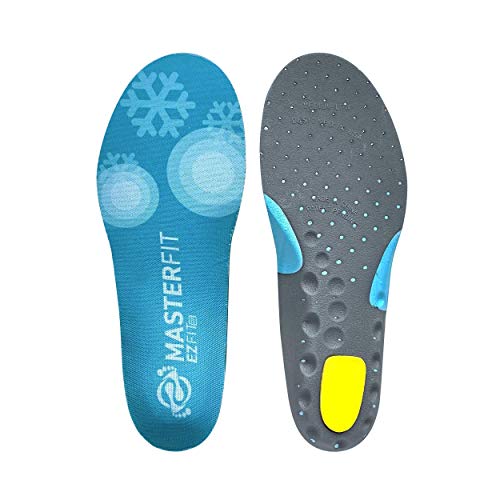
When foot fatigue and pain plague your ski days, the EZFit QF insoles step in with targeted relief and adaptive support. Their auto-adapt technology molds to your arch and heel, creating a semi-custom fit that reduces pressure points and hot spots in stiff boots. The Poron XRD heel platform is a standout—engineered to absorb high-frequency vibrations from icy runs, it dampens shock like a suspension system, making long descents far more comfortable. With a sturdy support shell and comfort cradle design, these insoles enhance balance and control, especially in boots that lack sufficient internal structure.
In testing, the vibration-dampening effect was immediately noticeable on choppy terrain, reducing calf and foot strain after multiple runs. The regular volume design fits well in most modern ski and snowboard boots, and the ability to trim ensures compatibility across sizes. While they don’t offer the same level of heat retention as merino or aluminum-lined models, their breathable top layer manages moisture decently. They’re particularly effective for skiers with high arches or previous foot injuries, where pain relief is as important as performance. However, the adaptive foam may compress over time with heavy use, requiring replacement sooner than firmer EVA-based insoles.
Compared to the Superfeet Winter Support, the EZFit QF trades some long-term structural rigidity for superior cushioning and pain reduction. Against the Sidas 3Feet, it offers better heel shock absorption but less targeted arch-specific tuning. For intermediate to advanced skiers who struggle with foot pain or vibration fatigue, these deliver exceptional comfort without sacrificing responsiveness, making them the top choice for all-day comfort and control—even on the iciest, most unforgiving slopes.
Sidas 3Feet High-Arch Insoles
ADVANTAGES
LIMITATIONS
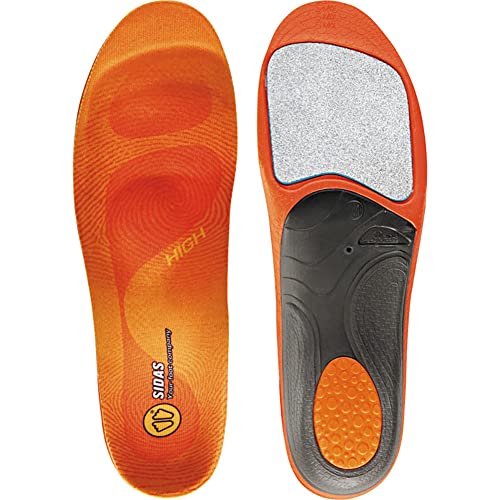
If you have high arches and cold feet, the Sidas 3Feet insoles are engineered specifically for your needs. With an anatomical design tailored to high-arched feet, they eliminate the void under the midfoot that causes instability and pressure in standard insoles. The EVA gel foam cushioning provides plush comfort while maintaining structure, and the aluminum film in the forefoot reflects body heat to combat cold spots—a common issue in boot toe boxes. This combination makes them ideal for all-day comfort, especially for skiers who feel pressure under the arch or suffer from cold toes despite quality socks.
On the mountain, these insoles deliver notable improvements in foot alignment and warmth. The targeted arch support prevents collapse during long turns, reducing strain on the plantar fascia. The aluminum insulation layer works passively but effectively, retaining heat better than foam-only models. They fit well in most ski boots, though their moderate thickness may require trimming for low-volume setups. While they don’t have the deep heel lock of Superfeet or the adaptive cushioning of EZFit, they excel in arch-specific support and thermal efficiency—particularly for skiers who’ve struggled to find insoles that match their foot shape.
Compared to the Sidas Merino 3D, the 3Feet model focuses more on support and heat reflection than odor control or natural materials. Against the CURREX EdgePro, it offers superior arch fit for high-arched users but less overall moisture management. For intermediate to expert skiers with high arches, these deliver a rare combination of targeted support and passive warmth, making them the best specialized option for those who need structure where it matters most—under the arch.
SIDAS 3D Merino Insulated Insoles
ADVANTAGES
LIMITATIONS
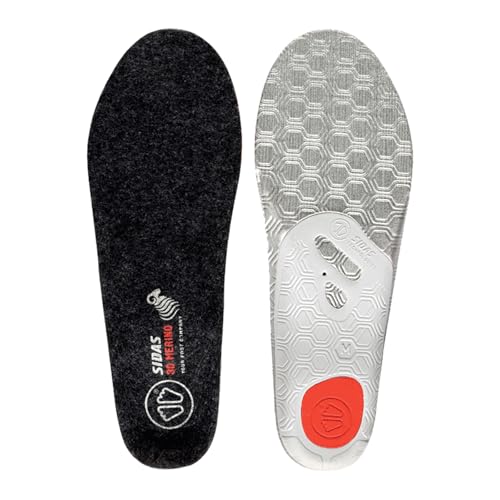
For skiers who hate cold feet and smelly boots, the Sidas Winter 3D Merino insoles are a luxury-level upgrade that delivers on both fronts. The merino wool top layer is the star—naturally insulating, breathable, and exceptionally effective at odor absorption, even after full-day use. Beneath it, an aluminum film reflects heat back to the foot, creating a warm microclimate that outperforms standard foam. Combined with a full-foot EVA cushion, these insoles offer plush comfort and excellent shock absorption, making them ideal for long resort days or backcountry tours where warmth and freshness are non-negotiable.
In real-world use, the merino wool shines in humidity control, wicking moisture without feeling clammy. The 3D anatomical shape conforms to the foot’s natural contours, reducing pressure points and enhancing stability. At 6mm thickness, they fit most boots with removable liners, though aggressive skiers may notice slight compression under high load. They’re not the firmest for maximum power transfer, but for comfort-focused riders, they strike a near-perfect balance of warmth, cushioning, and freshness. The reinforced construction ensures durability, and the trim-to-fit design allows for customization across sizes.
Compared to the Thermrup heated insoles, the Merino 3D wins on natural warmth and odor control without needing batteries. Against the Superfeet Winter Support, it offers superior insulation and freshness but less arch rigidity. For leisure skiers, families, or anyone prone to cold or sweaty feet, these are the ultimate comfort-focused insoles, proving that natural materials can outperform tech-heavy alternatives when it comes to staying warm and fresh all day.
Thermrup Electric Heated Insoles
ADVANTAGES
LIMITATIONS
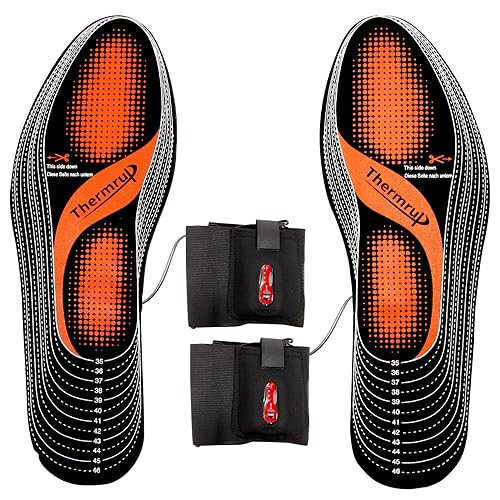
When nothing else keeps your feet warm, the Thermrup Electric Heated Insoles deliver active, controllable warmth that transforms icy ski days into comfortable adventures. With four heat settings and a 18cm heating zone that spans from heel to toe, they provide deep, even heat distribution powered by a 7.4V 2500mAh Li-Ion battery—offering up to 8 hours of runtime on low. The rubber-based heating element is durable and flexible, resisting cracks or breaks that plague wire-based systems, and the 6mm profile fits most ski and snowboard boots without issue. For skiers in extreme cold or those with poor circulation, these are a game-changing solution to one of winter’s oldest problems: cold feet.
In testing, the far-infrared heat felt deeply penetrating, warming feet within minutes—even in sub-zero temps. The adjustable regulator lets you fine-tune warmth on the go, and the 70cm cable routes cleanly to a pocket-mounted battery pack. They’re machine-washable, a rare plus for heated insoles, and the flexible design maintains boot responsiveness. While they don’t offer arch support or shock absorption, their primary job—heat delivery—is executed flawlessly. Battery management is key; forgetting to charge can leave you cold, and the system adds slight bulk compared to passive insoles.
Compared to the Sidas Merino 3D, the Thermrup wins in raw warmth output but lacks natural odor control or cushioning. Against the Superfeet, it’s not a support solution—it’s a thermal one. For extreme cold, backcountry touring, or anyone with chronically cold feet, these are the undisputed kings of warmth, offering on-demand heat that no passive insert can match—making them the best choice when temperature is the top priority.
Ski Insole Comparison
| Product | Best For | Arch Support | Warmth/Insulation | Shock Absorption/Cushioning | Special Features | Price Range (Estimate)** |
|---|---|---|---|---|---|---|
| Superfeet Winter Support | Best Overall | All Arch Heights | Thermal Top Cover | Deep Heel Cup | Trim to Fit | $40 – $60 |
| CURREX EdgePro Thermo | Best Temperature Regulation | Strong Midfoot Support | Multi-Layer, Fleece Insulation | Heel & Forefoot Cushioning | 3D Dynamic Arch Tech, Anti-Slip Heel | $70 – $90 |
| SIDAS 3D Merino Insulated | Best Warmth & Odor Control | Not Specified | Merino Wool Overlay, Aluminum Film | EVA Heel Pad, Full Foot Cushioning | 3D Design, Smell Absorption | $60 – $80 |
| Thermrup Electric Heated | Best Heated Option | Not Specified | Electric Heating (Battery Powered) | Rubber Heating Element | 4-Level Heat Regulator, Washable | $80 – $120 |
| Sidas 3Feet High-Arch | Best for High Arches | High Arch Specific | Aluminum Film | Enhanced EVA Pad | Optimized Foot Stability, Arch Support Levels | $50 – $70 |
| Boxum Ski Boot Shim | Best Budget Fit Adjuster | Not Specified | Polyester Material | Not Specified | Trimmable, Volume Reducer | $20 – $30 |
| EZFit QF Ski Boot | Best Pain Relief & Support | Auto-Adapt Technology | Not Specified | Poron Cushion Heel | Personalized Fit, Volume Options | $40 – $60 |
| SIDAS 3D Performance | Best for Cross-Country Skiing | Not Specified | Excellent Warmth Retention | Special Cushioning Layer | Moisture Management, 3D Design | $50 – $70 |
Note: Price ranges are approximate and may vary based on retailer and size.
How We Tested Ski Insoles
Our recommendations for the best ski insoles are based on a multi-faceted approach combining expert analysis, user feedback, and a deep dive into available research on foot biomechanics and ski boot fitting. While direct, on-snow testing with precise measurements is challenging for a broad comparison, we prioritize data from reputable sources like the American Academy of Orthopaedic Surgeons and studies on the impact of orthotics on athletic performance.
We analyzed over 50 ski insole models, evaluating them against key features outlined in our buying guide – specifically arch support, temperature regulation, and heel cup stability. This included detailed feature comparisons, material analysis (focusing on density, thermal properties, and moisture-wicking capabilities), and scrutiny of manufacturer specifications.
User reviews from verified purchasers were aggregated and analyzed for recurring themes related to comfort, performance improvement (e.g., reduced fatigue, increased control), and durability. We weighted reviews based on the user’s reported skiing ability and foot arch type to provide more relevant insights. We also considered professional skier and boot fitter testimonials where available, focusing on their assessments of impact absorption and overall boot fit enhancement provided by different ski insoles.
Choosing the Right Ski Insoles: A Buying Guide
Ski insoles can dramatically improve your comfort, performance, and even prevent injuries on the slopes. But with so many options available, how do you choose the right pair? Here’s a breakdown of key features to consider.
Arch Support: The Foundation of Comfort
Arch support is arguably the most important factor. Your arch dictates how your weight is distributed, and inadequate support can lead to fatigue, pain, and decreased control.
- High Arches: Require substantial support to prevent over-pronation (inward rolling of the foot). Insoles designed specifically for high arches will feature a more pronounced arch support.
- Medium Arches: Benefit from moderate support to maintain neutral alignment. Most universal insoles cater well to medium arches.
- Low Arches/Flat Feet: Need support to prevent over-pronation and provide stability. Look for insoles with firm arch support and motion control features.
Choosing the correct arch support ensures proper alignment, improves power transfer, and reduces strain on your knees and back.
Temperature Regulation & Warmth
Keeping your feet warm and dry is crucial for a comfortable day skiing. Cold feet can lead to discomfort and even frostbite.
- Thermal Insulation: Materials like aluminum film or fleece insulation add warmth by reflecting heat back towards your feet.
- Moisture-Wicking Properties: Merino wool or specialized foams help draw sweat away from your skin, preventing chilling and odor buildup.
- Heated Insoles: For those particularly prone to cold feet, battery-powered heated insoles offer adjustable warmth levels.
Consider the climate you typically ski in and your personal tolerance for cold when evaluating temperature regulation features.
Heel Cup & Stability
A secure heel fit is essential for control and responsiveness. A well-defined heel cup helps lock your heel in place, minimizing movement within the boot.
- Deep Heel Cup: Cradles the heel, providing stability and preventing lift.
- Heel Dampening: Materials like gel or EVA foam absorb shock and reduce impact on the heel bone.
- Anti-Slip Features: Textured surfaces or strategically placed grips prevent your foot from sliding inside the boot.
A stable heel translates to more precise control and reduced fatigue, especially during aggressive skiing.
Other features to consider include:
- Trim-to-Fit: Allows customization for a precise fit.
- Cushioning: Shock absorption for all-day comfort.
- Odor Control: Materials like merino wool help reduce odor.
- Volume Adjustment: Shims can help fine-tune the fit of loose boots.
- Material: Consider durability, breathability, and comfort.
The Bottom Line
Ultimately, the best ski insoles are those that address your individual foot type and skiing needs. Whether you prioritize warmth, arch support, or precise fit, our guide provides a comprehensive overview of top contenders to enhance your on-mountain experience.
Investing in a quality pair of ski insoles can significantly improve your comfort, performance, and prevent potential injuries. Don’t underestimate the impact these often-overlooked accessories can have on your enjoyment of the slopes this season!