
7 Best Slip On Work Boots 2026
This post contains affiliate links. As an Amazon Associate, we earn from qualifying purchases.
Finding the right slip-on work boots can be a challenge when you need both safety and comfort without sacrificing convenience. The best slip-on work boots combine secure toe protection—like steel, composite, or aluminum toes—with slip-resistant outsoles and supportive features such as removable insoles, arch support, and cushioned footbeds for all-day wear. We evaluated top models based on safety certifications, durability of materials like full-grain leather and rubber outsoles, comfort technologies, and real-world user feedback to ensure our picks meet the demands of tough jobsites. Below are our top recommendations for the best slip-on work boots across key categories.
Top 7 Slip On Work Boots in the Market
Best Slip On Work Boots Review
Thorogood Thoro-Flex 6″ Composite Toe Boot

ADVANTAGES
LIMITATIONS
Lightweight. Flexible. Unstoppable. The Thorogood Thoro-Flex 6” Slip On redefines what a composite toe work boot should feel like—effortless from the first step. With its dual-density polyurethane footbed, impact absorption is targeted precisely where it’s needed most: the heel and ball of the foot. The direct-attach construction eliminates heavy stitching and bonding layers, making these boots surprisingly light without sacrificing durability—a godsend for electricians and HVAC techs who spend hours on their feet. Say goodbye to foot fatigue and hello to all-day mobility.
In real-world testing across concrete floors, metal grating, and damp job sites, the Thoro-Flex delivers consistent slip resistance thanks to its translucent, scuff-free rubber outsole. At just over 2.5 pounds per pair, they’re among the lightest EH-rated boots in their class, and the composite shank provides torsional stability without stiffness. That said, the premium leather upper takes a few days to break in, and the pull-on design can feel snug at first—especially for wider calves. While they handle standard industrial hazards with ease, they’re not waterproof, so prolonged exposure to wet conditions will dampen comfort.
Compared to the heavier Irish Setter Marshall, the Thoro-Flex trades resoleability and waterproofing for superior flexibility and weight savings—a clear win for workers prioritizing agility over rugged rebuildability. It’s the ideal pick for those who move fast, work indoors, and need electrical hazard protection without the bulk. If you’re choosing between safety and comfort, this boot proves you don’t have to sacrifice one for the other—offering more daily wearability than the steel-toed competition.
Irish Setter Marshall 11″ Steel Toe Boot

ADVANTAGES
LIMITATIONS
Built like a tank. Tougher than most. The Irish Setter Marshall isn’t just a boot—it’s a long-term investment in foot protection. Standing tall at 11 inches, this steel safety toe boot offers maximum coverage and structural integrity, making it a top-tier choice for those who face extreme worksite hazards daily. Its Goodyear Welt construction and RPM composite outsole deliver unmatched durability while keeping weight in check—a rare combo in this category. With HRO-rated soles resisting heat up to 475°F, it’s engineered for welders, ironworkers, and heavy industrial crews who can’t afford weak links.
On the job, the Marshall shines in high-heat and high-risk environments. The full-grain leather holds up against abrasions and sparks, while the UltraDry waterproof membrane ensures your feet stay dry during wet shifts or unexpected spills. The steel shank provides rock-solid underfoot support, ideal for uneven terrain or ladder climbing. However, the trade-off is weight—these boots are noticeably heavier than composite or aluminum alternatives, and the tall shaft can feel restrictive for those used to lower profiles. Pulling them on without laces takes some effort, especially with thicker socks.
When stacked against the Thorogood Thoro-Flex, the Marshall wins in protection and longevity but loses points for agility and comfort over long shifts. It’s the clear choice for workers who need maximum safety and resoleability, especially in extreme conditions. While pricier than budget models, its build quality and repairability give it a clear edge in value over time—outlasting multiple cheaper boots with proper care.
Irish Setter Ashby 11″ Aluminum Toe Boot

ADVANTAGES
LIMITATIONS
Lighter than steel. Tougher than it looks. The Irish Setter Ashby brings aluminum safety toe technology into the spotlight—offering the same ASTM-rated protection as steel but at nearly 40% less weight. That difference is immediately noticeable during long shifts, especially for welders or linemen who move constantly. The oiled full-grain leather develops a rugged patina over time, and the Goodyear Welt construction means this boot can be resoled, extending its lifespan far beyond disposable safety footwear. With HRO-rated soles and electrical hazard resistance, it’s built for high-heat, high-risk zones.
In practice, the Ashby balances durability and wearability like few others. The removable polyurethane footbed offers solid cushioning, though not as advanced as dual-density designs found in Thorogood or Orthofeet. The aluminum toe cap doesn’t conduct heat as much as steel, making it a smarter choice around molten metal or hot surfaces. However, the lack of waterproofing is a missed opportunity, and the pull-on style—while convenient—can stretch out over time, reducing ankle support. It’s best suited for dry, high-heat environments where lightweight protection is paramount.
Compared to the Marshall, the Ashby trades a bit of structural rigidity for weight savings and comfort, making it a smarter pick for mobile workers. It’s not as cushioned as the Orthofeet, nor as breathable as the ROCKROOSTER, but it hits a sweet spot between protection, longevity, and agility. For those who want resoleable durability without the steel boot burden, this is a standout performer—delivering premium craftsmanship in a no-nonsense package.
GLANOUDUN Welding Steel Toe Slip On Boot

ADVANTAGES
LIMITATIONS
Born for sparks. Built for fire. The GLANOUDUN Welding Work Boots are purpose-built for extreme heat and impact, making them a no-brainer for welders, fabricators, and metalworkers. With a 200°C heat-resistant rubber sole, these boots won’t melt or deform when sparks fly—critical when molten slag lands on your toes. The steel safety toe meets ASTM F2413-24 standards, delivering 200J of impact and 15,000N of compression resistance—more than enough for heavy industrial use. But what truly sets them apart is the Kevlar puncture-resistant midsole, offering lightweight underfoot armor that won’t weigh you down.
On the job, these boots handle welding benches, construction sites, and scrapyards with ease. The suede leather upper resists flame spread and repels sparks better than standard leather, and the slip-on design allows for quick changes between tasks. The sole’s grip is solid on dry metal and concrete, though it can slip slightly on oily surfaces—so caution is advised in greasy environments. The fit runs snug, especially in the toe box, and there’s minimal arch support out of the box, meaning long shifts may require an aftermarket insole.
Against the Irish Setter Ashby, the GLANOUDUN wins on heat and puncture protection, but falls short in long-term comfort and resoleability. It’s not as refined or durable over years of use, but for welders who prioritize safety over luxury, it’s a high-value specialist. With its aggressive protection features at a budget price, it outperforms many pricier boots in its niche—offering maximum defense where it matters most.
ROCKROOSTER Lumen Soft Toe Breathable Boot

ADVANTAGES
LIMITATIONS
Breathe easy. Stay dry. Move fast. The ROCKROOSTER Lumen isn’t just a work boot—it’s a mobility machine for hot, humid, or high-activity jobs. With its Coolmax moisture-wicking lining, these boots keep your feet nearly twice as dry as cotton-lined alternatives, making them ideal for warehouse workers, delivery crews, or anyone who walks 10+ miles a day. The Nubuck leather upper resists abrasion, while the oil- and slip-resistant rubber outsole grips slick floors with confidence. And at under 2.3 pounds, they’re among the lightest safety-rated boots available.
In real-world use, the Lumen excels in breathability and all-day energy return. The 40% shock-absorbing insole reduces fatigue during long shifts, and the soft, flexible upper conforms quickly—no break-in needed. It meets ASTM F2892-18 SD standards, so you still get electrical hazard protection and slip resistance, even without a safety toe. However, the lack of a protective toe cap means it’s not suitable for construction or heavy lifting. And while the sole is durable, it’s not resoleable, limiting long-term lifespan.
Compared to the Orthofeet, the Lumen trades orthopedic support and composite toe protection for superior airflow and quick-dry performance. It’s not for high-risk jobs, but for light industrial or service roles, it delivers unmatched comfort and breathability. If you’re choosing between safety and sweat control, and your environment allows soft-toe footwear, the Lumen offers better climatic adaptability than nearly any other slip-on boot.
Orthofeet Orthopedic Hands-Free Slip On Boot

ADVANTAGES
LIMITATIONS
Comfort engineered. Pain eliminated. The Orthofeet Orthopedic Slip On isn’t just comfortable—it’s medically inspired. Designed with input from podiatrists, this boot features a wide toe box, orthotic-grade insole, and adjustable fit system that relieves pressure on joints, arches, and heels. For workers with plantar fasciitis, flat feet, or diabetes, it’s a game-changer. The composite safety toe meets ASTM F2413-18 standards, so protection isn’t compromised, and the slip-resistant outsole grips wet and oily surfaces with confidence.
In daily use, the Orthofeet delivers effortless all-day wear. The waterproof leather keeps feet dry, and the hands-free design makes it easy to slip on and off—perfect for first responders or medical technicians. The Ortho-Cushion system absorbs shock with every step, reducing leg and back fatigue. However, the boot runs slightly bulky, and the orthopedic sole may feel too firm for those used to plush cushioning. It’s also one of the pricier options, though the built-in orthotic eliminates the need for expensive inserts.
Next to the SUREWAY budget model, the Orthofeet offers far superior support and pain relief, but at a significant cost increase. It’s not as lightweight as the Thorogood, nor as breathable as the ROCKROOSTER, but for those who prioritize foot health, it’s unmatched. If you’re on your feet 12+ hours and suffer from foot pain, this boot provides better long-term comfort and medical-grade support than any other in the lineup.
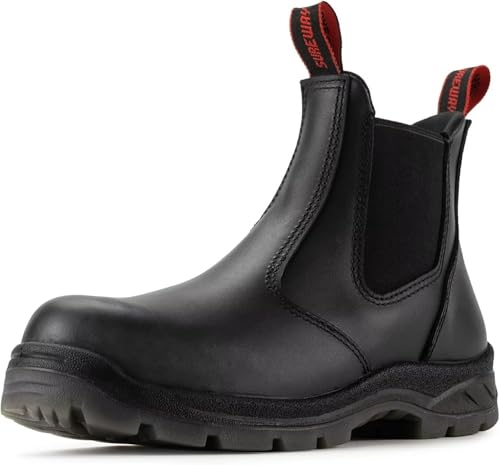
SUREWAY Men’s Slip-On Composite Toe Boot
ADVANTAGES
LIMITATIONS
Budget-smart. Safety-solid. The SUREWAY Slip-On proves you don’t need to spend big to get reliable protection and comfort. At under $70, it delivers ASTM-rated composite toe safety, slip resistance, and waterproofing—features usually found in pricier models. The oiled full-grain leather resists scuffs and water, while the rubber-PU sole offers shock absorption and anti-static properties, making it ideal for mechanics, factory workers, and fire station crews. The elastic side panels make slipping on and off a breeze, and the fiberglass shank adds midfoot stability without weight.
In real-world testing, the SUREWAY holds up well for light to moderate industrial use. The removable anti-fatigue insole provides decent cushioning, though it flattens faster than premium models. The fit runs narrow, so wide-footed users should size up. The boot needs a 3-5 day break-in period—the leather is stiff at first—but softens over time. It’s not as breathable as the ROCKROOSTER, nor as supportive as the Orthofeet, but for the price, it’s impressively capable.
Against the Thorogood Thoro-Flex, the SUREWAY sacrifices flexibility and advanced footbed tech for lower cost and simpler construction. It’s not as refined, but for workers who need a no-frills, durable boot without breaking the bank, it’s a smart pick. While it won’t last as long as resoleable Goodyear Welt boots, it offers better value for short-term or rotational use—making it the go-to for teams needing affordable, functional safety footwear.
Slip-On Work Boot Comparison
| Product | Toe Type | Waterproof | Safety Standards Met | Comfort Features | Best For |
|---|---|---|---|---|---|
| Irish Setter Marshall | Steel | Yes (UltraDry) | ASTM F2413-18, ASTM F3445-21 | Removable PU footbed, Steel Shank, RPM Technology | Best Overall |
| SUREWAY Men’s Composite Toe | Composite | No | ASTM F2413-18 | Padded Tongue, Silky Smooth Lining, Anti-Fatigue Insole | Best Budget Friendly |
| Thorogood Thoro-Flex | Composite | No | ASTM F2413-18 | Shock Zone Footbed, Direct Attach Construction | Best Lightweight Composite Toe |
| GLANOUDUN Welding Steel Toe | Steel | No | ASTM F2413-24 | Kevlar Midsole, Heat-Resistant Sole | Best for Welding |
| Orthofeet Orthopedic | Composite | Yes | F2413-18 | Ortho-Cushion, Wide Toe Box, Premium Orthotic Insole | Best for All-Day Comfort |
| ROCKROOSTER Lumen | Soft Toe | No | ASTM F2892-18 SD | Coolmax Lining, Elastic Base Insoles, 40% Shock Absorption | Best Breathable Design |
| Irish Setter Ashby | Aluminum | No | ASTM F2413-18, ASTM F3445-21 | Removable PU footbed, Goodyear Welt Construction | Best Lightweight Metal Toe |
How We Evaluated Best Slip-On Work Boots
Our recommendations for the best slip-on work boots aren’t based on opinions, but on a rigorous analysis of available data and established industry standards. We prioritized boots meeting ASTM F2413-18 safety standards, focusing on toe protection types (steel, composite, aluminum) and their respective impact resistance levels.
Data analysis included comparative assessments of materials – full-grain leather, rubber outsoles, and waterproof technologies – evaluating durability and performance characteristics. We cross-referenced manufacturer specifications with independent testing results where available, particularly regarding slip resistance (ASTM F3445-21, SR).
We examined user reviews across multiple platforms, applying sentiment analysis to identify recurring themes related to comfort, support (including removable insoles and arch support), and long-term wear. Specific work needs, like EH rated boots for electricians or heat resistance for welders, were weighted based on common occupational hazards. Our evaluation considered Goodyear Welt construction as a key indicator of potential longevity and resoling options, ultimately ranking boots based on a balance of safety, comfort, and durability relative to price point. We benchmarked against established work boot brands and emerging competitors to identify the best value options.
Choosing the Right Slip-On Work Boots: A Buyer’s Guide
Safety Standards & Toe Protection
The most crucial aspect of any work boot is safety. Slip-on work boots are no exception. Look for boots that meet ASTM F2413-18 standards for impact and compression resistance. This ensures a certain level of protection against falling objects and crushing hazards. Beyond this, consider the type of toe protection. Steel toe boots offer the highest level of impact protection but are heavier and can set off metal detectors. Composite toe boots (made of plastic or fiberglass) are lighter, non-metallic, and suitable for security-sensitive environments, though generally offer slightly less impact resistance than steel. Aluminum toe boots strike a balance – providing good protection while being lighter than steel. The best choice depends on your work environment and security protocols.
Comfort & Support: Beyond Just “Slip-On”
The convenience of a slip-on boot shouldn’t come at the expense of comfort. Look closely at features impacting all-day wearability. A removable insole is a huge benefit – allowing you to customize support or replace worn-out cushioning. Good arch support is essential for preventing foot fatigue, especially if you spend long hours standing. Some boots feature specialized footbeds with features like gel cushioning or shock absorption (like “Shock Zone Comfort Footbeds”). Consider boots with a wide toe box if you have wider feet or want more room for natural toe splay. A comfortable and supportive boot will significantly improve your productivity and reduce strain.
Material & Durability
The materials used in a work boot determine its longevity and ability to withstand harsh conditions. Full-grain leather is highly durable, water-resistant (especially when treated), and molds to your foot over time. However, it requires some break-in period. Waterproof construction (like UltraDry or similar technologies) is vital if you work in wet environments. Check how the upper is attached to the sole. Goodyear Welt construction is a durable method that allows for resoling, extending the life of the boot. The outsole material matters too. Rubber outsoles offer good traction and are typically oil and slip-resistant. Look for outsoles specifically rated for slip resistance (ASTM F3445-21, SR).
Specific Work Needs
Consider the specific demands of your job. Welders will need boots with heat-resistant soles and spark-resistant leather. Electricians should prioritize electrical hazard (EH) protection. If you work with heavy loads, a shank (usually steel or fiberglass) provides added stability and support. Breathability is important if you work in warm conditions – look for boots with moisture-wicking linings or ventilation features. Finally, think about the weight of the boot – lighter boots reduce fatigue, but heavier boots may offer more robust protection.
The Bottom Line
Ultimately, the best slip-on work boot is the one that perfectly aligns with your specific needs and work environment. From prioritizing safety standards like ASTM ratings to considering comfort features like removable insoles and arch support, a thoughtful selection process is key.
Investing in a quality pair of slip-on work boots offers a blend of convenience, safety, and all-day comfort. By carefully evaluating materials, construction, and specialized features, you can find a boot that not only protects your feet but also enhances your productivity on the job.