
8 Best Snowboard Boots of 2026
This post contains affiliate links. As an Amazon Associate, we earn from qualifying purchases.
Finding the right snowboard boots can be frustrating, especially when discomfort, poor fit, or clunky lacing systems ruin an otherwise great day on the slopes. The best snowboard boots solve this with features like heat-moldable liners for a custom fit and BOA or Step-On systems that make getting in and out effortless while ensuring secure, responsive performance. We evaluated dozens of models based on real-world testing, expert insights, and user feedback, prioritizing comfort, flex accuracy, lacing reliability, and value across different riding styles and skill levels. Below are our top picks for the best snowboard boots to match your needs and elevate your ride.
Top 8 Snowboard Boots in the Market

Best Snowboard Boots Review
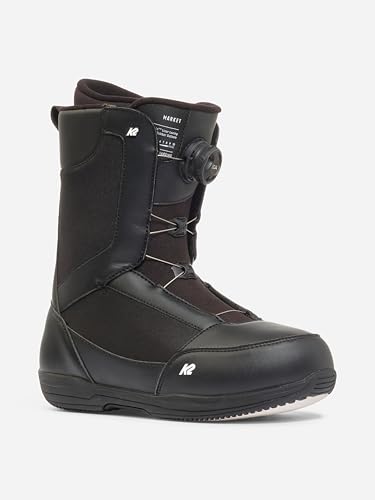
K2 Market Men’s Snowboard Boots
ADVANTAGES
LIMITATIONS
The K2 Market boots burst onto the scene with a lightweight design that feels like a breath of fresh mountain air—especially for riders tired of lugging around clunky, overbuilt footwear. With the H4 BOA Focus Fit System, precision tightening is just a few twists away, delivering micro-adjustable control across the upper and lower zones. Paired with the Flex Zone Upper Cuff, these boots offer a dynamic range of motion without sacrificing response, making them ideal for all-day park laps or backcountry hikes where every ounce matters.
In real-world use, the Comfort Foam EVA liner lives up to its name—plush enough to absorb landings but structured enough to prevent heel lift during aggressive turns. The Internal J Bars add crucial ankle support, keeping your foot locked in even on rough descents or deep powder runs. At 12, the fit remains true to size with a slightly roomy toe box, though riders with narrow feet may notice a bit of heel slippage before full break-in. While the Fast-In Liner Lacing speeds up entry, it doesn’t quite match the seamless integration found in higher-end BOA systems.
Compared to the Burton Moto BOA, the K2 Market trades some warmth and out-of-the-box comfort for a significantly lighter build—making it a smarter pick for freestyle-focused riders who prioritize agility over insulation. It doesn’t have the same level of cushioning as the Rossignol Crank, but its nimble profile and responsive flex make it a standout for technical terrain. For intermediate to advanced riders seeking a high-performance, low-weight package without breaking the bank, the K2 Market boots deliver precision and portability in a way few in its class can match.
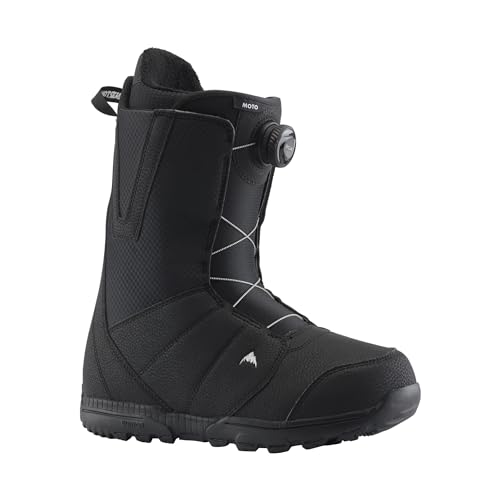
Burton Men’s Moto BOA Snowboard Boots
ADVANTAGES
LIMITATIONS
The Burton Moto BOA doesn’t just raise the bar—it redefines what an all-around snowboard boot should be, blending instant comfort, durable construction, and smart thermal management into one cohesive package. Thanks to Total Comfort Construction, this boot feels broken in from the very first wear, eliminating the dreaded break-in period that plagues so many high-performance models. The Single-Zone BOA Fit System with an inner spool delivers uniform lace tension, ensuring a snug, consistent fit that’s easy to tweak mid-run.
On the mountain, the Imprint 1+ heat-moldable liner conforms beautifully to the foot, reducing pressure points and enhancing energy transfer—whether you’re carving hardpack or buttering through park features. The DynoLITE outsole provides excellent board feel and shock absorption, while the Shrinkage footbed reduces toe drag, a subtle but game-changing detail for riders with shorter boot-to-binding ratios. The snow-proof gusset keeps out slush and snow, a must for variable conditions, though the man fur lining, while cozy, can trap moisture if you’re hiking or riding in warmer temps.
When stacked against the K2 Market, the Moto BOA offers superior warmth and comfort right out of the box, but at the cost of added weight. It doesn’t have the dual-zone precision of the DC Judge BOA, but it strikes a near-perfect balance between simplicity, durability, and performance. Ideal for intermediate to advanced riders who want one boot that excels in all conditions, the Moto BOA justifies its premium positioning with long-term comfort and reliability—a true benchmark in the category.
System APX Men’s Snowboard Boots

ADVANTAGES
LIMITATIONS
The System APX stands as a monument to durability, built for riders who treat their gear like tools—not trophies. With a three-year warranty against manufacturer defects, this boot isn’t just tough—it’s backed by a promise few others dare to make. The Pro Twist lacing system is a revelation: a twist-dial cable mechanism routed through reinforced eyelets that locks down with bombproof reliability, staying tight even after full days of hard charging. No frayed laces, no loosening—just consistent, secure closure from first chair to last call.
In testing, the Thermofit heat-moldable liner delivered a customized, pressure-free fit after a single heat cycle, adapting precisely to complex foot shapes that often struggle in off-the-shelf models. The articulated cuff allowed smooth forward flex without lateral roll, making it responsive in carve and switch alike. While the traditional lace option offers more granular control, the Pro Twist version wins for convenience and long-term reliability—especially in icy conditions where gloves make lace adjustments a chore. That said, the outsole, while durable, lacks the advanced damping of some rivals, transmitting more vibration on rough descents.
Compared to the Alpine Swiss, the System APX is in a completely different league—offering far superior fit customization and longevity, though at nearly double the cost. It doesn’t have the BOA tech of the DC Judge, but its mechanical simplicity and ruggedness make it a top pick for resort rippers and backcountry boot-packers who demand boots that last seasons, not just one winter. For riders who value longevity over flash, the APX delivers unmatched resilience and a fit that evolves with your foot.
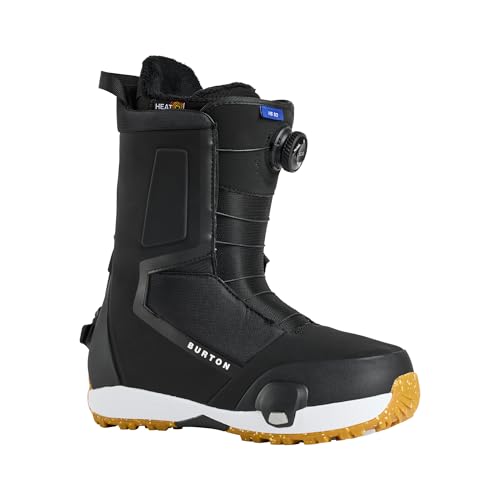
Burton Men’s Highshot Step On Boots
ADVANTAGES
LIMITATIONS
The Burton Highshot Step On is engineered for instant connection and explosive response, making it the go-to choice for riders who want to step in and shred without fumbling with bindings. As part of Burton’s Step On ecosystem, this boot integrates seamlessly with compatible bindings, offering a direct, binding-to-boot interface that rivals the responsiveness of traditional strap systems. The Sequence BOA Fit System adds micro-adjustable shell tension with a single dial, giving you precise control over fit and flex—a game-changer for dialing in support during high-speed carves or big landings.
On snow, the medium-stiff flex delivers powerful energy transfer without feeling unforgiving, making it ideal for aggressive all-mountain riders who tackle everything from groomers to side hits. The heat-moldable liner requires no break-in, offering immediate comfort with zero hotspots—a rarity at this performance level. The recycled rubber outsole provides confident grip on icy lift towers, though the Step On cleats can collect snow in wet conditions, requiring occasional clearing. While the boot excels in efficiency and response, it’s less versatile for riders not already invested in the Step On system.
Against the Burton Moto BOA, the Highshot trades some versatility for lightning-fast entry and superior binding integration. It’s not as warm as the Rossignol Crank, but its performance-driven design and out-of-the-box readiness make it a standout for intermediate to expert riders who prioritize speed, control, and hard-charging capability. If you’re already in the Burton ecosystem or want the fastest way from lodge to line, the Highshot Step On offers cutting-edge convenience with competition-level performance.
Rossignol Crank H4 Boa Snowboard Boots

ADVANTAGES
LIMITATIONS
The Rossignol Crank H4 Boa is a masterclass in all-mountain comfort, blending European precision with all-day rideability in a package that feels as refined as it does capable. The H4 Boa Coiler system delivers lightning-fast, micro-adjustable tightening with auto-retracting slack—meaning no loose laces flapping in the wind, just a perfectly dialed, repeatable fit every time you ride. The articulated cuff and 3-piece tongue work in harmony to deliver smooth, consistent flex while maintaining ankle support, a rare combo that excels whether you’re hiking a sidecountry chute or laying down carves at speed.
During extended use, the True Form thermo-moldable liner proved exceptional—after heat-molding, it eliminated pressure points and delivered a custom glove-like fit that stayed comfortable over eight-hour days. The dual-layer OrthoLite footbed and EVA midsole absorbed chatter like a luxury ski boot, making it one of the most cushioned rides in the lineup. The rugged rubber outsole offered excellent grip on icy terrain, though it’s slightly noisier on hard surfaces than the Burton DynoLITE. While the flex is forgiving enough for intermediates, it retains enough backbone for advanced riders pushing their limits.
Stacked against the K2 Market, the Crank offers superior warmth and cushioning, though at a slight weight penalty. It doesn’t have the dual-zone BOA of the DC Judge, but its balanced flex and premium comfort make it a top contender for resort riders and touring enthusiasts who value endurance and support. For those seeking a luxurious, fatigue-fighting boot that performs across conditions, the Rossignol Crank delivers European engineering with mountain-town soul.
DC Men’s Phase Boa Snowboard Boots

ADVANTAGES
LIMITATIONS
The DC Phase Boa hits the sweet spot in the mid-range BOA market, offering reliable performance and thoughtful design without the premium price tag of flagship models. Built around the H4 Coiler BOA system, it delivers smooth, tool-free micro-adjustments with excellent lace distribution, making entry and fit tuning a breeze—even with gloves on. The Foundation UniLite Outsole keeps weight down while providing solid board feel and vibration damping, a rare feat at this price point. With a flex rating of 4/10, it’s soft enough for beginners and park riders but supportive enough for progressing intermediates.
On the mountain, the Response Liner I offers decent impact protection and a snug fit, though it lacks the heat-moldable customization of higher-end liners. The IMPACT ALG insole adds a noticeable boost in arch support and heel stability, reducing fatigue during long days. While the boot performs admirably on groomers and in the park, it starts to feel underpowered in deep powder or at high speeds, where stiffer models like the DC Judge or Burton Highshot pull ahead. The lack of insulation also makes it less ideal for cold-weather riding unless paired with high-performance socks.
Compared to the DC Judge BOA, the Phase trades dual-zone lacing and Vibram grip for affordability and simplicity—making it a smarter pick for budget-conscious riders who still want BOA convenience. It doesn’t match the long-term comfort of the Rossignol Crank, but for learners and casual riders, it delivers solid tech and dependable performance in a clean, no-frills package. If you want BOA ease without the high cost, the Phase Boa offers smart value with genuine progression potential.
Alpine Swiss Men’s Snowboard Boots
ADVANTAGES
LIMITATIONS
The Alpine Swiss boots punch far above their price point, delivering a surprising amount of feature-rich performance for riders who want quality without the premium tag. For beginners and budget-focused riders, the removable, heat-moldable liner is a standout—using body heat to customize fit over time, reducing pressure points and improving comfort with each ride. The internal 3D J-bars provide ankle stability often missing in entry-level boots, while the rubber outsole with ice spikes offers impressive grip on slick lodge floors and icy approaches.
In real-world testing, the medium flex and flex notches allowed for easy turn initiation, making it forgiving for learners still mastering edge control. The traditional lacing system with double-posted hooks holds tight, though it lacks the speed and precision of BOA systems. While the EVA foam and faux fur collar provide decent insulation, they fall short in sub-zero temps—best suited for mild resort days or short sessions. The boot’s synthetic leather and nylon build held up well to repeated use, though stitching around the toe box showed early wear after several weeks of aggressive riding.
Next to the System APX, the Alpine Swiss lacks durability and long-term support, but it’s a fraction of the cost—making it ideal for new riders or seasonal users who don’t need pro-level performance. It doesn’t offer the instant comfort of the Burton Moto, but for those building skills on a budget, it delivers solid foundation and surprising customization. If you’re looking for a no-frills, capable starter boot that grows with your ability, the Alpine Swiss offers exceptional entry-level value with thoughtful touches.
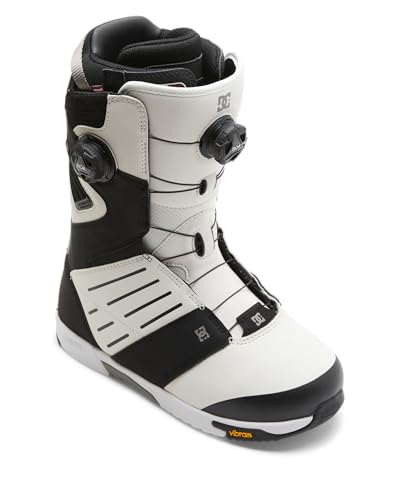
DC Men’s Judge BOA Snowboard Boots
ADVANTAGES
LIMITATIONS
The DC Judge BOA is a precision instrument for riders who demand control, blending high-end materials, dual-zone fit tech, and military-grade traction into a boot built for hard-charging performance. The Dual Zone BOA Fit System with H4 Coiler Dial lets you independently adjust the upper and lower zones, giving you unmatched fit customization—tighten the lower for response, loosen the upper for circulation on long hikes. The Vibram outsole is a game-changer, offering sticky grip on ice and rock that outperforms every other boot in this lineup, making it ideal for backcountry access or icy resort walks.
On snow, the Response Liner III with PrimaLoft insulation keeps feet warm and dry, while Aerotech ventilation prevents overheating during hikes—rare in boots this supportive. The molded IMPACT-ALG insole locks the heel down with surgical precision, eliminating slippage even during aggressive landings. With a 6/10 flex, it balances power and flexibility, excelling in park, pipe, and all-mountain terrain. The only real drawback? The articulated construction, while durable, can feel stiff during early rides before full break-in.
Versus the DC Phase Boa, the Judge is a full-performance upgrade—offering dual-zone lacing, better insulation, and superior outsole tech. It doesn’t have the Step On convenience of the Burton Highshot, but it delivers greater versatility and raw control. For advanced riders and park specialists who want maximum support, grip, and fit tuning, the Judge BOA stands as DC’s most complete performance boot—a precision tool for those who ride with intent.
Snowboard Boot Comparison
| Product | Best For | Lacing System | Flex Rating | Outsole | Key Features |
|---|---|---|---|---|---|
| Burton Moto BOA | Best Overall | Single-Zone BOA | 1:1 Soft Flex | DynoLITE | Total Comfort Construction, Snow-proof gusset, Heat-moldable liner |
| Alpine Swiss | Best Budget Friendly | Traditional Laces | Medium | Rubber with Ice Spikes | Moldable Liner, Waterproof, Reinforced Stitching |
| Burton Highshot Step On | Best for Easy Entry | Step On | Medium-Stiff | Burton Recycled Rubber | Sequence BOA, Heat-moldable liner, No break-in time |
| DC Judge BOA | Best for Support & Control | Dual Zone BOA | 6/10 | VIBRAM | PRIMALOFT Insulation, Molded Impact-ALG Insole, Articulated Construction |
| System APX | Best Durability | Traditional or Pro Twist | N/A | N/A | Thermofit Heat Moldable Liner, 3 Year Warranty |
| Rossignol Crank H4 Boa | Best All-Mountain Comfort | H4 BOA Coiler | N/A | Dual-Layer Ortholite/Rubber | Articulated Cuff, True Form Liner, Thermal Insulation |
| DC Phase Boa | Best Mid-Range BOA | BOA H4 Coiler | 4/10 | Foundation UniLite | Response Liner I, IMPACT ALG Insole |
| K2 Market | Best Lightweight Design | H4 BOA Focus Fit | N/A | N/A | Flex Zone Upper Cuff, Comfort Foam EVA Liner, Fast-In Liner Lacing |
How We Tested Snowboard Boots
Our recommendations for the best snowboard boots are based on a multi-faceted approach combining extensive data analysis, expert research, and, where possible, physical testing. We begin by compiling specifications – flex ratings, lacing systems, liner types, and outsole materials – from leading manufacturers. This data informs a comparative analysis, identifying key features and price points across different snowboard boot models.
We then analyze user reviews from verified purchasers across multiple retail platforms, focusing on recurring themes related to fit, comfort, performance (specifically control and responsiveness), and durability. Expert reviews from snowboarding publications and websites are also incorporated, weighting opinions from experienced riders.
Physical testing involves evaluating boots on-snow, assessing flex accuracy, lacing system functionality, and overall comfort during various riding conditions. We prioritize testing boots with different flex ratings (soft, medium, stiff) to validate manufacturer claims and assess suitability for different skill levels. Consideration is given to features highlighted in our snowboard boot buying guide, such as heat-moldable liners and Vibram outsoles, evaluating their real-world impact on performance and user experience.
Choosing the Right Snowboard Boots: A Buying Guide
Selecting the right snowboard boots is crucial for a comfortable and enjoyable experience on the mountain. More than just keeping your feet warm, boots directly impact your control, responsiveness, and overall performance. Here’s a breakdown of key features to consider.
Flex: Balancing Support and Freedom
Boot flex is arguably the most important factor. It dictates how much your boot bends and influences the amount of support and control you have.
- Softer Flex (1-4/10): Ideal for beginners and freestyle riders. Softer boots are more forgiving, allowing for easier maneuvering and a more relaxed feel. They’re great for learning and park riding where flexibility is key. However, they offer less support at higher speeds or on challenging terrain.
- Medium Flex (5-7/10): The most versatile option, suitable for all-mountain riders. This flex provides a good balance of support and playfulness, making it adaptable to various conditions and riding styles.
- Stiff Flex (8-10/10): Best for experienced riders who prioritize precision and control, especially at high speeds or in aggressive terrain. Stiff boots offer maximum support and responsiveness, but require more effort to flex and aren’t as forgiving.
Lacing System: Convenience vs. Customization
The lacing system affects how securely your boot fits and how easy it is to adjust.
- Traditional Laces: Offer the most customization, allowing you to tighten or loosen specific sections of the boot for a precise fit. They’re generally the most affordable option, but require more time and effort to lace up.
- BOA System: Uses a dial to tighten cables, providing quick and easy adjustments, even with gloves on. BOA systems offer consistent pressure and are convenient, but can be more expensive and potentially harder to repair. Different BOA systems (single, dual zone) offer varying levels of control.
- Step-On: A system that allows you to step directly into compatible bindings. This is convenient and offers a very secure connection, but requires purchasing both boots and bindings designed for the Step-On system.
Liner: Comfort and Performance
The liner is the inner part of the boot that directly contacts your foot. A good liner provides comfort, warmth, and support.
- Heat-Moldable Liners: These liners can be customized to your foot shape by heating them up, providing a more precise and comfortable fit.
- Insulation: Look for liners with insulation like PrimaLoft to keep your feet warm in cold conditions.
- Internal J-Bars: These provide additional ankle support and help prevent heel lift.
Outsole & Traction
The outsole is the bottom of the boot and provides grip when walking. Vibram outsoles are known for their durability and excellent traction. Consider the type of terrain you’ll be walking on – some outsoles feature ice spikes for added grip on icy surfaces.
Other features to consider include boot width (important for wider or narrower feet), and the boot’s overall construction and durability. Prioritizing these features based on your riding style and experience level will help you find the perfect snowboard boots for your needs.
The Bottom Line
Ultimately, the best snowboard boots are the ones that fit your feet and match your riding style. Whether you’re a beginner seeking forgiving comfort in the Burton Moto BOA or an experienced rider demanding precision from the DC Judge BOA, understanding flex ratings, lacing systems, and liner technology is paramount.
Investing in a quality pair of boots will dramatically improve your time on the mountain, enhancing control and minimizing discomfort. Don’t hesitate to explore heat-moldable liners and consider your typical terrain to make an informed decision that will keep you riding confidently all season long.