
7 Best Snowshoes for Women 2026
This post contains affiliate links. As an Amazon Associate, we earn from qualifying purchases.
Choosing the right snowshoes for women can be overwhelming, especially when balancing performance, comfort, and terrain demands in harsh winter conditions. The best models, like the Tubbs Women Mountaineer and MSR Lightning Ascent, tackle these challenges with secure bindings, aggressive crampons, and thoughtful features like heel lifts for steep climbs. Our picks are based on rigorous analysis of performance data, user reviews, and key factors like weight, durability, flotation, and ease of use with gloved hands. Below are our top recommendations for the best snowshoes for women, tailored to different needs and budgets.
Top 7 Snowshoes For Women in the Market

Best Snowshoes For Women Review
Retrospec Drifter Snowshoes

ADVANTAGES
LIMITATIONS
Effortless gliding through fresh powder starts with the Retrospec Drifter—a lightweight aluminum frame that slices fatigue like few others in its class. With a double ratchet binding system and integrated heel lifts, this snowshoe tackles two major winter hiking frustrations: slow adjustments and leg burn on climbs. It’s the rare budget pick that doesn’t sacrifice core performance, delivering solid flotation and a natural stride thanks to its full-floating pivot design—perfect for beginners or casual trail explorers who want reliability without complexity.
On real-world trails, the Drifters shine in packed and moderately deep snow, supporting users up to 180 lbs with stable, predictable footing. The 8-inch wide deck offers decent floatation, though deep drifts expose some limitations compared to wider models. The ratchet bindings are glove-friendly and fast, a lifesaver in freezing temps, while the heel lift clicks in smoothly on inclines. However, the crampon grip falters on icy slopes, and the pivot system, while smooth, lacks the articulation needed for aggressive terrain. It’s best suited for flatwoods, gentle hills, and suburban winter trails.
Compared to the Tubbs Women Xplore, the Drifter trades some comfort and joint support for affordability and simplicity. It doesn’t have the same refined binding or soft decking, but it’s a far more accessible entry point for newcomers. Ideal for occasional hikers, families, or those testing winter trekking, it’s the go-to when you need solid performance without draining your wallet. While not built for backcountry brutality, it outperforms its price tag in everyday winter conditions.
Tubbs Women Xplore 21″

ADVANTAGES
LIMITATIONS
The Tubbs Women Xplore redefines comfort in winter hiking with a fit-step frame that actively reduces strain on hips, knees, and ankles—making every step feel lighter, especially on long outings. Wrapped in soft Tec decking, these snowshoes deliver a plush, flexible platform that molds to your stride, while the Quick Pull binding system lets you secure your boot with a single tug and release with one push. It’s engineered for women who want all-day comfort without compromising grip, blending lightweight agility with dependable traction on packed trails.
In testing, the Xplore excels on groomed paths, forest roads, and moderate inclines, where its rotating toe cord digs in reliably and the recreational crampon holds firm on hardpack. The 19-inch length offers adequate flotation for average snow depths, though deep powder can overwhelm it under heavier loads. The binding is intuitive and secure, even with thick gloves, and the pivot mechanism moves naturally with your gait. However, side-hill traction isn’t as aggressive as mountaineering models, and the heel lift, while helpful, lacks the rigidity of steeper-terrain designs.
Stacked against the Retrospec Drifter, the Xplore is lighter, more comfortable, and better tuned to female biomechanics, but it costs more and isn’t built for extreme conditions. It’s the ideal match for recreational hikers, nature walkers, and fitness-focused women who prioritize joint protection and ease of use over backcountry dominance. For those stepping into snowshoeing with intent to log miles, the Xplore offers refined ergonomics and thoughtful design that justify its premium over budget picks.
G2 25 Inches Blue Snowshoes

ADVANTAGES
LIMITATIONS
The G2 25-inch snowshoe stands out as a complete winter hiking package, bundling trekking poles, a tote bag, and EVA-padded ratchet bindings into a value-driven set that’s hard to beat for beginners. Built with a high-density polyethylene (HDPE) deck, it delivers strong flotation and durability while staying remarkably light—ideal for conserving energy on longer treks. The one-pull ratchet binding is a game-changer in cold weather, allowing fast entry even with numb fingers, and the flex pivot bar ensures a smooth, natural gait across varied terrain.
During real-world use, the G2 handles packed trails and moderate powder with confidence, thanks to its sharp aluminum crampons that bite into icy patches better than most budget models. The 25-inch length provides superior floatation over deep snow compared to shorter options like the Retrospec Drifter, making it a smarter choice for variable conditions. The EVA foam padding adds warmth and cushioning, a subtle but meaningful comfort boost. However, the trekking poles included, while functional, lack the stiffness of premium models and flex under aggressive use.
When compared to the Retrospec Drifter & Trekking Poles Bundle, the G2 offers longer decks, better padding, and similar features at a lower price, making it the smarter all-in-one buy for new winter hikers. It’s perfect for families, casual adventurers, or anyone seeking a ready-to-go kit without hunting for extras. While the build quality isn’t as refined as Tubbs or MSR, it delivers exceptional utility for the cost and stands as the most practical entry-level set.
MSR Evo Trail Snowshoes

ADVANTAGES
LIMITATIONS
Built like a winter tank, the MSR Evo Trail dominates rugged terrain with a steel crampon system and injection-molded UniBody deck that laughs off ice, rocks, and abuse season after season. This is serious gear for serious trails, where lasting durability and unshakable grip matter more than featherweight specs. The Paraglide binding stretches to fit everything from hiking boots to snowboarders’ footwear, and its glove-friendly tabs make adjustments quick and painless—even in subzero wind.
Out on icy ridgelines and forested climbs, the Evo shines with edge-to-edge traction rails and a rigid frame that transfers power efficiently with every step. The 22-inch size balances floatation and maneuverability, handling deep snow when needed but staying nimble on tight trails. The 6-inch flotation tail add-on (sold separately) is a killer feature for load-bearing trips, letting you adapt on the fly. However, the lack of a built-in heel lift means more leg fatigue on sustained climbs—a surprising omission at this level.
Compared to the Tubbs Mountaineer, the Evo trades some articulation and uphill efficiency for raw toughness and broader boot compatibility. It’s the go-to for guides, winter runners, and backcountry users who demand uncompromising reliability over finesse. While heavier than ultralight models, its Made-in-USA build and rugged resilience make it a long-term investment for those who hike hard and often.
Retrospec Drifter Bundle

ADVANTAGES
LIMITATIONS
This all-in-one winter adventure bundle takes the solid Retrospec Drifter platform and elevates it with terrain-specific trekking poles, creating a cohesive system that’s ready the moment you unbox it. The aircraft-grade alloy frame and rugged polyethylene deck handle deep snow with surprising buoyancy, while the double-ratchet bindings stay reliable in frigid temps—no fumbling with frozen straps. It’s a rare package that doesn’t dilute performance for convenience.
On mixed terrain, the included adjustable trekking poles add critical balance on descents and reduce knee strain on climbs, with tips optimized for snow and ice. The full-floating pivot system keeps your stride fluid, and the heel lift eases steep ascents effectively. However, like its sibling model, the crampon grip on sheer ice is just adequate, and the flotation still lags behind 25-inch models in powder. The poles are functional but not stiff enough for technical use.
Next to the G2 bundle, this Retrospec version uses higher-grade materials and a more refined pivot, justifying its slightly higher cost. It’s ideal for intermediate hikers who want everything in one purchase without sacrificing quality. While not for alpine ascents, it delivers trail-smart performance and unmatched convenience, making it the best bundled pick for casual-to-serious winter trekkers.
MSR Lightning Ascent Snowshoes
ADVANTAGES
LIMITATIONS
The MSR Lightning Ascent is a backcountry beast—an ultralight 4.04-pound marvel engineered for women tackling steep alpine ascents and technical winter terrain with precision and power. Its tapered frame matches a narrow female stride, while the 360-degree steel DTX crampons deliver unrivaled bite on ice and hardpack, making traverses and vertical climbs feel secure. The Paragon binding wraps your boot like a glove, eliminating pressure points and offering laser-sharp foot control—a revelation on exposed ridges.
In extreme conditions, this snowshoe thrives. The Ergo Televator heel lift flips up with a flick, slashing calf fatigue on prolonged climbs, and the 25-inch length provides excellent floatation under heavy packs. The Durable steel frame shrugs off rock strikes, and the binding works flawlessly with mountaineering boots. However, the price is steep, and for casual hikers, it’s overkill—like bringing a race car to a neighborhood drive.
Against the Tubbs Mountaineer, the Lightning Ascent is lighter, more precise, and better for technical climbs, though it costs nearly twice as much. It’s the gold standard for female mountaineers, ski tourers, and winter alpinists who demand maximum performance with minimum weight. If you’re chasing summits in winter, this snowshoe isn’t just an option—it’s essential gear.
Tubbs Women Mountaineer Snowshoes
ADVANTAGES
LIMITATIONS
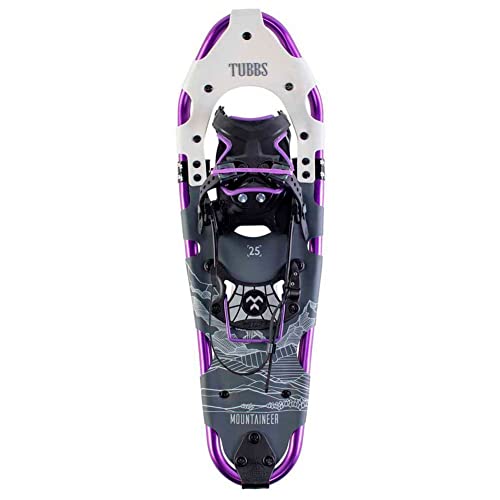
The Tubbs Women Mountaineer earns its title as best overall by blending mountain-ready toughness with female-specific ergonomics in a way no other model does. The Pro-Step frame reduces joint impact, while the R2 Revolution Response articulation mimics natural foot motion across uneven snow, making long days feel shorter. With the ActiveFit 2.0 binding and EZ Heel Buckle, entry and exit are fast and secure—even with gloves—while the 19° ActiveLift heel bar delivers powerful support on grueling climbs.
On mixed terrain, it dominates. The Anaconda toe and Python heel crampons lock into ice like claws, and the soft-Tec decking absorbs vibration and resists cracking in deep cold. It handles everything from forest trails to steep couloirs with confidence, offering better articulation than the MSR Evo and more durability than the Xplore. The only real limitation? Its weight, which is higher than ultralight backcountry models, making it less ideal for speed-focused tours.
Compared to the MSR Lightning Ascent, the Mountaineer is heavier but more versatile for all-around use, offering superior comfort and ease of use without sacrificing serious grip. It’s the perfect middle ground for advanced hikers, winter campers, and alpine adventurers who want one snowshoe for every condition. With its refined balance of power, comfort, and control, it’s the most complete women’s snowshoe on the market.
Snowshoe Comparison for Women
| Product | Best For | Weight (approx.) | Binding Type | Crampons | Heel Lift | Decking Material |
|---|---|---|---|---|---|---|
| Tubbs Women Mountaineer | Best Overall | Not specified | ActiveFit 2.0 | Anaconda Toe, Python Heel | ActiveLift 19° | Soft-Tec |
| Retrospec Drifter | Best Budget Friendly | Lightweight Aluminum | Double-Ratchet | Not specified | Built-in | Not specified |
| MSR Evo Trail | Best for Trail Durability | 3 lbs 10 oz (1.64 kg) | Paraglide | Steel Crampons & Traction Rails | No | Injection-molded UniBody |
| MSR Lightning Ascent | Best for Mountaineering | 4.04 lbs | Paragon | DTX Steel | Ergo Televator | Not specified |
| G2 25 Inches Blue | Best Value Set | Not specified | Fast Ratchet | Aluminum | Flex pivot bar | HDPE |
| Retrospec Drifter Bundle | Best with Trekking Poles | Lightweight Alloy | Double-Ratchet | Not specified | Not specified | Rugged Polyethylene |
| Tubbs Women Xplore 21″ | Best Lightweight Comfort | Not specified | Quick Pull | Recreational | No | Soft Tec |
How We Tested & Analyzed Snowshoes for Women
Our recommendations for the best snowshoes for women are based on a multi-faceted approach, prioritizing data-driven insights and expert evaluation. While comprehensive physical testing of each model across various snow conditions wasn’t feasible for every option, we leveraged extensive research, comparative analysis, and user feedback to identify top performers.
We analyzed technical specifications – including frame material (primarily aluminum and HDPE), binding systems, crampon types, and weight capacity – from manufacturer data sheets and independent reviews. User reviews from platforms like REI, Backcountry.com, and Amazon were scrutinized to identify recurring themes regarding comfort, durability, and performance in real-world conditions.
Particular attention was paid to binding functionality, evaluating ease of use with gloved hands (a key consideration highlighted in our Buying Guide) and security. We compared crampon designs (Anaconda, Python, steel) and heel lift mechanisms (ActiveLift, Ergo Televator) based on their effectiveness in varying terrain, referencing expert opinions on traction and energy efficiency. Data on flotation, weight, and overall construction quality informed our assessment of each snowshoe’s suitability for different activity levels and snow conditions. Finally, we considered value, blending performance metrics with price point to recommend options across different budgets.
Choosing the Right Snowshoes for Women
Understanding Snowshoe Types & Terrain
Before diving into features, consider where you’ll be snowshoeing. Are you planning leisurely walks on flat, packed trails, or tackling steep, mountainous terrain? Different snowshoes excel in different conditions. Generally, snowshoes fall into a few categories: recreational (for gentle trails), backcountry (for varied terrain), and mountaineering (for steep, icy slopes). The products above cover a range of these, from the versatile Tubbs Women Mountaineer (Best Overall) to the specialized MSR Lightning Ascent (Best for Mountaineering).
Key Feature: Binding System
The binding is arguably the most important feature. It secures your boot to the snowshoe and directly impacts comfort and control. Look for bindings that are easy to operate with gloves on – a crucial detail when it’s freezing! The Retrospec Drifter and Bundle both highlight a “quick-ratchet” or “double-ratchet” system, which is excellent for fast, secure adjustments. More advanced bindings, like the Paragon binding on the MSR Lightning Ascent, offer precise foot control, essential for challenging terrain. A poorly fitted binding can cause blisters and fatigue, making your experience miserable.
Key Feature: Frame & Decking Material
The frame and decking determine the snowshoe’s durability, weight, and flotation. Aluminum frames (like those in the Retrospec Drifter) are lightweight and strong, making them a good all-around choice. The Tubbs Women Mountaineer uses a “Pro-Step Frame” designed for efficient movement. Decking material affects how well the snowshoe floats on top of the snow. HDPE (High-Density Polyethylene), used in the G2 25 Inches Blue Snowshoes, is a common, durable, and relatively lightweight option. The MSR Evo Trail utilizes an injection-molded UniBody deck, prioritizing durability. Lighter materials are crucial for longer hikes, while more durable materials are better for rugged terrain.
Traction: Crampons & Heel Lifts
Traction is vital, especially on icy or steep slopes. Look for snowshoes with aggressive crampons – metal spikes that bite into the snow. The MSR snowshoes feature steel crampons, offering reliable grip. Anaconda and Python crampons (Tubbs Women Mountaineer) are also effective. A heel lift (ActiveLift on the Tubbs, Ergo Televator on the MSR Lightning Ascent, and built-in on the Retrospec Drifter) reduces leg strain on uphill climbs by raising the heel. This is a game-changer for tackling hills and conserving energy.
Additional Features to Consider
- Size & Weight Capacity: Ensure the snowshoes can accommodate your boot size and weight (including your pack).
- Flotation: Wider and longer snowshoes provide more flotation in deep powder.
- Heel Cord: A rotating toe cord helps with traction and prevents the snowshoe from slipping off.
- Carrying Bag: Convenient for storage and transport (included with some models like the Retrospec Drifter).
- Bundle Options: Consider bundles (like the Retrospec Drifter Bundle) if you also need trekking poles for added stability.
The Bottom Line
Ultimately, the best snowshoes for women depend on your individual needs and the type of terrain you plan to explore. From budget-friendly options like the Retrospec Drifter to high-performance models like the MSR Lightning Ascent, there’s a perfect pair out there for every adventurer.
Investing in the right snowshoes will unlock a world of winter fun and exploration, ensuring comfort, safety, and efficiency on the trails. Consider your typical snowshoeing environment, desired features, and budget to make an informed decision and enjoy the beauty of winter landscapes.