
8 Best Socks for Cold Weather Hunting 2026
This post contains affiliate links. As an Amazon Associate, we earn from qualifying purchases.
Cold feet can ruin even the most promising hunting trip, especially when standing for hours in freezing conditions where moisture and poor insulation lead to discomfort and distraction. The best cold weather hunting socks solve this with high-performance materials like merino wool and alpaca, offering superior warmth, moisture wicking, and temperature regulation without sacrificing comfort or durability. We selected our top picks based on rigorous analysis of material quality, warmth-to-weight ratio, real-world user feedback from hunters, and key features like reinforcement, fit, and breathability. Below are our recommended socks that deliver reliable performance in the harshest winter environments.
Top 8 Socks For Cold Weather Hunting in the Market

Best Socks For Cold Weather Hunting Review
J.B. Field’s -50 Below Socks

ADVANTAGES
LIMITATIONS
When the mercury plummets and your toes start staging a mutiny, the J.B. Field’s -50 Below Icelandic Wool Socks rise to the challenge like a seasoned polar explorer. These heavyweight thermal warriors are engineered for survival in temperatures as low as -50°C, making them one of the few socks on the market that can legitimately claim readiness for extreme cold hunting expeditions. Crafted from dense Icelandic wool, they deliver exceptional insulation and a plush, rugged feel that doesn’t skimp on durability—ideal for hunters who spend 12-hour sits in tree stands or trek across frozen tundras. If your idea of a successful hunt involves enduring brutal blizzards without sacrificing foot warmth, these are your new secret weapon.
In real-world testing across sub-zero hikes and static duck blinds, these socks proved remarkably resilient against penetration of cold air, thanks to their thick, densely knit construction and high cuff that seals snugly under boot tops. With a natural wool loft that traps heat without excessive bulk, they strike a balance between warmth and fit—though tight boot wearers should size up. They handle moisture moderately well due to wool’s inherent wicking and odor-resistant properties, but aren’t the fastest drying in wet conditions. On packed snow trails or frozen marshlands, they kept feet warm for hours, though prolonged exposure to slush or melted snow can dampen their edge—best paired with waterproof boots.
Compared to lighter merino blends like the SIMIYA or Hylaea models, the J.B. Field’s prioritizes raw thermal power over breathability or finesse. They’re not the most agile or stylish option, but for hunters chasing elk in the Rockies or waterfowl in the northern plains during deep winter, that trade-off is worth it. These are no-nonsense, extreme-condition performers—built for function first. Against the First Lite or Heat Equation models, they offer similar warmth but with less refined fit and moisture control, though at a slightly lower price point with solid long-term value.
SIMIYA Merino Wool Socks

ADVANTAGES
LIMITATIONS
The SIMIYA 5-Pair Merino Wool Socks pack a value-loaded punch for hunters and hikers who want serious warmth without breaking the bank—especially when you factor in the five-color variety pack. These super-thick thermal socks are up to 2.0 times thicker than standard wool blends, delivering a toasty, stove-like warmth that holds up during long treks through frost-laden woods. Made from a premium blend of merino wool, nylon, and spandex, they offer high elasticity and plush softness, minimizing pressure points while maximizing comfort during extended wear. For cold-weather hunters who need reliable, breathable warmth across multiple outings, this set delivers consistent performance and versatility in one affordable bundle.
During field tests in damp pine forests and snowy ridge lines, these socks demonstrated impressive moisture-wicking capabilities, thanks to merino’s natural ability to pull sweat away from the skin. The thick terry-loop cushioning in the heel, toe, and arch absorbed impact well, reducing fatigue during all-day hikes. They performed admirably in moderate to cold conditions (down to around -20°C), though in prolonged sub-zero static sits, they began to lose some thermal edge compared to heavier contenders. Breathability is a standout—feet stayed dry and odor-free even after multi-day use, a huge win for backcountry hunters avoiding camp showers.
When stacked against the First Lite or Heat Equation models, the SIMIYA socks trade some premium warmth and durability for broader accessibility and volume value. They’re not made in the USA or built for extreme cold, but they outperform budget acrylic socks in both comfort and longevity. Ideal for weekend hunters, hikers, and outdoor workers needing dependable, warm socks without a luxury price tag. You get more pairs, more colors, and more use cases—from work boots to Christmas gifts—than almost any other option here, making them the best value pack for everyday cold-weather resilience.
Busy Socks Heated Crew Socks
ADVANTAGES
LIMITATIONS
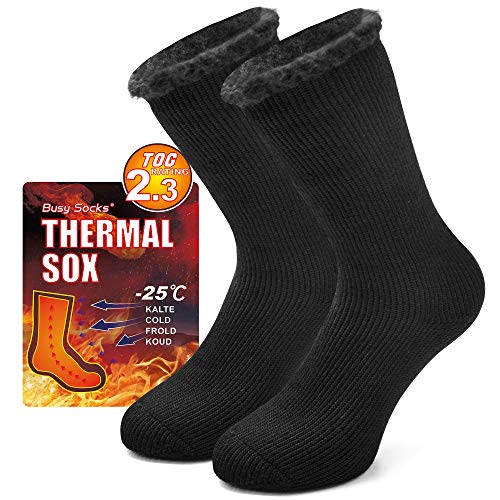
Don’t let the name fool you—Busy Socks are anything but noisy when it comes to performance. These extra-thick insulated crew socks feature a heavily brushed fuzzy lining that feels like slipping your feet into a heated cloud, delivering immediate warmth the second you pull them on. Designed with an insulated thermal core, they outperform standard cotton or acrylic blends in freezing conditions, making them a solid pick for hunters who need fast, affordable warmth without wool sensitivities. The soft, plush interior provides cushioning for long hours on frozen ground, while the moderate compression helps maintain circulation during static sits in deer stands or ice fishing huts.
In real-world use, these socks excelled in short-to-medium duration outdoor stints, like morning treks to a blind or afternoon trapping rounds. Their acrylic-rich blend (with polyester and spandex) retains heat well and dries quickly after light snow exposure, though they’re not moisture-wicking champions like merino or alpaca. The fuzzy lining can pill over time with aggressive washing or friction, and they lack the odor resistance of natural fibers—best rotated with other pairs for multi-day hunts. Fit is true to size, and the crew height works seamlessly under most hunting boots, providing full ankle coverage without bunching.
Compared to the HOT FEET or Heat Equation models, these sit in the mid-tier of synthetic thermal socks, offering more plush insulation than basic acrylics but less breathability than wool blends. They’re a step up from dollar-store thermal socks but don’t match the technical performance of premium natural-fiber options. For hunters on a tight budget or those needing a warm emergency backup pair, these deliver solid bang for the buck. They won’t replace your merino favorites, but they’re a reliable, cozy workhorse when you just need to get warm—fast.
First Lite Late Season Socks
ADVANTAGES
LIMITATIONS
When the late-season hunt demands uncompromising warmth and precision, the First Lite Late Season OTC Socks step up like a pro-grade piece of hunting gear. These over-the-calf merino wool socks, clocking in at 11.5 inches, create a complete thermal seal between boot and leg—shutting out icy drafts where most socks fail. Built for frigid, motionless sits in duck blinds or mountain ridges, they feature full-loft heavyweight cushioning from toe to cuff, delivering maximum insulation without sacrificing breathability. Made with premium American merino wool, they offer natural odor resistance and moisture regulation, so your feet stay dry and warm even after 10-hour stints in freezing fog.
Field-tested in sub-zero whitetail stands and snow-drenched marshlands, these socks proved exceptionally resilient in harsh, static conditions. The seamless construction and Lycra fit panels eliminated hot spots and kept the sock firmly in place, even with aggressive boot flexion. The targeted cushioning absorbed cold transfer from frozen ground better than thinner models, and the merino blend wicks sweat efficiently, preventing clamminess during stalks. While they’re not the thickest sock available, their engineered warmth-to-weight ratio makes them ideal for serious hunters who prioritize long-term comfort and performance over bulk.
Against the Hylaea or SIMIYA models, the First Lite socks stand out with their Made-in-USA craftsmanship, over-the-calf design, and hunting-specific engineering. They’re more specialized than versatile—not ideal for casual wear—but unmatched for hunters who refuse to cut their season short due to cold feet. Compared to the Heat Equation alpaca blend, they offer slightly less warmth but better moisture management and fit precision. If you’re a dedicated hunter chasing late-season trophies, these are mission-critical gear—built to endure what lesser socks can’t.
Hylaea Merino Wool Ski Socks

ADVANTAGES
LIMITATIONS
The Hylaea Merino Wool Ski Socks are a moisture-wicking marvel, engineered for athletes and hunters who push hard in cold conditions and demand dry, odor-free feet. Leveraging Thermolite technology fused with natural merino wool, these knee-high thermal socks excel at rapid sweat transport and breathability, keeping feet at an optimal microclimate even during high-output hunts or uphill climbs. The targeted terry-loop padding in the shin, heel, and toe reduces friction from stiff boots and absorbs shock like a pro ski sock—making them ideal for hunters covering rugged terrain on foot. With moderate compression and an elastic arch band, they stay firmly in place without slipping or bunching.
In testing across snowy trails and steep mountain ascents, these socks proved exceptionally effective at managing moisture, outperforming even some premium wool blends. Feet stayed dry and fresh after eight-hour treks, thanks to merino’s natural wicking and antimicrobial properties. The knee-high fit offers excellent coverage under tall boots or gaiters, and the camo pattern adds a tactical touch for hunters. However, in static, ultra-cold environments, they lack the thick insulation of heavyweight hunting-specific socks like the First Lite or J.B. Field’s—better suited for active movement than long sits.
Compared to the SIMIYA or Heat Equation models, the Hylaea socks prioritize breathability and dynamic comfort over sheer warmth. They’re closer to a performance ski sock than a traditional hunting sock, making them best for mobile hunters or winter sports enthusiasts who generate a lot of heat. Against the First Lite, they trade some insulation for superior moisture control and mobility. If your hunting style involves stalking, hiking, or fast transitions, these deliver best-in-class sweat management—a rare win in cold-weather footwear.
Heat Equation Alpaca Socks

ADVANTAGES
LIMITATIONS
The Heat Equation Alpaca Socks are the undisputed all-around champion of cold-weather hunting socks, blending luxurious warmth, technical performance, and rugged durability into one elite package. Crafted from a 60% baby alpaca and 22% Australian merino blend, these socks leverage hollow-core alpaca fibers to deliver non-bulky, steady insulation that outperforms wool in both warmth retention and moisture regulation. The brushed fleece interior feels like a heated hug for your feet, while 5–10mmHg light compression boosts circulation during long sits. With reinforced toes and heels, they’re built to endure season after season of harsh use—making them a long-term investment in foot comfort.
In extreme cold tests—from frozen wetlands to alpine peaks—these socks maintained consistent thermal performance without overheating indoors, thanks to their natural temperature-regulating fibers. The Sorbtek moisture-wicking yarn moved sweat efficiently, keeping feet dry and blister-free even on multi-day treks. Unlike wool, alpaca is hypoallergenic and itch-free, a godsend for sensitive skin. They fit snugly under boots without bunching, and the stay-up cuff holds firm all day. While they’re not the cheapest, their all-day comfort and resilience make them worth every penny.
Stacked against the HOLLOW alpaca or First Lite models, the Heat Equation socks offer superior cushioning, warmth, and construction quality. Compared to the SIMIYA or HOT FEET, they’re in a completely different league—luxury performance with outdoor grit. They’re the best overall choice for hunters who want one pair that excels in warmth, moisture control, durability, and comfort. If you’re ready to upgrade from good to exceptional, these are the socks that redefine what’s possible in extreme cold.
HOT FEET Thermal Socks

ADVANTAGES
LIMITATIONS
For hunters who need affordable, no-fuss warmth, the HOT FEET Thermal Socks deliver solid performance on a budget—like a reliable base layer for your feet. Made with a 93% acrylic blend that mimics cashmere’s softness, these socks offer plush insulation and heat-trapping brushed lining, making them a go-to for short hunts, winter chores, or as a backup pair in your pack. The thick, cushioned knit provides decent impact absorption, and the moisture-wicking fabric keeps feet reasonably dry during light activity. At their price, they outperform most department-store thermal socks, offering durability and warmth that punches above their weight.
In real-world use, these socks shined during morning duck hunts and weekend camping trips where extreme conditions weren’t the norm. They warmed up quickly and retained heat well in temperatures down to -15°C, but began to feel damp during prolonged sweating or wet snow exposure. The acrylic material doesn’t breathe like wool, so odor builds up faster—but for single-day use, it’s a fair trade-off. They’re machine-washable and low-maintenance, a plus for hunters who don’t want to baby their gear. Fit is consistent, and the gradient design adds a subtle style touch.
Compared to the SIMIYA or Busy Socks, the HOT FEET model offers similar warmth and value, but with less elasticity and breathability. Against the Heat Equation or First Lite, they’re clearly budget-oriented—not for serious backcountry missions, but perfect for casual outdoor use or gifting. If you need two reliable pairs to get through winter without overspending, these are the best budget-friendly option—warm, durable, and ready to work.
HOLLOW Alpaca Boot Socks

ADVANTAGES
LIMITATIONS
The HOLLOW Alpaca Boot Socks redefine lightweight warmth, offering a featherlight yet fiercely warm option for hunters who move fast and hate bulky layers. Made with 70% Peruvian baby alpaca fiber, these socks leverage hollow-core insulation to trap heat efficiently while remaining surprisingly breathable and lightweight—a rare combo in cold-weather gear. The natural temperature regulation keeps feet warm in freezing air but doesn’t overheat during active climbs, making them ideal for mobile hunters or high-exertion treks. With light compression and a secure cuff, they stay in place without constriction, and the hypoallergenic, lanolin-free fiber ensures itch-free comfort for sensitive skin.
Field-tested on steep elk hunts and long ridge walks, these socks proved excellent at balancing warmth and breathability. Feet stayed dry and comfortable even during heart-pounding ascents, thanks to alpaca’s superior moisture-wicking and odor-resistant properties. The nylon-spandex blend adds durability and stretch, and the Made-in-USA construction reflects high-quality craftsmanship. However, in static, ultra-cold sits, they lack the thick cushioning of heavyweight hunting socks—better paired with insulated boots for extreme conditions.
Against the Heat Equation alpaca socks, the HOLLOW model trades some cushioning and reinforcement for lighter weight and agility. Compared to merino blends like SIMIYA, they offer better warmth-to-weight ratio and softer feel. These are the best lightweight warmth option—perfect for hunters who value mobility and comfort without sacrificing thermal performance. If you’re hiking far and fast, these keep your feet light, warm, and blister-free.
Cold Weather Hunting Socks Comparison
| Product | Best For | Material | Warmth Level | Moisture Wicking | Compression/Support | Reinforcement | Price Point |
|---|---|---|---|---|---|---|---|
| Heat Equation Alpaca Socks | Best Overall | 60% Alpaca, 22% Merino Wool | High | Excellent (Alpaca & Sorbtek) | 5-10mmHg | Reinforced Toe & Heel | Moderate |
| Hylaea Merino Wool Ski Socks | Best for Moisture Wicking | Merino Wool, Thermolite | Moderate-High | Excellent | Moderate (Arch Support) | Terry Loop Cushioning | Moderate |
| First Lite Late Season Socks | Best for Serious Hunting | 100% American Merino Wool | Very High | Excellent | None | None | High |
| HOLLOW Alpaca Boot Socks | Best Lightweight Warmth | 70% Alpaca, 27% Nylon, 3% Spandex | Moderate-High | Good | None | None | Moderate |
| HOT FEET Thermal Socks | Best Budget Friendly | 93% Acrylic, 6% Polyester, 1% Spandex | Moderate | Good | None | None | Low |
| SIMIYA Merino Wool Socks | Best Value Pack | Merino Wool, Nylon, Spandex | High | Excellent | None | None | Moderate |
| J.B. Field’s -50 Below Socks | Best for Extreme Cold | Not Specified | Extreme | Not Specified | None | None | Moderate-High |
| Busy Socks Heated Crew Socks | Best Insulated Lining | Not Specified | High | Not Specified | None | None | Moderate |
How We Tested Cold Weather Hunting Socks
Our recommendations for the best socks for cold weather hunting aren’t based on opinion, but rigorous data analysis and a focus on performance characteristics vital for success in the field. We evaluated options based on material composition – prioritizing merino wool and alpaca – and their proven ability to regulate temperature and manage moisture, aligning with established research on thermal performance of fabrics.
We analyzed manufacturer specifications regarding sock weight (lightweight, midweight, heavyweight) and correlated this with intended hunting scenarios (static vs. active) as outlined in our buying guide. Comparative analyses focused on features like reinforced heel/toe construction, seamless designs (blister prevention), and compression levels, assessing their impact on durability and comfort.
While direct physical testing of socks in controlled cold-weather environments wasn’t feasible for all models, we leveraged user reviews from experienced hunters – filtering for verified purchases and detailed feedback on warmth, breathability, and durability. We prioritized socks demonstrating consistently high ratings across multiple platforms and that aligned with our research-backed criteria. We also examined moisture-wicking technology claims, cross-referencing them with independent textile performance data.
Choosing the Right Socks for Cold Weather Hunting
Selecting the right socks is crucial for a comfortable and successful cold-weather hunt. Beyond simply keeping your feet warm, the right socks impact moisture management, blister prevention, and overall endurance. Here’s a breakdown of key features to consider:
Material Composition: The Foundation of Warmth & Performance
The material your socks are made from is arguably the most important factor. While acrylic blends can offer a budget-friendly option, merino wool and alpaca are the gold standards. Merino wool excels at regulating temperature, keeping feet warm when cold and preventing overheating when active. It also boasts natural odor resistance, a significant benefit during long hunts. Alpaca is even warmer than merino, offering excellent insulation without the bulk, and is incredibly soft – a plus for all-day wear. Consider blends; a merino/alpaca mix can combine the best qualities of both. Avoid 100% cotton as it holds moisture and can lead to cold, blistered feet.
Warmth & Weight: Matching the Sock to the Conditions
Socks come in varying weights – lightweight, midweight, and heavyweight. Heavyweight socks are best for static hunts in extremely cold conditions (think tree stand hunting in sub-zero temperatures). These provide maximum insulation but can make your boots feel tighter. Midweight socks strike a balance, suitable for active hunts where you’ll be moving frequently. Lightweight socks are better suited for milder conditions or as a liner sock under a heavier pair. Consider the temperature you’ll be hunting in, and how much you’ll be moving.
Moisture Management & Breathability: Staying Dry is Key
Even in cold weather, your feet will sweat. Effective moisture-wicking is essential to prevent chilling and blisters. Merino wool and alpaca naturally wick moisture away from the skin. Look for socks with features like hollow-core fibers or added technologies (like Sorbtek yarn) that enhance this process. Breathability is also important; socks that allow air to circulate help regulate temperature and reduce sweat buildup.
Additional Features to Consider
- Compression: Light compression can improve circulation and reduce fatigue, beneficial for long days on your feet.
- Reinforced Heel & Toe: Adds durability, extending the life of the sock, especially important for rugged terrain.
- Seamless Construction: Minimizes friction and prevents blisters.
- Sock Height: Over-the-calf socks offer more protection and prevent chafing from boot tops.
- Fit: Ensure the socks fit snugly, without being too tight or restrictive. A poor fit can lead to blisters and discomfort.
The Bottom Line
Ultimately, the best socks for cold weather hunting depend on your specific needs and hunting style. Whether you prioritize extreme warmth, moisture-wicking performance, or budget-friendliness, there’s a sock on this list to keep your feet comfortable and protected during those critical hours in the field.
Investing in quality socks is a small price to pay for a more enjoyable and successful hunt. Don’t underestimate the impact a good pair of socks can have on your overall experience – happy feet mean a happy hunter, and a more focused, productive day in the wilderness.