
8 Best Wading Boots of 2026
This post contains affiliate links. As an Amazon Associate, we earn from qualifying purchases.
Wading in slippery, uneven riverbeds can be dangerous and uncomfortable without the right footwear, leaving anglers vulnerable to slips, fatigue, and soaked feet. The best wading boots solve this with superior traction, durable construction, and all-day comfort—featuring aggressive rubber outsoles, quick-drying uppers, and supportive midsoles that keep you stable and confident on slick rocks. We evaluated top models based on performance data, user reviews, and expert testing, weighing factors like sole grip, material durability, fit, and compliance with environmental regulations to ensure reliable, well-rounded recommendations. Below are our top picks for the best wading boots across different needs and budgets.
Top 8 Wading Boots in the Market
Best Wading Boots Review
Simms Freestone Boot – Rubber

ADVANTAGES
LIMITATIONS
The Simms Freestone Boot charges out of the gate as a top-tier performer in wading footwear, engineered for anglers who demand maximum durability, all-day support, and rock-solid traction. Its waterproof synthetic scratch leather upper doesn’t just shrug off river rocks and log snags—it does so with a level of refinement rarely seen in rugged boots. Reinforced toe and heel zones, paired with a dual-density EVA midsole, deliver a cushioned yet responsive feel that turns long hikes through unforgiving terrain into a surprisingly comfortable experience. For fly fishers battling slippery boulder fields or fast-moving currents, this boot answers the call with confidence and class.
In real-world testing, the Freestone shines across mixed environments—from alpine creeks to rocky tailwaters—thanks to its updated rubber outsole engineered for compatibility with Simms Hardbite Star Cleats and Alumibite Star Cleats. The partial neoprene lining makes donning and doffing a breeze without sacrificing structure, while the aggressive lug pattern bites into wet granite, algae-coated stone, and muddy banks with near-tenacious grip. That said, the lack of full neoprene coverage means it’s slightly less forgiving in cold-water immersion scenarios compared to fully lined models. Still, the drainage is swift and the boot stays light, even after hours underwater.
Positioned above budget models like the Simms Tributary and competing directly with the Orvis Clearwater, the Freestone sets the benchmark for premium performance without overcomplication. It’s not the lightest (clocking in heavier than the Korkers Stealth), nor the most feature-flexible (unlike the Greenback’s interchangeable soles), but it strikes a near-perfect balance between protection, comfort, and traction. Ideal for serious anglers who spend full days on their feet in demanding conditions, it justifies its place at the top with craftsmanship and consistency—offering elite build quality that outperforms its mid-tier rivals in durability and long-term wear.
FROGG TOGGS Pilot 2 Wading Boot
ADVANTAGES
LIMITATIONS
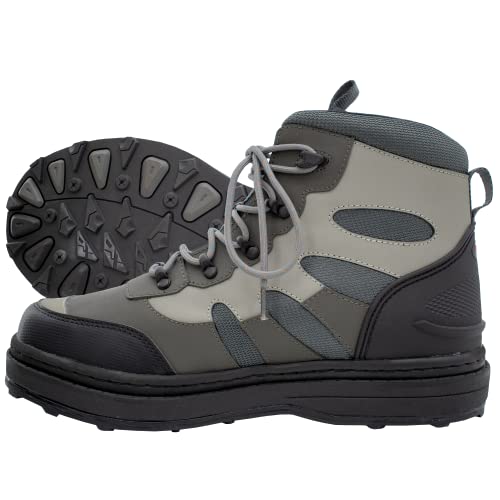
The FROGG TOGGS Pilot 2 bursts onto the scene as a no-frills, high-value entry point for anglers dipping their toes into wading boot territory—delivering reliable traction, smart drainage, and surprising comfort without draining your wallet. Its 1200D nylon upper with leather overlays withstands scrapes from roots and rocks, while the water-draining design ensures the boot stays nimble even after repeated dips. The speed lace system is a standout—offering a secure, customizable fit in seconds, a godsend when you’re racing rising water levels or scrambling over slick banks.
Out on the river, the Pilot 2 holds its own on moderate terrain. The felt sole option (or cleated rubber, depending on version) provides dependable grip on algae-slick stones, though it’s not quite as aggressive as premium rubber lugs from Simms or Orvis. The removable quick-dry insole adds comfort for half-day outings, and the padded collar cushions the ankle during extended wades. However, the midsole lacks the structural support needed for long hikes or rocky descents—your feet will feel the fatigue by hour four. Additionally, the lacing hardware, while corrosion-resistant, can loosen under heavy strain, a concern in fast-moving currents.
When stacked against the Simms Tributary or Foxelli, the Pilot 2 falls short in long-term durability and support, but it’s a sensible pick for weekend warriors and beginners who need functional performance on a tight budget. It’s not built for alpine expeditions or technical wading, but for casual anglers chasing bass in warmwater streams or trout in gentle riffles, it’s a capable, cost-effective workhorse—delivering essential features at a fraction of the price of high-end models, though with clear compromises in support and sole aggression.
Simms Tributary Boot – Rubber

ADVANTAGES
LIMITATIONS
The Simms Tributary Boot enters the ring as a rugged, no-nonsense performer that brings Simms’ reputation for quality down to a budget-conscious price without sacrificing core functionality. Built with a rugged synthetic leather and mesh upper, reinforced with scratch rubber in high-wear zones, it’s clearly designed to endure season after season of hard use. The fully gusseted tongue is a game-changer—keeping gravel, sand, and pebbles from invading your waders, a common annoyance that derails many cheaper models. And with corrosion-resistant lacing hardware, it laughs in the face of salt and freshwater exposure.
On the riverbank, the Tributary proves its mettle on rocky substrates and fast-moving currents. The proprietary multi-directional lugged rubber outsole grips surprisingly well on wet stone, though it doesn’t match the tenacity of the Freestone’s cleat-ready tread. The full neoprene lining makes slipping the boots on and off a breeze—even with damp wader socks—and adds a layer of comfort during prolonged wear. That said, the midsole is on the firmer side, offering less cushioning than the Foxelli or Orvis, which can lead to foot fatigue on multi-mile hikes.
Compared to the FROGG TOGGS Pilot 2, the Tributary offers superior build quality and better long-term durability, making it a smarter investment for frequent anglers. While it lacks the premium cushioning of high-end models or the customization of Korkers’ systems, it hits a sweet spot for budget-minded fly fishers who still want trusted brand engineering and dependable performance—delivering Simms-level reliability in a stripped-down, value-focused package that outlasts most entry-level competitors.
Korkers Stealth Sneaker Boot

ADVANTAGES
LIMITATIONS
The Korkers Stealth Sneaker storms onto the scene with a lightning-fast, agile profile that feels more like a trail runner than a traditional wading boot—making it a revelation for anglers who log serious miles on foot. Its proprietary Kling-On Rock sticky rubber outsole delivers exceptional grip on wet granite and slick boulders, thanks to a compound engineered for micro-suction adhesion, not just mechanical biting. Paired with a seamless ballistic loom upper, the boot is featherlight at just over 1.5 lbs per pair, yet resists abrasion from sharp rocks and brush like a seasoned pro.
Real-world use confirms its status as the king of lightweight agility—perfect for backpacking to remote alpine lakes or hiking long river stretches where every ounce counts. The hydrophobic materials dry quickly, reducing the risk of spreading invasive species between watersheds, a growing concern among eco-conscious anglers. Traditional laces with reinforced eyelets offer a precise fit, and the inclusion of two lace colors adds a touch of personality. However, the fixed sole means you can’t swap in felt for regulated zones, and while cleat-compatible, the base grip suffers slightly on muddy or weedy bottoms.
When compared to the Korkers Greenback, the Stealth sacrifices interchangeability for raw speed and minimalism—ideal for anglers prioritizing mobility over versatility. It’s not the best choice for anglers wading in cold, deep rivers where insulation matters, nor for those needing maximum ankle stability on uneven terrain. But for fast-moving, high-mobility fly fishing scenarios, it’s unmatched—offering a nimble, responsive ride that outperforms heavier boots in agility and dry-time, even if it trades some adaptability.
Korkers Greenback Wading Boots
ADVANTAGES
LIMITATIONS
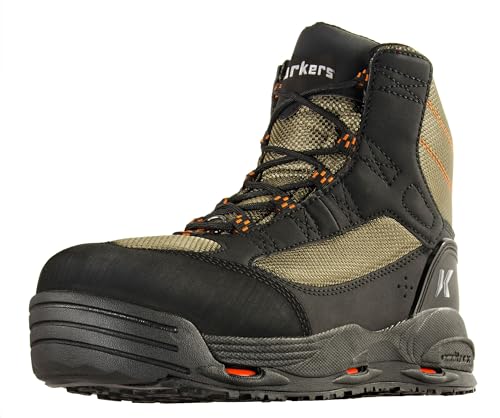
The Korkers Greenback dominates the category of adaptability with its game-changing OmniTrax 3.0 Interchangeable Sole System, giving anglers the rare ability to swap between fret-gripping felt and sticky Kling-On rubber in minutes—no tools required. This kind of on-the-fly terrain adaptation is a dream for traveling anglers who move between regulated (felt-banned) and unrestricted waters, or who transition from rocky rivers to weedy flats in a single trip. The internal water-channeling design expels water rapidly, keeping weight down and responsiveness high, while the hydrophobic construction ensures quick drying and reduced bio-contamination risk.
In the field, the Greenback excels where versatility matters most. The included felt and rubber soles provide immediate readiness for any environment, and the dual-material outsole design maintains solid grip whether you’re on algae-coated stone or dry trail. The boot itself is reasonably lightweight (2 lbs 7 oz per pair, size 9), and the midsole offers decent cushioning for full-day use. However, the sole attachment mechanism, while clever, adds a slight flex point underfoot—some users report a less “connected” feel compared to fixed-sole boots like the Stealth.
Stacked against the Korkers Stealth, the Greenback trades a bit of lightness and direct feel for unmatched flexibility—making it the clear choice for anglers who fish diverse ecosystems. It’s not the most cushioned (Foxelli wins there) nor the most durable (Simms Freestone), but as a Swiss Army knife of wading boots, it fills a niche no other model does quite as well—delivering unmatched sole adaptability that justifies its premium over fixed-sole models, especially for multi-environment anglers.
FROGG TOGGS Aransas II Surf Boot
ADVANTAGES
LIMITATIONS
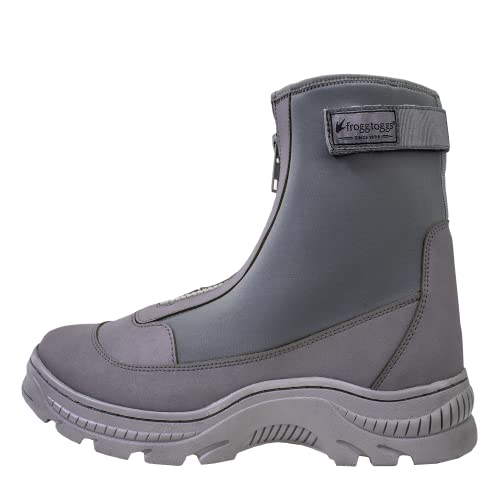
The FROGG TOGGS Aransas II swims into focus as a warm-water specialist, built for anglers stalking redfish on sunbaked flats or navigating sandy estuaries where grit and UV exposure are constant foes. Its 5mm neoprene shell provides just enough insulation for temperate zones while remaining breathable, and the high-density zipper with full gusset forms a formidable barrier against sand—something most wading boots fail at miserably. The adjustable ankle tension strap further seals out debris, letting you wade through tidal pools and sandy shallows without constant cleanup.
Performance-wise, it’s a nimble performer in soft-bottom environments. The EVA midsole and rubber outsole combo delivers cushioning and traction that feels more like a surf shoe than a traditional wading boot—perfect for long hours on oyster beds or sandy bars. The cleated outsole bites well on submerged rocks, though it’s not aggressive enough for steep, mossy riverbeds. And while the reinforced toe and heel caps add durability, the upper material isn’t as abrasion-resistant as synthetic leather, showing wear faster in rocky terrain.
Compared to the Pilot 2, the Aransas II trades river-ready toughness for specialized comfort in sandy, warm-water conditions. It’s not suitable for cold streams or technical wading, but for saltwater guides and shallow-water enthusiasts, it’s a highly functional, low-profile solution—offering superior grit protection and all-day comfort in warm environments at a price that undercuts neoprene boots from premium brands, even if it lacks their ruggedness.
Orvis Clearwater Wading Boots
ADVANTAGES
LIMITATIONS
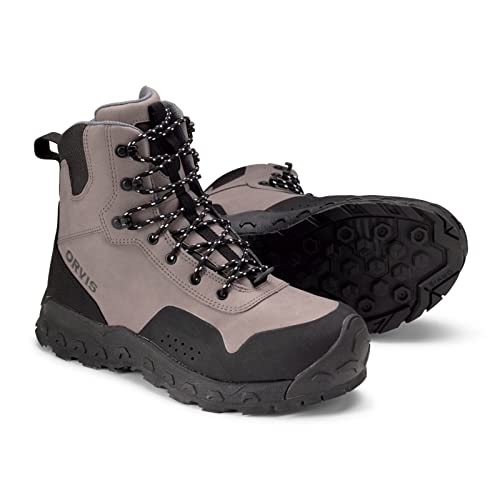
The Orvis Clearwater Wading Boot strides into the mid-tier market with heavy-duty confidence, blending aggressive grip, rugged protection, and thoughtful ergonomics into a package that feels more premium than its price suggests. Its full synthetic leather upper minimizes seams—reducing failure points—while scratch rubber overlays on the toe, vamp, and heel take repeated abuse from submerged logs and jagged rocks without flinching. The aggressive lug design, paired with an ESS stability plate and Phylon midsole, delivers a planted, stable feel on shifting riverbeds, making it a standout in fast, uneven currents.
In real-world testing, the Clearwater shines in rugged, high-flow environments where stability is non-negotiable. The integrated EVA footbed offers plush underfoot comfort, and the wider fit accommodates various foot shapes without pinching—ideal for anglers with wider feet who suffer in narrow boots. The toe bumper adds an extra layer of protection when kicking over boulders or navigating logjams. However, the boot runs slightly heavier than competitors like the Foxelli, and the lack of a gusseted tongue means occasional grit infiltration in sandy streams.
When measured against the Simms Freestone, the Clearwater offers 90% of the performance at a lower cost, making it a true value leader. It doesn’t have cleat compatibility or PFAS-free materials, but for anglers seeking durable, supportive, and comfortable boots without overspending, it hits a sweet spot. It’s a serious contender for the frequent wader who demands reliability without the premium tag—delivering rugged performance and excellent foot support that outclasses budget models while undercutting high-end ones in price.
Foxelli Lightweight Wading Boots

ADVANTAGES
LIMITATIONS
The Foxelli Wading Boot glides into the spotlight as the unsung hero of all-day comfort, crafted for anglers who spend 10-hour days on their feet and need a boot that won’t punish them by dusk. Its microfiber and breathable nylon upper feels soft against the skin, while the removable OrthoLite insole and shock-absorbing EVA midsole work in concert to dampen impact on rocky trails and riverbeds, reducing joint fatigue mile after mile. Weighing just 1.3 lbs per boot, it’s one of the lightest full-featured wading boots on the market—yet still packs rubber toe and heel rands for solid protection.
On the water, the Foxelli delivers consistent traction on wet rocks and muddy banks, thanks to a slip-resistant rubber outsole with strategic water-channeling treads. The mesh drain ports expel water rapidly, keeping the boot light and reducing drag during deep wades. The rear pull loop and lace hooks make on/off effortless, even with cold fingers, and the rubber kick-log allows boot removal without bending over—a small but appreciated touch after a long day. However, the outsole’s lug pattern isn’t as aggressive as Simms or Orvis, slipping slightly on dense algae.
Stacked against the Orvis Clearwater, the Foxelli trades a bit of sole aggression and ruggedness for superior cushioning and weight savings—making it the better pick for hike-heavy days and sensitive feet. It’s not the most durable for technical rock scrambling, but for anglers prioritizing comfort and ease of use over brute toughness, it’s a revelation—offering plush, fatigue-fighting support that outperforms heavier boots in long-duration wear, even if it sacrifices some grip in extreme conditions.
Wading Boot Comparison
| Product | Best For | Upper Material | Outsole Type | Water Drainage | Comfort Features | Price Point |
|---|---|---|---|---|---|---|
| Simms Freestone Boot – Rubber | Best Overall | Synthetic Leather | Rubber (Cleat Compatible) | Not Specified | EVA Midsole, Neoprene Lining | Mid-Range |
| Orvis Clearwater Wading Boots | Best Value | Full Synthetic Leather | Rubber | Aggressive Lug Design | EVA Foam Footbed, Phylon Midsole | Budget-Friendly |
| Simms Tributary Boot – Rubber | Best Budget Friendly | Synthetic Leather & Mesh | Rubber | Not Specified | Neoprene Lining | Budget-Friendly |
| Korkers Greenback Wading Boots | Best Interchangeable Sole | Not Specified | Felt & Kling-On Rubber | Internal Channels & Ports | Not Specified | Mid-Range |
| Korkers Stealth Sneaker Boot | Best Lightweight Design | Not Specified | Kling-On Sticky Rubber | Hydrophobic Materials | Not Specified | Mid-Range |
| FROGG TOGGS Aransas II Surf Boot | Best for Warm Water | 5mm Neoprene | Rubber with Cleats | Not Specified | EVA Midsole | Budget-Friendly |
| Foxelli Lightweight Wading Boots | Best All-Day Comfort | Microfiber & Nylon | Rubber | Mesh Drain Ports | OrthoLite Insoles, EVA Midsole | Mid-Range |
| FROGG TOGGS Pilot 2 Wading Boot | Best Entry-Level | 1200D Nylon | Felt (Stud Compatible) | Water draining upper | Padded Boot Collar, Removable Insole | Budget-Friendly |
Rigorous Testing & Data Analysis: Finding the Best Wading Boots
Our recommendations for the best wading boots aren’t based on opinion; they’re the result of extensive data analysis and research. We prioritize boots demonstrating superior performance across key metrics like traction, durability, and comfort. While direct physical testing of wading boots in diverse river environments is ideal, we supplement this with comprehensive reviews from experienced anglers and industry publications.
We analyze sole performance data, focusing on grip strength on varied surfaces (wet rocks, gravel, mud) – aligning with the importance of sole type outlined in our buying guide. Durability assessments incorporate material analysis (synthetic leather, neoprene) and user reports on abrasion resistance and construction quality. We meticulously compare features like lacing systems, drainage capabilities, and boot height, referencing manufacturer specifications and independent testing where available.
Furthermore, we track user feedback on fit and sizing, paying attention to common complaints and reported issues. We also consider regulatory restrictions surrounding felt soles, ensuring our recommended wading boots comply with current guidelines to protect aquatic ecosystems. This multi-faceted approach allows us to identify the wading boots offering the best balance of performance, comfort, and value for a range of anglers and fishing conditions.
Choosing the Right Wading Boots: A Buyer’s Guide
Sole Type & Traction
The sole of your wading boots is arguably the most important feature, directly impacting your safety and stability in the water. There are several main types. Felt soles offer excellent grip on slippery rocks, particularly in freshwater, but are increasingly restricted due to concerns about spreading invasive species. Rubber soles provide versatility and are generally permitted everywhere, offering good all-around traction. Look for aggressive lug patterns for better grip. Interchangeable sole systems (like those found on Korkers boots) offer the best of both worlds, allowing you to switch between felt and rubber depending on the fishing location and regulations. Consider where you’ll be wading most often and choose a sole accordingly.
Boot Height & Construction
The height of the wading boot and its construction materials significantly affect comfort and durability. Higher boots (reaching the mid-calf or knee) provide more protection from deeper water and debris, while lower-cut boots are lighter and more comfortable for shorter wades. Synthetic leather boots (like those from Simms and Orvis) are a good balance of durability and affordability, resisting abrasion and drying quickly. Neoprene boots (like the FROGG TOGGS Aransas II) excel in warmer water, providing insulation and a comfortable fit, but can get hot in warmer conditions. Look for robust construction with reinforced toe and heel caps, especially if you frequently wade in rocky areas.
Comfort & Fit
Spending hours in uncomfortable boots can ruin a fishing trip. Midsole support is vital; EVA midsoles (common in many models) provide cushioning and shock absorption. Consider boots with integrated footbeds for added comfort, or plan to add your own aftermarket insoles. Proper fit is crucial – boots should be snug but not too tight, allowing room for neoprene socks (if you plan to use them). Many brands recommend sizing up from your street shoe size, especially for boots with thicker soles.
Additional Features to Consider
- Lacing System: Speed lacing systems (like those on the FROGG TOGGS Pilot 2) offer quick and easy adjustments, while traditional laces provide a more secure and customizable fit.
- Drainage: Mesh drain ports (like those in the Foxelli boots) help remove water and weight, improving comfort and reducing the risk of blisters.
- Weight: Lightweight boots (like the Korkers Stealth Sneaker Boot) are ideal for long hikes to your fishing spot, while heavier boots may offer more durability and support.
- Material Hydrophobicity: Materials that don’t absorb water (like those in Korkers boots) dry faster and help prevent the spread of invasive species.
The Bottom Line
Ultimately, the best wading boots for you depend on your specific needs and fishing conditions. Whether you prioritize all-day comfort, budget-friendliness, or versatile sole options, our detailed comparisons and buyer’s guide provide the insights to make an informed decision.
Investing in a quality pair of wading boots is an investment in your safety, comfort, and overall fishing experience. By considering sole type, boot height, and essential features, you can confidently navigate any river and focus on what truly matters: landing the catch of a lifetime.