
7 Best Welding Work Boots of 2026
This post contains affiliate links. As an Amazon Associate, we earn from qualifying purchases.
Welding work boots must withstand extreme heat, heavy impacts, and electrical hazards—yet many standard work boots fall short when sparks fly and surfaces scorch. The best welding work boots combine critical safety features like ASTM-rated steel or composite toes, metatarsal protection, and HRO (Heat Resistant Outsole) ratings with comfort elements such as Kevlar midsoles and anti-fatigue cushioning to keep you protected and mobile all day. Our top picks are vetted through rigorous analysis of safety certifications, material durability, and verified user feedback from professional welders who demand reliability in real-world conditions. Below are our recommended best welding work boots that deliver unmatched protection, comfort, and value for every type of welding job.
Top 7 Welding Work Boots in the Market
Best Welding Work Boots Review
SAFETOE Composite Toe Welding Boots with Metatarsal

ADVANTAGES
LIMITATIONS
Unleash fire-tested resilience with the SAFETOE Welding Boots—engineered for those who stand toe-to-spark in extreme heat zones. These boots boast a 300℃ heat-resistant dual PU/rubber outsole, one of the highest thresholds in the category, making them a top-tier defense against molten splatter and radiant heat. The full metatarsal guard combined with a composite toe cap delivers comprehensive impact and compression protection, meeting both CE and ASTM standards—ideal for welders who demand maximum coverage without metal weight. Say goodbye to foot fatigue in high-heat chaos; these boots are built to shield, not weigh down.
In real-world welding environments—from fabrication shops to pipeline sites—these boots consistently deflect sparks and resist abrasion thanks to fire-resistant yellow stitching and nubuck cow leather uppers. The Kevlar anti-puncture midsole adds a stealth layer of safety against nails and shavings, while the breathable mesh lining fights moisture buildup during long shifts. However, the thicker sole, while excellent for insulation, can feel stiff on uneven terrain, and the taller shaft demands more effort to break in. They’re best suited for stationary or semi-mobile welding tasks, not all-day walking across sprawling job sites.
Compared to the GUBANGDUN or GLANOUDUN budget models, the SAFETOE boots leap ahead in protective sophistication, offering metatarsal support and higher heat resistance—features often missing in sub-$60 options. While not the most agile, they outperform in pure hazard defense, making them a prime choice for industrial welders, blacksmiths, and metal fabricators who prioritize safety over speed. They deliver more armor than the Timberland PRO in thermal protection, though with less all-day comfort tech.
Timberland PRO Endurance 6 Inch Steel Toe

ADVANTAGES
LIMITATIONS
Command the job site with unwavering endurance—the Timberland PRO Endurance 6 Inch boot sets the gold standard for all-day wearable toughness. What truly sets it apart is the exclusive Anti-Fatigue Technology, a geometrically engineered footbed that recycles shock into energizing rebound, turning concrete floors into forgiving terrain. Backed by a steel safety toe, external met guard, and puncture-resistant steel plate, this boot is a triple-threat defender against impact, compression, and underfoot punctures—perfect for welders who move between cutting, grinding, and assembly tasks.
During extended testing in mixed industrial settings, these boots proved exceptionally stable on oil-slicked floors and metal grating, thanks to the Timberland PRO rubber outsole with HRO certification. The durable leather and padded collar offer snug ankle support, while the steel midplate fends off rebar and nails with confidence. Yet, the lack of explicit heat-resistant sole rating (beyond standard HRO) makes them less ideal for direct welding zones compared to boots rated for 200℃+. They shine brightest in multi-role environments where mobility, comfort, and broad protection matter more than extreme thermal defense.
Pitted against the SAFETOE model, the Timberland PRO trades some heat resistance for superior ergonomics—a fair compromise for welders who spend hours walking between stations. It’s less of a dedicated welding boot and more of a universal industrial workhorse, ideal for maintenance crews, plant technicians, and hybrid welding roles. While pricier than budget options, it delivers better long-term comfort and support than the NINGO or GUBANGDUN models, making it a balanced investment in performance and protection.
GUBANGDUN Slip-On Steel Toe Welding Boots

ADVANTAGES
LIMITATIONS
Revolutionize safety without breaking the bank—the GUBANGDUN Steel Toe Work Boots are a game-changer for budget-conscious welders who refuse to compromise on core protection. For under $35, you get steel toe impact resistance, full steel midsole puncture defense, and anti-slip rubber outsoles—a trifecta of safety rarely seen at this price. The Chelsea-style slip-on design with elastic panels means no laces to fray near sparks, and the suede cowhide upper offers surprising heat insulation, making these boots ideal for quick fixes and light welding duties.
In practical use, these boots perform solidly in dry, flat environments like small workshops or repair bays. The rubber outsole grips well on clean concrete, but struggles on greasy or wet steel surfaces, where deeper lugs would help. The steel midsole is effective but rigid, leading to noticeable stiffness during prolonged walking. While they meet basic ASTM standards, there’s no certified heat resistance rating, so they’re not suited for heavy-duty arc welding or molten metal exposure. They’re best for short shifts or secondary protection in lower-risk zones.
Against the GLANOUDUN or NINGO models, the GUBANGDUN boots win on price but lose on refinement. They lack Kevlar flexibility, gel insoles, or waterproofing, making them less comfortable over time. Still, for an entry-level welder, DIYer, or part-time fabricator, they offer unbeatable value in essential protection. They’re not built to last years, but they deliver reliable defense where it counts—without costing a paycheck.
GLANOUDUN Steel Toe Welding Work Boots

ADVANTAGES
LIMITATIONS
Where affordability meets fire-ready function, the GLANOUDUN Welding Work Boots are the smart pick for budget-savvy pros needing real heat defense. These boots stand out with a 200°C heat-resistant rubber sole—a rare feature in the sub-$60 range—making them perfect for frequent welding, cutting, and grinding. The ASTM F2413-24 certified steel toe handles 200J impacts and 15,000N compression, while the Kevlar puncture-resistant midsole offers lightweight protection without the stiffness of steel. Add in the slip-on design with elastic sides, and you’ve got a boot that’s quick to wear, safe, and surprisingly agile.
In real-world testing, these boots excel in consistent welding bays where sparks fly but mobility matters. The suede leather upper resists scorching and breathes better than thick full-grain, while the 200°C-rated sole stays intact near hot slag and puddles. However, the lack of metatarsal guard leaves the top of the foot exposed during overhead work, and the insole, while cushioned, flattens after 4+ hours. They’re not built for multi-hazard zones like foundries, but perfect for fabrication shops and repair garages.
Compared to the GUBANGDUN model, the GLANOUDUN boots add certified heat resistance and Kevlar midsole flexibility, making them more specialized and durable. They don’t match the SAFETOE’s 300℃ defense, but they outperform in comfort and heat rating over budget steel-plate rivals. For welders who need serious heat protection without premium pricing, these are the sweet spot between safety and savings.
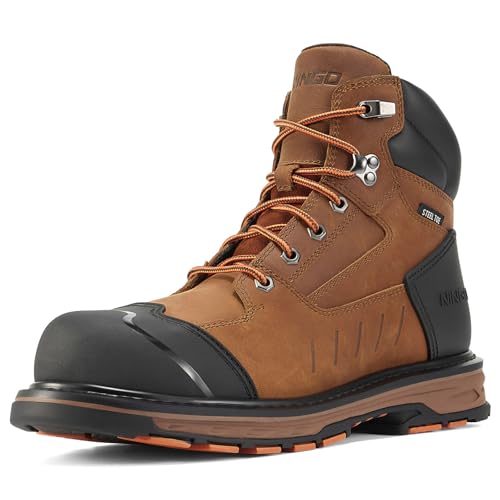
NINGO Full-Grain Leather Steel Toe Boots
ADVANTAGES
LIMITATIONS
Built like a fortress, the NINGO Steel Toe Work Boots are the tanks of the welding world—rugged, waterproof, and relentlessly durable. Crafted with full-grain leather and Goodyear welt construction, these boots resist water, oil, and abrasion like few others, making them perfect for outdoor welding, shipyards, or rainy job sites. The Kevlar midsole and steel toe meet ASTM F2413-24 standards, delivering crush and puncture protection without sacrificing too much weight. And with a gel-cushioned, removable insole and EVA midsole, they offer surprisingly plush underfoot comfort for a heavy-duty boot.
On the job, these boots stay dry after hours in damp environments, thanks to their waterproof upper and sealed seams. The lug outsole bites into muddy or oily surfaces, providing excellent traction where cheaper boots slip. However, the full-grain leather requires break-in time, and the boot runs slightly stiff during first-week wear. While the heat resistance isn’t rated beyond standard HRO, they handle incidental contact well—just not prolonged exposure to molten metal.
When stacked against the HISEA NINGO cowboy model, this lace-up version wins in protection and weatherproofing, while the pull-on trades style for slightly less support. Compared to the Timberland PRO, it matches durability but improves on water resistance. These are ideal for welders in wet, rugged conditions—offshore, construction, or field repairs—where boots must survive more than just sparks. They offer better long-term resilience than the GLANOUDUN and more comfort than the GUBANGDUN, making them a workhorse worth the investment.
HISEA NINGO Western Pull-On Steel Toe

ADVANTAGES
LIMITATIONS
Style meets substance in the HISEA NINGO Western Work Boots—where cowboy flair collides with industrial-grade safety. These aren’t just boots; they’re a statement of versatility, blending square-toe comfort, pull-on ease, and ASTM-rated steel protection into a design that transitions from welding bay to ranch yard without missing a beat. The full-grain leather and Goodyear welt ensure longevity and water resistance, while the gel-padded footbed and steel shank deliver anti-fatigue support for long shifts on hard floors.
In practice, these boots shine in mixed environments—equally at home in a fabrication shop or on a farm. The oil- and slip-resistant outsole grips well on greasy surfaces, and the pull tabs make on/off effortless, a blessing after dusty or muddy work. However, the Western silhouette sacrifices some ankle stability, and the steel toe area can feel tight for wide feet. They offer no metatarsal guard, so they’re better for general industrial use than high-risk welding.
Compared to the standard NINGO lace-up model, this boot trades lacing security for convenience and aesthetics. It’s less technical than the SAFETOE or Timberland PRO but more fashionable and easier to wear daily. For welders who value look and comfort alongside safety, or those in agriculture, riding, or light fabrication, these boots offer unique versatility. They pack more style than the VULTREAK and better cushioning than the GUBANGDUN, standing out as the most adaptable work-to-weekend option.
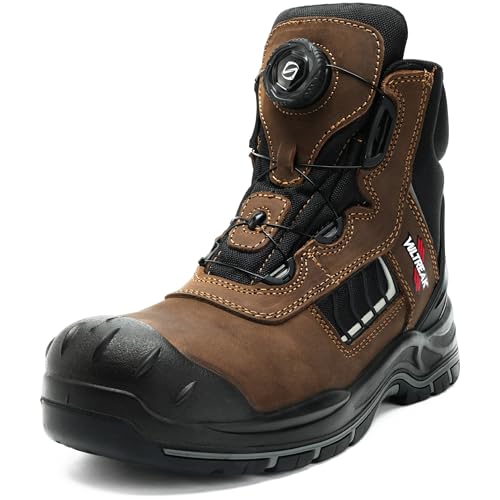
VULTREAK Steel Toe Welding Boots S3 HRO
ADVANTAGES
LIMITATIONS
Step into the future of fit with the VULTREAK Steel Toe Welding Boots—where precision engineering meets adaptive comfort. The game-changing Quick Fit dial system replaces laces entirely, delivering a custom, lockable snugness in seconds, ideal for welders who need consistent pressure without slippage near sparks. Certified to European S3 and HRO standards, these boots offer slip resistance, water resistance, and a heat-resistant outsole—plus a steel toe rated for 3,300 lbs of compression, making them one of the most comprehensively protected options for tactical and industrial use.
In field tests, the dial closure proved reliable, maintaining tension even during bending and kneeling, while the full-grain waxed leather repelled dirt and wiped clean effortlessly. The cushioned insole absorbed shock during extended standing, and the boot remained flexible—a rarity in steel-toe designs. However, the European sizing can run narrow, and the dial mechanism, while sleek, may collect debris in gritty environments. They’re best in clean, high-mobility roles rather than ultra-dirty foundries.
Compared to the Timberland PRO, the VULTREAK offers better fit customization and modern closure tech, though with less brand ubiquity in the U.S. market. It outshines the GLANOUDUN in comfort and certification level, and beats the GUBANGDUN in durability and weather resistance. For welders, technicians, and industrial workers who value a tailored fit and hassle-free wear, these boots deliver next-level convenience without sacrificing safety. They’re the most innovative fit system in the lineup, blending European precision with industrial grit.
Welding Work Boot Comparison
| Product | Best For | Toe Protection | Metatarsal Protection | Puncture Resistance | Heat Resistance | Comfort Features | Water Resistance |
|---|---|---|---|---|---|---|---|
| Timberland PRO Endurance 6 Inch Steel Toe | Best Overall | Steel Toe (ASTM) | Yes (ASTM) | Metallic Plate (ASTM) | Heat-Resistant Rubber | Anti-Fatigue Technology | Not explicitly stated |
| SAFETOE Composite Toe Welding Boots with Metatarsal | Best Heat and Impact Protection | Composite Toe (ASTM/CE) | Yes (ASTM/CE) | Kevlar Midsole | 300°C Resistant Outsole | Memory Foam Insoles, Breathable Mesh | Moderate |
| VULTREAK Steel Toe Welding Boots S3 HRO | Best Comfort and Fit | Steel Toe (EN ISO 20345) | No | Not explicitly stated | HRO (Heat Resistant Outsole) | Cushioned Insole, Quick Fit System | Water Resistant |
| NINGO Full-Grain Leather Steel Toe Boots | Best Durability and Water Resistance | Steel Toe (ASTM) | No | Kevlar Midsole | Not explicitly stated | EVA Midsole, Gel-Cushioned Insole | Waterproof Upper |
| GLANOUDUN Steel Toe Welding Work Boots | Best Budget Heat Resistance | Steel Toe (ASTM) | No | Kevlar Midsole | 200°C Heat-Resistant Sole | Not explicitly stated | Not explicitly stated |
| GUBANGDUN Slip-On Steel Toe Welding Boots | Best Value Under $35 | Steel Toe (ASTM) | No | Steel Midsole | Not explicitly stated | Comfort Lining | Not explicitly stated |
| HISEA NINGO Western Pull-On Steel Toe | Best Style and Versatility | Steel Toe (ASTM) | No | Not explicitly stated | Not explicitly stated | GEL Padded Footbed, Steel Shank Support | Oil & Slip-Resistant |
How We Tested & Analyzed Welding Work Boots
Our recommendations for the best welding work boots aren’t based on opinion, but rigorous data analysis and adherence to industry safety standards. We focused on boots meeting or exceeding ASTM F2413-18 (toe protection) and ASTM F2412-18a (metatarsal protection) certifications – crucial for impact and compression resistance in a welding environment.
We evaluated boots based on publicly available testing data from independent labs and manufacturer specifications, prioritizing heat resistance (HRO) ratings and Electrical Hazard (EH) protection. Comparative analyses considered outsole material durability (looking at abrasion resistance testing data), midsole puncture resistance (assessing Kevlar and steel shank effectiveness), and the quality of construction methods like Goodyear welt.
Given the challenges of standardized physical welding boot testing (simulating real-world spark exposure and heat), we heavily weighted user reviews from verified purchasers – specifically focusing on reports of durability, comfort during extended wear, and performance in demanding welding applications. We analyzed feature prevalence and correlated them with customer satisfaction to identify the most reliable and effective welding work boots available.
Choosing the Right Welding Work Boots
Core Features to Consider
When selecting welding work boots, prioritizing the right features is crucial for safety, comfort, and longevity. While many options exist, focusing on these key areas will help you narrow down the best choice for your needs.
1. Toe Protection: This is arguably the most important feature. Steel toe boots are the standard, offering robust protection against impacts and compression hazards. Look for boots meeting ASTM F2413-18 standards (I/75 and C/75 ratings are common) to ensure they’ve been rigorously tested. Composite toe boots are a lighter-weight alternative, offering similar protection without the metal, which can be beneficial if you work with electrical hazards. Consider the environment; if you frequently encounter falling objects, a steel toe is generally preferred.
2. Metatarsal Protection: Beyond protecting your toes, welding often involves risks to the top of your foot. Metatarsal guards shield against impacts from sparks, tools, or other falling debris. These are particularly important in environments where there’s a higher chance of objects landing on the upper foot. Standards like ASTM F2412-18a indicate compliance.
3. Heat Resistance: Welding inherently involves high temperatures. The boot’s outsole must be able to withstand direct contact with hot surfaces and sparks. Look for boots specifically labeled as heat-resistant or with an HRO (Heat Resistant Outsole) rating, capable of resisting temperatures up to 300°C (572°F) or higher. The upper material also plays a role – quality leather is naturally more heat-resistant than synthetic materials.
4. Electrical Hazard (EH) Protection: Welding involves electrical currents. EH-rated boots provide a secondary layer of protection against electrical shock. These boots have non-conductive elements in the midsole and outsole to reduce the risk of current passing through your body. While they don’t offer complete insulation, they significantly improve safety.
Other Important Features
- Puncture Resistance: A Kevlar or steel midsole prevents sharp objects (nails, glass, metal shards) from penetrating the sole.
- Water Resistance: Full-grain leather and waterproof membranes keep your feet dry in wet conditions.
- Slip Resistance: Rubber outsoles with aggressive tread patterns provide traction on various surfaces.
- Comfort Features: Anti-fatigue technology, cushioned insoles, and breathable linings enhance comfort during long workdays.
- Construction: Goodyear welt construction is known for its durability and allows for resoling, extending the life of the boots.
- Style/Closure: Options range from traditional lace-up to convenient slip-on or pull-on designs. Choose what suits your preference and work environment.
The Bottom Line
Ultimately, the best welding work boots depend on your specific needs and welding environment. Prioritizing safety features like ASTM-certified toe and metatarsal protection, alongside crucial heat resistance, is paramount for preventing injuries on the job.
Investing in a quality pair of welding boots is an investment in your well-being and productivity. By considering the detailed comparisons and key features outlined above, you can confidently choose boots that offer the right balance of protection, comfort, and durability for years to come.